



Community hub
Recent from talks
Knowledge base stats:
Talk channels stats:
Members stats:
Geothermal power in Iceland
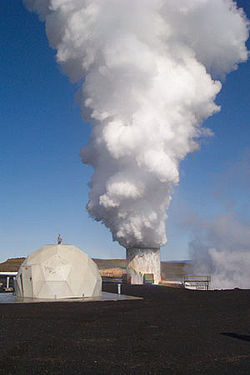
Geothermal power in Iceland refers to the use of geothermal energy in Iceland for electricity generation.
Iceland's uniquely active geology has led to natural conditions especially suitable for harnessing geothermal energy. Icelanders have long used geothermal energy for direct applications, such as heating homes and baths. The more recent, widespread adoption of geothermal energy as an energy source in Iceland was spawned by a need to stabilize energy prices and increase energy independence, allowing Iceland to increase reliance on geothermal energy for direct applications alongside electricity generation and contributing significantly to diminishing Iceland's carbon footprint.
The growth of geothermal power in Iceland is due to its continued support from the Icelandic government. As of 2020, Iceland's installed geothermal power production capacity is 799 megawatts (MW). Geothermal energy produces over a quarter of Iceland's total electricity.
Iceland's territory is some of the most geologically active on Earth. The country straddles the Mid-Atlantic Ridge (a rift between continental plates), and lies over a volcanic hotspot. This combination of factors has led to pronounced volcanism and geothermal activity. Furthermore, the island also possesses underground water reservoirs continually replenished by rain. Magma underneath the island heats these reservoirs to hundreds of degrees Fahrenheit. At least 25 such geothermal aquifers lie within the volcanic zone. These natural conditions in Iceland are favorable for geothermal power production.
Geothermal energy has been employed by Icelanders since the Viking Age, with initial uses including washing and bathing. Later, it began to be used to heat homes, greenhouses, and swimming pools, as well as to keep streets and sidewalks free of snow and ice. Today, at least 90% of all homes in Iceland are heated with geothermal energy.
The Blue Lagoon is a prominent example of a geothermal bath. With a mix of seawater and discharge freshwater from the nearby Svartsengi Power Station, the Blue Lagoon is 5,000 square meters in size and is Iceland's most popular tourist attraction.
While geothermal energy has had many uses in Iceland throughout history, its use there for electricity generation did not come until relatively recently. Iceland's power was largely derived from fossil fuels until the 1970s, when the national government looked to address energy price inequities across the country. A report commissioned in 1970 by the country's National Energy Authority, Orkustofnun, recommended increased domestic production of geothermal power and hydroelectricity to stabilize energy prices and reduce the nation's reliance on external energy resources. In 1973, an international energy crisis began, subjecting Iceland to highly volatile oil prices and an uncertain energy market. The crisis sparked Iceland's government to ramp up adoption of the domestic power sources identified by the National Energy Authority's report. The ensuing rapid growth of renewable energy production mostly originated from a geopolitical desire for energy independence and was catalyzed by the urgent economic constraints during the 1970s energy crisis. Since then, in addition to increasing Iceland's energy independence, it has also resulted in the widespread decarbonization of the country's electric grid.
Iceland's government policies strongly encourage the usage of renewable energy resources in power production. These policies stem from energy issues that the country had faced in years past; in the 1970s, for example, Iceland's government responded to increasing oil prices by replacing oil with geothermal energy in district heating. As a result, the cost of heating was decreased significantly, and compared to most other countries, was much lower.
Hub AI
Geothermal power in Iceland AI simulator
(@Geothermal power in Iceland_simulator)
Geothermal power in Iceland
Geothermal power in Iceland refers to the use of geothermal energy in Iceland for electricity generation.
Iceland's uniquely active geology has led to natural conditions especially suitable for harnessing geothermal energy. Icelanders have long used geothermal energy for direct applications, such as heating homes and baths. The more recent, widespread adoption of geothermal energy as an energy source in Iceland was spawned by a need to stabilize energy prices and increase energy independence, allowing Iceland to increase reliance on geothermal energy for direct applications alongside electricity generation and contributing significantly to diminishing Iceland's carbon footprint.
The growth of geothermal power in Iceland is due to its continued support from the Icelandic government. As of 2020, Iceland's installed geothermal power production capacity is 799 megawatts (MW). Geothermal energy produces over a quarter of Iceland's total electricity.
Iceland's territory is some of the most geologically active on Earth. The country straddles the Mid-Atlantic Ridge (a rift between continental plates), and lies over a volcanic hotspot. This combination of factors has led to pronounced volcanism and geothermal activity. Furthermore, the island also possesses underground water reservoirs continually replenished by rain. Magma underneath the island heats these reservoirs to hundreds of degrees Fahrenheit. At least 25 such geothermal aquifers lie within the volcanic zone. These natural conditions in Iceland are favorable for geothermal power production.
Geothermal energy has been employed by Icelanders since the Viking Age, with initial uses including washing and bathing. Later, it began to be used to heat homes, greenhouses, and swimming pools, as well as to keep streets and sidewalks free of snow and ice. Today, at least 90% of all homes in Iceland are heated with geothermal energy.
The Blue Lagoon is a prominent example of a geothermal bath. With a mix of seawater and discharge freshwater from the nearby Svartsengi Power Station, the Blue Lagoon is 5,000 square meters in size and is Iceland's most popular tourist attraction.
While geothermal energy has had many uses in Iceland throughout history, its use there for electricity generation did not come until relatively recently. Iceland's power was largely derived from fossil fuels until the 1970s, when the national government looked to address energy price inequities across the country. A report commissioned in 1970 by the country's National Energy Authority, Orkustofnun, recommended increased domestic production of geothermal power and hydroelectricity to stabilize energy prices and reduce the nation's reliance on external energy resources. In 1973, an international energy crisis began, subjecting Iceland to highly volatile oil prices and an uncertain energy market. The crisis sparked Iceland's government to ramp up adoption of the domestic power sources identified by the National Energy Authority's report. The ensuing rapid growth of renewable energy production mostly originated from a geopolitical desire for energy independence and was catalyzed by the urgent economic constraints during the 1970s energy crisis. Since then, in addition to increasing Iceland's energy independence, it has also resulted in the widespread decarbonization of the country's electric grid.
Iceland's government policies strongly encourage the usage of renewable energy resources in power production. These policies stem from energy issues that the country had faced in years past; in the 1970s, for example, Iceland's government responded to increasing oil prices by replacing oil with geothermal energy in district heating. As a result, the cost of heating was decreased significantly, and compared to most other countries, was much lower.