


Community hub
Recent from talks
Contribute something
Nothing was collected or created yet.
District heating
View on Wikipedia

District heating (also known as heat networks) is a system for distributing heat generated in a centralized location through a system of insulated pipes for residential and commercial heating requirements such as space heating and water heating. The heat is often obtained from a cogeneration plant burning fossil fuels or biomass, but heat-only boiler stations, geothermal heating, heat pumps and central solar heating are also used, as well as heat waste from factories and nuclear power electricity generation. District heating plants can provide higher efficiencies and better pollution control than localized boilers. According to some research, district heating with combined heat and power (CHPDH) is the cheapest method of cutting carbon emissions, and has one of the lowest carbon footprints of all fossil generation plants.[1]
District heating is ranked number 27 in Project Drawdown's 100 solutions to global warming.[2][3]
History
[edit]District heating traces its roots to the hot water-heated baths and greenhouses of ancient times, perhaps today most known in the Roman Empire. A hot water distribution system in Chaudes-Aigues in France is generally regarded as the first real district heating system. It used geothermal energy to provide heat for about 30 houses and started operation in the 14th century.[4]
The U.S. Naval Academy in Annapolis began steam district heating service in 1853.[citation needed] MIT began coal-fired steam district heating in 1916 when it moved to Cambridge, Massachusetts.[5][6]
Although these and numerous other systems have operated over the centuries, the first commercially successful district heating system was launched in Lockport, New York, in 1877 by American hydraulic engineer Birdsill Holly, considered the founder of modern district heating.
Generations of district heating
[edit]
Generally, all modern district heating systems are demand driven, meaning that the heat supplier reacts to the demand from the consumers and ensures that there is sufficient temperature and water pressure to deliver the demanded heat to the users. The five generations have defining features that sets them apart from the prior generations. The feature of each generation can be used to give an indication of the development status of an existing district heating system.
First generation
[edit]The first generation was a steam-based system fueled by coal and was first introduced in the US in the 1880s and became popular in some European countries, too. It was state of the art until the 1930s. These systems piped very high-temperature steam through concrete ducts, and were therefore not very efficient, reliable, or safe. Nowadays, this generation is technologically outdated. However, some of these systems are still in use, for example in New York or Paris. Other systems originally built have subsequently been upgraded.[7]
Second generation
[edit]The second generation was developed in the 1930s and was built until the 1970s. It burned coal and oil, and the energy was transmitted through pressurized hot water as the heat carrier. The systems usually had supply temperatures above 100 °C, and used water pipes in concrete ducts, mostly assembled on site, and heavy equipment. A main reason for these systems was the primary energy savings, which arose from using combined heat and power plants. While also used in other countries, typical systems of this generation were the Soviet-style district heating systems that were built after WW2 in several countries in Eastern Europe.[7]
Third generation
[edit]In the 1970s the third generation was developed and was subsequently used in most of the following systems all over the world. This generation is also called the "Scandinavian district heating technology", because many of the district heating component manufacturers are based in Scandinavia. The third generation uses prefabricated, pre-insulated pipes, which are directly buried into the ground and operates with lower temperatures, usually below 100 °C. A primary motivation for building these systems was security of supply by improving the energy efficiency after the two oil crises led to disruption of the oil supply. Therefore, those systems usually used coal, biomass and waste as energy sources, in preference to oil. In some systems, geothermal energy and solar energy are also used in the energy mix.[7] For example, Paris has been using geothermal heating from a 55–70 °C source 1–2 km below the surface for domestic heating since the 1970s.[8] Especially in the former Eastern Bloc nuclear energy has been used for district heating[9][10] and new systems keep being installed in China.[11] The source of the heat of nuclear district heating is virtually always waste heat from power reactors, but proposals to build dedicated heating reactors or to use the waste heat from repurposed spent fuel pools[12] have been brought forth.[13][14]
Fourth generation
[edit]Currently,[citation needed] the fourth generation is being developed,[7] with the transition to fourth generation already in process in Denmark.[15] The fourth generation is designed to combat climate change and integrate high shares of variable renewable energy into the district heating by providing high flexibility to the electricity system.[7]
According to the review by Lund et al.[7] those systems have to have the following abilities:
- "Ability to supply low-temperature district heating for space heating and domestic hot water (DHW) to existing buildings, energy-renovated existing buildings and new low-energy buildings."
- "Ability to distribute heat in networks with low grid losses."
- "Ability to recycle heat from low-temperature sources and integrate renewable heat sources such as solar and geothermal heat."
- "Ability to be an integrated part of smart energy systems (i.e. integrated smart electricity, gas, fluid and thermal grids) including being an integrated part of 4th Generation District Cooling systems."
- "Ability to ensure suitable planning, cost and motivation structures in relation to the operation as well as to strategic investments related to the transformation into future sustainable energy systems".
Compared to the previous generations the temperature levels have been reduced to increase the energy efficiency of the system, with supply side temperatures of 70 °C and lower. Potential heat sources are waste heat from industry, CHP plants burning waste, biomass power plants, geothermal and solar thermal energy (central solar heating), large scale heat pumps, waste heat from cooling purposes and data centers and other sustainable energy sources. With those energy sources and large scale thermal energy storage, including seasonal thermal energy storage, fourth generation district heating systems are expected to provide flexibility for balancing wind and solar power generation, for example by using heat pumps to integrate surplus electric power as heat when there is much wind energy or providing electricity from biomass plants when back-up power is needed.[7] Therefore, large scale heat pumps are regarded as a key technology for smart energy systems with high shares of renewable energy up to 100% and advanced fourth generation district heating systems.[16][7][17]
Fifth generation/cold district heating
[edit]
A fifth generation district heating and cooling network (5GDHC),[18] also called cold district heating, distributes heat at near ambient ground temperature: this in principle minimizes heat losses to the ground and reduces the need for extensive insulation. Each building on the network uses a heat pump in its own plant room to extract heat from the ambient circuit when it needs heat, and uses the same heat pump in reverse to reject heat when it needs cooling. In periods of simultaneous cooling and heating demands this allows waste heat from cooling to be used in heat pumps at those buildings which need heating.[19] The overall temperature within the ambient circuit is preferably controlled by heat exchange with an aquifer or another low temperature water source to remain within a temperature range from 10 °C to 25 °C.
While network piping for ambient ground temperature networks is less expensive to install per pipe diameter than in earlier generations, as it does not need the same degree of insulation for the piping circuits, it has to be kept in mind that the lower temperature difference of the pipe network leads to significantly larger pipe diameters than in prior generations. Due to the requirement of each connected building in the fifth generation district heating and cooling systems to have their own heat pump the system can be used both as a heat source or a heat sink for the heat pump, depending on if it is operated in heating or cooling mode. As with prior generations the pipe network is an infrastructure that in principle provides an open access for various low temperature heat sources, such as ambient heat, ambient water from rivers, lakes, sea, or lagoons, and waste heat from industrial or commercial sources.[20]
Based on the above description it is clear that there is a fundamental difference between the 5GDHC and the prior generations of district heating, particularly in the individualization of the heat generation. This critical system has a significant impact when comparing the efficiencies between the different generations, as the individualization of the heat generation moves the comparison from being a simple distribution system efficiency comparison to a supply system efficiency comparison, where both the heat generation efficiency as well as the distribution system efficiency needs to be included.
A modern building with a low-temperature internal heat distribution system can install an efficient heat pump delivering heat output at 45 °C. An older building with a higher-temperature internal distribution system e.g. using radiators will require a high-temperature heat pump to deliver heat output.
A larger example of a fifth generation heating and cooling grid is Mijnwater in Heerlen, the Netherlands.[21][22] In this case the distinguishing feature is a unique access to an abandoned water-filled coal mine within the city boundary that provides a stable heat source for the system.
A fifth generation network ("Balanced Energy Network", BEN) was installed in 2016 at two large buildings of the London South Bank University as a research and development project.[23][24]
Heat sources
[edit]District heating networks exploit various energy sources, sometimes indirectly through multipurpose infrastructure such as combined heat and power plants (CHP, also called co-generation).
Combustion of fossil or renewable fuels
[edit]The most used energy source for district heating is the burning of hydrocarbons. As the supply of renewable fuels is insufficient, the fossil fuels coal and gas are massively used for district heating.[25] This burning of fossil hydrocarbons usually contributes to climate change, as the use of systems to capture and store the CO2 instead of releasing it into the atmosphere is rare.
In the case of a cogeneration plant, the heat output is typically sized to meet half of the peak winter heat load, but over the year will provide 90% of the heat supplied. Much of the heat produced in summer will generally be wasted. The boiler capacity will be able to meet the entire heat demand unaided and can cover for breakdowns in the cogeneration plant. It is not economic to size the cogeneration plant alone to be able to meet the full heat load. In the New York City steam system, that is around 2.5 GW.[26][27] Germany has the largest amount of CHP in Europe.[28]
A simple thermal power station can be 20–35% efficient,[29] whereas a more advanced facility with the ability to recover waste heat can reach total energy efficiency of nearly 80%.[29] Some may approach 100% based on the lower heating value by condensing the flue gas as well.[30]
Nuclear fission
[edit]The heat produced by nuclear chain reactions can be injected into district heating networks. This does not contaminate the district pipes with radioactive elements, as the heat is transferred to the network through heat exchangers.[31] It is not technically necessary for the nuclear reactor to be very close to the district heating network, as heat can be transported over significant distances (exceeding 200 km) with affordable losses, using insulated pipes.[32][clarification needed]
Since nuclear reactors do not significantly contribute to either air pollution or global warming, they can be an advantageous alternative to the combustion of fossil hydrocarbons. However, only a small minority of the nuclear reactors currently in operation around the world are connected to a district heating network. These reactors are in Bulgaria, China, Hungary, Romania, Russia, Slovakia, Slovenia, Switzerland and Ukraine.[33][34]
The Sibirskaya Nuclear Power Plant in USSR was the first nuclear CHP plant, supplying district heating to Seversk since 1961 and to a part of Tomsk since 1973, stopped in 2008.[35] The Ågesta Nuclear Power Plant in Sweden was an early example of nuclear cogeneration, providing small quantities of both heat and electricity to a suburb of the country's capital between 1964 and 1974. The Beznau Nuclear Power Plant in Switzerland has been generating electricity since 1969 and supplying district heating since 1984. The Haiyang Nuclear Power Plant in China started operating in 2018 and started supplying small scale heat to the Haiyang city area in 2020. By November 2022, the plant used 345 MW-thermal effect to heat 200,000 homes, replacing 12 coal heating plants.[36]
Recent years have seen renewed interest in small modular reactors (SMRs) and their potential to supply district heating.[37] Speaking on the Energy Impact Center's (EIC) podcast, Titans of Nuclear, principal engineer at GE Hitachi Nuclear Energy Christer Dahlgren noted that district heating could be the impetus for the construction of new nuclear power plants in the future.[38] EIC's own open-source SMR blueprint design, OPEN100, could be incorporated into a district heating system.[39]
Natural underground heat
[edit]![[icon]](https://en.wikipedia.org/wiki/File:Wiki_letter_w_cropped.svg) | This section needs expansion. You can help by adding to it. (May 2013) |
History
Geothermal district heating was used in Pompeii, and in Chaudes-Aigues since the 14th century.[40]
Denmark
Denmark has one geothermal plant in operation in Thisted since 1984. Two other plants are now closed, located in Copenhagen (2005–2019), and Sønderborg (2013–2018). Both suffered issues with fine sand and blockages[41] [42] [43]
The country's first large-scale plant is being developed near Aarhus, and by the end of 2030, it is expected to be able to cover approximately 20% of the district heating demand in Aarhus.[44]
United States
Direct use geothermal district heating systems, which tap geothermal reservoirs and distribute the hot water to multiple buildings for a variety of uses, are uncommon in the United States, but have existed in America for over a century.
In 1890, the first wells were drilled to access a hot water resource outside of Boise, Idaho. In 1892, after routing the water to homes and businesses in the area via a wooden pipeline, the first geothermal district heating system was created.
As of a 2007 study,[45] there were 22 geothermal district heating systems (GDHS) in the United States. As of 2010, two of those systems have shut down.[46] The table below describes the 20 GDHS currently[when?] operational in America.
| System name | City | State | Startup year |
Number of customers |
Capacity (MWt) |
Annual energy generated (GWh) |
System temperature | |
|---|---|---|---|---|---|---|---|---|
| °F | °C | |||||||
| Warm Springs Water District | Boise | ID | 1892 | 275 | 3.6 | 8.8 | 175 | 79 |
| Oregon Institute of Technology | Klamath Falls | OR | 1964 | 1 | 6.2 | 13.7 | 192 | 89 |
| Midland | Midland | SD | 1969 | 12 | 0.09 | 0.2 | 152 | 67 |
| College of Southern Idaho | Twin Falls | ID | 1980 | 1 | 6.34 | 14 | 100 | 38 |
| Philip | Philip | SD | 1980 | 7 | 2.5 | 5.2 | 151 | 66 |
| Pagosa Springs | Pagosa Springs | CO | 1982 | 22 | 5.1 | 4.8 | 146 | 63 |
| Idaho Capital Mall | Boise | ID | 1982 | 1 | 3.3 | 18.7 | 150 | 66 |
| Elko | Elko | NV | 1982 | 18 | 3.8 | 6.5 | 176 | 80 |
| Boise City | Boise | ID | 1983 | 58 | 31.2 | 19.4 | 170 | 77 |
| Warren Estates | Reno | NV | 1983 | 60 | 1.1 | 2.3 | 204 | 96 |
| San Bernardino | San Bernardino | CA | 1984 | 77 | 12.8 | 22 | 128 | 53 |
| City of Klamath Falls | Klamath Falls | OR | 1984 | 20 | 4.7 | 10.3 | 210 | 99 |
| Manzanita Estates | Reno | NV | 1986 | 102 | 3.6 | 21.2 | 204 | 95 |
| Elko County School District | Elko | NV | 1986 | 4 | 4.3 | 4.6 | 190 | 88 |
| Gila Hot Springs | Glenwood | NM | 1987 | 15 | 0.3 | 0.9 | 140 | 60 |
| Fort Boise Veteran's Hospital Boise | Boise | ID | 1988 | 1 | 1.8 | 3.5 | 161 | 72 |
| Kanaka Rapids Ranch | Buhl | ID | 1989 | 42 | 1.1 | 2.4 | 98 | 37 |
| In Search Of Truth Community | Canby | CA | 2003 | 1 | 0.5 | 1.2 | 185 | 85 |
| Bluffdale | Bluffdale | UT | 2003 | 1 | 1.98 | 4.3 | 175 | 79 |
| Lakeview | Lakeview | OR | 2005 | 1 | 2.44 | 3.8 | 206 | 97 |
Solar heat
[edit]
Use of solar heat for district heating has been increasing in Denmark and Germany[48] in recent years.[49] The systems usually include interseasonal thermal energy storage for a consistent heat output day to day and between summer and winter. Good examples are in Vojens[50] at 50 MW, Dronninglund at 27 MW and Marstal at 13 MW in Denmark.[51][52] These systems have been incrementally expanded to supply 10% to 40% of their villages' annual space heating needs. The solar-thermal panels are ground-mounted in fields.[53] The heat storage is pit storage, borehole cluster and the traditional water tank. In Alberta, Canada the Drake Landing Solar Community has achieved a world record 97% annual solar fraction for heating needs, using solar-thermal panels on the garage roofs and thermal storage in a borehole cluster.[54][55]
Low temperature natural or waste heat
[edit]In Stockholm, the first heat pump was installed in 1977 to deliver district heating sourced from IBM servers. Today the installed capacity is about 660 MW heat, using treated sewage water, sea water, district cooling, data centers and grocery stores as heat sources.[56][57] Another example is the Drammen Fjernvarme District Heating project in Norway which produces 14 MW from water at just 8 °C, industrial heat pumps are demonstrated heat sources for district heating networks. Among the ways that industrial heat pumps can be used are:
- As the primary base load source where water from a low grade source of heat, e.g. a river, fjord, data center, power station outfall, sewage treatment works outfall (all typically between 0 ˚C and 25 ˚C), is boosted up to the network temperature of typically 60 ˚C to 90 ˚C using heat pumps. These devices, although consuming electricity, will transfer a heat output three to six times larger than the amount of electricity consumed. An example of a district system using a heat pump to source heat from raw sewage is in Oslo, Norway that has a heat output of 18 MW(thermal).[58]
- As a means of recovering heat from the cooling loop of a power plant to increase either the level of flue gas heat recovery (as the district heating plant return pipe is now cooled by the heat pump) or by cooling the closed steam loop and artificially lowering the condensing pressure and thereby increasing the electricity generation efficiency.
- As a means of cooling flue gas scrubbing working fluid (typically water) from 60 ˚C post-injection to 20 ˚C pre-injection temperatures. Heat is recovered using a heat pump and can be sold and injected into the network side of the facility at a much higher temperature (e.g. about 80 ˚C).
- Where the network has reached capacity, large individual load users can be decoupled from the hot feed pipe, say 80 ˚C and coupled to the return pipe, at e.g. 40 ˚C. By adding a heat pump locally to this user, the 40 ˚C pipe is cooled further (the heat being delivered into the heat pump evaporator). The output from the heat pump is then a dedicated loop for the user at 40 ˚C to 70 ˚C. Therefore, the overall network capacity has changed as the total temperature difference of the loop has varied from 80 to 40 ˚C to 80 ˚C–x (x being a value lower than 40 ˚C).
Concerns have existed about the use of hydrofluorocarbons as the working fluid (refrigerant) for large heat pumps. Whilst leakage is not usually measured, it is generally reported to be relatively low, such as 1% (compared to 25% for supermarket cooling systems). A 30-megawatt heatpump could therefore leak (annually) around 75 kg of R134a or other working fluid.[59]
However, recent technical advances allow the use of natural heat pump refrigerants that have very low global warming potential (GWP). CO2 refrigerant (R744, GWP=1) or ammonia (R717, GWP=0) also have the benefit, depending on operating conditions, of resulting in higher heat pump efficiency than conventional refrigerants. An example is a 14 MW(thermal) district heating network in Drammen, Norway, which is supplied by seawater-source heatpumps that use R717 refrigerant, and has been operating since 2011. 90 °C water is delivered to the district loop (and returns at 65 °C). Heat is extracted from seawater (from 60-foot (18 m) depth) that is 8 to 9 °C all year round, giving an average coefficient of performance (COP) of about 3.15. In the process the seawater is chilled to 4 °C; however, this resource is not used. In a district system where the chilled water could be used for air conditioning, the effective COP would be considerably higher.[59]
In the future, industrial heat pumps will be further de-carbonised by using, on one side, excess renewable electrical energy (otherwise spilled due to meeting of grid demand) from wind, solar, etc. and, on the other side, by making more of renewable heat sources (lake and ocean heat, geothermal, etc.). Furthermore, higher efficiency can be expected through operation on the high voltage network.[60]
Heat accumulators and storage
[edit]
Increasingly large heat stores are being used with district heating networks to maximise efficiency and financial returns. This allows cogeneration units to be run at times of maximum electrical tariff, the electrical production having much higher rates of return than heat production, whilst storing the excess heat production. It also allows solar heat to be collected in summer and redistributed off season in very large but relatively low-cost in-ground insulated reservoirs or borehole systems. The expected heat loss at the 203,000m³ insulated pond in Vojens is about 8%.[50]
With European countries such as Germany and Denmark moving to very high levels (80% and 100% respectively by 2050) of renewable energy for all energy uses there will be increasing periods of excess production of renewable electrical energy. Heat pumps can take advantage of this surplus of cheap electricity to store heat for later use.[61] Such coupling of the electricity sector with the heating sector (Power-to-X) is regarded as a key factor for energy systems with high shares of renewable energy.[62]
Heat distribution
[edit]


After generation, the heat is distributed to the customer via a network of insulated pipes. District heating systems consist of feed and return lines. Usually the pipes are installed underground but there are also systems with overground pipes. The DH system's start-up and shut downs, as well as fluctuations on heat demand and ambient temperature, induce thermal and mechanical cycling on the pipes due to the thermal expansion. The axial expansion of the pipes is partially counteracted by frictional forces acting between the ground and the casing, with the shear stresses transferred through the PU foam bond. Therefore, the use of pre-insulated pipes has simplified the laying methods, employing cold laying instead of expansion facilities like compensators or U-bends, being so more cost effective.[63] Pre-insulated pipes sandwich assembly composed of a steel heat service pipe, an insulating layer (polyurethane foam) and a polyethylene (PE) casing, which are bonded by the insulating material.[64] While polyurethane has outstanding mechanical and thermal properties, the high toxicity of the diisocyanates required for its manufacturing has caused a restriction on their use.[65] This has triggered research on alternative insulating foam fitting the application,[66] which include polyethylene terephthalate (PET) [67] and polybutylene (PB-1).[68]
Within the system heat storage units may be installed to even out peak load demands.
The common medium used for heat distribution is water or superheated water, but steam is also used. The advantage of steam is that in addition to heating purposes it can be used in industrial processes due to its higher temperature. The disadvantage of steam is a higher heat loss due to the high temperature. Also, the thermal efficiency of cogeneration plants is significantly lower if the cooling medium is high-temperature steam, reducing electric power generation. Heat transfer oils are generally not used for district heating, although they have higher heat capacities than water, as they are expensive and have environmental issues.
At customer level the heat network is usually connected to the central heating system of the dwellings via heat exchangers (heat substations): the working fluids of both networks (generally water or steam) do not mix. However, direct connection is used in the Odense system.
Typical annual loss of thermal energy through distribution is around 10%, as seen in Norway's district heating network.[69]
Heat metering
[edit]The amount of heat provided to customers is often recorded with a heat meter to encourage conservation and maximize the number of customers which can be served, but such meters are expensive. Due to the expense of heat metering, an alternative approach is simply to meter the water – water meters are much cheaper than heat meters, and have the advantage of encouraging consumers to extract as much heat as possible, leading to a very low return temperature, which increases the efficiency of power generation.[citation needed]
Many systems were installed under a socialist economy (such as in the former Eastern Bloc) which lacked heat metering and means to adjust the heat delivery to each apartment.[70][71] This led to great inefficiencies – users had to simply open windows when too hot – wasting energy and reducing the numbers of connectable customers.[72]
Size of systems
[edit]District heating systems can vary in size. Some systems cover entire cities such as Stockholm or Flensburg, using a network of large 1000 mm diameter primary pipes linked to secondary pipes – e.g. 200 mm diameter, which in turn link to tertiary pipes that might be of 25 mm diameter which might connect to 10 to 50 houses.
Some district heating schemes might only be sized to meet the needs of a small village or area of a city in which case only the secondary and tertiary pipes will be needed.
Some schemes may be designed to serve only a limited number of dwellings, of about 20 to 50 houses, in which case only tertiary sized pipes are needed.
Pros and cons
[edit]District heating has various advantages compared to individual heating systems. Usually district heating is more energy efficient, due to simultaneous production of heat and electricity in combined heat and power generation plants. This has the added benefit of reducing greenhouse gas emissions.[73] The larger combustion units also have a more advanced flue gas cleaning than single boiler systems. In the case of surplus heat from industries, district heating systems do not use additional fuel because they recover heat which would otherwise be dispersed to the environment.
District heating requires a long-term financial commitment that fits poorly with a focus on short-term returns on investment. Benefits to the community include avoided costs of energy through the use of surplus and wasted heat energy, and reduced investment in individual household or building heating equipment. District heating networks, heat-only boiler stations, and cogeneration plants require high initial capital expenditure and financing. Only if considered as long-term investments will these translate into profitable operations for the owners of district heating systems, or combined heat and power plant operators. District heating is less attractive for areas with low population densities, as the investment per household is considerably higher. Also it is less attractive in areas of many small buildings; e.g. detached houses than in areas with a fewer larger buildings; e.g. blocks of flats, because each connection to a single-family house is quite expensive.
Ownership, monopoly issues and charging structures
[edit]In many cases large combined heat and power district heating schemes are owned by a single entity. This was typically the case in the old Eastern bloc countries. However, for many schemes, the ownership of the cogeneration plant is separate from the heat using part.
Examples are Warsaw which has such split ownership with PGNiG Termika owning the cogeneration unit, the Veolia owning 85% of the heat distribution, the rest of the heat distribution is owned by municipality and workers. Similarly all the large CHP/CH schemes in Denmark are of split ownership.[citation needed]
Sweden provides an alternative example where the heating market is deregulated. In Sweden it is most common that the ownership of the district heating network is not separated from the ownership of the cogeneration plants, the district cooling network or the centralized heat pumps. There are also examples where the competition has spawned parallel networks and interconnected networks where multiple utilities cooperate.[citation needed]
In the United Kingdom there have been complaints that district heating companies have too much of a monopoly and are insufficiently regulated,[74] an issue the industry is aware of, and has taken steps to improve consumer experience through the use of customer charters as set out by the Heat Trust. Some customers are taking legal action against the supplier for Misrepresentation & Unfair Trading, claiming district Heating is not delivering the savings promised by many heat suppliers.[75]
National variation
[edit]Since conditions from city to city differ, every district heating system is unique. In addition, nations have different access to primary energy carriers and so they have a different approach on how to address heating markets within their borders.
Europe
[edit]Since 1954, district heating has been promoted in Europe by Euroheat & Power. They have compiled an analysis of district heating and cooling markets in Europe within their Ecoheatcool project supported by the European Commission. A separate study, entitled Heat Roadmap Europe, has indicated that district heating can reduce the price of energy in the European Union between now and 2050.[76] The legal framework in the member states of the European Union is currently influenced by the EU's CHP Directive.
Cogeneration in Europe
[edit]The EU has actively incorporated cogeneration into its energy policy via the CHP Directive. In September 2008 at a hearing of the European Parliament's Urban Lodgment Intergroup, Energy Commissioner Andris Piebalgs is quoted as saying, "security of supply really starts with energy efficiency."[77] Energy efficiency and cogeneration are recognized in the opening paragraphs of the European Union's Cogeneration Directive 2004/08/EC. This directive intends to support cogeneration and establish a method for calculating cogeneration abilities per country. The development of cogeneration has been very uneven over the years and has been dominated throughout the last decades by national circumstances.
As a whole, the European Union currently generates 11% of its electricity using cogeneration, saving Europe an estimated 35 Mtoe per annum.[78] However, there are large differences between the member states, with energy savings ranging from 2% to 60%. Europe has the three countries with the world's most intensive cogeneration economies: Denmark, the Netherlands and Finland.[79]
Other European countries are also making great efforts to increase their efficiency. Germany reports that over 50% of the country's total electricity demand could be provided through cogeneration. Germany set a target to double its electricity cogeneration from 12.5% of the country's electricity to 25% by 2020 and has passed supporting legislation accordingly in "Federal Ministry of Economics and Technology", (BMWi), Germany, August 2007. The UK is also actively supporting district heating. In the light of UK's goal to achieve an 80% reduction in carbon dioxide emissions by 2050, the government had set a target to source at least 15% of government electricity from CHP by 2010.[80] Other UK measures to encourage CHP growth are financial incentives, grant support, a greater regulatory framework, and government leadership and partnership.
According to the IEA 2008 modelling of cogeneration expansion for the G8 countries, expansion of cogeneration in France, Germany, Italy and the UK alone would effectively double the existing primary fuel savings by 2030. This would increase Europe's savings from today's 155 TWh to 465 TWh in 2030. It would also result in a 16% to 29% increase in each country's total cogenerated electricity by 2030.
Governments are being assisted in their CHP endeavors by organizations like COGEN Europe who serve as an information hub for the most recent updates within Europe's energy policy. COGEN is Europe's umbrella organization representing the interests of the cogeneration industry, users of the technology and promoting its benefits in the EU and the wider Europe. The association is backed by the key players in the industry including gas and electricity companies, ESCOs, equipment suppliers, consultancies, national promotion organisations, financial and other service companies.
A 2016 EU energy strategy suggests increased use of district heating.[81]
Austria
[edit]

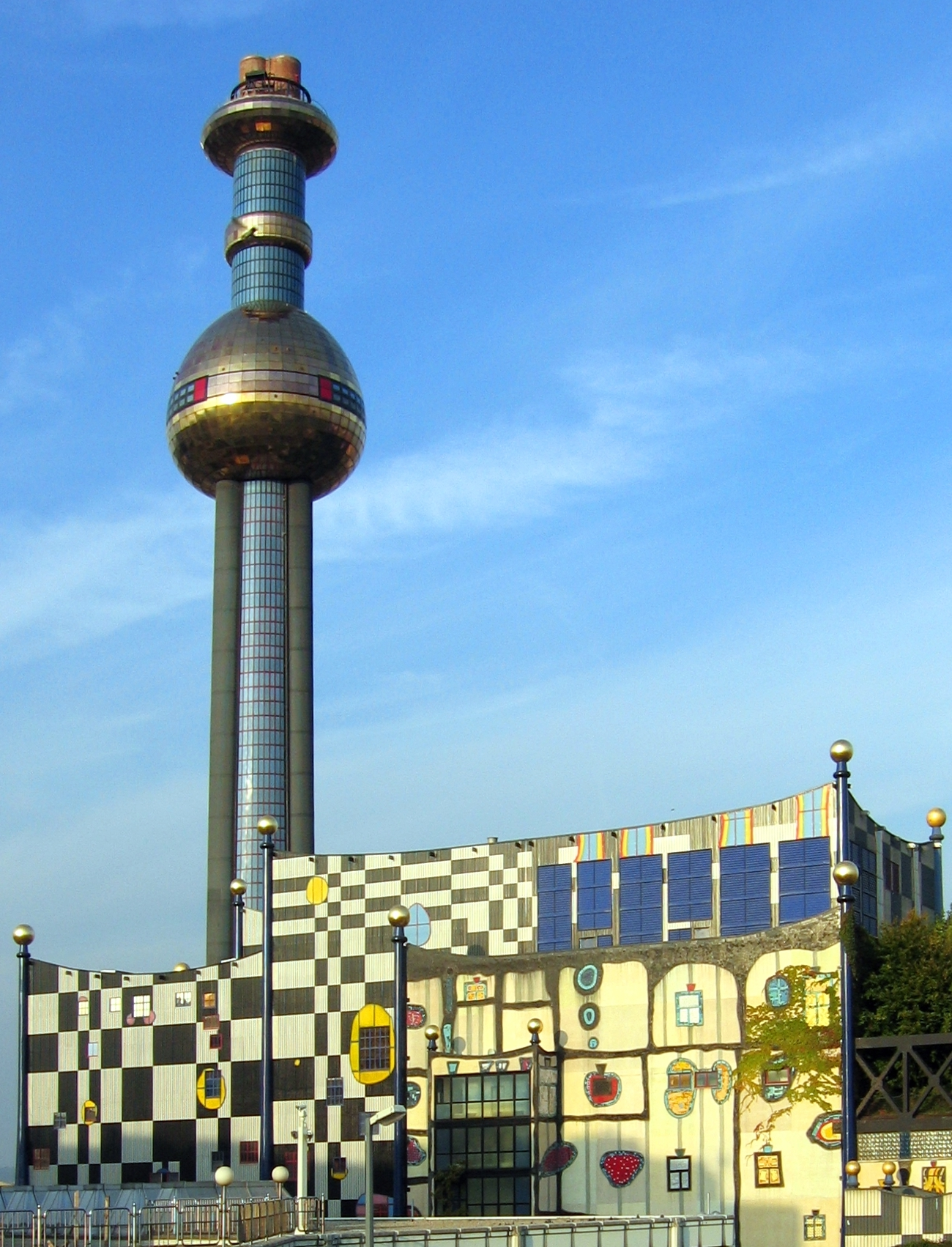
The largest district heating system in Austria is in Vienna (Fernwärme Wien) – with many smaller systems distributed over the whole country.
District heating in Vienna is run by Wien Energie. In the business year of 2004/2005 a total of 5,163 GWh was sold, 1,602 GWh to 251,224 private apartments and houses and 3,561 GWh to 5211 major customers. The three large municipal waste incinerators provide 22% of the total in producing 116 GWh electric power and 1,220 GWh heat. Waste heat from municipal power plants and large industrial plants account for 72% of the total. The remaining 6% is produced by peak heating boilers from fossil fuel. A biomass-fired power plant has produced heat since 2006.
In the rest of Austria the newer district heating plants are constructed as biomass plants or as CHP-biomass plants like the biomass district heating of Mödling or the biomass district heating of Baden.
Most of the older fossil-fired district heating systems have a district heating accumulator, so that it is possible to produce the thermal district heating power only at that time where the electric power price is high.
Belgium
[edit]Belgium has district heating in multiple cities. The largest system is in the Flemish city Ghent, the piping network of this power plant is 22 km long. The system dates back to 1958.[83]
Bulgaria
[edit]Bulgaria has district heating in around a dozen towns and cities. The largest system is in the capital Sofia, where there are four power plants (two CHPs and two boiler stations) providing heat to the majority of the city. The system dates back to 1949.[84]
Czech Republic
[edit]The largest district heating system in the Czech Republic is in Prague owned and operated by Pražská teplárenská, serving 265,000 households and selling c. 13 PJ of heat annually. Most of the heat is actually produced as waste heat in 30 km distant thermal power station in Mělník. There are many smaller central heating systems spread around the country[85] including waste heat usage, municipal solid waste incineration and heat plants [de].
Denmark
[edit]In Denmark district heating covers more than 64% of space heating and water heating.[86] In 2007, 80.5% of this heat was produced by combined heat and power plants. Heat recovered from waste incineration accounted for 20.4% of the total Danish district heat production.[87] In 2013, Denmark imported 158,000 ton waste for incineration.[88] Most major cities in Denmark have big district heating networks, including transmission networks operating with up to 125 °C and 25 bar pressure and distribution networks operating with up to 95 °C and between 6 and 10 bar pressure. The largest district heating system in Denmark is in the Copenhagen area operated by CTR I/S and VEKS I/S. In central Copenhagen, the CTR network serves 275,000 households (90–95% of the area's population) through a network of 54 km double district heating distribution pipes providing a peak capacity of 663 MW,[89] some of which is combined with district cooling.[90] The consumer price of heat from CTR is approximately €49 per MWh plus taxes (2009).[91] Several towns have central solar heating with various types of thermal energy storage.
The Danish island of Samsø has three straw-fueled plants producing district heating.[92]
Finland
[edit]In Finland district heating accounts for about 50% of the total heating market,[93] 80% of which is produced by combined heat and power plants. Over 90% of apartment blocks, more than half of all terraced houses, and the bulk of public buildings and business premises are connected to a district heating network. Natural gas is mostly used in the south-east gas pipeline network, imported coal is used in areas close to ports, and peat is used in northern areas where peat is a local resource. Renewables, such as wood chips and other paper industry combustible by-products, are also used, as is the energy recovered by the incineration of municipal solid waste. Industrial units which generate heat as an industrial by-product may sell otherwise waste heat to the network rather than release it into the environment. Excess heat and power from pulp mill recovery boilers is a significant source in mill towns. In some towns waste incineration can contribute as much as 8% of the district heating heat requirement. Availability is 99.98% and disruptions, when they do occur, usually reduce temperatures by only a few degrees.
In Helsinki, an underground datacenter next to the President's palace releases excess heat into neighboring homes,[94] producing enough heat to heat approximately 500 large houses.[95] A quarter of a million households around Espoo are scheduled to receive district heating from datacenters.[96]
Germany
[edit]In Germany district heating has a market share of around 14% in the residential buildings sector. The connected heat load is around 52,729 MW. The heat comes mainly from cogeneration plants (83%). Heat-only boilers supply 16% and 1% is surplus heat from industry. The cogeneration plants use natural gas (42%), coal (39%), lignite (12%) and waste/others (7%) as fuel.[97]
The largest district heating network is located in Berlin whereas the highest diffusion of district heating occurs in Flensburg with around 90% market share. In Munich about 70% of the electricity produced comes from district heating plants.[98]
District heating has rather little legal framework in Germany. There is no law on it as most elements of district heating are regulated in governmental or regional orders. There is no governmental support for district heating networks but a law to support cogeneration plants. As in the European Union the CHP Directive will come effective, this law probably needs some adjustment.
Greece
[edit]Greece has district heating mainly in the province of Western Macedonia, Central Macedonia and the Peloponnese Province. The largest system is the city of Ptolemaida, where there are five power plants (thermal power stations or TPS in particular) providing heat to the majority of the largest towns and cities of the area and some villages. The first small installation took place in Ptolemaida in 1960, offering heating to Proastio village of Eordaea using the TPS of Ptolemaida. Today District heating installations are also available in Kozani, Ptolemaida, Amyntaio, Philotas, Serres and Megalopolis using nearby power plants. In Serres the power plant is a Hi-Efficiency CHP Plant using natural gas, while coal is the primary fuel for all other district heating networks.
Hungary
[edit]According to the 2011 census there were 607,578 dwellings (15.5% of all) in Hungary with district heating, mostly panel flats in urban areas.[99] The largest district heating system located in Budapest, the municipality-owned Főtáv Zrt. ("Metropolitan Teleheating Company") provides heat and piped hot water for 238,000 households and 7,000 companies.[100]
Iceland
[edit]
93% of all housing in Iceland enjoy district heating services – 89.6% from geothermal energy, Iceland is the country with the highest penetration of district heating.[101] There are 117 local district heating systems supplying towns as well as rural areas with hot water – reaching almost all of the population. The average price is around US$0.027 per kWh of hot water.[102]
The Reykjavík Capital Area district heating system serves around 230,000 residents had a maximum thermal power output of 830 MW. In 2018, the average annual heating demand in the Reykjavik area was 473MW.[103] It is the largest district heating system in Iceland and is operated by Veitur. Heat is supplied from the Hellisheiði (200MWth) and Nesjavellir (300MWth) CHP plants, as well as a few lower temperature fields inside Reykjavik. Heating demand has increased steadily as the population has grown, necessitating enlargement of thermal water production in the Hellisheiði CHP plant.[104]
Iceland's second largest district heating system is on the Reykjanes peninsula, with the Svartsengi CHP plant providing heating to 21,000 homes including Keflavik and Grindavik, with a thermal power output of 150 MW.[105]
Ireland
[edit]The Dublin Waste-to-Energy Facility will provide district heating for up to 50,000 homes in Poolbeg and surrounding areas.[106] Some existing residential developments in the North Docklands have been constructed for conversion to district heating – currently using on-site gas boilers – and pipes are in place in the Liffey Service Tunnel to connect these to the incinerator or other waste heat sources in the area.[107]
Tralee, County Kerry has a 1 MW district heating system providing heat to an apartment complex, sheltered housing for the elderly, a library and over 100 individual houses. The system is fuelled by locally produced wood chip.[108]
In Glenstal Abbey, County Limerick there exists a pond-based 150 kW heating system for a school.[109]
A scheme to use waste heat from an Amazon Web Services datacentre in Tallaght is intended to heat 1200 units and municipal buildings[110]
Italy
[edit]
In Italy, district heating is used in some cities (Bergamo, Brescia, Cremona, Bolzano, Verona, Ferrara, Imola, Modena,[111] Reggio Emilia, Terlan, Turin, Parma, Lodi, and now Milan). The district heating of Turin is the biggest of the country and it supplies 550.000 people (62% of the whole city population).
Latvia
[edit]In Latvia, district heating is used in major cities such as Riga, Daugavpils, Liepāja, Jelgava. The first district heating system was constructed in Riga in 1952.[112] Each major city has a local company responsible for the generation, administration, and maintenance of the district heating system.
Netherlands
[edit]District heating is used in Rotterdam,[113][114] Amsterdam, Utrecht,[115] and Almere[116] with more expected as the government has mandated a transition away from natural gas for all homes in the country by 2050.[117] The town of Heerlen has developed a grid using water in disused coalmines as a source and storage for heat and cold. This is a good example of a 5th generation heating and cooling grid[21][22]
North Macedonia
[edit]District heating is only available in Skopje. Balkan Energy Group (BEG) operates three DH production plants, which cover majority of the network, and supply heat to around 60,000 households in Skopje, more than 80 buildings in the educational sector (schools and kindergartens) and more than 1,000 other consumers (mostly commercial).[118] The three BEG production plants use natural gas as a fuel source.[119] There is also one cogeneration plant TE-TO AD Skopje producing heat delivered to the Skopje district heating system. The share of cogeneration in DH production was 47% in 2017. The distribution and supply of district heating is carried out by companies owned by BEG.[118]
Norway
[edit]In Norway district heating only constitutes approximately 2% of energy needs for heating. This is a very low number compared to similar countries. One of the main reasons district heating has a low penetration in Norway is access to cheap hydro-based electricity, and 80% of private electricity consumption goes to heat rooms and water. However, there is district heating in the major cities.
Poland
[edit]
In 2009, 40% of Polish households used district heating, most of them in urban areas.[120] Heat is provided primarily by combined heat and power plants, most of which burn hard coal. The largest district heating system is in Warsaw, owned and operated by Veolia Warszawa, distributing approx. 34 PJ annually.
Romania
[edit]The largest district heating system in Romania is in Bucharest. Owned and operated by RADET, it distributes approximately 24 PJ annually, serving 570 000 households. This corresponds to 68% of Bucharest's total domestic heat requirements (RADET fulfills another 4% through single-building boiler systems, for a total of 72%).
Russia
[edit]
In most Russian cities, district-level combined heat and power plants (ТЭЦ, теплоэлектроцентраль) produce more than 50% of the nation's electricity and simultaneously provide hot water for neighbouring city blocks. They mostly use coal- and gas-powered steam turbines for cogeneration of heat. Now, combined cycle gas turbines designs are beginning to be widely used as well.
Serbia
[edit]In Serbia, district heating is used throughout the main cities, particularly in the capital, Belgrade. The first district heating plant was built in 1961 as a means to provide effective heating to the newly built suburbs of Novi Beograd. Since then, numerous plants have been built to heat the ever-growing city. They use natural gas as fuel, because it has less of an effect on the environment. The district heating system of Belgrade possesses 112 heat sources of 2,454 MW capacity, over 500 km of pipeline, and 4,365 connection stations, providing district heating to 240,000 apartments and 7,500 office/commercial buildings of total floor area exceeding 17,000,000 square meters.[citation needed]
Slovenia
[edit].jpg)
The first district heating network in Slovenia and Yugoslavia began to be implemented on November 29, 1959, from the newly built network fed from the Velenje Thermal Power Plant for the needs of the new city center of Velenje. In Slovenia, coverage with district heating systems is 22%, or only 47 out of 210 municipalities have district heating systems. The largest coverage with the district heating system and the lowest price is in Velenje, where all city facilities are connected, so there are no local or individual fireplaces. The prices of MWh of district heat in Slovenia in 2010 ranged between EUR 25 and EUR 93. The largest district heating systems in Slovenia are in Velenje - Šalek Valley and Ljubljana. The total Slovenian installed production and distribution thermal power of all heating systems amounts to 1.7 GW.
Slovakia
[edit]Slovakia's centralised heating system covers more than 54% of the overall demand for heat. In 2015 approximately 1.8 million citizens, 35% of the total population of Slovakia, were served by district heating.[121] The infrastructure was built mainly during the 1960s and 1980s. In recent years large investments were made to increase the share of renewable energy sources and energy efficiency in district heating systems.[122]
The heat production comes mostly from natural gas and biomass sources, and 54% of the heat in district heating is generated through cogeneration.[121] The distribution system consists of 2800 km of pipes. Warm and hot water are the most common heat carriers, but older high-pressure steam transport still accounts for around one-quarter of the primary distribution, which results in more losses in the system.[123]
In terms of the market structure, there were 338 heat suppliers licensed to produce and/or distribute heat in 2016, of which 87% were both producers and distributors. Most are small companies that operate in a single municipality, but some large companies such as Veolia are also present in the market. The state owns and operates large co-generation plants that produce district heat and electricity in six cities (Bratislava, Košice, Žilina, Trnava, Zvolen and Martin). Multiple companies can operate in one city, which is the case in larger cities. A large share of DH is produced by small natural gas heat boilers connected to blocks of buildings. In 2014, nearly 40% of the total DH generation was from natural gas boilers, other than co-generation.[124]
Sweden
[edit]Sweden has a long tradition for using district heating (fjärrvärme) in urban areas. In 2015, about 60% of Sweden's houses (private and commercial) were heated by district heating, according to the Swedish association of district heating.[125] The city of Växjö reduced its CO2 emissions from fossil fuels by 34% from 1993 to 2009.[126] This was to achieved largely by way of biomass fired district heating.[127] Another example is the plant of Enköping, combining the use of short rotation plantations both for fuel as well as for phytoremediation.[128]
In 2024, 46% of the heat generated in Swedish district heating systems was produced with renewable bioenergy sources, as well as 22% in waste-to-energy plants, 7% was provided by heat pumps, 11% by flue-gas condensation and 8% by industrial waste heat recovery. 3% was generated from grid electricity. The remaining was produced by fossil fuels (2%) and peat (0.3%)[129]
Because of the law banning traditional landfills,[130] waste is commonly used as a fuel.
United Kingdom
[edit]
In the United Kingdom, district heating became popular after World War II, but on a restricted scale, to heat the large residential estates that replaced dwellings destroyed by the Blitz. In 2013 there were 1,765 district heating schemes, with 920 based in London alone.[131] In total around 210,000 homes and 1,700 businesses are supplied by heat networks in the UK.[132]
The Pimlico District Heating Undertaking (PDHU) in London first became operational in 1950 and continues to expand to this day. The PDHU once relied on waste heat from the now-disused Battersea Power Station on the south side of the River Thames. It is still in operation; the water is now heated locally by a new energy centre which incorporates 3.1 MWe / 4.0 MWth of gas fired CHP engines and 3 × 8 MW gas-fired boilers.
One of the United Kingdom's largest district heating schemes is EnviroEnergy in Nottingham. The plant, initially built by Boots, is now used to heat 4,600 homes, and a wide variety of business premises, including the Concert Hall, the Nottingham Arena, the Victoria Baths, the Broadmarsh Shopping Centre, the Victoria Centre, and others. The heat source is a waste-to-energy incinerator.
Sheffield's district heating network was established in 1988 and is still expanding today. It saves an equivalent 21,000 plus tonnes of CO2 each year when compared to conventional sources of energy – electricity from the national grid and heat generated by individual boilers. There are currently over 140 buildings connected to the district heating network. These include city landmarks such as the Sheffield City Hall, the Lyceum Theatre, the University of Sheffield, Sheffield Hallam University, hospitals, shops, offices and leisure facilities plus 2,800 homes. More than 44 km of underground pipes deliver energy which is generated at Sheffield Energy Recovery Facility. This converts 225,000 tonnes of waste into energy, producing up to 60 MWe of thermal energy and up to 19 MWe of electrical energy.
The Southampton District Energy Scheme was originally built to use just geothermal energy, but now also uses the heat from a gas-fired CHP generator. It supplies heating and district cooling to many large premises in the city, including the Westquay shopping centre, the De Vere Grand Harbour hotel, the Royal South Hants Hospital, and several housing schemes. In the 1980s Southampton began to use combined heat and power district heating, taking advantage of geothermal heat "trapped" in the area. The geothermal heat provided by the well works in conjunction with the Combined Heat and Power scheme. Geothermal energy provides 15–20%, fuel oil 10%, and natural gas 70% of the total heat input for this scheme and the combined heat and power generators use conventional fuels to make electricity. "Waste heat" from this process is recovered for distribution through the 11 km mains network.[8][133]
Scotland has several district heating systems. The first in the UK was installed at Aviemore, and others followed at Lochgilphead, Fort William and Forfar. Lerwick District Heating Scheme in Shetland is of note because it is one of the few schemes where a completely new system was added to a previously existing small town.
ADE has an online map of district heating installations in the UK.[134] ADE estimates that 54 percent of energy used to produce electricity is being wasted via conventional power production, which relates to £9.5 billion ($US12.5 billion) per year.[135]
North America
[edit]In North America, district heating systems fall into two general categories. Those that are owned by and serve the buildings of a single entity are considered institutional systems. All others fall into the commercial category.
Canada
[edit]District Heating is becoming a growing industry in Canadian cities, with many new systems being built in the last ten years. Some of the major systems in Canada include:
- Calgary: ENMAX currently operates the Calgary Downtown District Energy Centre which provides heating to up to 10,000,000 square feet (930,000 m2) of new and existing residential and commercial buildings. The District Energy Centre began operations in March 2010 providing heat to its first customer, the City of Calgary Municipal building.[136]
- Edmonton: The community of Blatchford, which is currently being developed on the grounds of Edmonton's former City Centre Airport, is launching a District Energy Sharing System (DESS) in phases.[137] A geo-exchange field went online in 2019, and Blatchford's energy utility is in the planning and design phase for a sewage heat exchange system.[138][137]
- Hamilton, ON has a district heating and cooling system in the downtown core, operated by HCE Energy Inc.[139]
- Montreal has a district heating and cooling system in the downtown core.
- Toronto:
- Enwave provides district heating and cooling within the downtown core of Toronto, including deep lake cooling technology, which circulates cold water from Lake Ontario through heat exchangers to provide cooling for many buildings in the city.
- Creative Energy is constructing a combined-heat-and-power district energy system for the Mirvish Village development.
- Surrey: Surrey City Energy owned by the city, provides district heating to the city's City Centre district.[140]
- Vancouver:
- Creative Energy's Beatty Street facility has operated since 1968 and provides a central heating plant for the city's downtown core of Vancouver. In addition to heating 180 buildings, the Central Heat Distribution network also drives a steam clock. Work is currently underway to move the facility from natural gas to electric equipment.
- A large scale district heating system known as the Neighbourhood Energy Utility[141] in the South East False Creek area is in initial operations with natural gas boilers and serves the 2010 Olympic Village. The untreated sewage heat recovery system began operations in January 2010, supplying 70% of annual energy demands, with retrofit work underway to move the facility off its remaining natural gas use.
- Windsor, Ontario has a district heating and cooling system in the downtown core.
- Drake Landing Solar Community, AB, is small in size (52 homes) but notable for having the only central solar heating system in North America.
- London, Ontario and Charlottetown, PEI have district heating co-generation systems owned and operated by Veresen.[142]
- Sudbury, Ontario has a district heating cogeneration system in its downtown core, as well as a standalone cogeneration plant for the Sudbury Regional Hospital. In addition, Naneff Gardens, a new residential subdivision off Donnelly Drive in the city's Garson neighbourhood, features a geothermal district heating system using technology developed by a local company, Renewable Resource Recovery Corporation.[143]
- Ottawa, contains a significant district heating and cooling system serving the large number of federal government buildings in the city. The system loop contains nearly 4,000 m3 (1 million US gal) of chilled or heated water at any time.
- Cornwall, Ontario operates a district heating system which serves a number of city buildings and schools.
- Markham, Ontario: Markham District Energy operates several district heating sites:
- Warden Energy Centre (c. 2000), Clegg Energy Centre and Birchmount Energy Centre serving customers in the Markham Centre area
- Bur Oak Energy Centre (c. 2012) serving customers in the Cornell Centre area
Many Canadian universities operate central campus heating plants.
United States
[edit]As of 2013[update], approximately 2,500 district heating and cooling systems existed in the United States, in one form or another, with the majority providing heat.[144]
- Consolidated Edison of New York (Con Ed) operates the New York City steam system, the largest commercial district heating system in the United States.[145] The system has operated continuously since March 3, 1882, and serves Manhattan Island from the Battery through 96th Street.[146] In addition to providing space- and water-heating, steam from the system is used in numerous restaurants for food preparation, for process heat in laundries and dry cleaners, for steam sterilization, and to power absorption chillers for air conditioning. On July 18, 2007, one person was killed and numerous others injured when a steam pipe exploded on 41st Street at Lexington.[147] On August 19, 1989, three people were killed in an explosion in Gramercy Park.[148]
- Milwaukee, Wisconsin, has been using district heating for its central business district since the Valley Power Plant commenced operations in 1968.[149] The air quality in the immediate vicinity of the plant, has been measured with significantly reduced ozone levels. The 2012 conversion of the plant, which changed the fuel input from coal to natural gas, is expected to further improve air quality at both the local César Chavez sensor as well as Antarctic sensors[150] The Wisconsin power plants double as breeding grounds for peregrine falcons.[151]
- Denver's district steam system is the oldest continuously operated commercial district heating system in the world. It began service November 5, 1880, and continues to serve 135 customers.[152] The system is partially powered by the Xcel Energy Zuni Cogeneration Station, which was originally built in 1900.[153]
- NRG Energy operates district systems in the cities of San Francisco, Harrisburg, Minneapolis, Omaha, Pittsburgh, and San Diego.[154]
- Seattle Steam Company, a district system operated by Enwave, in Seattle. Enwave also operates district heat system in Chicago, Houston, Las Vegas, Los Angeles, New Orleans, and Portland along with additional Canadian cities.[155]
- Detroit Thermal operates a district system in Detroit that started operation at the Willis Avenue Station in 1903, originally operated by Detroit Edison.[156][157]
- Citizens Energy Group in Indianapolis, Indiana, operates the Perry K. Generating Station, a gas-fired power plant that produces and distributes steam to about 160 downtown Indianapolis customers.[158]
- Lansing Board of Water & Light, a municipal utility system in Lansing, Michigan operates a steam and chilled water system with the steam coming from the natural gas-fired REO Cogeneration Plant and the chilled water coming from the dedicated Roy E. Peffley Chilled Water Plant.[159][160]
- Cleveland Thermal operates a district steam (since 1894) from the Canal Road plant near The Flats and district cooling system (since 1993) from Hamilton Avenue plant on the bluffs east of downtown.
- Veresen operates district heating/co-generation plants in Ripon, California, and San Gabriel, California.[161]
- Veolia Energy, a successor of the 1887 Boston Heating Company,[162] operates a 26-mile (42 km) district system in Boston and Cambridge, Massachusetts, and operates systems in Philadelphia PA, Baltimore MD, Kansas City MO, Tulsa OK, Houston TX and other cities.
- District Energy St. Paul operates the largest hot water district heating system in North America and generates the majority of its energy from an adjacent biomass-fueled combined heat and power plant. In March 2011, a 1 MWh thermal solar array was integrated into the system, consisting of 144 20' x 8' solar panels installed on the roof of a customer building, RiverCentre.
- The California Department of General Services runs a central plant providing district heating to four million square feet in 23 state-owned buildings, including the State Capitol, using high-pressure steam boilers.[163]
- BPU of Jamestown NY operates a second generation water district heating system. It was put into operation in 1984, runs from the BPU electrical plant and provides heat to the business district at Fahrenheit.
Historically, district heating was primarily used in urban areas of the US, but by 1985, it was mainly used in institutions.[164] A handful of smaller municipalities in New England maintained municipal steam into the 21st century, in cities like Holyoke, Massachusetts and Concord, New Hampshire, however the former would end service in 2010 and the latter in 2017, attributing aging infrastructure and capital expenses to their closures.[165][166][167] In 2019, Concord replaced a number of remaining pipes with more efficient ones for a smaller steam system heating only the State House and State Library, mainly due to historic preservation reasons rather than a broader energy plan.[168]

District heating is also used on many college campuses, often in combination with district cooling and electricity generation. Colleges using district heating include the University of Texas at Austin; Rice University;[169] Brigham Young University;[170] Georgetown University;[171] Cornell University,[172] which also employs deep water source cooling using the waters of nearby Cayuga Lake;[173] Purdue University;[174] University of Massachusetts Amherst;[175] University of Maine at Farmington;[176] University of Notre Dame; Michigan State University; Eastern Michigan University;[177] Case Western Reserve University; Iowa State University; University of Delaware;[178] University of Maryland, College Park [citation needed], University of Wisconsin–Madison,[179] University of Georgia,[180] University of Cincinnati,[181] North Carolina State University,[182] University of North Carolina Chapel Hill, Duke University, and several campuses of the University of California.[183] MIT installed a cogeneration system in 1995 that provides electricity, heating and cooling to 80% of its campus buildings.[184] The University of New Hampshire has a cogeneration plant run on methane from an adjacent landfill, providing the university with 100% of its heat and power needs without burning oil or natural gas.[185] North Dakota State University (NDSU) in Fargo, North Dakota has used district heating for over a century from their coal-fired heating plant.[186]
Asia
[edit]Japan
[edit]87 district heating enterprises are operating in Japan, serving 148 districts.[187]
Many companies operate district cogeneration facilities that provide steam and/or hot water to many of the office buildings. Also, most operators in the Greater Tokyo serve district cooling.
China
[edit]In southern China (south of the Qinling–Huaihe Line), there are nearly no district heating systems. In northern China, district heating systems are common.[188][189] Most district heating systems are just for heating by burning hard coal instead of CHP. Since air pollution in China has become quite serious, many cities gradually are now using natural gas rather than coal in district heating system. There is also some amount of geothermal heating[190][191] and sea heat pump systems.[192]
In February 2019, China's State Power Investment Corporation (SPIC) signed a cooperation agreement with the Baishan municipal government in Jilin province for the Baishan Nuclear Energy Heating Demonstration Project, which would use a China National Nuclear Corporation DHR-400 (District Heating Reactor 400 MWt).[193][194] Building cost is 1.5 billion yuan ($230 million), taking three years to build.[195]
Turkey
[edit]Geothermal energy in Turkey provides some district heating,[196] and residential district heating and cooling requirements have been mapped.[197]
Market penetration
[edit] | This article needs to be updated. (December 2022) |
Penetration of district heating (DH) into the heat market varies by country. Penetration is influenced by different factors, including environmental conditions, availability of heat sources, economics, and economic and legal framework. The European Commission aims to develop sustainable practices through implementation of district heating and cooling technology.[198]
In the year 2000 the percentage of houses supplied by district heat in some European countries was as follows:
| Country | Penetration (2000)[199] |
|---|---|
| Iceland | 95% |
| Denmark | 68% (2024)[86] |
| Estonia | 52% |
| Poland | 52% |
| Sweden | 50% |
| Czech Rep. | 49% |
| Finland | 49% |
| Slovakia | 40% |
| Russia | 35%[200] |
| Germany | 22% (2014)[201] |
| Hungary | 16% |
| Austria | 12.5% |
| France | 7.7% (2017)[202] |
| Netherlands | 3% |
| UK | 2% |
In Iceland the prevailing positive influence on DH is availability of easily captured geothermal heat. In most Eastern European countries, energy planning included development of cogeneration and district heating. Negative influence in the Netherlands and UK can be attributed partially to milder climate, along with competition from natural gas.[citation needed] The tax on domestic gas prices in the UK is a third of that in France and a fifth of that in Germany.
See also
[edit]
- District cooling
- Central solar heating
- Geothermal heating
- List of public utilities
- CHP Directive
- New York City steam system
- Public utility
- Thermal energy storage
- Deep water source cooling
- Energy policy of the European Union
- Cost of electricity by source
- Cogeneration
- Alchevsk district heating disaster (2006)
Footnotes
[edit]- ^ "Carbon footprints of various sources of heat – CHPDH comes out lowest". Claverton Group. Retrieved 2011-09-25.
- ^ Haas, Arlene (April 12, 2018). "The Overlooked Benefits of District Energy Systems". Burnham Nationwide. Retrieved 2019-09-28.
- ^ "District Heating". Drawdown. 2017-02-07. Archived from the original on 2019-05-02. Retrieved 2019-09-28.
- ^ Mazhar, Abdul Rehman; et al. (2018). "a state of art review on district heating systems". Renewable and Sustainable Energy Reviews. 96: 420–439. Bibcode:2018RSERv..96..420M. doi:10.1016/j.rser.2018.08.005. S2CID 116827557.
- ^ "Powering Innovation | MIT 2016". mit2016.mit.edu. Retrieved 2023-02-26.
- ^ "Energy Efficiency | MIT Sustainability". sustainability.mit.edu. Retrieved 2023-02-26.
- ^ a b c d e f g h Lund, Henrik; et al. (2014). "4th Generation District Heating (4GDH): Integrating smart thermal grids into future sustainable energy systems". Energy. 68: 1–11. doi:10.1016/j.energy.2014.02.089.
- ^ a b "Energy from Beneath the Rocks". The Geology of Portsdown Hill. 18 December 2006. Archived from the original on 18 December 2006. Retrieved 30 July 2022.
- ^ V.L. Losev; M.V. Sigal; G.E. Soldatov (1989). "Nuclear district heating in CMEA countries" (PDF). IAEA Bulletin. 3. International Atomic Energy Agency: 46–49. Retrieved 15 August 2025.
- ^ Oliker, Ishai (1 February 2022). "District Heating Supply from Nuclear Power Plants". POWER. Retrieved 15 August 2025.
- ^ "China starts building long-distance nuclear heating pipeline". World Nuclear News. World Nuclear Association. 17 February 2023. Retrieved 15 August 2025.
- ^ Palata, Lubos (7 April 2021). "Nuclear heating: A low-cost, greener option?". Deutsche Welle. Retrieved 15 August 2025.
- ^ Zhang, Yifan; Li, Wenan; Yu, Qian (12 April 2023). "Development Prospect and Application of Nuclear District Heating in China". In Liu, Chengmin (ed.). Springer Proceedings in Physics, vol. 283. Proceedings of the 23rd Pacific Basin Nuclear Conference. Vol. 1. Beijing: China Nuclear Power Engineering Corporation. pp. 8–17. doi:10.1007/978-981-99-1023-6_2. ISBN 978-981-99-1022-9. Retrieved 15 August 2025.
- ^ Leppänen, Jaakko (10 January 2019). A Review of District Heating Reactor Technology. VTT Research Report No. VTT-R-06895-18 (Report). Espoo: VTT Technical Research Centre of Finland. Retrieved 15 August 2025.
- ^ Yang, Xiaochen; et al. (2016). "Energy, economy and exergy evaluations of the solutions for supplying domestic hot water from low-temperature district heating in Denmark" (PDF). Energy Conversion and Management. 122: 142–152. Bibcode:2016ECM...122..142Y. doi:10.1016/j.enconman.2016.05.057. S2CID 54185636.
- ^ David, Andrei; et al. (2018). "Heat Roadmap Europe: Large-Scale Electric Heat Pumps in District Heating Systems". Energies. 10 (4): 578. doi:10.3390/en10040578.
- ^ Sayegh, M. A.; et al. (2018). "Heat pump placement, connection and operational modes in European district heating". Energy and Buildings. 166: 122–144. Bibcode:2018EneBu.166..122S. doi:10.1016/j.enbuild.2018.02.006.
- ^ S.Buffa; et al. (2019). "5th generation district heating and cooling systems: A review of existing cases in Europe". Renewable and Sustainable Energy Reviews. 104: 504–522. Bibcode:2019RSERv.104..504B. doi:10.1016/j.rser.2018.12.059.
- ^ "Heat Sharing Network".
- ^ Pellegrini, Marco; Bianchini, Augusto (2018). "The Innovative Concept of Cold District Heating Networks: A Literature Review". Energies. 11: 236pp. doi:10.3390/en11010236. hdl:11585/624860.
- ^ a b Verhoeven, R.; et al. (2014). "Minewater 2.0 Project in Heerlen the Netherlands: Transformation of a Geothermal Mine Water Pilot Project into a Full Scale Hybrid Sustainable Energy Infrastructure for Heating and Cooling". IRES 2013 Conference, Strassbourg. Vol. 46. Energy Procedia, 46 (2014). pp. 58–67. doi:10.1016/j.egypro.2014.01.158.
- ^ a b "Heerlen case study and roadmap". Guide to District Heating. HeatNet_NWE EU project. 19 December 2019. Retrieved 13 August 2020.
- ^ "Balanced Energy Network".
- ^ "About the BEN Project". Archived from the original on 2019-02-18. Retrieved 2019-02-17.
- ^ Chiara Delmastro (November 2021). "District Heating – Analysis - IEA". Retrieved 2022-05-21.
- ^ "Newsroom: Steam". ConEdison. Retrieved 2007-07-20.
- ^ Bevelhymer, Carl (2003-11-10). "Steam". Gotham Gazette. Archived from the original on 2007-08-13. Retrieved 2007-07-20.
- ^ "What is cogeneration?". COGEN Europe. 2015.
- ^ a b "DOE – Fossil Energy: How Turbine Power Plants Work". Fossil.energy.gov. Archived from the original on August 12, 2011. Retrieved 2011-09-25.
- ^ "Waste-to-Energy CHP Amager Bakke Copenhagen". Archived from the original on 2016-01-10. Retrieved 2015-03-09.
- ^ Patel, Sonal (November 1, 2021). "How an AP1000 Plant Is Changing the Nuclear Power Paradigm Through District Heating, Desalination". Power Magazine. Retrieved November 20, 2021.
- ^ Safa, Henry (2012). "Heat recovery from nuclear power plants". International Journal of Electrical Power & Energy Systems. 42 (1): 553–559. Bibcode:2012IJEPE..42..553S. doi:10.1016/j.ijepes.2012.04.052.
- ^ Lipka, Maciej; Rajewski, Adam (2020). "Regress in nuclear district heating. The need for rethinking cogeneration". Progress in Nuclear Energy. 130 103518. Bibcode:2020PNuE..13003518L. doi:10.1016/j.pnucene.2020.103518. S2CID 225166290.
- ^ "District Heating Supply from Nuclear Power Plants". POWER Magazine. 1 February 2022.
- ^ "Северское краеведение". lib.seversk.ru. Retrieved 2025-08-14.
- ^ "Largest nuclear heating project warms China's first carbon-free city". www.districtenergy.org. 21 November 2022.
- ^ "Finnish firm launches SMR district heating project". World Nuclear News. February 24, 2020. Retrieved November 20, 2021.
- ^ "Christer Dahlgren". Titans of Nuclear. August 30, 2019. Retrieved November 20, 2021.
- ^ Proctor, Darrell (February 25, 2020). "Tech Guru's Plan—Fight Climate Change with Nuclear Power". Power Magazine. Retrieved November 20, 2021.
- ^ Bloomquist, R. Gordon (2001). Geothermal District Energy System Analysis, Design, and Development (PDF). International Summer School. International Geothermal Association. p. 213(1). Retrieved November 28, 2015.
During Roman times, warm water was circulated through open trenches to provide heating for buildings and baths in Pompeii.
- "Geothermal District Energy System Analysis, Design, and Development". Stanford University (Abstract).
- ^ "Geotermianlæg i drift". Energistyrelsen (in Danish). 2016-04-19. Retrieved 2024-05-02.
- ^ Madsen, Jacob Lund (2019-05-28). "Hovedstadsområdets fjernvarmeselskaber dropper udvikling af geotermi". Ingeniøren (in Danish).
- ^ "Det blev aldrig en succes: Nu nedlægger Sønderborg Varme geotermianlæg til 187 mio. kroner | jv.dk". jv.dk (in Danish). 2024-01-11.
- ^ "New rules pave the way for large-scale geothermal plant in Denmark". State of Green. Retrieved 2024-05-02.
- ^ Thorsteinsson, Hildigunnur. "U.S. Geothermal District Heating: Barriers and Enablers" (PDF). Archived from the original (PDF) on 9 August 2014. Retrieved 25 July 2014.
- ^ Lund, John. "The United States of America Country Update 2010" (PDF). Retrieved 25 July 2014.
- ^ Pauschinger, Thomas; Schmidt, Thomas (2013). "Solar unterstützte Kraft-Würme-Kopplung mit saisonalem Wärmespeicher". Euroheat & Power. 42 (5): 38–41. ISSN 0949-166X.
- ^ Schmidt T., Mangold D. (2013). Large-scale thermal energy storage – Status quo and perspectives Archived 2016-10-18 at the Wayback Machine. First international SDH Conference, Malmö, SE, 9–10th April 2013. Powerpoint.
- ^ Wittrup, Sanne (23 October 2015). "Fjernvarmeværker går fra naturgas til sol". Ingeniøren. Archived from the original on 10 January 2016. Retrieved 1 November 2015.
- ^ a b Wittrup, Sanne (14 June 2015). "Verdens største damvarmelager indviet i Vojens". Ingeniøren. Archived from the original on 2015-10-19. Retrieved 2015-11-01.
- ^ Holm L. (2012). Long Term Experiences with Solar District Heating in Denmark[permanent dead link]. European Sustainable Energy Week, Brussels. 18–22 June 2012. Powerpoint.
- ^ Current data on Danish solar heat plants Archived 2016-12-23 at the Wayback Machine (click Vojens in South-West Denmark, then "About the plant")
- ^ Dalenbäck, J-O (2012). Large-Scale Solar Heating: State of the Art[permanent dead link]. Presentation at European Sustainable Energy Week, 18–22 June 2012, Brussels, Belgium.
- ^ Wong B., Thornton J. (2013). Integrating Solar & Heat Pumps Archived 2016-06-10 at the Wayback Machine. Renewable Heat Workshop. (Powerpoint)
- ^ Natural Resources Canada, 2012. Canadian Solar Community Sets New World Record for Energy Efficiency and Innovation Archived 2013-04-30 at the Wayback Machine. 5 Oct. 2012.
- ^ Levihn, Fabian (2017). "CHP and heat pumps to balance renewable power production: Lessons from the district heating network in Stockholm". Energy. 137: 670–678. Bibcode:2017Ene...137..670L. doi:10.1016/j.energy.2017.01.118.
- ^ Bryant, Miranda (28 March 2025). "'The heat you need at a reasonable price': how district heating can speed the switch to clean energy". The Guardian. London, United Kingdom. ISSN 0261-3077. Retrieved 2025-03-29.
- ^ Pedersen, S. & Stene, J. (2006). 18 MW heat pump system in Norway utilises untreated sewage as heat source Archived 2016-03-04 at the Wayback Machine. IEA Heat Pump Centre Newsletter, 24:4, 37–38.
- ^ a b Hoffman, & Pearson, D. 2011. Ammonia heat pumps for district heating in Norway 7 – a case study Archived 2013-12-03 at the Wayback Machine. Presented at Institute of Refrigeration, 7 April, London.
- ^ "Combined Heat and Power and District Heating report. Joint Research Centre, Petten, under contract to European Commission, DG Energy 2013" (PDF). Archived from the original (PDF) on 2021-04-28. Retrieved 2013-12-02.
- ^ DYRELUND Anders, Ramboll, 2010. Heat Plan Denmark 2010
- ^ Lund, Henrik; et al. (2017). "Smart energy and smart energy systems". Energy. 137: 556–565. Bibcode:2017Ene...137..556L. doi:10.1016/j.energy.2017.05.123.
- ^ Christensen. Fatigue analysis of district heating systems. Netherlands Agency for Energy and the Environment 1999
- ^ EN 253:2019. District heating pipes. Bonded single pipe systems for directly buried hot water networks. Factory made pipe assembly of steel service pipe, polyurethane thermal insulation and a casing of polyethylene.
- ^ Commission Regulation (EU) 2020/1149 of 3 August 2020 amending Annex XVII to Regulation (EC) No 1907/2006 of the European Parliament and of the Council concerning the Registration, Evaluation, Authorisation and Restriction of Chemicals (REACH) as regards diisocyanates: (EU) 2020/1149. In: Official Journal of the European Union; 2020.
- ^ Doyle, Lucía (2022). A Circular Economy Approach to Multifunctional Sandwich Structures: Polymeric Foams for District Heating Pre-Insulated Pipes (Thesis). HafenCity Universität Hamburg. doi:10.34712/142.35. Retrieved 2023-01-23.
- ^ Doyle, Lucía; Weidlich, Ingo (2021). "Sustainable insulation for sustainable DHC". Energy Reports. 7. Elsevier BV: 150–157. Bibcode:2021EnRep...7..150D. doi:10.1016/j.egyr.2021.08.161. ISSN 2352-4847. S2CID 240180109.
- ^ Doyle, Lucía (2021). "Extrusion foaming behavior of polybutene-1. Toward single-material multifunctional sandwich structures". Journal of Applied Polymer Science. 139 (12) 51816. Wiley. doi:10.1002/app.51816. ISSN 0021-8995. S2CID 240464626.
- ^ "Norwegian Water Resources and Energy Directorate" (PDF). Archived from the original (PDF) on 2011-09-28. Retrieved 2011-09-25.
- ^ Oliver, Christian (October 22, 2014). "EU warms to the potential efficiencies of district heating". Financial Times. Retrieved 2018-09-07.
- ^ Kirill Eliseev (2011). District Heating Systems in Finland and Russia (PDF) (Thesis). Mikkeli University of Applied Sciences.
- ^ Warsaw, Beth Gardiner in (2015-04-13). "How Warsaw's district heating system keeps the capital cleaner than Kraków". The Guardian. Retrieved 2018-10-07.
- ^ Dunne, Eimear. "Infographic explaining District Heating Systems". Frontline Energy & Environmental. Archived from the original on 5 May 2014. Retrieved 5 May 2014.
- ^ Green heating system accused of causing 'fuel poverty' BBC
- ^ Dowling, Nicola; Goldberg, Adrian (30 April 2017). "Green scheme 'causing fuel poverty'". BBC News. Retrieved 18 March 2018.
- ^ Connolly, David; Mathiesen, Brian Vad; Østergaard, Poul Alberg; Möller, Bernd; Nielsen, Steffen; Lund, Henrik; Persson, Urban; Werner, Sven; Grözinger, Jan; Boermans, Thomas; Bosquet, Michelle; Trier, Daniel (27 May 2013). Heat Roadmap Europe 2: Second Pre-Study for the EU27. Department of Development and Planning, Aalborg University. ISBN 9788791404481. Retrieved 18 March 2018 – via vbn.aau.dk.
- ^ "Energy Efficiency Industrial Forum Position Paper: energy efficiency – a vital component of energy security" (PDF).[permanent dead link]
- ^ "COGEN Europe News". Archived from the original on 2009-01-01.
- ^ "COGEN Europe: Cogeneration in the European Union's Energy Supply Security" (PDF). 16 October 2017.[permanent dead link]
- ^ "DEFRA Action in the UK – Combined Heat and Power". Archived from the original on 2010-06-12.
- ^ "Register of Commission Documents" (PDF).
- ^ Steyr, Fernwärme. "Bioenergie Steyr". www.fernwaermesteyr.at. Archived from the original on 18 March 2018. Retrieved 18 March 2018.
- ^ "Stadsverwarming in Gent voorziet 110 Luminus-klanten via warmtenet". Lumiworld (in Dutch). 2016-11-03. Retrieved 2020-06-16.
- ^ "Основни етапи в развитието на Топлофикация София EАД". www.toplo.bg. Archived from the original on 19 January 2012. Retrieved 15 January 2022.
- ^ www.tscr.cz, Teplárenské sdružení České republiky -. "Teplárenské sdružení ČR – sdružuje teplárny a podnikatele v teplárenství a energetice". www.tscr.cz. Retrieved 18 March 2018.
- ^ a b Dansk Fjernvarme (12 July 2017). "Statistics about District Heating". www.danskfjernvarme.dk. Archived from the original on 9 October 2018. Retrieved 9 October 2018.
- ^ Danish Energy Statistics 2007 by the Danish Ministry of Energy (in Danish).
- ^ Klimaråd: Affaldsimport vil belaste dansk CO2-regnskab Archived 2015-11-28 at the Wayback Machine 27 November 2015.
- ^ Environmentally Friendly District Heating to Greater Copenhagen Archived November 29, 2007, at the Wayback Machine, publication by CTR I/S (2006)
- ^ "Gratis energi leverer både varme og køl i Tårnby". Energy Supply DK. 19 September 2019. Archived from the original on 14 December 2019.
- ^ Prisen på Fjernvarme Archived July 19, 2011, at the Wayback Machine, price list from the Danish homepage of a Copenhagen district heating provider Københavns Energi Archived June 11, 2004, at the Wayback Machine
- ^ "Network – DAC". dac.dk. Retrieved 18 March 2018.
- ^ District heating in Finland Archived July 22, 2011, at the Wayback Machine
- ^ "In Helsinki". Scientificamerican.com. Retrieved 2011-09-25.
- ^ "Underground data center to help heat Helsinki | Green Tech – CNET News". News.cnet.com. 2009-11-29. Retrieved 2011-09-25.
- ^ "Fortum and Microsoft announce world's largest collaboration to heat homes, services and businesses with sustainable waste heat from new data centre region". Fortum. 17 March 2022.
- ^ AGFW Branchenreport 2006 Archived September 27, 2007, at the Wayback Machine, by the German Heat and Power Association -AGFW- (in German).
- ^ "Combined heat and power". www.swm.de. Archived from the original on 19 March 2018. Retrieved 18 March 2018.
- ^ Hungarian census 2011 table 1.2.10 (Hungarian)
- ^ "Cégünkről". FŐTÁV – Budapesti Távhőszolgáltató Zrt. Retrieved 18 March 2018.
- ^ Iceland Energy Authority. "Energy Statistics in Iceland 2020" (PDF).
- ^ Iceland Energy Authority, Orkustofnun Data Repository OS-2021-T012-01 (2021). "Proportion of energy source in space heating based on heated space in Iceland 1952-2020" (PDF).
{{cite web}}: CS1 maint: numeric names: authors list (link) - ^ "Reykjavík district heating I Projects I www.verkis.com". www.verkis.com. Retrieved 2024-01-16.
- ^ Gretar Ívarsson (April 2019). "Hitaveita í Reykjavík – Vatnsvinnsla 2018" (PDF).
- ^ "History of District Heating in Iceland". Mannvit.com. Archived from the original on 2011-10-07. Retrieved 2011-09-25.
- ^ Sean Duke (August 9, 2016). "An 'under the hood' look at Dublin's First 'waste-to-energy' plant". Science Spinning. Archived from the original on April 25, 2017. Retrieved April 24, 2017.
- ^ "Dublin District Heating System | Dublin City Council". 28 June 2018.
- ^ "Covenant of Mayors, Sustainable Energy Action Plan, 2012 - 2020" (PDF). Comhairle Contae Chiarraí / Kerry County Council. 2013. Archived from the original (PDF) on 2014-05-06. Retrieved 2014-05-06.
- ^ "Geothermal Glenstal". Glenstal Abbey Benedictine Community. 2012. Archived from the original on 2012-07-17. Retrieved 2012-07-02.
- ^ "Dublin has sufficient waste heat to meet its needs, forum hears". The Irish Times.
- ^ Hera – Teleriscaldamento
- ^ "History of District Heating in Riga".
- ^ Harmsen, J.; Powell, Joseph B. (2011-11-30). Sustainable Development in the Process Industries: Cases and Impact. John Wiley & Sons. ISBN 9781118209806.
- ^ Hawkey, David; Webb, Janette; Lovell, Heather; McCrone, David; Tingey, Margaret; Winskel, Mark (2015-12-14). Sustainable Urban Energy Policy: Heat and the city. Routledge. ISBN 9781317577065.
- ^ Municipality of Utrecht (2021-12-23). "Utrecht Energy Policy". Archived from the original on 2020-09-18.
- ^ "Almere District Heating Network: Case Studies". Thermaflex. Retrieved 2019-10-14.
- ^ "Amsterdam stimuleert ontwikkeling duurzame warmtenetten" (in Dutch). 5 Oct 2018.
- ^ a b "District Energy in North Macedonia". Euroheat & Power. Archived from the original on 2021-10-01. Retrieved 2022-07-25.
- ^ "Energy and Water Services Regulatory Commission of the Republic of North Macedonia, Annual Report, 2018" (PDF). RISE, Regulatory Indicators for Sustainable Energy. 2019. p. 60. Retrieved 2022-07-30.
- ^ "Zużycie energii w gospodarstwach domowych w 2009 r." [Energy consumption in households in 2009] (PDF) (in Polish). Główny Urząd Statystyczny. 2012-05-28. Retrieved 2013-01-25.
- ^ a b "District Energy in Slovakia". May 2017.
- ^ "Energy Policies of IEA Countries. Slovak Republic 2018 Review" (PDF). International Energy Agency. 2019. p. 144. Retrieved 2022-07-30.
- ^ "Energy Policies of IEA Countries. Slovak Republic 2018 Review" (PDF). International Energy Agency. 2019. p. 138. Retrieved 2022-07-30.
- ^ "Energy Policies of IEA Countries. Slovak Republic 2018 Review" (PDF). International Energy Agency. 2019. p. 137. Retrieved 2022-07-30.
- ^ "Statistik och pris - Svenske Fjärrvärme". Energiföretagen. Archived from the original on 2012-04-18. Retrieved 2022-07-26.
- ^ "SESAC Site Växjö". Smart Cities Marketplace. Retrieved 2022-07-30.
- ^ "Växjö local energy". World Wildlife Fund. 2020. Retrieved 2022-07-30.
- ^ Mola-Yudego, B; Pelkonen, P. (2011). "Pulling effects of district heating plants on the adoption and spread of willow plantations for biomass: The power plant In Enköping (Sweden)". Biomass and Bioenergy. 35 (7): 2986–2992. Bibcode:2011BmBe...35.2986M. doi:10.1016/j.biombioe.2011.03.040.
- ^ "Miljövärdering av fjärrvärme - Energiföretagen Sverige". Energiföretagen (in Swedish). Archived from the original on 2025-06-30. Retrieved 2025-06-30.
- ^ J.Wawrzynczyk; M. Recktenwald; O. Norrlöw; E. Szwajcer Dey (March 2008). "The role of cation-binding agents and enzymes in solubilisation of sludge" (PDF). Water Research. 42 (6, 7): 1555–1562. doi:10.1016/j.watres.2007.11.004. PMID 18054984. Retrieved 16 April 2013.
- ^ "Summary evidence on District Heating Networks in the UK" (PDF). DECC.
- ^ "The Future of Heating: Meeting the Challenge" (PDF). DECC.
- ^ "Geothermie district heating scheme Southampton United Kingdom" (PDF). Archived from the original (PDF) on 2007-09-27. Retrieved 2007-01-19. 080304 energie-cites.org
- ^ "District Heating Installation Map". ADE.
- ^ Lambert, Kirsty (9 November 2017). "What a Waste! The Big Problem of Heat Loss in UK Cities". www.renewableenergyworld.com. Retrieved 12 November 2017.
- ^ "ENMAX District Energy Centre". ENMAX.com. Retrieved 2015-09-25.
- ^ a b "District Energy Sharing". Blatchford Renewable Energy Utility. City of Edmonton. Retrieved 2020-09-24.
- ^ Riebe, Natasha (November 1, 2019). "Blatchford renewable energy utility ready to go". CBC News. Retrieved September 24, 2020.
- ^ "HCE Energy Inc". hamiltonce.com. Retrieved 2015-12-18.
- ^ Reid, Amy (November 30, 2017). "An exclusive look at Surrey's expanding district energy system". Surrey Now-Leader. Retrieved January 28, 2018.
- ^ "Neighbourhood Energy Utility". Vancouver.ca. Retrieved 2011-09-25.
- ^ "District Energy". Veresen. Archived from the original on 2013-09-21. Retrieved 2013-09-20.
- ^ "New geothermal technology could cut energy costs". Northern Life, August 12, 2009.
- ^ "Why Is District Energy Not More Prevalent in the U.S.?". HPACEngineering. Informa. June 7, 2013. Archived from the original on March 26, 2018.
- ^ "Con Ed Steam". Energy.rochester.edu. Archived from the original on 2007-09-21. Retrieved 2011-09-25.
- ^ "A Brief History of Con Edison". Con Edison. Archived from the original on 2015-11-14. Retrieved 2014-05-04.
- ^ "Explosion rocks central New York". BBC News. July 19, 2007. Retrieved May 1, 2010.
- ^ Barron, James (July 19, 2007). "Steam Blast Jolts Midtown, Killing One". The New York Times. Retrieved May 1, 2010.
- ^ "Valley Power Plant conversion". we-energies.com. 2013. Archived from the original on 16 September 2013. Retrieved 22 May 2022.
- ^ Content, Thomas (2012-08-17). "We Energies converting Valley power plant". Jsonline.com. Retrieved 2022-05-04.
- ^ WEC Energy Group. "WEC Peregrine Falcons". We-energies.com. Retrieved 2022-05-04.
- ^ Jan Wagner; Stephen P. Kutska (October 2008). Monica Westerlund (ed.). "DENVER'S 128-YEAR-OLD STEAM SYSTEM: "THE BEST IS YET TO COME"". District Energy. 94 (4): 16–20. ISSN 1077-6222.
- ^ "Zuni Station". Xcel Energy. Archived from the original on 28 June 2010. Retrieved 20 July 2010.
Plant Description: ... The facility also supplies steam for delivery to Xcel Energy's thermal energy customers in downtown Denver. ... Plant History: Zuni Station was originally built in 1900 and called the LaCombe Plant.
- ^ "District energy | combined heat and power plants | NRG Thermal Corporation". Nrgthermal.com. Archived from the original on 2011-09-25. Retrieved 2011-09-25.
- ^ "Locations - Enwave Energy Corporation". Retrieved 2020-08-10.
- ^ Oberholtzer, Michele (2018-02-01). "What's the Source of the Steam Pouring Out of Detroit's Sidewalks?". Hour Detroit Magazine. Retrieved 2021-02-22.
- ^ Detroit Edison's District Heating System (1903) Beacon Street Plant (PDF). American Society of Mechanical Engineers.
- ^ "Citizens seeks rate reduction for downtown steam customers". Indianapolis Business Journal. IBJ Media. April 22, 2016. Retrieved August 13, 2022.
- ^ "Steam | lbwl.com". www.lbwl.com. Retrieved 2025-02-10.
- ^ "Chilled Water | lbwl.com". www.lbwl.com. Retrieved 2025-02-10.
- ^ "Fort Chicago's Power Business". Veresen, Fort Chicago Energy Partners. 2010. Archived from the original on August 11, 2010.
- ^ "Theodore Newton Vail and the Boston Heating Company, 1886–1890". Energy.rochester.edu. Archived from the original on 2009-07-18. Retrieved 2010-05-13.
- ^ "SACRAMENTO CENTRAL UTILITY PLANT – CASE STUDY" (PDF). Alerton.com. Retrieved 2013-10-25.
- ^ District Heating and Cooling in the United States: Prospects and Issues. National Research Council. 1985. doi:10.17226/263. ISBN 9780309035378.
- ^ Brooks, David (May 27, 2017). "Concord Steam: Last-of-its-kind power plant down to its final days". Concord Monitor. Concord, N.H. Archived from the original on September 28, 2019.
- ^ City of Holyoke Energy Reduction Action Plan (PDF) (Report). May 14, 2010. Archived from the original (PDF) on February 1, 2017.
- Rules and Regulations of the Holyoke Gas & Electric Department (PDF) (Report). August 8, 2008. pp. 22–27. Archived from the original (PDF) on October 28, 2019.
- Dobbs, G. Michael (January 19, 2010). "Holyoke applies for $75 million energy grant". The Reminder. Springfield.
- "New Steam Service to Start Monday". Springfield Republican. Springfield, Mass. November 13, 1937. p. 4.
- ^ Moore, David (2002). Holyoke Gas & Electric Department, 1902–2002, The First One Hundred Years (PDF) (Report). Holyoke Gas & Electric. Archived from the original (PDF) on 2019-01-09.
- ^ Brooks, David (April 3, 2019). "Replacing Concord Steam with new pipes continues to snarl downtown traffic". Concord Monitor. Concord, N.H. Archived from the original on April 4, 2019.
- ^ "Energy Consumption – Sustainability at Rice University". sustainability.rice.edu. Retrieved 18 March 2018.
- ^ "BYU Central Utilities Plant". apmonitor.com. Retrieved 18 March 2018.
- ^ "Energy and Climate". sustainability.georgetown.edu. Retrieved 18 March 2018.
- ^ "Combined Heat and Power Plant". energyandsustainability.fs.cornell.edu. Retrieved 18 March 2018.
- ^ "Cooling Home". Facilities and Campus Services. Cornell University. Retrieved 2022-07-26.
- ^ "Plant Operations, Physical Facilities Energy and Engineering Services". Purdue University. 2010. Archived from the original on 2013-12-25. Retrieved 2013-12-24.
- ^ "UMass Amherst Dedicates $133 Million Central Heating Plant, Showcasing Green Energy Achievements on Campus". News & Media Relations. University of Massachusetts Amherst. April 23, 2009. Archived from the original on October 28, 2019.
- ^ "UMaine Farmington Opens Biomass Heating Plant". Maine Public. 15 March 2016. Retrieved 16 December 2021.
- ^ "Eastern Michigan University: Physical Plant". www.emich.edu. Retrieved 18 March 2018.
- ^ "Central Plant Operations, Facilities, Real Estate & Auxilliar Services". University of Delaware. 2015. Archived from the original on 2015-09-06. Retrieved 2015-08-20.
- ^ "Heating & Cooling Plants – Physical Plant – UW–Madison". physicalplant.wisc.edu. Retrieved 18 March 2018.
- ^ "Energy". Sustainable UGA. University of Georgia. Retrieved 2021-01-25.
- ^ "Production, Utilities". University of Cincinnati. Retrieved 2021-04-01.
- ^ "Sustainability in Cates Utility Plant". Sustainability.
- ^ "University of California cogeneration plant gets its power back". Retrieved 2015-12-20.
- ^ "MIT students seek to harness waste heat – MIT News Office". Web.mit.edu. 2008-07-24. Retrieved 2011-09-25.
- ^ "Sustainability | University of New Hampshire". www.sustainableunh.unh.edu. Archived from the original on July 4, 2010.
- ^ "Heating Plant". www.ndsu.edu. Retrieved 18 March 2018.
- ^ "平成21年4月現在支部別熱供給事業者: The Japan Heat Service Utilities Associations 2009". Jdhc.or.jp. Archived from the original on 2011-10-07. Retrieved 2011-09-25.
- ^ Guan Jin, James. "District Energy in China". Euroheat&Power. Retrieved 21 February 2020.
- ^ Zhang, Jingjing; Di Lucia, Lorenzo (23 September 2015). "A transition perspective on alternatives to coal in Chinese district heating". International Journal of Sustainable Energy Planning and Management. 6. doi:10.5278/ijsepm.2015.6.5.

- ^ Tester, Jeff (17 July 2018). "U.S. lagging in geothermal energy as China and others pull ahead". Axios. Retrieved 21 February 2020.
- ^ Hallsson, Hallur (1 October 2019). "The Icelandic geothermal model is changing China". Icelandic Times. Retrieved 21 February 2020.
- ^ Chang Su; Hatef Madani; Hua Liu; Ruzhu Wang; Björn Palm (2020). "Seawater heat pumps in China, a spatial analysis". Energy Conversion and Management. 203 112240: 112440. Bibcode:2020ECM...20312240S. doi:10.1016/j.enconman.2019.112240. S2CID 209702976.
- ^ "China signs agreement for nuclear heating demonstration project". Nuclear Engineering International. 14 March 2019. Retrieved 18 March 2019.
- ^ "CNNC completes design of district heating reactor". World Nuclear News. 7 September 2018. Retrieved 18 March 2019.
- ^ Stanway, David (10 December 2017). "China looks to nuclear option to ease winter heating woes". Reuters. Archived from the original on December 10, 2017. Retrieved 18 March 2019.
- ^ "Interview with Ufuk Sentürk – Chairman of JESDER, Turkey". 2022-05-17. Retrieved 2022-08-01.
- ^ Sözen, Adnan; Menli̇k, Tayfun; Anvari̇-Moghaddam, Amjad (2020-09-01). "Mapping of Turkey's District Heating/Cooling Requirements". Politeknik Dergisi. 23 (3): 867–878. doi:10.2339/politeknik.699047. S2CID 216520458.
- ^ "District Heating And Cooling Market Size by Type, End-Use Industry 2021-2028". Adroitmarketresearch.com. Retrieved 2022-05-04.
- ^ Sabine Froning (Euroheat & Power): DHC/CHP/RES a smile for the environment, Kiev 2003 Archived February 25, 2009, at the Wayback Machine
- ^ Puzakov, Viatchislav; Polivanov, Vasilii (2013). "Country by Country Survey—Russia" (PDF). Danish Board of District Heating. Archived from the original (PDF) on 2021-03-07. Retrieved 2018-11-18.
- ^ "So heizt Deutschland heute". www.bmwi-energiewende.de. Retrieved 18 March 2018.
- ^ "District Energy in France – Euroheat & Power". euroheat.org. 1 May 2017. Retrieved 18 March 2018.

External links
[edit]
- UK's Information Portal on Decentralised and District Energy
- District Energy Library
- Technical description of district heating and district cooling at Munich Airport, Germany
- Geothermal District Heating, Iceland
- Future Challenges for CHP in the UK and Continental Europe, Feb 2010 by F.Starr
- Max Fordham argues against use of CHP District Heating
- Energy Hub – EU funded FP7 Project – District heating, cooling and power aiming for 100% on-site renewable energy at Leuven, Belgium
- Advantages and Disadvantages of CHP district heating compared to heating and cooling from Heat Sharing Networks.
- A Balanced Energy Network integrates heat pumps, demand side response and distributed heat storage in a district heat sharing network.
- Heat Interface Units
- The Celsius Toolbox – Information on district energy solutions and energy transition. Archived 2020-10-30 at the Wayback Machine
| International | |
|---|---|
| National | |
| Other | |

District heating
View on GrokipediaFundamentals
Definition and Operating Principles
District heating refers to the centralized production of thermal energy, which is then distributed via insulated pipelines to multiple end-users such as residential, commercial, and industrial buildings within a defined urban or local area.[1] This approach contrasts with decentralized individual heating systems by enabling economies of scale in heat generation and reducing the need for on-site boilers in each building.[1] The core operating principle involves generating hot water or steam at a central plant using various heat sources, including combined heat and power (CHP) units, boilers, or renewable inputs, with temperatures typically ranging from 70–120°C for modern low-temperature systems to higher for steam-based networks. The heated medium is circulated through a primary network of supply pipes to consumer substations, where plate heat exchangers transfer the thermal energy to secondary circuits for space heating, domestic hot water, or process needs without mixing the district fluid with building water.[1] Cooled return water or condensate is then conveyed back to the central plant via separate return pipes for reheating, forming a closed-loop system that minimizes heat losses through insulation and pumping optimization. Efficiency in operation stems from the ability to match heat production to aggregate demand profiles across the network, often leveraging waste heat recovery or cogeneration to achieve overall system efficiencies exceeding 90% in CHP-integrated setups, far surpassing isolated building boilers.[1] Pressure management, flow control via valves, and metering at substations ensure balanced distribution and billing based on actual consumption, while modern systems incorporate smart controls for dynamic temperature adjustments to further reduce transmission losses, which can account for 10–20% of generated heat in well-designed networks.[8]Key System Components
District heating systems comprise three primary components: a centralized heat production plant, an extensive distribution network, and consumer-end substations equipped with heat exchangers.[9][10] The heat production plant generates thermal energy, typically as hot water or steam, from sources such as combined heat and power (CHP) units or dedicated boilers.[11] This facility ensures a reliable supply of heat at temperatures ranging from 70°C to 130°C for water-based systems, depending on network design and seasonal demand.[1] The distribution network forms the backbone of the system, consisting of a insulated pipe infrastructure that transports heated fluid from the production plant to end-users and returns cooled fluid for reheating.[12] These pipes, often pre-insulated with materials like polyurethane foam encased in polyethylene jackets, minimize heat loss, which can be limited to under 1-2% per kilometer in modern installations.[13] Circulation pumps maintain flow rates and pressure differentials, typically operating in a closed-loop configuration to enhance efficiency and prevent contamination.[14] Networks may span tens of kilometers in urban areas, with larger diameters near the plant tapering to smaller branches.[15] At the building level, substations serve as interface units where primary network fluid transfers heat to secondary building circuits via plate heat exchangers, isolating the high-pressure distribution side from domestic systems.[16] These exchangers, often compact and counterflow designs, achieve high thermal efficiency by maximizing temperature differences, with control valves modulating flow based on demand signals from building thermostats.[17] Substations may include metering for billing based on heat consumption, measured in gigajoules, and safety features like pressure relief valves.[18] In steam-based systems, which are less common in newer installations due to higher losses, condensers replace exchangers to handle phase changes.[12]History
Origins and Early Implementations
The concept of centralized heating traces back to ancient civilizations, such as the Roman hypocaust systems that distributed heat via underfloor channels in public baths and buildings, though these were not piped networks serving multiple structures from a remote source.[19] Earlier modern proposals, including a 1623 scheme by Dutch inventor Cornelius Drebbel for steam-based heating in London, failed to materialize into operational systems.[19] The first successful commercial district heating system emerged in the United States in 1877, when mechanical engineer Birdsill Holly installed a steam distribution network in Lockport, New York.[20][3] Holly's design featured a central boiler generating low-pressure steam, conveyed through underground iron pipes to heat 13 buildings, including homes and businesses, thereby eliminating the need for individual on-site boilers.[20] This innovation stemmed from Holly's 1876 home experiment with steam heating and his prior work on hydraulic systems and fire engines.[20] Holly's Lockport system proved economically viable by reducing fuel costs and maintenance through economies of scale, prompting rapid adoption across U.S. cities in the late 19th century.[19] By 1890, over 50 district heating networks operated in American urban areas, primarily using coal-fired boilers to produce steam for residential, commercial, and institutional heating.[19] Notable early expansions included systems in New York City, Philadelphia, and Chicago, where steam mains extended for miles to serve dense populations, often integrated with emerging electric utilities for combined heat and power.[19] These first-generation setups relied on high-temperature steam (typically 100–150 psi) for efficient long-distance transmission but faced challenges like pipe corrosion and condensation losses, which early engineers addressed through insulated mains and drip traps.[20] In Europe, district heating implementations lagged behind the U.S., with initial tests in the late 19th century yielding limited success until the early 20th century.[3] The earliest documented European plant was a rudimentary waste-to-energy facility in Frederiksberg, Denmark, commissioned in 1903, which supplied hot water to nearby buildings using incinerated refuse as fuel.[21] Germany and the Soviet Union pioneered broader adoption around the 1920s–1930s, favoring steam systems in industrial cities to leverage excess heat from power plants, though wartime disruptions and material shortages constrained growth until post-World War II reconstruction.[22] These early European networks emphasized reliability in cold climates, influencing designs that prioritized coal and later municipal waste as feedstocks.[21]Technological Generations
The classification of district heating systems into technological generations provides a framework for understanding their evolution, emphasizing reductions in supply temperatures, improved efficiency, and integration with low-carbon energy sources. This categorization, formalized in research literature around 2014, delineates progression from early steam-based networks to modern low-temperature configurations, driven by advances in insulation, materials, and energy policy shifts toward decarbonization.[23] [24] First-generation systems, prevalent from the late 19th century to the early 20th century, relied on steam as the heat carrier, with supply temperatures reaching 150–200°C. These networks, exemplified in early urban implementations like those in the United States and Europe, facilitated heat distribution over longer distances but suffered from substantial heat losses due to poor insulation and the need for robust piping to handle high pressures and condensation. Steam systems enabled initial scalability in dense urban areas but were energy-intensive and required frequent maintenance to manage water accumulation and corrosion.[24] [25] Second-generation district heating, emerging in the mid-20th century and dominant until the 1970s or 1980s, transitioned to pressurized hot water above 100°C, typically 100–150°C supply temperatures. This shift allowed for smaller pipe diameters and reduced infrastructure costs compared to steam, while better insulation materials minimized losses during transport. Systems of this era often paired with fossil fuel combustion for heat production, supporting widespread adoption in post-war reconstruction efforts in Europe, though high temperatures limited compatibility with emerging renewable sources.[23] [24] Third-generation networks, developed from the late 20th century onward, operate at supply temperatures of 70–100°C, eliminating the need for superheated water and leveraging advanced prefabricated, insulated pipes to cut distribution losses to 10–20%. These systems improved economic viability and energy efficiency, with examples widespread in Scandinavian countries by the 1980s, where they integrated combined heat and power (CHP) plants using coal or gas. The lower temperatures enhanced safety and reduced pumping energy, but reliance on high-exergy fuels persisted, constraining further efficiency gains.[25] [23] Fourth-generation district heating, conceptualized for 21st-century deployment, features low supply temperatures of 70°C or below, enabling seamless integration of renewables like heat pumps, solar thermal, and industrial waste heat, alongside smart grid controls for demand-side flexibility. These systems prioritize exergy matching to minimize conversion losses, with pilot implementations demonstrating up to 50% reductions in primary energy use compared to prior generations. Challenges include retrofitting existing buildings for low-temperature compatibility and ensuring hygienic hot water supply via booster heaters or UV disinfection. The framework, while useful, underscores that generational advancement depends on multi-criteria assessments including lifecycle costs and emissions, rather than temperature alone.[24] [23] [25]Post-2020 Developments and Policy Shifts
The Russian invasion of Ukraine in February 2022 disrupted natural gas supplies to Europe, prompting policy shifts toward reducing reliance on imported fossil fuels in district heating systems, which traditionally depend heavily on gas-fired combined heat and power plants. In response, the European Union accelerated decarbonization efforts through the Revised Renewable Energy Directive (RED III), adopted in 2023, which mandates higher shares of renewables in heating and cooling, including district heating networks, with targets for member states to achieve at least 49% renewable energy in final heating consumption by 2030. This built on post-2020 national long-term strategies under the Governance Regulation, where 20 EU member states identified district heating as key to sector decarbonization, emphasizing electrification and waste heat recovery over continued fossil fuel use. Technological advancements post-2020 have focused on fourth-generation district heating (4GDH) systems, characterized by lower supply temperatures (below 70°C) to enable integration of low-grade renewables like large-scale heat pumps and ambient waste heat, improving efficiency and reducing grid losses by up to 20% compared to third-generation systems. Innovations include hybrid setups combining solar thermal collectors with seasonal thermal energy storage, as demonstrated in projects like the Danish Silkeborg initiative, which by 2023 achieved over 50% renewable coverage in district heating through such means.[1] Policy incentives, such as the EU's EUR 401 million grant to Czech Republic's green district heating scheme in April 2023, have supported these transitions, prioritizing biomass-to-renewable fuel switches and geothermal integration to phase out coal and gas.[1] In Ukraine, the war inflicted approximately USD 2.1 billion in damages to district heating infrastructure by mid-2024, destroying or impairing over 40% of energy facilities and exacerbating pre-existing inefficiencies in Soviet-era systems reliant on natural gas imports. Reconstruction policies, aided by international initiatives like the EU's ReWarm program launched in 2023, emphasize resilient, decentralized networks with heat pumps and efficiency upgrades, aiming for a two-thirds reduction in building heating energy use by 2050 through modular designs less vulnerable to centralized disruptions.[26] Globally, the International Energy Agency reported in 2023 a surge in district heating investments, with systems in Nordic countries advancing toward fifth-generation ultra-low temperature networks to leverage excess renewable electricity, though challenges persist in retrofitting high-temperature legacy pipes without full replacement.[1]Heat Production
Conventional Sources: Fossil Fuels and Combustion
District heating systems utilizing conventional sources employ large-scale combustion of fossil fuels—primarily coal, natural gas, and fuel oil—in centralized boiler plants or combined heat and power (CHP) facilities to produce hot water (typically 80–120°C) or low-pressure steam for distribution.[1] Coal-fired plants, common in regions with abundant reserves like China and parts of Eastern Europe, involve pulverized coal combustion in grate or fluidized bed boilers, enabling high-capacity output suitable for baseload heating demands.[1] Natural gas, favored for its lower emissions per unit of energy and rapid startup capabilities, is burned in water-tube boilers or gas turbines within CHP setups, while fuel oil serves as a backup or transitional fuel in oil-rich areas.[27] These combustion processes release heat via exothermic reactions, with exhaust gases managed through stack emissions controls such as selective catalytic reduction for NOx and scrubbers for SOx, achieving pollutant reductions unattainable in decentralized residential boilers.[1] CHP integration enhances system efficiency by capturing waste heat from electricity generation, yielding total energy utilization rates of 80–90% versus 30–40% for separate heat-only boilers or power plants.[11] For instance, natural gas-fired reciprocating engines or combustion turbines in CHP configurations burn fuel to drive generators while routing exhaust heat to district heating networks, minimizing fuel waste and supporting grid stability through dispatchable output.[27] Coal CHP plants, such as those in China's extensive district heating infrastructure, similarly cogenerate heat and power, though their higher carbon intensity—emitting approximately 0.9–1.0 kg CO2 per kWh thermal—contrasts with natural gas's 0.2–0.4 kg CO2 per kWh.[1] Globally, these systems provided reliable, high-density energy for urban heating, underpinning the scalability of district networks in dense populations where individual fossil fuel appliances would strain local air quality and supply chains.[1] In 2022, fossil fuels dominated district heat production at nearly 90% worldwide, with coal accounting for over 48% (heavily concentrated in China), natural gas around 30% (prevalent in Europe and the US), and oil a smaller share as a peaking or residual fuel.[1] In the European Union, fossil sources comprised about 65% of district heating inputs as of 2023, including 32% natural gas and 26% coal or lignite, despite policy-driven transitions toward alternatives.[28] These shares reflect fossil fuels' advantages in energy density (e.g., coal's 24–32 MJ/kg versus biomass's variability) and established infrastructure, though combustion contributes roughly 4% of global CO2 emissions from district heating alone, with China's coal reliance amplifying the total.[1] Operational challenges include fuel price volatility—exacerbated by events like the 2022 Russia-Ukraine conflict spiking European gas costs—and the need for carbon capture retrofits to align with emission targets, yet centralized combustion facilitates superior monitoring and abatement compared to distributed systems.[1]Renewable and Waste Heat Sources
Renewable energy sources, including geothermal, biomass, and solar thermal, contribute significantly to district heating in regions with supportive policies and infrastructure, though globally they account for only about 5% of district heat supplies as of 2023, with shares exceeding 50% in leading countries like Denmark.[1][29] In the European Union, renewable sources generated 33.5% of heat production in 2022, driven by biomass and geothermal integration.[30] These sources enable decarbonization by leveraging low-marginal-cost heat, but their deployment depends on site-specific resource availability, upfront capital for extraction or collection infrastructure, and network temperatures compatible with lower-grade heat inputs. Geothermal energy provides baseload heat directly from subsurface reservoirs or aquifers, with Europe operating over 240 geothermal district heating plants totaling more than 4.3 GWth capacity and annual production of approximately 12,900 GWh as of recent assessments.[31] In Denmark, the city of Aarhus commissioned a 110 MW geothermal system in 2023 utilizing 70°C water to supply heat to 36,000 households, contributing to a national goal of full decarbonization of district heating by 2030.[32] Hungary's Szeged project, Europe's largest geothermal district heating renovation completed in phases through 2023, reduced pollution by 60% and increased local energy supply to 50% by integrating deep wells with existing networks.[33] Such systems require geological suitability and drilling costs averaging 5-10 million euros per well, but offer high capacity factors above 80% due to stable subsurface temperatures.[34] Biomass, primarily wood chips, pellets, and agricultural residues, dominates renewable heat in Scandinavian district heating, powering combined heat and power plants with conversion efficiencies up to 90%.[35] In Denmark, biomass and biogenic waste supplied over 60% of district heat in 2022, enabling a shift where fossil fuels comprised only 13% of production by 2023.[36] Sweden similarly relies on biomass for a substantial portion of its extensive networks, though transitioning from coal and gas remnants poses logistical challenges in fuel sourcing and emissions permitting.[37] Facilities like Denmark's planned biomass conversions at Studstrup and Avedøre stations, targeting completion by 2025, demonstrate scalability, with one plant supplying two-thirds of heat to multiple municipalities via waste-to-energy co-firing.[38][39] Biomass integration demands sustainable sourcing to avoid deforestation risks, as verified by EU sustainability criteria mandating at least 70% greenhouse gas savings over fossils.[40] Solar thermal systems capture heat via large collector fields, feeding seasonal storage pits or tanks to match district heating demands, with global capacity growth led by China accounting for 75% of 2021 installations.[1] Denmark pioneered utility-scale solar district heating, where fields of flat-plate or evacuated-tube collectors supply up to 20-50% of annual heat in hybrid setups, as in Marstal's combined solar-biomass plant operational since 2010 expansions.[41] These installations achieve collector efficiencies of 50-70% at temperatures below 100°C, suitable for low-temperature networks, but require land areas of 1-2 m² per kWth and pit storage volumes up to 100,000 m³ for multi-month buffering.[42][43] Waste heat recovery captures excess thermal energy from industrial processes, data centers, and incinerators, upgrading it via heat pumps or direct injection to offset primary fuel use in district networks. In Nordic countries, data center waste heat—often at 40-60°C—has been integrated into district heating, with case studies showing potential to cover 10-20% of urban heat demands through proximity piping.[44][45] Industrial examples, such as steel or chemical plants, recover flue gas or cooling water heat, with modeling indicating up to 30% system-wide efficiency gains when temporally matched to peak heating loads.[46][47] Economic viability hinges on low-temperature networks below 70°C and incentives like variable pricing schemes, as demonstrated in European pilots where waste heat reduced operational costs by 15-25% compared to boiler alternatives.[48] Challenges include intermittent availability and transmission losses over distances exceeding 5 km without insulation upgrades.[49]Advanced and Nuclear Sources
Nuclear power plants supply district heating by extracting heat from the secondary circuit, typically producing hot water at temperatures suitable for distribution networks, often replacing fossil fuel boilers in urban or remote areas.[50] This cogeneration approach leverages low-grade waste heat that would otherwise be rejected, with minimal impact on electrical output in cold climates where demand aligns seasonally.[51] Operational examples include Russia's Kola Nuclear Power Plant, which provides heating to the Murmansk region amid temperatures ranging from -15°C to 17°C, supporting residential and industrial needs since the plant's commissioning in 1973.[52] Early implementations demonstrated feasibility, such as Sweden's Ågesta reactor, a 10 MW(e) boiling water unit that supplied hot water for district heating to Stockholm's Farsta suburb from 1963 until its shutdown in 1974 due to policy shifts favoring oil imports.[53] Similar systems in Eastern Europe and the Soviet Union during the mid-20th century integrated nuclear heat into centralized networks, though many faced challenges from economic transitions post-1990. In contemporary applications, China's Qinshan Phase III plant initiated waste heat extraction for district heating in early 2023, marking the country's first such integration to reduce coal dependency in coastal cities.[1] Advanced nuclear technologies, particularly small modular reactors (SMRs), address scalability and siting constraints for district heating by enabling factory-built units closer to load centers, with thermal capacities from 50 MW upward tailored for urban networks.[54] Finland's Technical Research Centre (VTT) has developed the LDR-50 SMR since 2020, a 50 MW thermal light-water design operating at low pressure for direct heating applications, shown in feasibility studies to be profitable for Helsinki's metropolitan area by displacing fossil fuels with emissions lower than alternatives like large heat pumps even on low-carbon grids.[55][56] Companies such as Steady Energy are advancing compact SMR variants using high-assay low-enriched uranium (HALEU) for efficient, zero-emission heating plants, emphasizing modularity to match district demands without grid-scale electrical generation.[57] These systems prioritize safety through passive cooling and reduced core sizes, with lifecycle emissions analyses confirming nuclear heat as the lowest-carbon option for baseload district supply in high-density settings.[58][56]Heat Storage and Management
Thermal Accumulators
Thermal accumulators in district heating systems store excess heat produced during off-peak periods or from intermittent sources, releasing it during high demand to balance supply and consumption fluctuations. This decoupling allows for optimized operation of heat production facilities, such as combined heat and power plants or renewable installations, by enabling continuous base-load generation regardless of real-time demand.[59][60] Primarily relying on sensible heat storage, these systems use water as the medium due to its high specific heat capacity, typically operating at temperatures between 80–120°C for hot water accumulators.[61] Common configurations include tank thermal energy storage (TTES), consisting of insulated steel or concrete vessels, and pit thermal energy storage (PTES), which are large excavated pits lined with impermeable membranes and filled with water, often covered with floating insulation to minimize losses. PTES offers lower capital costs per unit volume for capacities exceeding 10,000 m³, making it suitable for seasonal storage in solar district heating applications, with examples demonstrating round-trip efficiencies above 80%.[62] In Denmark's Dronninglund system, a 60,000 m³ PTES integrates with solar collectors to provide over 50% of annual heat demand, showcasing effective large-scale implementation.[62] Similarly, the 70,000 m³ PTES in Høje-Taastrup, operational since 2023, stores up to 500 MWh equivalent, generating annual economic value of 6–7 million DKK through optimized production scheduling.[63] Smaller-scale accumulators, such as phase-change material (PCM) units installed at consumer substations, address short-term mismatches by stabilizing return temperatures and reducing pump energy, with studies showing reductions in temperature differentials from 7.15 K to 2.29 K.[64] Overall, integrating thermal accumulators enhances system flexibility, facilitates renewable energy incorporation via power-to-heat, and can achieve CO₂ emissions reductions up to 83% alongside heating cost savings of 41.7% in modeled scenarios.[65][66] In Germany, a 43,000 m³ PTES supports district heating by storing surplus heat, equivalent to daily needs for thousands of households.[67]Integration with Grid Flexibility
Thermal accumulators in district heating systems facilitate integration with electricity grid flexibility by functioning as large-scale thermal batteries, storing heat generated during periods of surplus renewable electricity production. Power-to-heat (P2H) technologies, such as electric boilers and heat pumps, convert excess power from variable sources like wind and solar into heat, which is stored in hot water tanks for later distribution. This mechanism absorbs grid oversupply, mitigates curtailment of renewables, and provides demand-side flexibility without the high costs of electrochemical batteries.[68][69] In Denmark, where district heating serves a substantial portion of heating needs, thermal storage enables rapid response to grid signals. Electric boilers can ramp up or down within seconds, offering ancillary services like frequency regulation and balancing. For instance, in the DK-West region, transmission system operators utilize over 200 MW of short-term flexibility from electric boilers, while a 12 MW unit in Ringkøbing demonstrates regulation capabilities at 98-100% efficiency. Large storage tanks allow heat production to align with low electricity prices, such as during high solar output in spring, effectively turning district heating into a "virtual battery" for the grid.[68][70][71] This integration reduces overall system balancing costs and supports higher renewable penetration. In 2024, Denmark's balancing services market participants grew sevenfold from the previous year, with district heating contributing as a key flexible consumer, helping Energinet manage grid stability amid increasing variability. Thermal storage proves more cost-effective than direct electricity storage for long-duration applications, enhancing the economic case for sector coupling in energy transitions.[70][69]Distribution and Delivery
Network Design and Infrastructure
District heating networks consist of a primary distribution system that transports hot water from centralized production plants to consumer substations via insulated pipelines, typically buried underground to minimize heat loss and protect against environmental factors.[1][72] The pipelines are engineered to maintain supply temperatures between 70–120°C and return temperatures around 40–60°C, with design pressures up to 10–25 bar to overcome hydraulic resistance over distances that can span several kilometers.[73] These networks often incorporate booster pumping stations at intervals to sustain flow and pressure, particularly in larger systems exceeding 5 km in length.[74] The core infrastructure comprises pre-insulated bonded pipes, featuring a metallic service pipe—commonly steel for high-temperature applications—encased in rigid polyurethane (PUR) foam insulation and protected by an outer high-density polyethylene (HDPE) jacket.[75][76] This construction achieves thermal conductivity values as low as 0.025–0.03 W/m·K, enabling annual heat losses below 5–10% depending on burial depth and soil conditions.[77] European standards such as EN 15632 specify requirements for flexible factory-made systems, including bonding material performance and test methods for leakage and thermal performance under burial simulations.[78] For lower-temperature networks (below 70°C), polymeric alternatives like cross-linked polyethylene (PEX) or polybutene-1 (PB-1) service pipes may be used, offering corrosion resistance and flexibility for easier installation.[79][80] Network topology is designed either as tree-like (radial) or looped (ring) configurations to balance cost, reliability, and hydraulic efficiency. Tree topologies, resembling branched arterial systems, minimize pipe length and initial capital costs but are vulnerable to single-point failures, potentially isolating downstream consumers during disruptions.[81] Looped designs, by contrast, provide redundant pathways, enabling flow from multiple directions to maintain supply during pipe breaks or maintenance, though they require 20–50% more piping and advanced control systems for pressure regulation.[82] Modern optimizations often employ mixed topologies with primary looped rings feeding secondary tree branches, incorporating control valves, flow meters, and SCADA systems for real-time monitoring and delta-T optimization to enhance overall efficiency.[83][74] At consumer ends, the primary network connects to building-specific heat exchangers in substations, preventing mixing of district and building fluids while allowing individualized metering and control. Infrastructure expansion considers soil thermal properties, urban density, and future load growth, with modular pre-fabricated sections facilitating scalable deployment; for instance, Denmark's networks utilize standardized twin-pipe assemblies for twin supply-return configurations, reducing installation time by up to 30%.[77][75]Metering, Billing, and Consumer Interfaces
Metering in district heating systems typically employs heat meters that quantify thermal energy delivered to consumers by measuring the product of fluid flow rate, specific heat capacity, and temperature differential across the supply and return lines.[84][85] These devices surpass volumetric metering by accounting for variations in water temperature and flow efficiency, enabling precise allocation of heat energy rather than mere water volume, which reduces disputes over supply quality and promotes equitable consumption tracking.[84] Common technologies include ultrasonic flow meters, such as those compliant with standards like MID (Measuring Instruments Directive) in Europe, paired with PT1000 temperature sensors for bidirectional heating and cooling measurement.[86][87] Smart metering variants integrate M-Bus or remote reading protocols to transmit data wirelessly, facilitating real-time monitoring and system optimization in multi-unit buildings.[88][89] Billing practices derive primarily from metered thermal energy consumption, often structured as a two-part tariff comprising a fixed capacity charge—reflecting peak demand or assigned maximum load via methods like consumption-hour estimation—and a variable energy charge scaled to actual usage in gigajoules or kilowatt-hours.[90][91] This approach incentivizes load management, as excess peak usage can elevate fixed costs, while energy tariffs may incorporate time-of-use pricing to align with network efficiency during off-peak periods.[90] In ultra-low temperature district heating, billing may simplify to flat consumption tariffs without separate capacity fees if network stability reduces peak sensitivity, though traditional systems retain differentiated charges to recover infrastructure costs.[91] Automated billing software processes meter data to generate unified invoices covering heat, hot water, and sometimes maintenance, ensuring compliance with regulations like those mandating accurate submetering in shared buildings.[92] Consumer interfaces primarily consist of heat interface units (HIUs), compact assemblies installed at the building entry that hydraulically separate the district network from internal systems via plate heat exchangers, preventing contamination and enabling independent control of domestic hot water and space heating circuits.[93][94] These units often incorporate thermostatic valves, flow controllers, and strainers to regulate supply temperatures—typically 70–90°C from the network—down to user-set levels around 40–55°C for radiators or underfloor systems, with integrated metering for sub-apartment allocation in multi-tenant setups.[93] Advanced interfaces support smart functionality, such as app-based or automated controllers that adjust setpoints in response to dynamic pricing signals or occupancy data, potentially reducing peak loads by 10–20% through demand-side management.[95] Direct consumer access via digital dashboards or in-unit displays provides visibility into usage patterns, fostering behavioral adjustments that enhance overall system efficiency without relying on individual boilers.[96][97]Scale and Deployment Contexts
System Sizing and Density Requirements
District heating systems are sized based on the aggregate peak and annual heat demands of connected buildings, with generation capacity typically scaled to match maximum winter loads while ensuring operational flexibility for seasonal variations. Local systems often range from 40 to 60 MW thermal output to serve neighborhoods or small districts, corresponding to annual heat deliveries of 12.8 to 216 GWh depending on climate and building stock.[98][99] Peak sizing accounts for diversity factors, where not all consumers demand heat simultaneously, reducing required capacity by 20-50% compared to summed individual peaks; engineering standards recommend oversizing by 10-20% for growth and redundancy.[100] Economic viability hinges on heat density thresholds to offset high upfront pipe installation costs, which constitute 50-70% of total capital expenditure. Linear heat density (LHD), measured as annual heat demand per meter of distribution pipe (MWh/m/year), is the primary criterion; networks below 1.8-2 MWh/m/year face prohibitive losses and low utilization, rendering them uneconomical without subsidies.[101][102] Areal heat density, expressed in TJ/km²/year, further guides site selection, with feasibility generally requiring over 150 TJ/km² to prioritize high-demand urban cores over sparse areas.[103]| Density Metric | Minimum Threshold for Viability | Context |
|---|---|---|
| Linear Heat Density (LHD) | >1.8-2 MWh/m/year | Standard networks; lower values increase relative heat losses to 15-20% of supply.[101][102] |
| Areal Heat Density | >150 TJ/km²/year | Urban expansion criteria; equates to dense multifamily housing.[103] |
Suitability for Urban, Suburban, and Rural Areas
District heating exhibits varying degrees of suitability across urban, suburban, and rural settings, primarily determined by heat demand density, which influences distribution efficiency, capital costs, and heat losses. Systems require annual heat densities typically exceeding 20-30 GWh/km² for economic viability, as lower thresholds result in disproportionate infrastructure expenses relative to served demand.[100][107] High linear heat density—heat flow per unit pipe length—further enhances feasibility by minimizing transmission losses, which average 10-20% in well-insulated networks but escalate with extended piping.[100] Urban areas, characterized by population densities often above 5,000 inhabitants/km² and compact building clusters, offer optimal conditions for district heating deployment. Continuous heat demands from residential, commercial, and industrial users enable scale economies, with examples including city centers where systems achieve payback through cogeneration and waste heat recovery.[108] In such environments, network expansions support over 90% coverage in select European cities, leveraging existing infrastructure to offset upfront pipe installation costs estimated at €500-1,000 per meter.[108][102] Suburban contexts, featuring moderate densities and dispersed developments, yield intermediate suitability, contingent on proximity to urban cores or clustered suburbs. Viability improves with heat densities above 10-15 GWh/km², as in peri-urban extensions where supra-regional networks can reduce average costs by 16% annually through shared production assets.[109] However, sprawling layouts necessitate longer pipelines, amplifying losses and requiring subsidies or incentives to compete with individual gas or electric heating, particularly in mild climates where full-load hours drop below 2,000 annually.[110] Rural areas, with low densities often below 20 GWh/km², render district heating largely uneconomical due to extensive piping demands and sparse user bases, favoring decentralized alternatives like biomass boilers or heat pumps.[107] Challenges include high per-connection costs and vulnerability to low utilization, though niche applications arise near abundant local resources such as geothermal or agricultural waste, as seen in select Eastern European or Chinese rural pilots where state support mitigates upfront barriers.[111][112] Overall, rural deployment remains limited, comprising under 5% of systems in low-density nations like the UK.[107]Technical Advantages
Efficiency from Cogeneration and Scale
District heating systems derive substantial efficiency gains from combined heat and power (CHP), also known as cogeneration, where a single facility produces both electricity and thermal energy from the same fuel input, capturing otherwise wasted heat for distribution via the network. Conventional power generation converts roughly 30-40% of fuel into electricity, dissipating the rest as low-grade heat, while separate boilers achieve 80-90% thermal efficiency but demand distinct fuel combustion. By contrast, CHP integration in district heating yields overall system efficiencies of 70-90%, as the thermal output directly supplies the heating demand, minimizing transmission losses from on-site generation.[113] These efficiencies stem from the thermodynamic reality that CHP exploits the inherent coupling of heat and power production, avoiding the entropy losses of separate processes; the U.S. Department of Energy reports CHP systems typically operate at 65-75% efficiency, surpassing the approximately 50% national average for decoupled heat and electricity services.[114] In district energy applications, the International District Energy Association indicates CHP plants routinely attain 70-85% or higher fuel utilization by channeling thermal byproducts into networks, enabling consistent high-load operation that standalone systems cannot replicate.[115] Scale amplifies these benefits through centralized infrastructure serving extensive urban areas, where economies arise from aggregating diverse building loads to sustain base-load CHP at optimal capacity factors above 70%, reducing per-unit fuel consumption and variable costs.[113] Large networks facilitate deployment of advanced, high-efficiency turbines and heat recovery equipment infeasible at individual-building scales, with district systems smoothing peak demands to avoid efficiency drops from frequent ramping.[115] Over 600 such U.S. district energy installations, as of 2023, demonstrate this scalability, where a single modern plant outperforms dispersed units by leveraging volume for lower marginal losses and better resource matching.[113]Potential for Resource Recovery
District heating systems facilitate the recovery of thermal energy from diverse waste streams, integrating low- and medium-grade heat that would otherwise dissipate unused, thereby enhancing overall energy efficiency and minimizing reliance on fossil fuels. Primary sources include wastewater, data centers, industrial processes, supermarkets, and municipal solid waste incineration, where heat exchangers or heat pumps upgrade and inject recovered energy into the network.[49][116] Globally, urban waste heat recovery potential reaches approximately 1.41 exajoules annually, with wastewater accounting for 44%, service sector buildings 21%, data centers 19%, and other sources like transport and facilities comprising the remainder.[117] Wastewater heat recovery leverages the consistent thermal content in sewage—typically 10–20°C above ambient—via heat exchangers at treatment plants or sewers, often boosted by large-scale heat pumps for district integration. In Stockholm, Sweden, the Hammarbyverket facility, the world's largest wastewater heat pump plant, utilizes seven heat pumps to extract heat from purified effluent, contributing significantly to the city's district heating supply alongside an "open district heating" model that enables third-party waste heat feed-in with an estimated local potential of 1 TWh per year.[118][119] This approach has demonstrated recovery rates where district operators capture substantial portions of available sewage heat, though building-level extractions can reduce downstream plant yields by 5–9%.[120] Data centers represent a rapidly expanding source, generating steady waste heat from cooling systems at temperatures of 15–60°C, suitable for direct network injection or upgrading. In Finland, Fortum's district heating system recovers waste heat from a Microsoft data center, supplying 40% of its capacity in what is described as the world's largest such integration, while projects in Dublin (Amazon) and Berlin (NTT DATA) channel data center exhaust to heat thousands of homes, reducing the centers' electricity demands for cooling by up to 30%.[121][122][123] Data center heat recovery potential has grown with sector expansion, exceeding 250% in electricity use over five years, enabling emissions reductions when paired with low-carbon electricity.[122] Industrial and commercial waste heat, from processes like food refrigeration or manufacturing exhaust, offers further integration opportunities, particularly in dense urban networks where proximity minimizes transmission losses. In Denmark, waste-to-energy incineration supplies 20% of district heating across over 400 networks, processing non-recyclable municipal solid waste to generate heat and power; Copenhagen's Amager Bakke plant alone handles 560,000 tons annually, providing district heat to local buildings.[124][125] Across Europe, such facilities contribute about 10% to district heating, diverting waste from landfills while recovering energy equivalent to millions of households' needs, though full climate benefits depend on avoiding fossil fuel displacement and managing biogenic emissions.[126][127] Overall, resource recovery in district heating can achieve waste heat utilization factors up to 44% in advanced low-temperature networks, with economic viability enhanced by heat pumps and policy incentives, though realization hinges on source-network proximity, temperature matching, and infrastructure investments.[46][128]Technical Disadvantages and Challenges
Heat Losses and Transmission Inefficiencies
Heat losses in district heating systems occur predominantly during transmission through underground pipelines, where heat dissipates via conduction from the hot water or steam to the pipe insulation, followed by transfer to surrounding soil through convection and, to a lesser extent, radiation. These losses are inevitable due to the temperature gradient between the transport medium—typically 70–120°C supply temperatures—and ambient ground conditions, which can reach 5–15°C depending on location and season. Empirical measurements indicate that conduction through insulation accounts for the majority of losses, with overall network distribution efficiencies often falling to 80–90%, meaning 10–20% of generated heat is lost before delivery to consumers.[129][130][131] Quantifiable loss rates vary by system parameters but are commonly expressed as a percentage of total heat supplied or per kilometer of pipeline. In Nordic systems like those in Sweden, annual network losses averaged 12% of produced heat as of 2010–2017 analyses, with similar figures reported across European networks where insulation standards are high. For longer transmission lines, losses can remain low in well-insulated setups; a 150 km pipeline study showed under 2% total power loss due to advanced polyurethane foam insulation and minimized joints. However, in less optimized urban grids with older pipes, losses can exceed 20%, particularly in summer when lower demand leads to higher relative dissipation from standing water volumes. Per-kilometer rates depend on pipe diameter and insulation thickness, often ranging from 5–15 kW/km for typical mains, escalating with larger diameters due to increased surface area for heat transfer.[132][130][133] Key factors influencing transmission losses include supply temperature, pipe insulation quality, network length, burial depth, and soil thermal conductivity. Higher supply temperatures amplify losses quadratically with the temperature difference (ΔT), as heat flux follows Fourier's law; reducing from 70°C to 50°C can cut losses by up to 35% by shrinking ΔT and enabling thinner insulation. Poor or degraded insulation—common in aging networks—increases conduction rates, while longer distances compound cumulative dissipation, making sparse suburban or rural extensions inefficient without boosters. Burial depth affects ground temperature exposure, with shallower pipes (<1 m) losing more to surface fluctuations, and moist soils enhancing convective transfer. Pipe diameter inversely correlates with loss per unit heat transported for fixed flows but raises absolute losses via greater exposed area, necessitating trade-offs in network design.[134][130][77] Transmission inefficiencies extend beyond raw heat loss to exergy degradation, where high-quality heat at the plant diminishes in usability over distance; a 12 km network can incur up to 16% exergy loss due to irreversible mixing with lower-grade environmental heat. Unlike decentralized systems generating heat on-site, district heating's centralized model inherently incurs these transport penalties, offsetting cogeneration gains and raising effective fuel needs by 10–15% in extended grids. Mitigation via low-temperature networks or real-time flow optimization reduces but does not eliminate these issues, as fundamental thermodynamics limits perfect insulation and zero-ΔT operation.[131][133]Infrastructure Vulnerabilities and Maintenance Demands
District heating networks are susceptible to physical failures primarily from pipe corrosion and aging, with faulty pipes accounting for 56% of failures in systems like that in Heilongjiang, China, over a one-year period.[135] In Warsaw's district heating network, analysis of failures over ten years revealed patterns driven by material degradation and installation quality, necessitating statistical modeling for probability assessments.[136] For 40-year-old piping under normal operating conditions, failure probability reaches 0.126 per kilometer per year, highlighting the escalating risks in legacy systems.[137] Environmental and external threats exacerbate these vulnerabilities; earthquakes pose significant risks to urban district heating networks, potentially disrupting heat supply through pipe ruptures and requiring resilience frameworks for post-event recovery.[138] In conflict zones, such as Ukraine in 2022, Soviet-era district heating infrastructure became a target, with attacks severing centralized supply lines and leaving cities without heat during winter, underscoring the single-point failure risks of extensive piped networks.[139] Cybersecurity issues further compound physical weaknesses, as demonstrated by a 2024 cyberattack exploiting Modbus protocol vulnerabilities in a heating utility, which falsified temperature data and halted heating and hot water for 48 hours using FrostyGoop malware. Maintenance demands are intensive due to the vast underground infrastructure, often spanning hundreds of kilometers, requiring regular inspections, leak detection, and replacements to mitigate corrosion and thermal fatigue.[140] In the United Kingdom, a 2021 case involved repairing heavily corroded pipes in a district heating system to prevent breaches, employing composite wraps to restore integrity without full excavation, illustrating the operational disruptions and costs of addressing degradation in urban settings.[141] Predictive analytics and machine learning models, trained on datasets like 2293 failure cases from urban pipelines, enable prioritization of high-risk segments, but implementation demands ongoing data collection and investment in monitoring technologies.[142] Inadequate maintenance has led to reliability issues, including prolonged outages and customer complaints of freezing conditions, as reported in poorly managed UK networks where slow repairs amplify service disruptions.[143] Overall, these systems necessitate robust asset management strategies, including redundancy in critical paths and bi-level optimization for heat supply reliability, to counter inherent fragility from centralized distribution.[144]Economic Aspects
Capital and Operational Costs
District heating systems entail high capital expenditures, primarily due to the construction of centralized heat production facilities and extensive insulated underground piping networks. Capital costs for the distribution network often constitute 61-75% of total investment, with pipe expenses scaling nonlinearly with diameter and length; for instance, in a reference case of a 1 km pipeline supplying 1 MW of heat, capital amortization contributes 1.24 euro cents per kWh delivered.[145] Per-household network costs vary by urban density and development type, ranging from €1,400 in greenfield inner-city areas to €2,650 in pre-built park areas for systems serving approximately 3,000 buildings.[146] Heat production plant costs further depend on technology: centralized gas boilers range from €0.06-0.12 million per MW, while biomass or geothermal options escalate to €0.3-1.9 million per MW.[146] Oversizing pipes or extending lengths beyond optimal parameters can increase total capital costs by 9-32%, underscoring the importance of linear heat density for economic viability.[145] Operational costs include fuel procurement, electricity for pumping, and maintenance, but centralized scale enables efficiencies not achievable in individual systems. In a baseline scenario with 2,000 full-load hours annually, pumping electricity accounts for 0.30 euro cents per kWh, comprising 13% of distribution costs excluding fuel, while total distribution operations add up to 2.16 euro cents per kWh when including capital recovery.[145] Plant O&M typically equals 1.8-5% of investment annually, with consumer-side maintenance at around €150 per year.[146] Lifetime operation and maintenance for district heating prove 6-10 times lower than for dispersed individual boilers or heat pumps, owing to fewer units requiring service and bulk efficiencies in large-scale equipment.[4] Levelized costs reflect these dynamics, with district heating often delivering heat at 0.036-0.163 €/kWh depending on source and location, competitive against decentralized gas boilers (0.115-0.180 €/kWh) or heat pumps (0.161-0.249 €/kWh) in dense settings.[146] Annual system costs for district heating are approximately 19% below those of individual natural gas boilers and 30-31% below water-source heat pumps or biomass units, driven by lower upfront investments per effective capacity in networked applications (e.g., €6,175 total vs. €6,440-16,243 for alternatives).[147] However, viability hinges on high utilization; doubling full-load hours via improved density or temperature differentials (e.g., 45 K vs. 30 K) can reduce overall costs by 15-50%.[145] In low-density or suboptimal designs, elevated capital burdens may yield higher levelized costs than efficient individual fossil fuel options.[146]Subsidies, Incentives, and Fiscal Realities
District heating systems frequently depend on government subsidies and incentives to offset high capital expenditures for infrastructure development, which can exceed hundreds of millions of euros per project in dense urban areas. In the European Union, the EU Taxonomy regulates investments by classifying sustainable district heating activities, influencing funding flows but potentially deterring private capital if criteria tighten, as evidenced by analyses showing reduced investor interest in non-compliant assets. For instance, the Netherlands estimated a €140 million subsidy requirement from 2028 to 2037 for price guarantees on new district heating networks to ensure affordability amid volatile energy prices. Similarly, in April 2023, the EU allocated €401 million to support green district heating initiatives in the Czech Republic, targeting decarbonization through waste heat recovery and renewables. These measures highlight how fiscal support bridges the funding gap, calculated by excluding mandatory environmental compliance costs from state aid eligibility. Nordic countries exemplify heavy reliance on targeted incentives, where policy frameworks have driven over 60% heat market penetration in Denmark and Sweden through grants, tax exemptions, and low-interest loans. Denmark's government launched a subsidy pool via the Danish Energy Agency to facilitate district heating expansions, complemented by DKK 250 million (approximately €33.5 million) in 2022 for green heating transitions away from natural gas, including conversions from oil or gas boilers with grants covering up to 50% of costs. The Danish Municipal Bank (KommuneKredit) provides long-term, low-interest financing for network construction, effectively subsidizing municipal operators and enabling biomass integration via tax exemptions on fuels. Sweden employs similar non-prioritized tariffs and interruptible supply incentives to encourage flexible demand, though less quantified in public fiscal outlays. These incentives, rooted in energy security and efficiency mandates since the 1970s oil crises, have lowered operational costs but required sustained public funding, with biomass district heating grants tied to political agreements promoting renewables over fossils. Fiscal realities underscore vulnerabilities: while subsidies enhance viability in high-density settings by leveraging scale economies, economic assessments reveal that many expansions remain unprofitable without ongoing support, with levelized costs competitive only under optimistic heat demand assumptions exceeding 2,000 full-load hours annually. High upfront infrastructure costs—often €1,000–€2,000 per meter for pipes in European benchmarks—amplify fiscal exposure, as seen in World Bank analyses of Europe and Central Asia where implicit subsidies for inefficient heating systems impose annual welfare costs equivalent to 7% of GDP, straining budgets during price shocks. Public-private models mitigate some burdens, yet policy incoherence, such as abrupt fossil subsidy phase-outs amid the 2022 energy crisis (which saw EU-wide fossil fuel supports surge), risks stranded assets in legacy coal or gas-based networks. Critics argue these distortions favor district heating over alternatives like heat pumps in marginal cases, potentially inflating taxpayer liabilities without proportional emissions reductions if renewables underperform. Empirical data from techno-economic studies confirm that subsidy dependence correlates with lower private investment, necessitating rigorous cost-benefit appraisals to avoid overbuild in low-density suburbs where individual systems prove cheaper long-term.Ownership Models and Monopoly Risks
District heating systems are typically structured under ownership models that reflect local regulatory, economic, and infrastructural contexts, including municipal utilities, private enterprises, public-private partnerships, and community cooperatives. Municipal ownership predominates in many European countries, where local governments operate systems as public utilities to prioritize heat supply reliability and affordability over profit maximization.[148] Private ownership is more common in competitive markets or where initial capital from investors funds large-scale deployments, often involving concessions or long-term leases for network operation.[149] Public-private partnerships blend these approaches, with governments providing regulatory oversight or subsidies while private entities handle construction and maintenance, as seen in various North American and Asian implementations.[150] Community-owned models, including consumer cooperatives, emphasize democratic control and reinvestment of surpluses into system expansion, particularly in smaller or rural networks.[151] The distribution of district heating via extensive underground pipe networks constitutes a natural monopoly, as duplicating infrastructure for competitors is economically unfeasible due to high fixed costs and geographical coverage requirements.[148] This structure creates barriers to entry, locking consumers into a single supplier and eliminating market competition, which can lead to inefficiencies or exploitation absent effective oversight.[152] Empirical analyses in Sweden indicate that privately owned networks charge prices 10-20% higher—approximately 9-15 €/MWh more—than municipally owned ones, attributing the differential to profit motives rather than operational differences.[153] [148] In Denmark, consumer- or municipality-owned systems have demonstrated greater scalability and lower consumer costs compared to private operators, which sometimes evade price caps to inflate tariffs.[151] [154] To mitigate monopoly risks, regulatory frameworks often impose price controls, connection mandates, or performance standards, as in the UK's Energy Act 2023, which enables monitoring of heat network operators for fair pricing and reliability.[155] Public or cooperative ownership reduces these risks by aligning incentives with consumer interests, fostering long-term investments in efficiency and renewables without short-term profit pressures; studies confirm such models yield more stable and lower tariffs over time.[151] [153] However, private models can introduce innovation and capital efficiency if paired with strict regulation, though evidence from Germany's Monopolies Commission highlights ongoing challenges in preventing cost pass-throughs to consumers amid decarbonization mandates.[156] Inadequate regulation exacerbates vulnerabilities, such as forced connections without alternatives, underscoring the causal link between ownership structure and market power dynamics.[157]Comparative Analysis
Versus Individual Heating Systems
District heating systems centralize heat production and distribution, contrasting with individual heating systems such as gas boilers, electric furnaces, or heat pumps installed per building or unit. This centralization enables economies of scale in generation, often through combined heat and power (CHP) plants that achieve overall efficiencies of 80-90% by utilizing waste heat from electricity production, compared to 30-50% for standalone gas boilers or 300-400% for individual air-source heat pumps (measured as coefficient of performance).[1][158] Individual systems avoid distribution losses—typically 5-15% in district networks—but lack the integrated cogeneration benefits, leading to higher primary energy use in fossil-fuel-dependent setups.[147] Operationally, district heating demonstrates lower annual costs in dense urban settings, estimated at 19% below individual natural gas boilers and 30-31% below individual water-source heat pumps, due to bulk procurement of fuels and centralized maintenance reducing per-unit labor. In the UK, district heating unit rates typically range around 15-20p per kWh, higher than mains gas at approximately 6p per kWh, due to passed-on wholesale costs and operational fees, which has prompted consumer complaints about affordability relative to individual gas heating.[159][160] However, upfront capital for district infrastructure, including pipes and substations, can exceed individual installations by factors of 2-5 times per equivalent heat capacity, though total lifecycle costs often favor district systems in multi-unit buildings where individual setups duplicate equipment.[146][161] In low-density areas like single-family homes, individual systems prove more cost-effective due to minimal distribution needs and flexibility in scaling to demand.[161] Environmentally, district heating reduces emissions when sourcing from CHP or renewables, with studies showing 20-50% lower CO2 intensity than decentralized gas heating in optimized networks, though outcomes vary by fuel mix—fossil-heavy district plants may match or exceed individual electric heat pumps powered by low-carbon grids.[147][162] Individual systems offer greater adaptability to electrification or biofuels, enabling households to respond to policy shifts without network-wide retrofits, but proliferation leads to fragmented efficiency gains.[163] Reliability differs markedly: district systems risk widespread outages from pipe failures or plant downtime, affecting entire neighborhoods, whereas individual units provide redundancy and quicker recovery, though they demand resident-level maintenance and face risks from poor upkeep.[163] Empirical data from European implementations indicate district heating suits high-density apartments for aggregated efficiency, while individual systems align better with dispersed housing, with adoption barriers in the latter including higher peak-load grid strain from uncoordinated electric heating.[161][164]| Aspect | District Heating Advantages/Disadvantages | Individual Heating Advantages/Disadvantages |
|---|---|---|
| Efficiency | Higher via CHP (80-90%); distribution losses 5-15% | 30-400% depending on type; no transmission losses but no scale synergies |
| Costs | Lower operational (19-31% savings); high initial infrastructure | Lower upfront; higher per-unit fuel/maintenance in aggregates |
| Emissions | Lower with renewables/CHP; fuel-dependent | Flexible to low-carbon tech; fragmented optimization |
| Reliability | Centralized vulnerability; professional ops | Decentralized resilience; user-dependent maintenance |
Versus Decentralized Alternatives like Heat Pumps
District heating systems centralize heat production and distribution through insulated pipelines, contrasting with decentralized alternatives like individual heat pumps, which extract and upgrade ambient heat (from air, ground, or water) directly at the point of use using electricity.[165] Heat pumps achieve coefficients of performance (COP) of 3 to 5, delivering 3-5 units of heat per unit of electricity consumed, outperforming direct electric resistance heating or fossil fuel boilers in primary energy use.[166] However, their real-world efficiency drops in cold climates below -10°C, where COP can fall below 2, increasing electricity demand and reliance on backup systems.[166] Transmission in district heating incurs network losses of 10-20% over distances up to several kilometers, depending on pipe insulation and supply temperatures, though low-temperature fourth- and fifth-generation systems (below 70°C) minimize these to under 10%.[167] Centralized production enables economies of scale, such as large heat pumps or combined heat and power (CHP) plants with overall efficiencies exceeding 90% when capturing waste heat from industry or power generation, which individual heat pumps cannot replicate without grid-scale integration.[4] Empirical studies in Nordic contexts show district systems coupled with central heat pumps yielding lower primary energy consumption than standalone individual units, with savings up to 15-20% in mixed urban settings.[168] Economically, district heating often undercuts individual air-to-water heat pumps by 30-47% in levelized cost of heat (LCOH) for new builds in dense areas, due to shared infrastructure amortizing capital costs across users, though upfront network investments can exceed €1,000-2,000 per connection.[164] Individual heat pumps require €10,000-20,000 per household installation, with operational costs sensitive to electricity prices; in regions with variable grids, this can exceed district tariffs by 20-30%.[147] Conversely, decentralized systems avoid monopoly pricing risks inherent in district utilities, offering flexibility for off-grid or rural applications where network extension is uneconomical.[169] A Danish analysis found district heating 805€ cheaper annually than individual heat pumps over 30 years, factoring in maintenance and fuel volatility.[164] Carbon dioxide emissions comparisons hinge on the energy mix: individual heat pumps reduce household emissions by 50-80% versus gas boilers if powered by low-carbon electricity (e.g., >50% renewables), but district systems using biomass, geothermal, or industrial waste heat can achieve near-zero operational emissions at scale, outperforming in fossil-heavy grids.[170] In a Swedish study, district heating cut system-wide CO2 by 87% more than decentralized options when integrating storage and heat pumps, due to optimized load balancing.[171] Grid decarbonization favors heat pumps in electricity-abundant scenarios, yet district networks facilitate broader resource recovery, such as excess renewable curtailment, reducing overall sectoral emissions by 20-30% in modeled 100% renewable systems.[172] Reliability favors district heating for end-users, with centralized maintenance shifting burdens to operators and minimizing individual faults, though networks face vulnerabilities like pipe leaks or supply disruptions affecting thousands.[173] Individual heat pumps offer resilience against systemic failures but demand homeowner upkeep, with failure rates of 5-10% annually in harsh winters due to defrost cycles or component wear.[174] Hybrid approaches, combining district baseload with localized heat pump peaks, emerge as pragmatic in transitional grids, enhancing redundancy without full decentralization.[175]Global Variations and Case Studies
European Implementations
District heating networks supply a substantial share of heating in several European countries, with Nordic nations leading in adoption. In Denmark, over two-thirds of households are connected to district heating systems, which account for approximately 39% of heat in end-use sectors and have expanded by adding 40,000 households in 2023 alone.[176][177][178] Sweden achieves more than 50% coverage of building heating demand through district heating, rising to higher levels in urban settings, supported by combined heat and power plants and biomass.[179] Finland connects about 45% of buildings to district heating, where it generated 46% of residential and service building heating energy in 2020, increasingly incorporating renewables like heat recovery.[180][181] Eastern and Central European countries also feature notable implementations, with penetration rates around 40-45% in Poland, the Czech Republic, and Baltic states like Estonia (over 50%).[178] Germany operates over 6,000 district heating systems covering about 14% of heat with renewables, while Austria and Iceland exceed 50% renewable shares in district heat.[3][1] Europe hosts roughly 17,000 such systems serving more than 70 million people, with 25% of district heat derived from renewables including bioenergy, geothermal, and heat pumps.[22][1] Prominent examples include Denmark's Aarhus, site of Europe's largest geothermal district heating project announced in 2022 and partially operational by 2025, aiming to leverage underground resources for efficient supply.[1] In Vienna, Austria, the Spittelau waste-to-energy plant, operational since 1971 and renovated in the 1990s, provides district heating via incineration of municipal waste, integrating flue gas cleaning for emissions control. Sweden's Lund features the world's largest low-temperature district heating network, optimizing energy use through reduced pumping needs and compatibility with renewables.[182] Finland's Helsinki employs wastewater-sourced heat pumps at the Katri Vala plant, delivering 126 MW thermal since 2006.[1] European Union policies bolster these systems through the revised Renewable Energy Directive, promoting district heating and cooling with renewables targets, alongside funding such as €401 million for Czech Republic green district heating in 2023 and Germany's €3 billion program for decarbonization initiated in 2022.[183][1] These initiatives drive integration of technologies like large-scale heat pumps and geothermal, though implementation varies by national grids and subsidies.[1]North American Implementations
District heating systems in North America trace their origins to the late 19th century, with the first successful commercial steam-based installation launched in Lockport, New York, in 1877 by mechanical engineer Birdsill Holly.[19] This pioneering effort utilized steam from low-pressure engines to heat multiple buildings via underground pipes, addressing the limitations of individual coal-fired furnaces in growing industrial cities.[184] Early adoption accelerated in dense urban centers like New York and Chicago, where high-rise structures demanded efficient centralized solutions; by 1918, 397 such systems operated across the United States, serving commercial districts and apartments.[185] A geothermal variant emerged in 1892 in Boise, Idaho, tapping hot springs for district-scale heating, marking one of the earliest non-fossil fuel applications on the continent.[186] Overall, 480 district heating systems were constructed in the U.S. from 1877 to 2020, but operational challenges—including high maintenance costs, competition from natural gas, and urban redevelopment—led to widespread decommissioning, leaving only 68 active by 2020.[185] In Canada, implementations lagged but appeared in cities like Montreal and Toronto by the early 20th century, often tied to industrial cogeneration.[187] Contemporary North American networks remain urban-focused and fragmented, with the U.S. hosting the majority; the domestic market generated USD 5.59 billion in 2024, dominated by operators like Vicinity Energy, which manages steam and hot-water systems in Boston, Philadelphia, and other East Coast hubs serving over 1,600 buildings.[188][188] Canadian examples include Enwave's district energy in Toronto, utilizing Lake Ontario cooling alongside heating for 130 million square feet of space.[187] Heat sources typically include combined heat and power (CHP) plants, waste incineration, and emerging geothermal wells, as in a 2022 U.S. project with 200 wells for cooling and heating.[1] Penetration remains low compared to Europe, constrained by sprawling suburbs favoring decentralized gas boilers and the high upfront costs of pipe networks in low-density areas.[188] Aging infrastructure exacerbates issues, requiring multimillion-dollar retrofits for corrosion-prone pipes and pumps, while regulatory hurdles and fuel price volatility deter expansion beyond institutional campuses and downtown cores.[188] Despite this, growth prospects exist in decarbonization efforts, with Canada projecting a 7.8% CAGR through 2028 via biomass and waste-to-energy integration.[189] Recent pilots, such as deep geothermal in western Canada and the U.S., aim to leverage untapped reservoirs but face drilling expertise gaps from the oil sector.[190][191]Asian and Other Regional Implementations
China hosts the world's largest district heating network, primarily concentrated in northern urban areas where cold winters necessitate centralized systems. In 2022, the urban district heating area reached approximately 11.367 billion square meters, reflecting a 7.53% year-over-year increase and an average annual compound growth rate driven by rapid urbanization and policy mandates for coal-to-gas or renewable transitions. Coverage extends to about 88% of urban heating areas in northern provinces, with a national centralized heating rate of roughly 13.78 billion square meters by 2020, though systems remain predominantly coal-fired cogeneration, contributing over 10% of the country's CO2 and air pollutant emissions. Recent initiatives include integrating waste heat from nuclear plants, with China's first such project launched in early 2023, alongside efforts to enhance efficiency and reduce emissions through heat pumps and biomass, though facility-level cost analyses highlight challenges in aligning with climate goals.[192][193][194][1][195] In South Korea, district heating serves urban apartments and high-rises, with the Korea District Heating Corporation (KDHC) holding a near-monopoly in the Seoul metropolitan area and supplying over 1.5 million customers as of 2019. Coverage reached 16.1% of households by 2016, equivalent to about 14.5% of apartment units nationwide, often via combined heat and power plants using natural gas and renewables for efficiency gains over individual systems. Economic analyses indicate district heating lowers consumer costs compared to alternatives, with apartments connected to these networks commanding premiums of approximately KRW 92 million (USD 72,000) due to reliability and reduced peak loads.[196][197][198][199] Japan's district heating implementations are smaller-scale and integrated with cooling (DHC) systems, emphasizing urban commercial districts rather than widespread residential coverage. Tokyo Gas Engineering Solutions operates the largest facilities, providing steam, hot, and chilled water for over 50 years, with renewables and exhaust heat comprising 15% of supply and electricity-based heating/cooling at 16%. Innovations include Japan's first hydrogen co-firing boiler for district heating launched in Tokyo in July 2025, blending green hydrogen with city gas to cut emissions, and a 2021 ground-source heat project in Otaru City aiming for fifth-generation low-temperature networks. Studies on excess heat utilization in northern regions like Akita suggest potential for waste heat from municipal solid waste plants, though adoption remains limited by Japan's mild climate and high reliance on individual gas boilers.[200][201][202][203][204] Russia maintains one of the most extensive district heating infrastructures globally, with over 17,000 systems serving 44 million customers and accounting for a significant share of thermal energy production, particularly in Siberian and Far Eastern Asian regions where harsh winters demand reliable supply. Networks span thousands of kilometers, consuming about one-third of natural gas production, but face modernization challenges from aging pipes leading to frequent failures, as seen in widespread outages across regions in January 2024.[205][206][207] In other regions like Australia and the Middle East, district heating adoption is minimal due to milder or warmer climates favoring individual systems or district cooling. Australia lacks a historical tradition, with pilots confined to campuses and new developments in extreme weather zones, though fifth-generation low-exergy networks show conceptual promise. Middle Eastern markets prioritize cooling, with heating systems rare and often uneconomical amid low electricity tariffs. Similarly, tropical areas such as Singapore and India focus on district cooling for high-density urban loads, with negligible heating infrastructure.[208][209][210][211][212]Adoption Rates and Market Dynamics
Current Penetration Statistics
District heating supplies approximately 9% of the global final heating needs in buildings and industry as of 2022, with total production reaching about 17 exajoules that year. This equates to roughly 4% of global CO2 emissions from heating sources, underscoring its scale despite limited overall penetration. Production is highly concentrated, with China, Russia, and Europe accounting for over 90% of the total, while renewables comprise only 5% of supplies worldwide—rising to 25% in Europe but remaining negligible elsewhere due to heavy reliance on coal (48%) and natural gas (38%).[1] In Europe, district heating meets about 12% of final energy use for space and water heating across households, services, and industry sectors as of recent assessments. Penetration varies sharply by country: Denmark, Sweden, and Finland achieve 50-70% coverage of heat demand, driven by dense urban networks and policy support for cogeneration; Poland and the Czech Republic hover around 40%, while Baltic states reach up to 45%. Western European nations like the United Kingdom and Ireland maintain shares below 5%, limited by historical emphasis on natural gas boilers and fragmented infrastructure. Eastern and Central Europe's higher adoption stems from Soviet-era centralized systems, though modernization efforts have improved efficiency without proportionally expanding coverage.[213][178][191] North American penetration remains marginal, with the United States covering less than 5% of multifamily and commercial heating via district systems, confined largely to dense urban areas like New York City and Boston; overall, individual gas and electric systems dominate due to abundant natural gas supplies and regulatory hurdles to network expansion. In Asia, China's networks serve roughly 20% of urban heating demand—concentrating over half of global production—but national penetration lags below 10% owing to rural reliance on decentralized fuels like coal stoves. Russia mirrors this urban focus, with district heating supplying 70% of heat in major cities but facing inefficiencies from aging pipelines and fossil dependencies.[1][188]| Region/Country | Approximate Share of Heating Market (%) | Notes (as of 2022-2023 data) |
|---|---|---|
| Global | 9 | Concentrated in few countries; fossil-dominant.[1] |
| Europe (avg.) | 12 | Varies widely; higher renewables.[213] |
| Denmark/Sweden | 50-70 | Highest in Europe; urban saturation.[191] |
| Poland | ~40 | Legacy systems in Central Europe.[178] |
| United States | <5 | Urban pockets only; gas boilers prevail.[1] |
| China (urban) | ~20 | Massive scale but rural exclusion.[1] |