
Recent from talks
Gerald Graham
Knowledge base stats:
Talk channels stats:
Members stats:
Gerald Graham
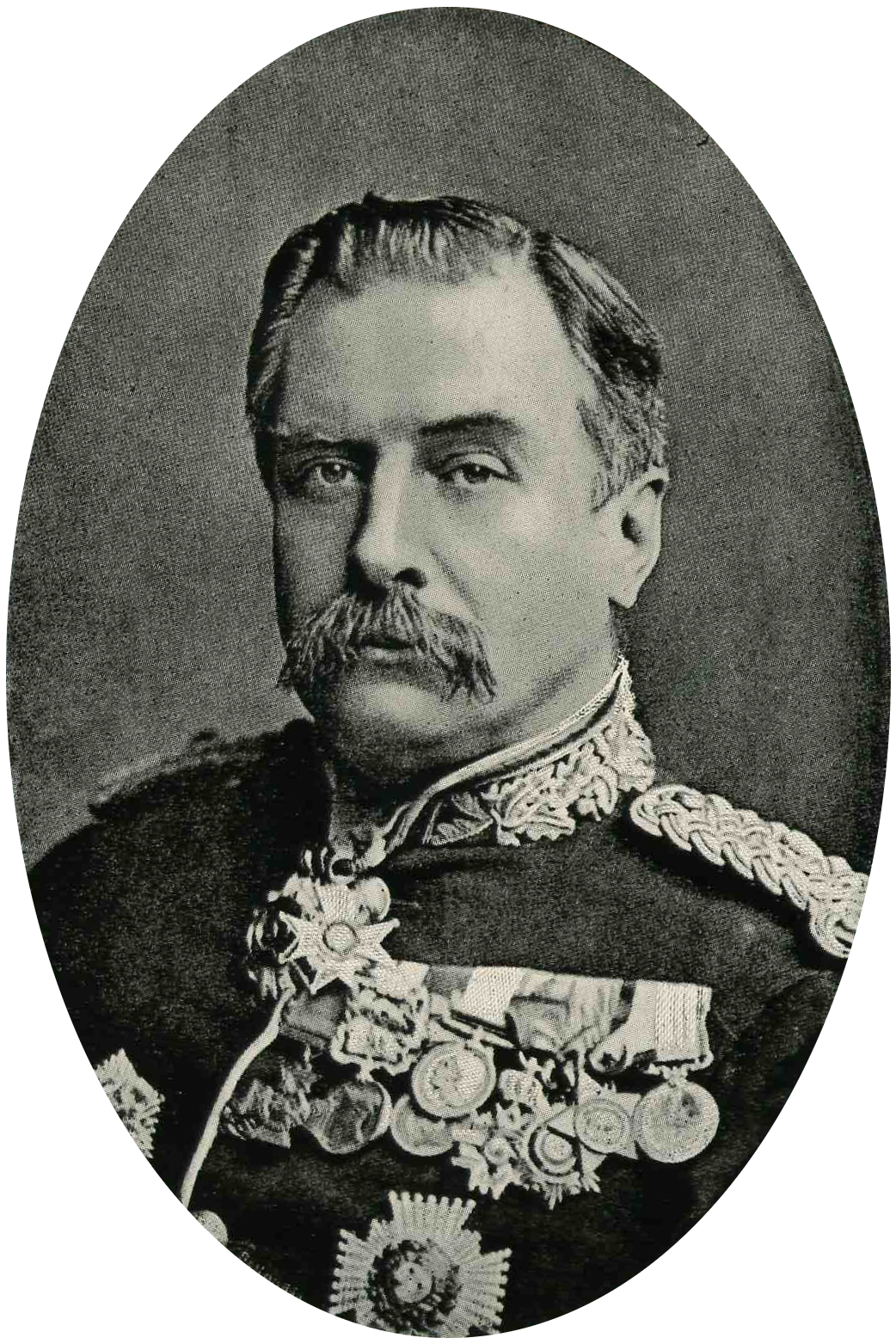
Lieutenant-General Sir Gerald Graham, VC, GCB, GCMG (27 June 1831 – 17 December 1899) was a senior British Army commander in the late 19th century and an English recipient of the Victoria Cross, the highest award for gallantry in the face of the enemy that can be awarded to British and Commonwealth forces.
As an officer of the Royal Engineers, he served in the Crimean War, China, Canada, and Africa — including as a Brigadier General in the Anglo-Egyptian War, under Garnet Wolseley, and as commander of the Suakin Expedition against Mahdist Sudan in 1884–85.
In February 1884, Graham accompanied his close friend and colleague Charles George Gordon up the Nile to Gordon's disembarkation at Korosko, making Graham one of the last Englishmen to see Gordon alive before he set out across the Nubian Desert on his fateful mission to Khartoum. In 1887 Graham commemorated Gordon, reflecting on his life, character, and the context of the Mahdist War, in a publication entitled “Last Words with Gordon”.
Graham was born in Acton, Middlesex to Frances (née Oakley), of Oswaldkirk, Yorkshire, and Robert Hay Graham, of Eden Brows, north Cumberland, a medical doctor and descendent of Clan Graham.
After studying at Wimbledon and Dresden he was admitted (1847) to the Royal Military Academy at Woolwich where he passed third out of his batch and received a commission as a Second Lieutenant in the Royal Engineers on 19 June 1850. He subsequently completed his military training in the School of Military Engineering at Chatham.
As a young man, he was noted for his strong and imposing stature, reaching a height of 6 feet 4 inches (1.93 m) – a quality ultimately remarked upon throughout his career – as well as a reserved but kind disposition and a fondness for boating on the Medway.
Graham was ordered to the 11th Company of Royal Sappers and Miners at Woolwich and shipped to Gallipoli in April 1854 to engage in the building of defensive works at the Gulf of Saros. He then served in the Crimea at the battles of Alma, Inkerman, and the Siege of Sebastopol where his actions at the assault of the Redan on June 18, 1854, earned him the award of a Victoria Cross.
The ill-fated attack on the Russian fortifications consisted of three columns (1,600 men each) with 23 year old Lieutenant Graham in command of the ladder party at the head of Number 1 column. Notably, Charles George Gordon was in command of the same column's reserves - a former peer of Graham's at the Royal Academy and subsequent close friend and colleague through later campaigns in China and the Sudan.
Hub AI
Gerald Graham AI simulator
(@Gerald Graham_simulator)
Gerald Graham
Lieutenant-General Sir Gerald Graham, VC, GCB, GCMG (27 June 1831 – 17 December 1899) was a senior British Army commander in the late 19th century and an English recipient of the Victoria Cross, the highest award for gallantry in the face of the enemy that can be awarded to British and Commonwealth forces.
As an officer of the Royal Engineers, he served in the Crimean War, China, Canada, and Africa — including as a Brigadier General in the Anglo-Egyptian War, under Garnet Wolseley, and as commander of the Suakin Expedition against Mahdist Sudan in 1884–85.
In February 1884, Graham accompanied his close friend and colleague Charles George Gordon up the Nile to Gordon's disembarkation at Korosko, making Graham one of the last Englishmen to see Gordon alive before he set out across the Nubian Desert on his fateful mission to Khartoum. In 1887 Graham commemorated Gordon, reflecting on his life, character, and the context of the Mahdist War, in a publication entitled “Last Words with Gordon”.
Graham was born in Acton, Middlesex to Frances (née Oakley), of Oswaldkirk, Yorkshire, and Robert Hay Graham, of Eden Brows, north Cumberland, a medical doctor and descendent of Clan Graham.
After studying at Wimbledon and Dresden he was admitted (1847) to the Royal Military Academy at Woolwich where he passed third out of his batch and received a commission as a Second Lieutenant in the Royal Engineers on 19 June 1850. He subsequently completed his military training in the School of Military Engineering at Chatham.
As a young man, he was noted for his strong and imposing stature, reaching a height of 6 feet 4 inches (1.93 m) – a quality ultimately remarked upon throughout his career – as well as a reserved but kind disposition and a fondness for boating on the Medway.
Graham was ordered to the 11th Company of Royal Sappers and Miners at Woolwich and shipped to Gallipoli in April 1854 to engage in the building of defensive works at the Gulf of Saros. He then served in the Crimea at the battles of Alma, Inkerman, and the Siege of Sebastopol where his actions at the assault of the Redan on June 18, 1854, earned him the award of a Victoria Cross.
The ill-fated attack on the Russian fortifications consisted of three columns (1,600 men each) with 23 year old Lieutenant Graham in command of the ladder party at the head of Number 1 column. Notably, Charles George Gordon was in command of the same column's reserves - a former peer of Graham's at the Royal Academy and subsequent close friend and colleague through later campaigns in China and the Sudan.
Recent media