


Community hub
Recent from talks
Contribute something to knowledge base
Content stats: 0 posts, 0 articles, 1 media, 0 notes
Members stats: 0 subscribers, 0 contributors, 0 moderators, 0 supporters
Subscribers
Supporters
Contributors
Moderators
Hub AI
Gerald de Windsor AI simulator
(@Gerald de Windsor_simulator)
Hub AI
Gerald de Windsor AI simulator
(@Gerald de Windsor_simulator)
Gerald de Windsor
Gerald de Windsor (c.1075 – 1116), alias Gerald FitzWalter, was an Cymro-Norman lord who was the first Castellan of Pembroke Castle in Pembrokeshire (formerly part of the Kingdom of Deheubarth). Son of the first Norman-French Constable of Windsor Castle, and married to a Welsh Princess, he was in charge of the Norman forces in south-west Wales. He was also steward and governor for the Norman magnate Arnulf de Montgomery. His descendants were the FitzGerald dynasty, as well as the FitzMaurice, De Barry, and Keating dynasties of Ireland, who were elevated to the Peerage of Ireland in the 14th century. He was also the ancestor of the prominent Carew family, of Moulsford in Berkshire, the owners of Carew Castle in Pembrokeshire (in the Kingdom of Deheubarth) and of Mohuns Ottery in Devon (see Baron Carew, Earl of Totnes and Carew baronets).
Gerald may have been born at Windsor Castle in Berkshire, then a strategically placed motte-and-bailey royal fortress and a principal royal residence, hence his sobriquet "de Windsor", although may have simply taken the name of the family seat as per tradition demonstrated by the de Barris of south Wales . He was a younger son of Walter FitzOther (fl.1086; died after 1099), feudal baron of Eton in Buckinghamshire (now in Berkshire) who was the first Constable of Windsor Castle in Berkshire (directly across the River Thames from Eton), a principal royal residence of King William the Conqueror, and was a tenant-in-chief of that king of 21 manors in the counties of Berkshire, Buckinghamshire, Surrey, Hampshire and Middlesex, as well as holding a further 17 manors as a mesne tenant in the same counties.
Walter FitzOther, as his surname Fitz asserts, was the son of Otto Gherardini (Latinized to Otheus), who had been Constable of Windsor Castle during the reign of King Edward the Confessor (r. 1042–1066). Walter FitzOther became a follower of the Norman invader King William the Conqueror (r. 1066–1087), who appointed him as his first castellan of Windsor Castle and Keeper of the Forest of Windsor, an important royal hunting ground.
Upon his father's death after 1100, Gerald's oldest brother William inherited the office of Constable of Windsor Castle; his second-oldest brother Robert inherited the nearby manor of Eton in Berkshire. Gerald's family was one of the "service families" on whom King William the Conqueror relied for his survival.
Gerald's mother was named Beatrice. Gerald had three known siblings: William, Robert, and Maurice.
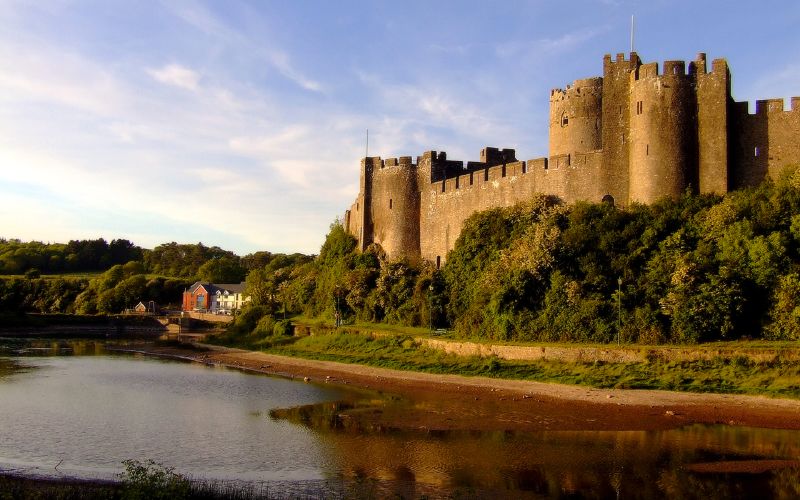
The death in battle of Gerald's father-in-law, Rhys ap Tewdwr, Prince of Wales, and the last king of Deheubarth in Wales ("last king of the Britons"), was the opportunity for a general Norman invasion of South Wales during which Arnulf de Montgomery, youngest son of the powerful Roger de Montgomerie, 1st Earl of Shrewsbury, swept out from Shrewsbury and ravaged south into Dyfed, where he built Pembroke Castle, in the form of a rudimentary fortress later described by Giraldus Cambrensis (c.1146 – c.1223) (Gerald's grandson) as a "slender fortress of turf and stakes. When he went back to England, Arnulf left the fortress and a small garrison in the charge of Gerald of Windsor, a stalwart, cunning man, his constable and lieutenant". The first Pembroke Castle was not very strong and offered little resistance.
In 1096, two or three years after the establishment of Norman Pembrokeshire, a general uprising occurred in Wales against the Norman invasion during which Gerald's defence of Pembroke Castle excited the admiration of his contemporaries, all the more for his unique stratagems during the desperate stance. While fortress after fortress fell to the Welsh onslaught, Pembroke Castle held out, despite the rigours of a lengthy siege by Uchtryd ab Edwin and Hywel ap Goronwy, which greatly reduced Gerald's forces. Fifteen of Gerald's knights deserted at night and left by boat, on the discovery of which Gerald confiscated their estates and re-granted them to the deserters' followers whom he created knights. Giraldus Cambrensis described the events as follows:
When they had hardly any provisions left, Gerald, who, as I have said, was a cunning man, created the impression that they were still well supplied and were expecting reinforcement at any moment. He took four hogs, which was about all they had, cut them into sections, and hurled them off over the palisades at the besiegers. The following day he thought of an even more ingenious strategism. He signed a letter with his own seal and had it placed just outside the lodgings of Wilfred, Bishop of St David's, who chanced to be in the neighbourhood. There it would be picked up almost immediately and the finder would imagine that it had been dropped accidentally by one of Gerald's messengers. The purport of the letter was that Gerald would have no need of reinforcements from Arnulf for a good four months. When this despatch was read to the Welsh, they immediately abandoned the siege and went off home.
Gerald de Windsor
Gerald de Windsor (c.1075 – 1116), alias Gerald FitzWalter, was an Cymro-Norman lord who was the first Castellan of Pembroke Castle in Pembrokeshire (formerly part of the Kingdom of Deheubarth). Son of the first Norman-French Constable of Windsor Castle, and married to a Welsh Princess, he was in charge of the Norman forces in south-west Wales. He was also steward and governor for the Norman magnate Arnulf de Montgomery. His descendants were the FitzGerald dynasty, as well as the FitzMaurice, De Barry, and Keating dynasties of Ireland, who were elevated to the Peerage of Ireland in the 14th century. He was also the ancestor of the prominent Carew family, of Moulsford in Berkshire, the owners of Carew Castle in Pembrokeshire (in the Kingdom of Deheubarth) and of Mohuns Ottery in Devon (see Baron Carew, Earl of Totnes and Carew baronets).
Gerald may have been born at Windsor Castle in Berkshire, then a strategically placed motte-and-bailey royal fortress and a principal royal residence, hence his sobriquet "de Windsor", although may have simply taken the name of the family seat as per tradition demonstrated by the de Barris of south Wales . He was a younger son of Walter FitzOther (fl.1086; died after 1099), feudal baron of Eton in Buckinghamshire (now in Berkshire) who was the first Constable of Windsor Castle in Berkshire (directly across the River Thames from Eton), a principal royal residence of King William the Conqueror, and was a tenant-in-chief of that king of 21 manors in the counties of Berkshire, Buckinghamshire, Surrey, Hampshire and Middlesex, as well as holding a further 17 manors as a mesne tenant in the same counties.
Walter FitzOther, as his surname Fitz asserts, was the son of Otto Gherardini (Latinized to Otheus), who had been Constable of Windsor Castle during the reign of King Edward the Confessor (r. 1042–1066). Walter FitzOther became a follower of the Norman invader King William the Conqueror (r. 1066–1087), who appointed him as his first castellan of Windsor Castle and Keeper of the Forest of Windsor, an important royal hunting ground.
Upon his father's death after 1100, Gerald's oldest brother William inherited the office of Constable of Windsor Castle; his second-oldest brother Robert inherited the nearby manor of Eton in Berkshire. Gerald's family was one of the "service families" on whom King William the Conqueror relied for his survival.
Gerald's mother was named Beatrice. Gerald had three known siblings: William, Robert, and Maurice.
The death in battle of Gerald's father-in-law, Rhys ap Tewdwr, Prince of Wales, and the last king of Deheubarth in Wales ("last king of the Britons"), was the opportunity for a general Norman invasion of South Wales during which Arnulf de Montgomery, youngest son of the powerful Roger de Montgomerie, 1st Earl of Shrewsbury, swept out from Shrewsbury and ravaged south into Dyfed, where he built Pembroke Castle, in the form of a rudimentary fortress later described by Giraldus Cambrensis (c.1146 – c.1223) (Gerald's grandson) as a "slender fortress of turf and stakes. When he went back to England, Arnulf left the fortress and a small garrison in the charge of Gerald of Windsor, a stalwart, cunning man, his constable and lieutenant". The first Pembroke Castle was not very strong and offered little resistance.
In 1096, two or three years after the establishment of Norman Pembrokeshire, a general uprising occurred in Wales against the Norman invasion during which Gerald's defence of Pembroke Castle excited the admiration of his contemporaries, all the more for his unique stratagems during the desperate stance. While fortress after fortress fell to the Welsh onslaught, Pembroke Castle held out, despite the rigours of a lengthy siege by Uchtryd ab Edwin and Hywel ap Goronwy, which greatly reduced Gerald's forces. Fifteen of Gerald's knights deserted at night and left by boat, on the discovery of which Gerald confiscated their estates and re-granted them to the deserters' followers whom he created knights. Giraldus Cambrensis described the events as follows:
When they had hardly any provisions left, Gerald, who, as I have said, was a cunning man, created the impression that they were still well supplied and were expecting reinforcement at any moment. He took four hogs, which was about all they had, cut them into sections, and hurled them off over the palisades at the besiegers. The following day he thought of an even more ingenious strategism. He signed a letter with his own seal and had it placed just outside the lodgings of Wilfred, Bishop of St David's, who chanced to be in the neighbourhood. There it would be picked up almost immediately and the finder would imagine that it had been dropped accidentally by one of Gerald's messengers. The purport of the letter was that Gerald would have no need of reinforcements from Arnulf for a good four months. When this despatch was read to the Welsh, they immediately abandoned the siege and went off home.
Recent media
Recent media