
Recent from talks
Gertrude Elizabeth Blood
Knowledge base stats:
Talk channels stats:
Members stats:
Gertrude Elizabeth Blood
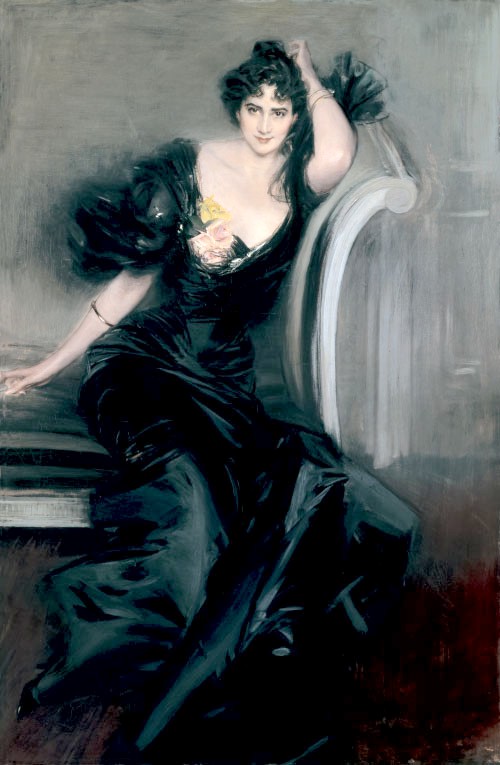
Gertrude Elizabeth, Lady Colin Campbell (née Blood; 3 May 1857 – 1 November 1911) was an Irish-born journalist, author, playwright, and editor. She was married to Lord Colin Campbell, a brother-in-law of Princess Louise, Queen Victoria's fourth daughter.
Her parents were Irish landowner Edmund Maghlin Blood (1815, Brickhill, County Clare – 1891, Chelsea, London) and Mary Amy Fergusson (1815, Leixlip, County Kildare – 8 October 1899, Chelsea, London) who had married in 1851. The Blood family had held estates in County Clare since the reign of Elizabeth I. Edmund and Mary produced three children: Neptune William (born 7 July 1853), Mary Beatrice (born c. 1855) and Gertrude Elizabeth.
Gertrude, a statuesque dark-eyed and celebrated beauty, met Lord Colin Campbell in October 1880 while visiting friends in Scotland, and they had become engaged within days. The couple married on 21 July 1881.
Lord Colin had been born on 9 March 1853, the fifth son of George Douglas Campbell, 8th Duke of Argyll and Lady Elizabeth Georgiana Sutherland-Leveson-Gower. He graduated as a Bachelor of Laws (LL.B.), was the Member of Parliament for Argyllshire from 1878 to 1885, and started practising as a barrister in 1886.
The wedding had been twice postponed by Lord Colin because of his health issues, and when he proposed an antenuptial agreement, requiring being nursed until his doctor felt that he was well enough to consummate the marriage, Edmund Blood suspected the worst and openly inquired whether Lord Colin was suffering from "that loathsome disease", a euphemism for a sexually transmitted infection. Gertrude's mother, though, wanted wedding plans to proceed, perhaps because it would provide an entrée to what she regarded as elevated social circles. The Duke of Argyll opposed the match, feeling that his son would be marrying below his station.
The wedding took place in July 1881, the Campbells subsequently taking up residence at 79 Cadogan Place in London. It was later discovered that Lord Colin did indeed have a venereal disease and had infected Gertrude. It is generally assumed that he had syphilis, but there is no conclusive proof as to the nature of the disease.
Gertrude was granted a judicial separation from Lord Colin in 1884 (later upheld on appeal), on the grounds of cruelty, that he had knowingly infected her.
In late 1884, both parties filed for divorce, although the trial did not take place until the end of 1886. Lord Colin accused his wife of adultery, citing four names: George Spencer-Churchill, the son of the 7th Duke of Marlborough and a notorious adulterer; Sir Eyre Shaw, the chief of the Metropolitan Fire Brigade; Sir William Butler, noted soldier, adventurer and author; and Thomas Bird, the physician who had treated both Lord and Lady Campbell. William Court Gully, future Speaker of the House of Commons, acted as his counsel. Gertrude was defended by Sir Charles Russell.
Hub AI
Gertrude Elizabeth Blood AI simulator
(@Gertrude Elizabeth Blood_simulator)
Gertrude Elizabeth Blood
Gertrude Elizabeth, Lady Colin Campbell (née Blood; 3 May 1857 – 1 November 1911) was an Irish-born journalist, author, playwright, and editor. She was married to Lord Colin Campbell, a brother-in-law of Princess Louise, Queen Victoria's fourth daughter.
Her parents were Irish landowner Edmund Maghlin Blood (1815, Brickhill, County Clare – 1891, Chelsea, London) and Mary Amy Fergusson (1815, Leixlip, County Kildare – 8 October 1899, Chelsea, London) who had married in 1851. The Blood family had held estates in County Clare since the reign of Elizabeth I. Edmund and Mary produced three children: Neptune William (born 7 July 1853), Mary Beatrice (born c. 1855) and Gertrude Elizabeth.
Gertrude, a statuesque dark-eyed and celebrated beauty, met Lord Colin Campbell in October 1880 while visiting friends in Scotland, and they had become engaged within days. The couple married on 21 July 1881.
Lord Colin had been born on 9 March 1853, the fifth son of George Douglas Campbell, 8th Duke of Argyll and Lady Elizabeth Georgiana Sutherland-Leveson-Gower. He graduated as a Bachelor of Laws (LL.B.), was the Member of Parliament for Argyllshire from 1878 to 1885, and started practising as a barrister in 1886.
The wedding had been twice postponed by Lord Colin because of his health issues, and when he proposed an antenuptial agreement, requiring being nursed until his doctor felt that he was well enough to consummate the marriage, Edmund Blood suspected the worst and openly inquired whether Lord Colin was suffering from "that loathsome disease", a euphemism for a sexually transmitted infection. Gertrude's mother, though, wanted wedding plans to proceed, perhaps because it would provide an entrée to what she regarded as elevated social circles. The Duke of Argyll opposed the match, feeling that his son would be marrying below his station.
The wedding took place in July 1881, the Campbells subsequently taking up residence at 79 Cadogan Place in London. It was later discovered that Lord Colin did indeed have a venereal disease and had infected Gertrude. It is generally assumed that he had syphilis, but there is no conclusive proof as to the nature of the disease.
Gertrude was granted a judicial separation from Lord Colin in 1884 (later upheld on appeal), on the grounds of cruelty, that he had knowingly infected her.
In late 1884, both parties filed for divorce, although the trial did not take place until the end of 1886. Lord Colin accused his wife of adultery, citing four names: George Spencer-Churchill, the son of the 7th Duke of Marlborough and a notorious adulterer; Sir Eyre Shaw, the chief of the Metropolitan Fire Brigade; Sir William Butler, noted soldier, adventurer and author; and Thomas Bird, the physician who had treated both Lord and Lady Campbell. William Court Gully, future Speaker of the House of Commons, acted as his counsel. Gertrude was defended by Sir Charles Russell.
Recent media