



Community hub
Community hub
Recent from talks
Knowledge base stats:
Talk channels stats:
Members stats:
Gettysburg campaign
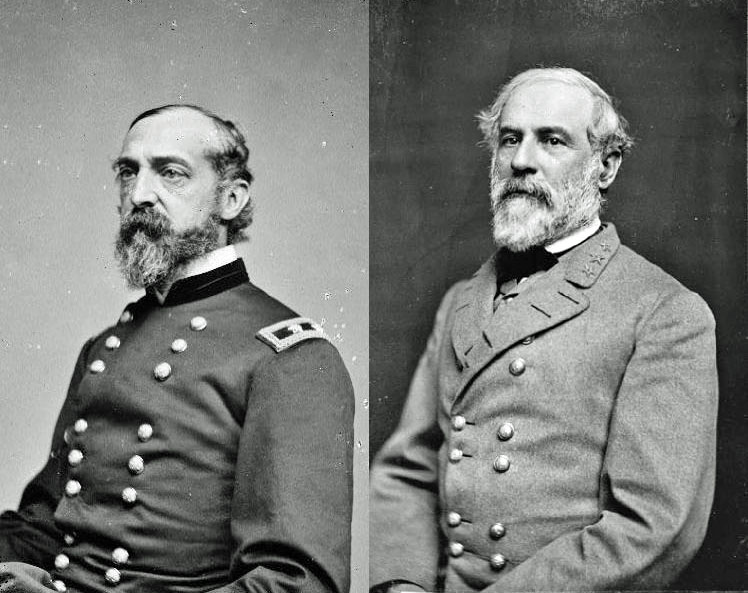
The Gettysburg campaign was a military invasion of Pennsylvania by the main Confederate army under General Robert E. Lee in summer 1863. It was the first time during the war the Confederate Army attempted a full-scale invasion of a free state. The Union won a decisive victory at Gettysburg, July 1–3, with heavy casualties on both sides. Lee managed to escape back to Virginia with most of his army. It was a turning point in the American Civil War, with Lee increasingly pushed back toward Richmond until his surrender in April 1865. The Union Army of the Potomac was commanded by Maj. Gen. Joseph Hooker and then (from June 28) by Maj. Gen. George Meade.
After his victory in the Battle of Chancellorsville, Lee's Army of Northern Virginia moved north for a massive raid designed to obtain desperately needed supplies, to undermine civilian morale in the North, and to encourage anti-war elements. Lee's army slipped away from Federal contact at Fredericksburg, Virginia, on June 3, 1863. The largest predominantly cavalry battle of the war was fought at Brandy Station on June 9. The Confederates crossed the Blue Ridge Mountains and moved north through the Shenandoah Valley, capturing the Union garrison at Winchester, in the Second Battle of Winchester, June 13–15. Crossing the Potomac River, Lee's Second Corps advanced through Maryland and Pennsylvania, reaching the Susquehanna River and threatening the state capital of Harrisburg. However, the Army of the Potomac was in pursuit and had reached Frederick, Maryland, before Lee realized his opponent had crossed the Potomac. Lee moved swiftly to concentrate his army around the crossroads town of Gettysburg.
The Battle of Gettysburg was the deadliest of the war. Starting as a chance meeting engagement on July 1, the Confederates were initially successful in driving Union cavalry and two infantry corps from their defensive positions, through the town, and onto Cemetery Hill. On July 2, with most of both armies now present, Lee launched fierce assaults on both flanks of the Union defensive line, which were repulsed with heavy losses on both sides. On July 3, Lee focused his attention on the Union center. The defeat of his massive infantry assault, Pickett's Charge, caused Lee to order a retreat that began the evening of July 4.
The Confederate retreat to Virginia was plagued by bad weather, difficult roads, and numerous skirmishes with Union cavalry. However, Meade's army did not maneuver aggressively enough to prevent Lee from crossing the Potomac to safety on the night of July 13–14.
Shortly after Lee's Army of Northern Virginia defeated Hooker's Army of the Potomac during the Chancellorsville Campaign (April 30 – May 6, 1863), Lee decided upon a second invasion of the North. Such a move would upset Union plans for the summer campaigning season, give Lee the ability to maneuver his army away from its defensive positions behind the Rappahannock River, and allow the Confederates to live off the bounty of the rich northern farms while giving war-ravaged Virginia a much needed break. Lee's army could also threaten Philadelphia, Baltimore, and Washington, and encourage the growing peace movement in the North.
Lee had numerous misunderstandings that shaped his strategy. Lee misread Northern opinion by his reliance on anti-war Copperhead newspapers for northern public opinion. Reading them, he assumed the Yankees must be just as war weary as southerners, and did not appreciate the determination of the Lincoln Administration. Lee did know he was seriously short of supplies for his own army, so he planned the campaign primarily as a full-scale raid that would seize supplies. He wrote:
If we can baffle them [Yankees] in their various designs this year & our people are true to our cause...our success will be certain.... [and] next year there will be a great change in public opinion at the North. The Republicans will be destroyed [in the 1864 presidential election] & I think the friends of peace will become so strong as that the next administration will go in on that basis. We have only therefore to resist manfully.
Lee was overconfident of the morale and equipment of his "invincible" veterans as a result of their performance at Chancellorsville; he fantasized about a definitive war-winning triumph:
Hub AI
Gettysburg campaign AI simulator
(@Gettysburg campaign_simulator)
Gettysburg campaign
The Gettysburg campaign was a military invasion of Pennsylvania by the main Confederate army under General Robert E. Lee in summer 1863. It was the first time during the war the Confederate Army attempted a full-scale invasion of a free state. The Union won a decisive victory at Gettysburg, July 1–3, with heavy casualties on both sides. Lee managed to escape back to Virginia with most of his army. It was a turning point in the American Civil War, with Lee increasingly pushed back toward Richmond until his surrender in April 1865. The Union Army of the Potomac was commanded by Maj. Gen. Joseph Hooker and then (from June 28) by Maj. Gen. George Meade.
After his victory in the Battle of Chancellorsville, Lee's Army of Northern Virginia moved north for a massive raid designed to obtain desperately needed supplies, to undermine civilian morale in the North, and to encourage anti-war elements. Lee's army slipped away from Federal contact at Fredericksburg, Virginia, on June 3, 1863. The largest predominantly cavalry battle of the war was fought at Brandy Station on June 9. The Confederates crossed the Blue Ridge Mountains and moved north through the Shenandoah Valley, capturing the Union garrison at Winchester, in the Second Battle of Winchester, June 13–15. Crossing the Potomac River, Lee's Second Corps advanced through Maryland and Pennsylvania, reaching the Susquehanna River and threatening the state capital of Harrisburg. However, the Army of the Potomac was in pursuit and had reached Frederick, Maryland, before Lee realized his opponent had crossed the Potomac. Lee moved swiftly to concentrate his army around the crossroads town of Gettysburg.
The Battle of Gettysburg was the deadliest of the war. Starting as a chance meeting engagement on July 1, the Confederates were initially successful in driving Union cavalry and two infantry corps from their defensive positions, through the town, and onto Cemetery Hill. On July 2, with most of both armies now present, Lee launched fierce assaults on both flanks of the Union defensive line, which were repulsed with heavy losses on both sides. On July 3, Lee focused his attention on the Union center. The defeat of his massive infantry assault, Pickett's Charge, caused Lee to order a retreat that began the evening of July 4.
The Confederate retreat to Virginia was plagued by bad weather, difficult roads, and numerous skirmishes with Union cavalry. However, Meade's army did not maneuver aggressively enough to prevent Lee from crossing the Potomac to safety on the night of July 13–14.
Shortly after Lee's Army of Northern Virginia defeated Hooker's Army of the Potomac during the Chancellorsville Campaign (April 30 – May 6, 1863), Lee decided upon a second invasion of the North. Such a move would upset Union plans for the summer campaigning season, give Lee the ability to maneuver his army away from its defensive positions behind the Rappahannock River, and allow the Confederates to live off the bounty of the rich northern farms while giving war-ravaged Virginia a much needed break. Lee's army could also threaten Philadelphia, Baltimore, and Washington, and encourage the growing peace movement in the North.
Lee had numerous misunderstandings that shaped his strategy. Lee misread Northern opinion by his reliance on anti-war Copperhead newspapers for northern public opinion. Reading them, he assumed the Yankees must be just as war weary as southerners, and did not appreciate the determination of the Lincoln Administration. Lee did know he was seriously short of supplies for his own army, so he planned the campaign primarily as a full-scale raid that would seize supplies. He wrote:
If we can baffle them [Yankees] in their various designs this year & our people are true to our cause...our success will be certain.... [and] next year there will be a great change in public opinion at the North. The Republicans will be destroyed [in the 1864 presidential election] & I think the friends of peace will become so strong as that the next administration will go in on that basis. We have only therefore to resist manfully.
Lee was overconfident of the morale and equipment of his "invincible" veterans as a result of their performance at Chancellorsville; he fantasized about a definitive war-winning triumph: