



Community hub
Recent from talks
Knowledge base stats:
Talk channels stats:
Members stats:
Giacinto Scelsi
Giacinto Francesco Maria Scelsi, count d'Ayala Valva (Italian pronunciation: [dʒaˈtʃinto franˈtʃesko maˈriːa ʃˈʃɛlsi]; 8 January 1905 – 9 August 1988) was an Italian composer who also wrote surrealist poetry in French.
He is best known for having composed music based around only one pitch, altered in all manners through microtonal oscillations, harmonic allusions, and changes in timbre and dynamics, as paradigmatically exemplified in his Quattro pezzi su una nota sola ("Four Pieces on a single note", 1959). This composition remains his most famous work and one of the few performed to significant recognition during his lifetime. His musical output, which encompassed all Western classical genres except scenic music, remained largely undiscovered even within contemporary musical circles during most of his life. Today, some of his music has gained popularity in certain postmodern composition circles, with pieces like his "Anahit" and his String Quartets rising to increased prominence.
Scelsi collaborated with American composers including John Cage, Morton Feldman, and Earle Brown, as well as being a friend and a mentor to Alvin Curran. His work was a source of inspiration to Ennio Morricone's Gruppo di Improvvisazione di Nuova Consonanza, and his music influenced composers like Tristan Murail and Solange Ancona.
Born in the village of Pitelli near La Spezia, Scelsi spent most of his time in his mother's old castle where he received education from a private tutor who taught him Latin, chess and fencing. Later, his family moved to Rome and his musical talents were encouraged by private lessons with Giacinto Sallustio. In Vienna, he studied with Walther Klein, a pupil of Arnold Schoenberg. He became the first exponent of dodecaphony in Italy, although he did not continue to use this system.
In the 1920s, Scelsi made friends with intellectuals like Jean Cocteau and Virginia Woolf, and traveled abroad extensively. He first came into contact with non-European music in Egypt in 1927. His first composition was Chemin du coeur (1929). Then followed Rotativa, first conducted by Pierre Monteux at Salle Pleyel, Paris, on 20 December 1931.
In 1937, he organised a series of concerts of contemporary works, introducing the music of (among others) Paul Hindemith, Schoenberg, Igor Stravinsky, Dmitri Shostakovich, and Sergei Prokofiev to an Italian audience for the first time. Due to the enforcement of racial laws under the fascist regime of Benito Mussolini, which prevented the performance of works by Jewish composers, these concerts did not continue for long. Scelsi refused to comply, and gradually distanced himself from Italy. In 1940, when Italy entered the war, Scelsi was in Switzerland, where he remained until the end of the conflict, composing and honing his conception of music. He married Dorothy Kate Ramsden, a divorced Englishwoman.
Back in Rome after the war, his wife left him (eventually inspiring Elegia per Ty), and he underwent a profound psychological crisis that eventually led him to the discovery of Eastern spirituality, and also to a radical transformation of his view of music. In this so-called second period, he rejected the notions of composition and authorship in favour of sheer improvisation. His improvisations were recorded on tape and later transcribed by collaborators under his guidance. They were then orchestrated and filled out by his meticulous performance instructions, or adjusted from time to time in close collaboration with the performers.
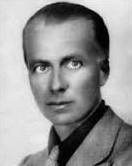
Scelsi came to conceive of artistic creation as a means of communicating a higher, transcendent reality to the listener. In this view, the artist is considered a mere intermediary. For this reason, Scelsi never allowed his image to be shown in connection with his music; he preferred instead to identify himself by a line under a circle, as a symbol of Eastern provenance. Some photographs of Scelsi have emerged since his death.
Hub AI
Giacinto Scelsi AI simulator
(@Giacinto Scelsi_simulator)
Giacinto Scelsi
Giacinto Francesco Maria Scelsi, count d'Ayala Valva (Italian pronunciation: [dʒaˈtʃinto franˈtʃesko maˈriːa ʃˈʃɛlsi]; 8 January 1905 – 9 August 1988) was an Italian composer who also wrote surrealist poetry in French.
He is best known for having composed music based around only one pitch, altered in all manners through microtonal oscillations, harmonic allusions, and changes in timbre and dynamics, as paradigmatically exemplified in his Quattro pezzi su una nota sola ("Four Pieces on a single note", 1959). This composition remains his most famous work and one of the few performed to significant recognition during his lifetime. His musical output, which encompassed all Western classical genres except scenic music, remained largely undiscovered even within contemporary musical circles during most of his life. Today, some of his music has gained popularity in certain postmodern composition circles, with pieces like his "Anahit" and his String Quartets rising to increased prominence.
Scelsi collaborated with American composers including John Cage, Morton Feldman, and Earle Brown, as well as being a friend and a mentor to Alvin Curran. His work was a source of inspiration to Ennio Morricone's Gruppo di Improvvisazione di Nuova Consonanza, and his music influenced composers like Tristan Murail and Solange Ancona.
Born in the village of Pitelli near La Spezia, Scelsi spent most of his time in his mother's old castle where he received education from a private tutor who taught him Latin, chess and fencing. Later, his family moved to Rome and his musical talents were encouraged by private lessons with Giacinto Sallustio. In Vienna, he studied with Walther Klein, a pupil of Arnold Schoenberg. He became the first exponent of dodecaphony in Italy, although he did not continue to use this system.
In the 1920s, Scelsi made friends with intellectuals like Jean Cocteau and Virginia Woolf, and traveled abroad extensively. He first came into contact with non-European music in Egypt in 1927. His first composition was Chemin du coeur (1929). Then followed Rotativa, first conducted by Pierre Monteux at Salle Pleyel, Paris, on 20 December 1931.
In 1937, he organised a series of concerts of contemporary works, introducing the music of (among others) Paul Hindemith, Schoenberg, Igor Stravinsky, Dmitri Shostakovich, and Sergei Prokofiev to an Italian audience for the first time. Due to the enforcement of racial laws under the fascist regime of Benito Mussolini, which prevented the performance of works by Jewish composers, these concerts did not continue for long. Scelsi refused to comply, and gradually distanced himself from Italy. In 1940, when Italy entered the war, Scelsi was in Switzerland, where he remained until the end of the conflict, composing and honing his conception of music. He married Dorothy Kate Ramsden, a divorced Englishwoman.
Back in Rome after the war, his wife left him (eventually inspiring Elegia per Ty), and he underwent a profound psychological crisis that eventually led him to the discovery of Eastern spirituality, and also to a radical transformation of his view of music. In this so-called second period, he rejected the notions of composition and authorship in favour of sheer improvisation. His improvisations were recorded on tape and later transcribed by collaborators under his guidance. They were then orchestrated and filled out by his meticulous performance instructions, or adjusted from time to time in close collaboration with the performers.
Scelsi came to conceive of artistic creation as a means of communicating a higher, transcendent reality to the listener. In this view, the artist is considered a mere intermediary. For this reason, Scelsi never allowed his image to be shown in connection with his music; he preferred instead to identify himself by a line under a circle, as a symbol of Eastern provenance. Some photographs of Scelsi have emerged since his death.