



Community hub
Recent from talks
Knowledge base stats:
Talk channels stats:
Members stats:
Giacomo Casanova
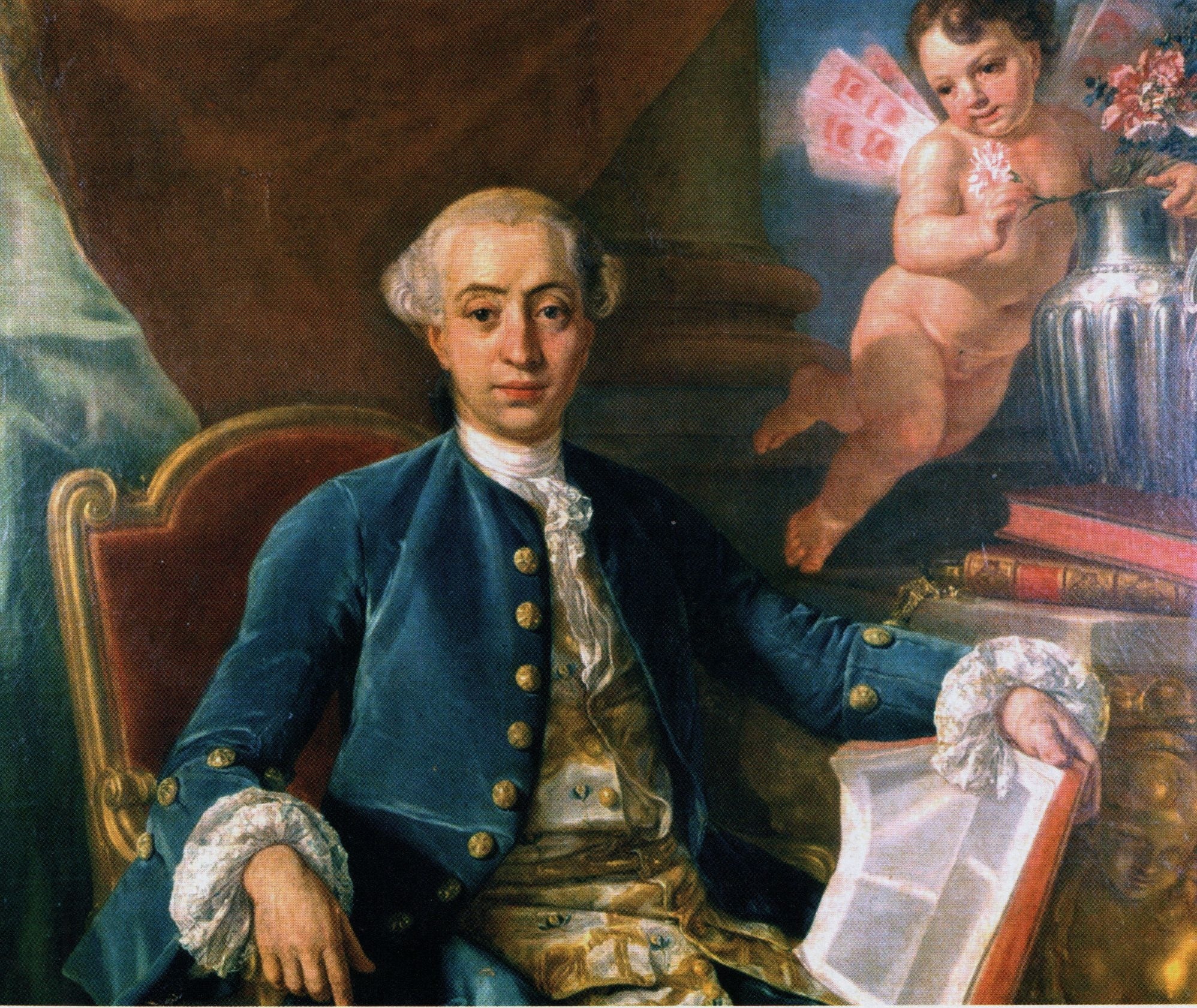
Giacomo Girolamo Casanova (/ˌkæsəˈnoʊvə, ˌkæzə-/; Italian: [ˈdʒaːkomo dʒiˈrɔːlamo kazaˈnɔːva, kasa-]; 2 April 1725 – 4 June 1798) was an Italian adventurer and writer who was born in the Republic of Venice and travelled extensively throughout Europe. He is chiefly remembered for his autobiography, written in French and published posthumously as Histoire de ma vie ("The Story of My Life"). That work has come to be regarded as a unique and provocative source of information on the customs and norms of European social life in the 18th century.
Born to a family of actors, Casanova studied law at the University of Padua and received minor orders in the Catholic Church with a view towards pursuing a career as a canon lawyer. However, he had no enthusiasm for the law or vocation for the church, and he soon abandoned those plans and launched instead upon an itinerant life as a gambler, violinist, confidence trickster, and man of letters. Throughout his life, Casanova obtained money and other advantages from various aristocratic patrons by pretending to possess alchemical, cabbalistic, and magical secret knowledge. Among other exploits, Casanova escaped from the Piombi prison, to which he had been confined by order of the Venetian Council of Ten for offenses against religion and morals, and later helped convince the authorities of the Kingdom of France to establish a state lottery as a source of revenue.
Casanova, who often misrepresented himself as an aristocrat, used a variety of pseudonyms, including Baron or Count of Farussi (his mother's maiden name) and the invented title Chevalier de Seingalt (French pronunciation: [sɛ̃ɡɑl]). After he began writing in French, following his second exile from Venice, he often signed his works as "Jacques Casanova de Seingalt". In his autobiography, Casanova reports encounters with popes, cardinals, and monarchs, as well as with major intellectual and artistic figures such as Voltaire, Goethe, and Mozart.
The most notorious aspect of Casanova's career are his many complicated sexual affairs with women, stretching from his early adolescence to his old age, which he described in detail in his autobiography. As a consequence of this, Casanova's name has become a byword for a male seducer and libertine, like "Lothario" or "Don Juan". He spent his final years in Bohemia, where he served as librarian to the household of Count Waldstein and resided at Dux Castle, where he wrote his autobiography.
Giacomo Girolamo Casanova was born in Venice in 1725 to actress Zanetta Farussi, wife of actor and dancer Gaetano Casanova. Giacomo was the first of six children, followed by Francesco Giuseppe (1727–1803), Giovanni Battista (1730–1795), Faustina Maddalena (1731–1736), Maria Maddalena Antonia Stella (1732–1800), and Gaetano Alvise (1734–1783).
At the time of Casanova's birth, the city of Venice thrived as the pleasure capital of Europe, ruled by political and religious conservatives who tolerated social vices and encouraged tourism.[citation needed] It was a required stop on the Grand Tour, traveled by young men coming of age, especially those belonging to the British aristocracy. The famed Carnival, gambling houses, and beautiful courtesans were powerful drawcards. This environment provided many of his formative experiences.
His grandmother, Marzia Baldissera, cared for him while his mother toured about Europe in the theater. His father died when he was eight. As a child, Casanova suffered nosebleeds, for which his grandmother sought help from a witch: "Leaving the gondola, we enter a hovel, where we find an old woman sitting on a pallet, with a black cat in her arms and five or six others around her." Though the unguent applied was ineffective, Casanova was fascinated by the incantation. Perhaps to remedy the nosebleeds (a physician blamed the density of Venice's air), Casanova, on his ninth birthday, was sent to a boarding house on the mainland in Padua. For Casanova, the neglect by his parents was a bitter memory. "So they got rid of me," he proclaimed.
Conditions at the boarding house were appalling, so he appealed to be placed under the care of Abbé Gozzi, his primary instructor, who tutored him in academic subjects, as well as the violin. Casanova moved in with the priest and his family and lived there through most of his teenage years. In the Gozzi household, Casanova first came into contact with the opposite sex, when Gozzi's younger sister Bettina fondled him at the age of 11. Bettina was "pretty, lighthearted, and a great reader of romances. ... The girl pleased me at once, though I had no idea why. It was she who little by little kindled in my heart the first sparks of a feeling which later became my ruling passion." Although she subsequently married, Casanova maintained a lifelong attachment to Bettina and the Gozzi family.
Hub AI
Giacomo Casanova AI simulator
(@Giacomo Casanova_simulator)
Giacomo Casanova
Giacomo Girolamo Casanova (/ˌkæsəˈnoʊvə, ˌkæzə-/; Italian: [ˈdʒaːkomo dʒiˈrɔːlamo kazaˈnɔːva, kasa-]; 2 April 1725 – 4 June 1798) was an Italian adventurer and writer who was born in the Republic of Venice and travelled extensively throughout Europe. He is chiefly remembered for his autobiography, written in French and published posthumously as Histoire de ma vie ("The Story of My Life"). That work has come to be regarded as a unique and provocative source of information on the customs and norms of European social life in the 18th century.
Born to a family of actors, Casanova studied law at the University of Padua and received minor orders in the Catholic Church with a view towards pursuing a career as a canon lawyer. However, he had no enthusiasm for the law or vocation for the church, and he soon abandoned those plans and launched instead upon an itinerant life as a gambler, violinist, confidence trickster, and man of letters. Throughout his life, Casanova obtained money and other advantages from various aristocratic patrons by pretending to possess alchemical, cabbalistic, and magical secret knowledge. Among other exploits, Casanova escaped from the Piombi prison, to which he had been confined by order of the Venetian Council of Ten for offenses against religion and morals, and later helped convince the authorities of the Kingdom of France to establish a state lottery as a source of revenue.
Casanova, who often misrepresented himself as an aristocrat, used a variety of pseudonyms, including Baron or Count of Farussi (his mother's maiden name) and the invented title Chevalier de Seingalt (French pronunciation: [sɛ̃ɡɑl]). After he began writing in French, following his second exile from Venice, he often signed his works as "Jacques Casanova de Seingalt". In his autobiography, Casanova reports encounters with popes, cardinals, and monarchs, as well as with major intellectual and artistic figures such as Voltaire, Goethe, and Mozart.
The most notorious aspect of Casanova's career are his many complicated sexual affairs with women, stretching from his early adolescence to his old age, which he described in detail in his autobiography. As a consequence of this, Casanova's name has become a byword for a male seducer and libertine, like "Lothario" or "Don Juan". He spent his final years in Bohemia, where he served as librarian to the household of Count Waldstein and resided at Dux Castle, where he wrote his autobiography.
Giacomo Girolamo Casanova was born in Venice in 1725 to actress Zanetta Farussi, wife of actor and dancer Gaetano Casanova. Giacomo was the first of six children, followed by Francesco Giuseppe (1727–1803), Giovanni Battista (1730–1795), Faustina Maddalena (1731–1736), Maria Maddalena Antonia Stella (1732–1800), and Gaetano Alvise (1734–1783).
At the time of Casanova's birth, the city of Venice thrived as the pleasure capital of Europe, ruled by political and religious conservatives who tolerated social vices and encouraged tourism.[citation needed] It was a required stop on the Grand Tour, traveled by young men coming of age, especially those belonging to the British aristocracy. The famed Carnival, gambling houses, and beautiful courtesans were powerful drawcards. This environment provided many of his formative experiences.
His grandmother, Marzia Baldissera, cared for him while his mother toured about Europe in the theater. His father died when he was eight. As a child, Casanova suffered nosebleeds, for which his grandmother sought help from a witch: "Leaving the gondola, we enter a hovel, where we find an old woman sitting on a pallet, with a black cat in her arms and five or six others around her." Though the unguent applied was ineffective, Casanova was fascinated by the incantation. Perhaps to remedy the nosebleeds (a physician blamed the density of Venice's air), Casanova, on his ninth birthday, was sent to a boarding house on the mainland in Padua. For Casanova, the neglect by his parents was a bitter memory. "So they got rid of me," he proclaimed.
Conditions at the boarding house were appalling, so he appealed to be placed under the care of Abbé Gozzi, his primary instructor, who tutored him in academic subjects, as well as the violin. Casanova moved in with the priest and his family and lived there through most of his teenage years. In the Gozzi household, Casanova first came into contact with the opposite sex, when Gozzi's younger sister Bettina fondled him at the age of 11. Bettina was "pretty, lighthearted, and a great reader of romances. ... The girl pleased me at once, though I had no idea why. It was she who little by little kindled in my heart the first sparks of a feeling which later became my ruling passion." Although she subsequently married, Casanova maintained a lifelong attachment to Bettina and the Gozzi family.