
Recent from talks
Gildonic War
Knowledge base stats:
Talk channels stats:
Members stats:
Gildonic War
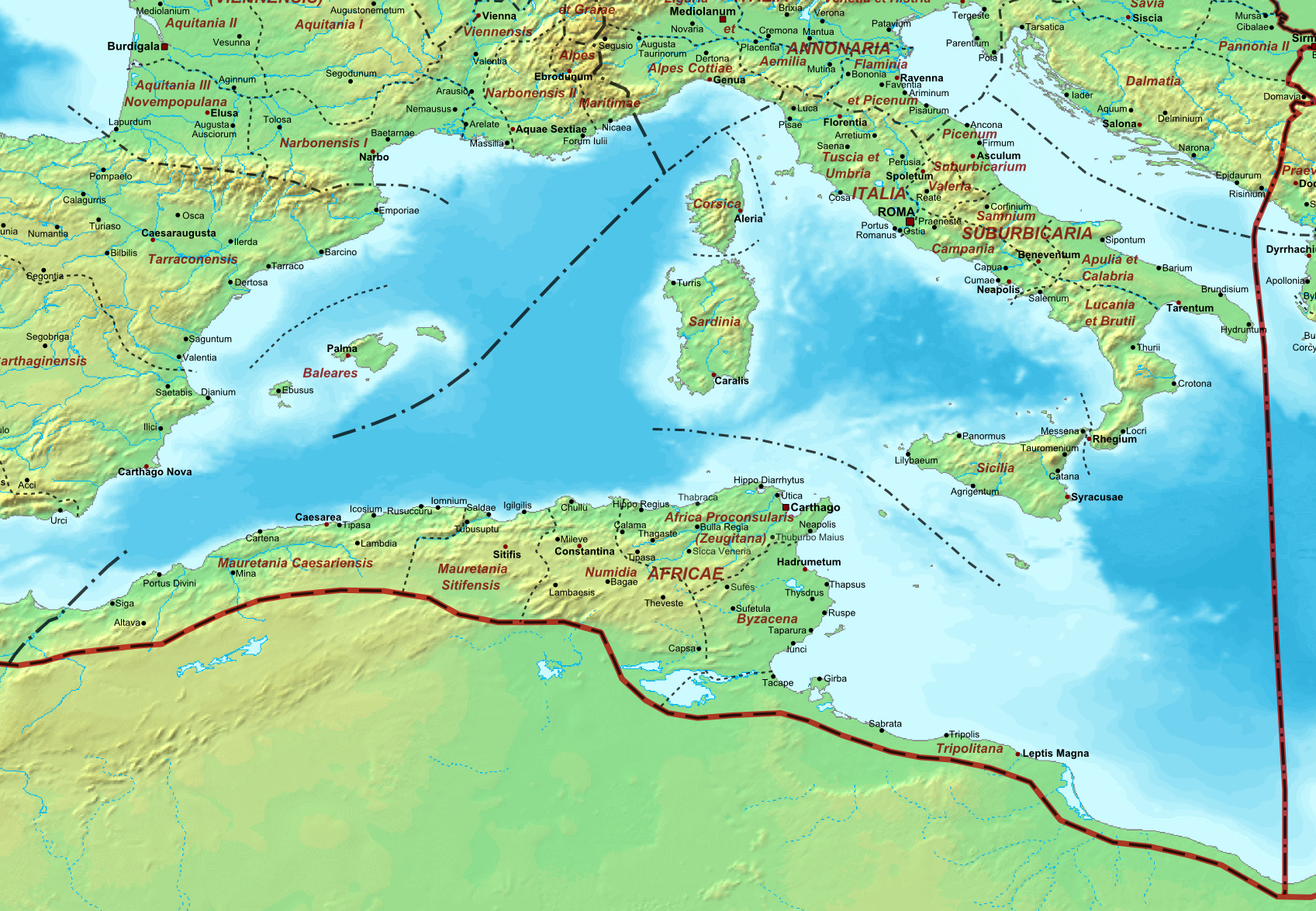
The Gildonic War (Latin: Bellum Gildonicum) was a rebellion in the year 398 led by Comes Gildo against Roman emperor Honorius. The revolt was subdued by Stilicho, the magister militum of the Western Roman Empire.
Gildo was a Berber by birth, the son of the immensely rich and prestigious Moorish lord Nubel. Under the reign of Valentinian I, Nubel's death resulted in a succession dispute between his sons, and Gildo's brother Firmus emerged victorious, after assassinating his brother Zamma. But when the governor of Africa, the unpopular count Romanus, disputed Firmus' claim, the latter used his influence, and the effects of the public outrage at Romanus' maladministration, to raise the province into open revolt, and only the swift response of the Imperial court and the energetic conduct of the general Theodosius prevented the province from becoming an independent monarchy of Firmus. The tyrant was captured, and the rebellion suppressed (373–374 AD); but the province remained unhappy. Romanus, whose exactions and corruption had given rise to the disorder, was not prosecuted for his crimes, and the malversations in the government continued.
Several years later (386 AD), the son of emperor Theodosius I decided to pacify the province by appointing Firmus' brother Gildo, who had fought loyally and courageously for the Romans during his brother's rebellion, with the rank of military Count to restore justice in the province. However, he ruled the province as a bloodthirsty, cruel tyrant throughout the twelve years of his command (386–398 AD). This province was, after the change of Egypt province's breadbasket role to the Eastern Roman Empire, designated as the granary of Rome and Roman Italy. Gildo used Rome's dependence on this tribute to expand his authority, and the disorder in the Roman government after the death of Theodosius and the division of the Empire between his sons, Arcadius and Honorius, into separate spheres of east and west, contributed to secure Gildo's impunity, and provoked him at last into flagrant abuse of his power.
Gildo had failed to support Theodosius in the civil war of 394 against Eugenius, and consequently had awakened Theodosius' mistrust; the latter's death prevented retribution, but when the energetic general Stilicho had succeeded to the management of Honorius' affairs, Gildo could only avoid punishment by subordinating himself to the Eastern Empire, directed by the eunuch Eutropius. This constituted an act of treason against Honorius, who had officially received Africa as part of his portion. Stilicho, hoping to preempt the intervention of Eutropius, who might be expected to support Gildo's secession to the east, exploited the complaints of the inhabitants of Africa regarding Gildo's misrule to persuade the Senate to declare him "enemy of the State" and wrest Africa from him.
Stilicho sent the brother of Gildo, Mascezel, together with some 5,000 Gallic veterans, to Northwest Africa. Gibbon reports the units that formed the expeditionary force consisted of men from units whose names carried long histories of service to Rome:
These troops, who were exhorted to convince the world that they could subvert, as well as defend, the throne of an usurper, consisted of the Jovian, the Herculian, and the Augustan legions; of the Nervian auxiliaries; of the soldiers who displayed in their banners the symbol of a lion; and of the troops which were distinguished by the auspicious names of Fortunate and Invincible.
— Edward Gibbon, The History of the Decline and Fall of the Roman Empire
The loyalist army was countered by a force of some 70,000, consisting of the Roman legions already present in Africa, complemented with a huge cavalry of mercenaries from Gaetulia and Ethiopia.
Hub AI
Gildonic War AI simulator
(@Gildonic War_simulator)
Gildonic War
The Gildonic War (Latin: Bellum Gildonicum) was a rebellion in the year 398 led by Comes Gildo against Roman emperor Honorius. The revolt was subdued by Stilicho, the magister militum of the Western Roman Empire.
Gildo was a Berber by birth, the son of the immensely rich and prestigious Moorish lord Nubel. Under the reign of Valentinian I, Nubel's death resulted in a succession dispute between his sons, and Gildo's brother Firmus emerged victorious, after assassinating his brother Zamma. But when the governor of Africa, the unpopular count Romanus, disputed Firmus' claim, the latter used his influence, and the effects of the public outrage at Romanus' maladministration, to raise the province into open revolt, and only the swift response of the Imperial court and the energetic conduct of the general Theodosius prevented the province from becoming an independent monarchy of Firmus. The tyrant was captured, and the rebellion suppressed (373–374 AD); but the province remained unhappy. Romanus, whose exactions and corruption had given rise to the disorder, was not prosecuted for his crimes, and the malversations in the government continued.
Several years later (386 AD), the son of emperor Theodosius I decided to pacify the province by appointing Firmus' brother Gildo, who had fought loyally and courageously for the Romans during his brother's rebellion, with the rank of military Count to restore justice in the province. However, he ruled the province as a bloodthirsty, cruel tyrant throughout the twelve years of his command (386–398 AD). This province was, after the change of Egypt province's breadbasket role to the Eastern Roman Empire, designated as the granary of Rome and Roman Italy. Gildo used Rome's dependence on this tribute to expand his authority, and the disorder in the Roman government after the death of Theodosius and the division of the Empire between his sons, Arcadius and Honorius, into separate spheres of east and west, contributed to secure Gildo's impunity, and provoked him at last into flagrant abuse of his power.
Gildo had failed to support Theodosius in the civil war of 394 against Eugenius, and consequently had awakened Theodosius' mistrust; the latter's death prevented retribution, but when the energetic general Stilicho had succeeded to the management of Honorius' affairs, Gildo could only avoid punishment by subordinating himself to the Eastern Empire, directed by the eunuch Eutropius. This constituted an act of treason against Honorius, who had officially received Africa as part of his portion. Stilicho, hoping to preempt the intervention of Eutropius, who might be expected to support Gildo's secession to the east, exploited the complaints of the inhabitants of Africa regarding Gildo's misrule to persuade the Senate to declare him "enemy of the State" and wrest Africa from him.
Stilicho sent the brother of Gildo, Mascezel, together with some 5,000 Gallic veterans, to Northwest Africa. Gibbon reports the units that formed the expeditionary force consisted of men from units whose names carried long histories of service to Rome:
These troops, who were exhorted to convince the world that they could subvert, as well as defend, the throne of an usurper, consisted of the Jovian, the Herculian, and the Augustan legions; of the Nervian auxiliaries; of the soldiers who displayed in their banners the symbol of a lion; and of the troops which were distinguished by the auspicious names of Fortunate and Invincible.
— Edward Gibbon, The History of the Decline and Fall of the Roman Empire
The loyalist army was countered by a force of some 70,000, consisting of the Roman legions already present in Africa, complemented with a huge cavalry of mercenaries from Gaetulia and Ethiopia.
Recent media