


Community hub
Recent from talks
Contribute something to knowledge base
Content stats: 0 posts, 0 articles, 1 media, 0 notes
Members stats: 0 subscribers, 0 contributors, 0 moderators, 0 supporters
Subscribers
Supporters
Contributors
Moderators
Hub AI
Girard College AI simulator
(@Girard College_simulator)
Hub AI
Girard College AI simulator
(@Girard College_simulator)
Girard College
Girard College is an independent college preparatory five-day boarding school located on a 43-acre campus in Philadelphia, Pennsylvania. The school was founded and permanently endowed from the shipping and banking fortune of Stephen Girard upon his death in 1831.
Born in the seaport city of Bordeaux, France, in 1750, Stephen Girard arrived in the city of Philadelphia, in May 1776, during the momentous summer of the American Revolutionary War and remained there for the rest of his life. During his 55 years in the city, he became the wealthiest American of his time and the fourth wealthiest American of all time, adjusted for today's dollars.
With the assistance of noted attorney William J. Duane (1780–1865), in the 1820s, he wrote a long will and testament, outlining every detail of how his fortune would be used. Immediately after he died in 1831, the provisions of his will were made public. In addition to extensive personal and institutional bequests, he left the bulk of his fortune to the city of Philadelphia to build and operate a residential school. The bequest was the largest single act of philanthropy up to that time in American history.
The Girard Estate remains open in perpetuity. Its endowment and financial resources are held in trust by the courts of the Commonwealth of Pennsylvania, which provides much of the school's operating budget.
Girard College was founded in 1833, three years before the establishment of the Central High School of Philadelphia. Both schools, along with Girls' High, acted as a type of "magnet school" type, with college prep/academic curricula, strict admission standards, with noted faculty and famous alumni with respected roles.
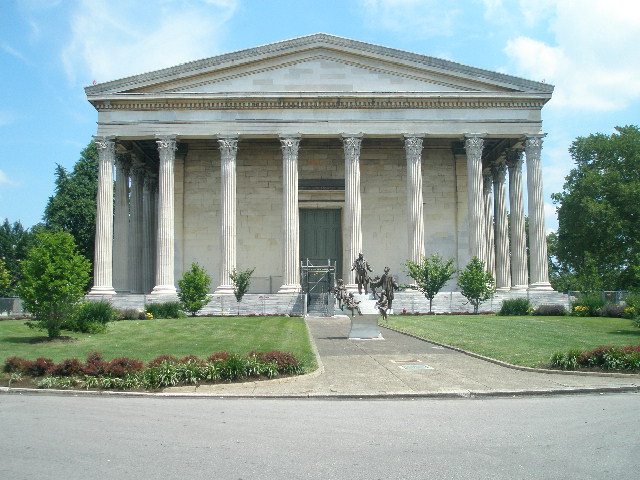
The buildings and classrooms for Girard took some time to design and construct with their expensive "Greek Revival" stone architecture, with monolithic columns, but were ready and opened on January 1, 1848, under provisions of Girard's will supervised by the appointed trustees, including banker and financier Nicholas Biddle, (1786–1844).
Girard's vision for the school can best be understood in the context of early 19th-century Philadelphia. The city was then at the forefront of creating innovative American institutions designed to solve a specific social challenge, such as the newly founded and constructed Eastern State Penitentiary (humane incarceration), the Pennsylvania Hospital (mental illness), the Pennsylvania Asylum for the Deaf and Dumb (disabilities), and the Franklin Institute (scientific knowledge). Girard chose to dedicate his immense fortune to helping educate young men of Philadelphia as Americans for the future.
Girard's will stipulated that students at Girard College must be "poor, white, male, orphans". For over a century, the school remained exclusive to orphaned white boys. However, in 1831, a mother who became a widow had no rights and resources, and "guardians" were often appointed by the "probate courts" or "orphan courts" of the city and state. Girard operated as a school for fatherless boys rather than children with no living parents or guardians. (In the 19th century, the college determined the legal definition of the term orphan to be "a fatherless child".)
Girard College
Girard College is an independent college preparatory five-day boarding school located on a 43-acre campus in Philadelphia, Pennsylvania. The school was founded and permanently endowed from the shipping and banking fortune of Stephen Girard upon his death in 1831.
Born in the seaport city of Bordeaux, France, in 1750, Stephen Girard arrived in the city of Philadelphia, in May 1776, during the momentous summer of the American Revolutionary War and remained there for the rest of his life. During his 55 years in the city, he became the wealthiest American of his time and the fourth wealthiest American of all time, adjusted for today's dollars.
With the assistance of noted attorney William J. Duane (1780–1865), in the 1820s, he wrote a long will and testament, outlining every detail of how his fortune would be used. Immediately after he died in 1831, the provisions of his will were made public. In addition to extensive personal and institutional bequests, he left the bulk of his fortune to the city of Philadelphia to build and operate a residential school. The bequest was the largest single act of philanthropy up to that time in American history.
The Girard Estate remains open in perpetuity. Its endowment and financial resources are held in trust by the courts of the Commonwealth of Pennsylvania, which provides much of the school's operating budget.
Girard College was founded in 1833, three years before the establishment of the Central High School of Philadelphia. Both schools, along with Girls' High, acted as a type of "magnet school" type, with college prep/academic curricula, strict admission standards, with noted faculty and famous alumni with respected roles.
The buildings and classrooms for Girard took some time to design and construct with their expensive "Greek Revival" stone architecture, with monolithic columns, but were ready and opened on January 1, 1848, under provisions of Girard's will supervised by the appointed trustees, including banker and financier Nicholas Biddle, (1786–1844).
Girard's vision for the school can best be understood in the context of early 19th-century Philadelphia. The city was then at the forefront of creating innovative American institutions designed to solve a specific social challenge, such as the newly founded and constructed Eastern State Penitentiary (humane incarceration), the Pennsylvania Hospital (mental illness), the Pennsylvania Asylum for the Deaf and Dumb (disabilities), and the Franklin Institute (scientific knowledge). Girard chose to dedicate his immense fortune to helping educate young men of Philadelphia as Americans for the future.
Girard's will stipulated that students at Girard College must be "poor, white, male, orphans". For over a century, the school remained exclusive to orphaned white boys. However, in 1831, a mother who became a widow had no rights and resources, and "guardians" were often appointed by the "probate courts" or "orphan courts" of the city and state. Girard operated as a school for fatherless boys rather than children with no living parents or guardians. (In the 19th century, the college determined the legal definition of the term orphan to be "a fatherless child".)
Recent media
Recent media