


Community hub
Recent from talks
Contribute something to knowledge base
Content stats: 0 posts, 0 articles, 1 media, 0 notes
Members stats: 0 subscribers, 0 contributors, 0 moderators, 0 supporters
Subscribers
Supporters
Contributors
Moderators
Hub AI
Glass fiber AI simulator
(@Glass fiber_simulator)
Hub AI
Glass fiber AI simulator
(@Glass fiber_simulator)
Glass fiber
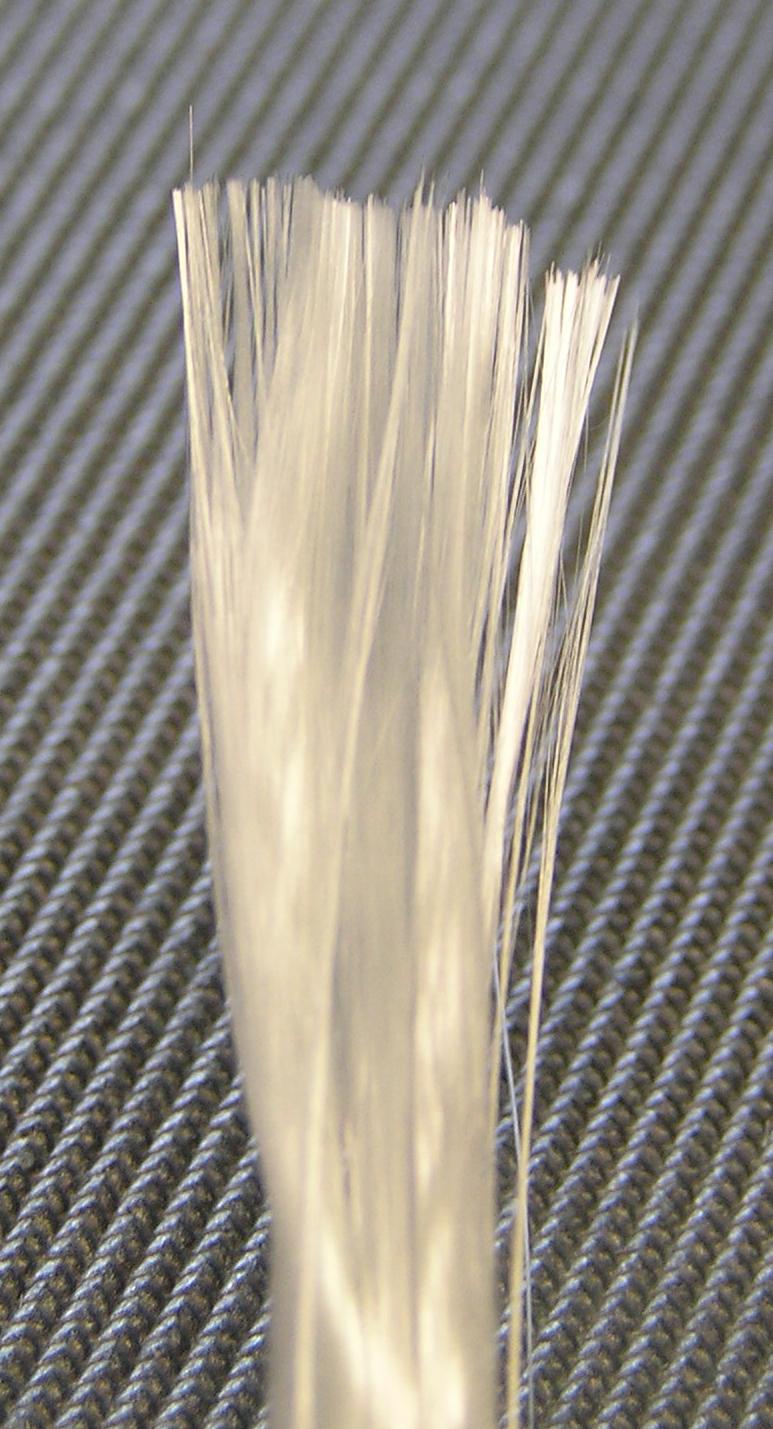
Glass fiber (or glass fibre) is a material consisting of numerous extremely fine fibers of glass.
Glassmakers throughout history have experimented with glass fibers, but mass manufacture of glass fiber was only made possible with the invention of finer machine tooling. In 1893, Edward Drummond Libbey exhibited a dress at the World's Columbian Exposition incorporating glass fibers with the diameter and texture of silk fibers. Glass fibers can also occur naturally, as Pele's hair.
Glass wool, which is one product called "fiberglass" today, was invented some time between 1932 and 1933 by Games Slayter of Owens-Illinois, as a material to be used as thermal building insulation. It is marketed under the trade name Fiberglas, which has become a genericized trademark. Glass fiber, when used as a thermal insulating material, is specially manufactured with a bonding agent to trap many small air cells, resulting in the characteristically air-filled low-density "glass wool" family of products.
Glass fiber has roughly comparable mechanical properties to other fibers such as polymers and carbon fiber. Although not as rigid as carbon fiber, it is much cheaper and significantly less brittle when used in composites. Glass fiber reinforced composites are used in marine industry and piping industries because of good environmental resistance, better damage tolerance for impact loading, high specific strength and stiffness.
Glass fiber is formed when thin strands of silica-based or other formulation glass are extruded into many fibers with small diameters suitable for textile processing. The technique of heating and drawing glass into fine fibers has been known for millennia, and was practiced in Egypt and Venice. Before the recent use of these fibers for textile applications, all glass fiber had been manufactured as staple (that is, clusters of short lengths of fiber).
The modern method for producing glass wool is the invention of Games Slayter working at the Owens-Illinois Glass Company (Toledo, Ohio). He first applied for a patent for a new process to make glass wool in 1933. The first commercial production of glass fiber was in 1936. In 1938 Owens-Illinois Glass Company and Corning Glass Works joined to form the Owens-Corning Fiberglas Corporation. When the two companies joined to produce and promote glass fiber, they introduced continuous filament glass fibers. Owens-Corning is still the major glass-fiber producer in the market today.
The most common type of glass fiber used in fiberglass is E-glass, which is alumino-borosilicate glass with less than 1% w/w alkali oxides, mainly used for glass-reinforced plastics. Other types of glass used are A-glass (Alkali-lime glass with little or no boron oxide), E-CR-glass (Electrical/Chemical Resistance; alumino-lime silicate with less than 1% w/w alkali oxides, with high acid resistance), C-glass (alkali-lime glass with high boron oxide content, used for glass staple fibers and insulation), D-glass (borosilicate glass, named for its low dielectric constant), R-glass (alumino silicate glass without MgO and CaO with high mechanical requirements as reinforcement), and S-glass (alumino silicate glass without CaO but with high MgO content with high tensile strength).
Pure silica (silicon dioxide), when cooled as fused quartz into a glass with no true melting point, can be used as a glass fiber for fiberglass, but has the drawback that it must be worked at very high temperatures. In order to lower the necessary work temperature, other materials are introduced as "fluxing agents" (i.e., components to lower the melting point). Ordinary A-glass ("A" for "alkali-lime") or soda lime glass, crushed and ready to be remelted, as so-called cullet glass, was the first type of glass used for fiberglass. E-glass ("E" because of initial electrical application), is alkali-free, and was the first glass formulation used for continuous filament formation. It now makes up most of the fiberglass production in the world, and also is the single largest consumer of boron minerals globally. It is susceptible to chloride ion attack and is a poor choice for marine applications. S-glass ("S" for "Strength") is used when high tensile strength (modulus) is important, and is thus important in composites for building and aircraft construction. The same substance is known as R-glass ("R" for "reinforcement") in Europe. C-glass ("C" for "chemical resistance") and T-glass ("T" is for "thermal insulator" – a North American variant of C-glass) are resistant to chemical attack; both are often found in insulation-grades of blown fiberglass.
Glass fiber
Glass fiber (or glass fibre) is a material consisting of numerous extremely fine fibers of glass.
Glassmakers throughout history have experimented with glass fibers, but mass manufacture of glass fiber was only made possible with the invention of finer machine tooling. In 1893, Edward Drummond Libbey exhibited a dress at the World's Columbian Exposition incorporating glass fibers with the diameter and texture of silk fibers. Glass fibers can also occur naturally, as Pele's hair.
Glass wool, which is one product called "fiberglass" today, was invented some time between 1932 and 1933 by Games Slayter of Owens-Illinois, as a material to be used as thermal building insulation. It is marketed under the trade name Fiberglas, which has become a genericized trademark. Glass fiber, when used as a thermal insulating material, is specially manufactured with a bonding agent to trap many small air cells, resulting in the characteristically air-filled low-density "glass wool" family of products.
Glass fiber has roughly comparable mechanical properties to other fibers such as polymers and carbon fiber. Although not as rigid as carbon fiber, it is much cheaper and significantly less brittle when used in composites. Glass fiber reinforced composites are used in marine industry and piping industries because of good environmental resistance, better damage tolerance for impact loading, high specific strength and stiffness.
Glass fiber is formed when thin strands of silica-based or other formulation glass are extruded into many fibers with small diameters suitable for textile processing. The technique of heating and drawing glass into fine fibers has been known for millennia, and was practiced in Egypt and Venice. Before the recent use of these fibers for textile applications, all glass fiber had been manufactured as staple (that is, clusters of short lengths of fiber).
The modern method for producing glass wool is the invention of Games Slayter working at the Owens-Illinois Glass Company (Toledo, Ohio). He first applied for a patent for a new process to make glass wool in 1933. The first commercial production of glass fiber was in 1936. In 1938 Owens-Illinois Glass Company and Corning Glass Works joined to form the Owens-Corning Fiberglas Corporation. When the two companies joined to produce and promote glass fiber, they introduced continuous filament glass fibers. Owens-Corning is still the major glass-fiber producer in the market today.
The most common type of glass fiber used in fiberglass is E-glass, which is alumino-borosilicate glass with less than 1% w/w alkali oxides, mainly used for glass-reinforced plastics. Other types of glass used are A-glass (Alkali-lime glass with little or no boron oxide), E-CR-glass (Electrical/Chemical Resistance; alumino-lime silicate with less than 1% w/w alkali oxides, with high acid resistance), C-glass (alkali-lime glass with high boron oxide content, used for glass staple fibers and insulation), D-glass (borosilicate glass, named for its low dielectric constant), R-glass (alumino silicate glass without MgO and CaO with high mechanical requirements as reinforcement), and S-glass (alumino silicate glass without CaO but with high MgO content with high tensile strength).
Pure silica (silicon dioxide), when cooled as fused quartz into a glass with no true melting point, can be used as a glass fiber for fiberglass, but has the drawback that it must be worked at very high temperatures. In order to lower the necessary work temperature, other materials are introduced as "fluxing agents" (i.e., components to lower the melting point). Ordinary A-glass ("A" for "alkali-lime") or soda lime glass, crushed and ready to be remelted, as so-called cullet glass, was the first type of glass used for fiberglass. E-glass ("E" because of initial electrical application), is alkali-free, and was the first glass formulation used for continuous filament formation. It now makes up most of the fiberglass production in the world, and also is the single largest consumer of boron minerals globally. It is susceptible to chloride ion attack and is a poor choice for marine applications. S-glass ("S" for "Strength") is used when high tensile strength (modulus) is important, and is thus important in composites for building and aircraft construction. The same substance is known as R-glass ("R" for "reinforcement") in Europe. C-glass ("C" for "chemical resistance") and T-glass ("T" is for "thermal insulator" – a North American variant of C-glass) are resistant to chemical attack; both are often found in insulation-grades of blown fiberglass.
Recent media
Recent media