



Community hub
Recent from talks
Contribute something to knowledge base
Content stats: 0 posts, 0 articles, 1 media, 0 notes
Members stats: 0 subscribers, 0 contributors, 0 moderators, 0 supporters
Subscribers
Supporters
Contributors
Moderators
Hub AI
Glencoe I AI simulator
(@Glencoe I_simulator)
Hub AI
Glencoe I AI simulator
(@Glencoe I_simulator)
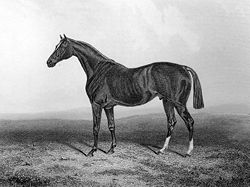
Glencoe I
Glencoe (1831–1857) was a British bred Thoroughbred racehorse, who won the 2,000 Guineas Stakes and the Ascot Gold Cup. He was one of the earliest Thoroughbred stallions imported into the United States and was a top broodmare sire there. Several outstanding sons of Lexington were out of Glencoe mares, including Asteroid, Kentucky and Norfolk.
He was a chestnut stallion who was foaled at his breeder's stud, located in Middleton Stoney, Oxfordshire. Glencoe was by Sultan, a versatile stallion who won races from six furlongs to over three miles. Sultan raced until age eight and was leading sire in Great Britain for six consecutive years (1832–1837). The dam of Glencoe Trampoline (by Tramp), was a fairly good racemare and an even better producer of racehorses, foaling not only Glencoe but Glenara and Glencaire (all by Sultan).
Glencoe stood 15 hands 1¾ inches (1.57 m) high, with a large star and half-stockinged hind legs. He had a long, hollow back that sagged, especially as he aged, but still had a fine head, a lovely neck, sound legs, a deep girth, and powerful hindquarters with wide hips, inherited from his sire. Glencoe also inherited great staying power from his grandsire, Tramp.
Glencoe was started as a three-year-old by trainer James Edwards. Edwards is still the only trainer to have won four successive 2,000 Guineas, all four horses sired by Sultan and bred by the Earl of Jersey. Glencoe, the trainer's favourite horse, was the first of these four winners.
Glencoe first ran at the 1834 Second Riddlesworth Stakes, winning a £1,400 purse and finishing in a canter. Two days later at the same Newmarket meeting, however, he ran against the highly regarded Plenipotentiary in a £100 Sweepstakes and was beaten. He then won the Desert Stakes in a canter before winning the 2,000 Guineas Stakes, for a purse of 1,750 sovereigns. Glencoe's second loss in a stakes race was the Derby Stakes, to Plenipotentiary and Shillelah. He then had a walk-over in the Royal Stakes and won the rest of his races that season: the Goodwood Cup, by four lengths at the canter and beating Colwick; the Racing Stakes against three others; and the Garden Stakes by four lengths and defeating Colwick. After his three-year-old season, the London Sporting Magazine wrote: "...from his late performances he has shown himself the best horse in the world. Where is there one to be found to meet him at weight for age? Not in England, assuredly."[citation needed]
As a four-year-old, Glencoe won his only race of the season, the 2½ mile Ascot Gold Cup. He was entered in The Whip, a four-mile challenge race, during his second season, but there were no responses to the challenge. Glencoe was then retired, with this record:
Glencoe stayed in Britain for a short time after his retirement, standing at Tattersall's Dawley Wall Farm in Middlesex for his first stud season. He covered three Jersey and forty outside mares for a fee of $80, producing 30 foals. One of these mares, Marpessa, had raced against Glencoe earlier in his career. She produced his daughter, the great filly Pocahontas. Pocahontas is said to be the greatest broodmare in the history of racing, producing three outstanding sons—Stockwell, Rataplan, and King Tom. During his first year, Glencoe also sired Darkness, an Ascot Stakes winner, who is the third dam of the French sire, Plutus.
Bought by American James Jackson, Glencoe was then shipped to the United States at the end of the 1836 breeding season, arriving in New York before being sent south. James Jackson was an Irish-American emigrant who had built up a business in Nashville and started the farm Forks of Cypress in northern Alabama. Glencoe was one of the first Thoroughbreds to be imported into the United States, and had an incredible effect on the Thoroughbred bloodlines of the country, siring a calculated 481 foals during his twenty-two years at standing at stud in Alabama, Tennessee and Kentucky. It is not known what happened to the last of his foals, which were born during the first years of the American Civil War, and it is thought that the births of many foals were not recorded. Many of these fine horses were drafted into the war effort, on both sides.
Glencoe I
Glencoe (1831–1857) was a British bred Thoroughbred racehorse, who won the 2,000 Guineas Stakes and the Ascot Gold Cup. He was one of the earliest Thoroughbred stallions imported into the United States and was a top broodmare sire there. Several outstanding sons of Lexington were out of Glencoe mares, including Asteroid, Kentucky and Norfolk.
He was a chestnut stallion who was foaled at his breeder's stud, located in Middleton Stoney, Oxfordshire. Glencoe was by Sultan, a versatile stallion who won races from six furlongs to over three miles. Sultan raced until age eight and was leading sire in Great Britain for six consecutive years (1832–1837). The dam of Glencoe Trampoline (by Tramp), was a fairly good racemare and an even better producer of racehorses, foaling not only Glencoe but Glenara and Glencaire (all by Sultan).
Glencoe stood 15 hands 1¾ inches (1.57 m) high, with a large star and half-stockinged hind legs. He had a long, hollow back that sagged, especially as he aged, but still had a fine head, a lovely neck, sound legs, a deep girth, and powerful hindquarters with wide hips, inherited from his sire. Glencoe also inherited great staying power from his grandsire, Tramp.
Glencoe was started as a three-year-old by trainer James Edwards. Edwards is still the only trainer to have won four successive 2,000 Guineas, all four horses sired by Sultan and bred by the Earl of Jersey. Glencoe, the trainer's favourite horse, was the first of these four winners.
Glencoe first ran at the 1834 Second Riddlesworth Stakes, winning a £1,400 purse and finishing in a canter. Two days later at the same Newmarket meeting, however, he ran against the highly regarded Plenipotentiary in a £100 Sweepstakes and was beaten. He then won the Desert Stakes in a canter before winning the 2,000 Guineas Stakes, for a purse of 1,750 sovereigns. Glencoe's second loss in a stakes race was the Derby Stakes, to Plenipotentiary and Shillelah. He then had a walk-over in the Royal Stakes and won the rest of his races that season: the Goodwood Cup, by four lengths at the canter and beating Colwick; the Racing Stakes against three others; and the Garden Stakes by four lengths and defeating Colwick. After his three-year-old season, the London Sporting Magazine wrote: "...from his late performances he has shown himself the best horse in the world. Where is there one to be found to meet him at weight for age? Not in England, assuredly."[citation needed]
As a four-year-old, Glencoe won his only race of the season, the 2½ mile Ascot Gold Cup. He was entered in The Whip, a four-mile challenge race, during his second season, but there were no responses to the challenge. Glencoe was then retired, with this record:
Glencoe stayed in Britain for a short time after his retirement, standing at Tattersall's Dawley Wall Farm in Middlesex for his first stud season. He covered three Jersey and forty outside mares for a fee of $80, producing 30 foals. One of these mares, Marpessa, had raced against Glencoe earlier in his career. She produced his daughter, the great filly Pocahontas. Pocahontas is said to be the greatest broodmare in the history of racing, producing three outstanding sons—Stockwell, Rataplan, and King Tom. During his first year, Glencoe also sired Darkness, an Ascot Stakes winner, who is the third dam of the French sire, Plutus.
Bought by American James Jackson, Glencoe was then shipped to the United States at the end of the 1836 breeding season, arriving in New York before being sent south. James Jackson was an Irish-American emigrant who had built up a business in Nashville and started the farm Forks of Cypress in northern Alabama. Glencoe was one of the first Thoroughbreds to be imported into the United States, and had an incredible effect on the Thoroughbred bloodlines of the country, siring a calculated 481 foals during his twenty-two years at standing at stud in Alabama, Tennessee and Kentucky. It is not known what happened to the last of his foals, which were born during the first years of the American Civil War, and it is thought that the births of many foals were not recorded. Many of these fine horses were drafted into the war effort, on both sides.
Recent media
Recent media