Hubbry Logo
Glenn TryonGlenn TryonMain
Open search
Glenn Tryon
Community hub
Glenn Tryon
logo
8 pages, 0 posts
0 subscribers
Be the first to start a discussion here.
Glenn Tryon
Glenn Tryon
from Wikipedia

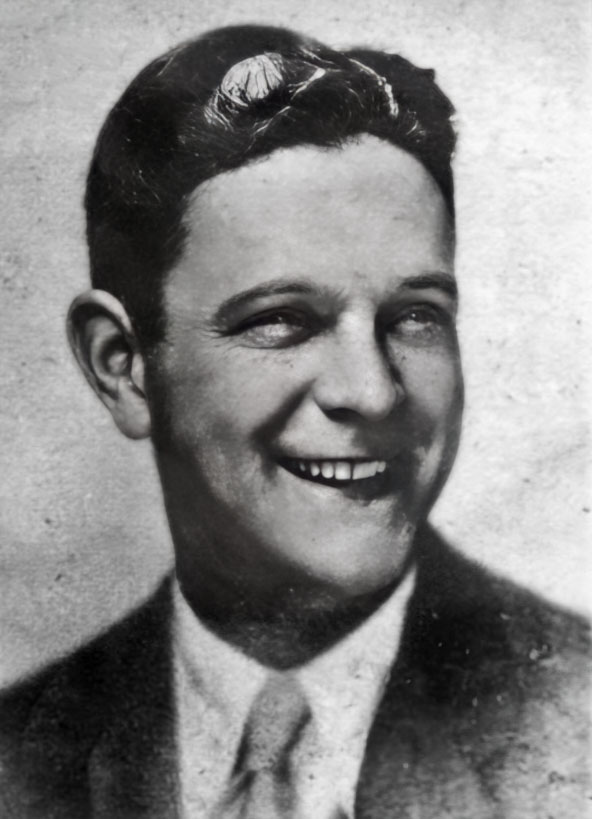
Glenn Tryon (born Glenn Monroe Kunkel; August 2, 1898 – April 18, 1970) was an American film actor, screenwriter, director and producer. He appeared in more than 60 films between 1923 and 1951.

Key Information

Biography

[edit]

He was born as Glenn Monroe Kunkel on August 2, 1898, in Juliaetta, Idaho. Tryon was married to actress Jane Frazee from 1942 to 1947 and they had one son, Timothy Tryon. Glenn was also married to actress Lillian Hall (1896–1959). Tryon died on April 18, 1970, in Orlando, Florida at the age of 71.

Selected filmography

[edit]
Tryon and Merna Kennedy in the film Skinner Steps Out (1929)

References

[edit]
[edit]
Revisions and contributorsEdit on WikipediaRead on Wikipedia
from Grokipedia
Glenn Tryon was an American actor, screenwriter, director, and producer known for his starring roles in silent film comedies at Hal Roach Studios during the 1920s. He was signed by Hal Roach in 1924 as a potential comedy lead to succeed Harold Lloyd, headlining a series of two-reel shorts and appearing in prominent roles in numerous Roach productions, including 45 Minutes from Hollywood (1926), an early film featuring Oliver Hardy in a major role and a cameo by Stan Laurel. Although he did not achieve major stardom comparable to Lloyd, his work positioned him as a key figure in the studio's silent-era comedy output. Tryon began his entertainment career in vaudeville and regional theater before entering films in 1923, initially appearing in supporting and leading roles in Roach shorts like The Battling Orioles (1924) and The White Sheep (1924). As the silent era transitioned to sound, he shifted toward feature films and behind-the-camera work, contributing screenplays and dialogue to titles including Roberta (1935) and directing features such as Beauty for the Asking (1939) and Nazty Nuisance (1943). He later served as an associate producer at Universal and Hal Roach, working on comedies through the 1940s, and made occasional on-screen appearances in later years. Tryon's multifaceted career bridged the silent comedy heyday and the studio system's sound era, reflecting the evolving demands of Hollywood production.

Early life and stage career

Birth and youth

Glenn Tryon was born Glenn Monroe Kunkel on August 2, 1898, in Juliaetta, Latah County, Idaho, United States. He was the son of Albert Kunkel and Grace Harriett Perkins. Details of his childhood in rural Idaho remain limited in available records, though Tryon developed an early interest in the performing arts that would shape his later path.

Vaudeville and stage experience

Glenn Tryon began his professional performing career in vaudeville and regional melodrama, gaining experience as a stage actor before entering the motion picture industry. As a former vaudevillian and stage performer, he possessed the comedic timing and physical skills valued in early comedy shorts. In 1924, producer Hal Roach signed Tryon to appear in a series of two-reel comedies, viewing him as stage-trained talent suitable to fill the leading role as a replacement for Harold Lloyd. The contract took effect as soon as Tryon's existing vaudeville commitment expired, marking his transition to films around that period.

Acting career

Hal Roach comedies and silent era prominence

Glenn Tryon entered the film industry in 1923 with a role in the Hal Roach-produced short Mother's Joy, appearing alongside Stan Laurel. The following year, Hal Roach signed him to a contract in 1924, positioning Tryon as a potential successor to Harold Lloyd in a series of two-reel comedies featuring an athletic, collegiate-style lead. Tryon starred in numerous Hal Roach shorts during the mid-1920s, including The Battling Orioles (1924), Long Pants (1926), and others that capitalized on his physical comedy skills and youthful persona. He also took leading roles in silent features such as Lonesome (1928), a romantic comedy-drama directed by Paul Fejös, and Skinner Steps Out (1929), based on the story Skinner's Dress Suit. Despite Roach's efforts to groom him as a major comedy star, Tryon did not attain the widespread fame or box-office dominance of contemporaries like Lloyd. He appeared in over 60 films overall, with the majority of his credits occurring in the 1920s through shorts and occasional features. As leading opportunities in silent comedies waned toward the end of the decade, Tryon's prominence in that format began to decline.

Sound era and supporting roles

With the introduction of sound films, Glenn Tryon shifted from starring roles in silent comedies to more limited on-screen work, appearing in several early talkies but gradually taking smaller parts. He featured in Broadway (1929), Dames Ahoy! (1930) as Jimmy Chase, and Dragnet Patrol (1931) as Larry White, alongside other early sound efforts such as King of Jazz (1930) in multiple vignettes, The Midnight Special (1930), The Secret Menace (1931) as Bob Jordan, and several low-budget features and shorts through the early 1930s, often in lead or co-lead capacities in B-movies, westerns, and adventures. After the early 1930s, Tryon's acting appearances grew increasingly sporadic and confined to supporting or bit roles, reflecting his parallel transition to screenwriting and directing. Notable later credits included George White's Scandals (1945), in which he portrayed George White, Variety Girl (1947) as Bill Farris, and Home Town Story (1951) as Kenlock. Across his career, Tryon amassed 68 acting credits between 1923 and 1951, with the majority occurring in the silent era and far fewer in the sound period.

Screenwriting career

Transition and 1930s contributions

After his leading roles in films diminished with the transition to sound and the end of his tenure as a Hal Roach star, Glenn Tryon reinvented himself as a screenwriter in the 1930s. He accumulated 13 writing credits across his career, with most of his contributions concentrated in this decade, including adaptations, original screenplays, additional dialogue, and uncredited work on comedy and dialogue. Key credits from this period include his adaptation of Rafter Romance (1933), the screenplay for Bachelor Bait (1934), additional dialogue for the musical Roberta (1935), and the screenplay for Small Town Boy (1937). He also provided uncredited contributions, such as dialogue and comedy sequences for In Person (1935) and additional dialogue for Orchids to You (1935). Some of Tryon's screenwriting overlapped with his early directing work during this transitional phase.

Directing career

Feature films and shorts from 1934 onward

Glenn Tryon began his directing career in 1934 with the feature film Gridiron Flash. He accumulated a total of 11 directing credits from the mid-1930s through the late 1940s, consisting primarily of feature films along with occasional short-length projects and one uncredited assignment. His credits during this period include Gridiron Flash (1934), Two in Revolt (1936), Easy to Take (1936), Small Town Boy (1937), Wings of the Morning (1937, original director uncredited), The Law West of Tombstone (1938), Beauty for the Asking (1939), Double Date (1941), Nazty Nuisance (1943), Meet Miss Bobby Socks (1944), and Miss Mink of 1949 (1949). These productions were largely low-budget features and comedies released by studios such as RKO Radio Pictures and Columbia Pictures, typical of the B-film offerings that formed the lower half of double bills during Hollywood's studio era. Nazty Nuisance stands out as a short-length satirical comedy, while the others were feature-length. Tryon's directing work concluded with Miss Mink of 1949, after which he shifted focus to other industry roles.

Producing career

Associate producer at major studios

In 1941, Glenn Tryon transitioned into the role of associate producer at major studios, beginning with assignments at Universal Pictures and Hal Roach Studios. His work in this capacity continued through the early 1940s, focusing on low-budget studio productions typical of the era's assembly-line filmmaking. During this period, he earned 7 producer credits (including associate producer roles), contributing to the completion and management of various features and shorts. This phase followed his earlier involvement in directing.

Personal life

Glenn Tryon was born on August 2, 1898, in Juliaetta, Idaho, and died on April 18, 1970, in Orlando, Florida.

Marriages and family

Glenn Tryon was married twice, both times to actresses. His first marriage was to Lillian Hall, on October 10, 1924, in Santa Ana, Orange, California. No children are recorded from this union. His second marriage was to Jane Frazee on May 28, 1942, in Yuma, Arizona. The couple had one son, Timothy Tryon. This marriage ended in divorce on April 16, 1947, in Las Vegas, Nevada.

Death

Final years and passing

In his final years, Glenn Tryon retired from the film industry after completing his last credited work in 1951. Tryon passed away on April 18, 1970, in Orlando, Florida, at the age of 71.
Add your contribution
Related Hubs
User Avatar
No comments yet.