
Recent from talks
Gloria von Thurn und Taxis
Knowledge base stats:
Talk channels stats:
Members stats:
Gloria von Thurn und Taxis
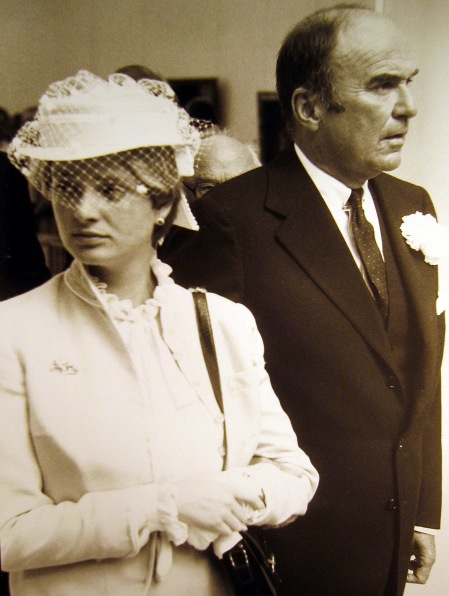
Gloria, Dowager Princess of Thurn and Taxis (Mariae Gloria Ferdinanda Joachima Josephine Wilhelmine Huberta; born Countess Gloria von Schönburg-Glauchau, 23 February 1960) is a German socialite, businesswoman, Catholic activist, art collector, and artist. Upon the death of her husband, Johannes, 11th Prince of Thurn and Taxis, she took on the management of Schloss St. Emmeram and the enterprises of the House of Thurn and Taxis. She has been an advocate for Traditionalist Catholicism, particularly the continuation of the Tridentine Mass.
Gloria Gräfin von Schönburg-Glauchau was born on 23 February 1960 in Stuttgart, Baden-Württemberg, West Germany. Her father, Joachim, Count of Schönburg-Glauchau, was the nominal head of the Glauchau branch of the German princely House of Schönburg, a mediatised dynasty within the former Holy Roman Empire. Her mother, Countess Beatrix Széchenyi de Sárvár-Felsővidék, was a member of the Széchenyi family and a descendant of Count István Széchenyi. Her parents divorced in 1986 and her father married Ursula Zwicker. Gloria is one of five children from her father's two marriages. She has two brothers, Carl-Alban Count von Schönburg-Glauchau (born 1966), formerly head of the family, who renounced his rights after his marriage to Juliet Helene Beechy-Fowler, daughter of Nicholas Beechy-Fowler and Countess Jutta von Pfeil und Klein-Ellguth; and Alexander, Count of Schönburg-Glauchau, a writer and the nominal head of the Schönburg-Glauchau branch of the family, who is married according to the rules of the house to Princess Irina of Hesse, grandniece of Prince Philip, Duke of Edinburgh, consort of Queen Elizabeth II. One of her sisters was the socialite Countess Maya von Schönburg-Glauchau. Gloria was baptized as an infant and raised in the Catholic faith.
When she was a child, Gloria and her family moved to Africa, living in Togo and Somalia, where her father worked as an author and a journalist. Although they are descendants of German nobility, her family had little wealth as a result of Communism in Germany and Hungary. In 1945 the Soviet government of Saxony seized her family's ancestral homes, castles Wechselburg, Hinterglauchau, Forderglauchau, Rochsburg, Alt-Penig, and Neu-Penig. She moved back to West Germany with her family in 1970 and enrolled at the Konrad-Adenauer-Gymnasium in Meckenheim, later studying at Kloster Wald, a girls' boarding school in a Benedictine convent. As a teenager she worked as a waitress at a ski resort in St Moritz, Switzerland.
In 1979, at age 19, Gloria met Johannes, Hereditary Prince of Thurn and Taxis, age 53, at a luncheon he hosted at Nürnberger Bratwurst Glöckl in Munich. She began a relationship with him soon thereafter and they married on 31 May 1980 in a Catholic ceremony in Regensburg, Bavaria. At the time of their marriage Johannes was estimated to be worth between $2 and $3 billion. Gloria and her husband are fourth cousins twice removed, both descendants of Karl Alexander, 5th Prince of Thurn and Taxis. Upon their marriage Gloria became the Hereditary Princess of Thurn and Taxis. When her father-in-law, Karl August, 10th Prince of Thurn and Taxis, died in 1982, her husband became the 11th Prince of Thurn and Taxis.
The couple had three children:
Gloria and her husband were known for their lavish lifestyle, becoming social and fashion icons in the 1980s. She became part of the European jet set and was referred to in the media as the "punk princess" and "Princess TNT".
When her husband died in 1990, Gloria was left to settle his debts, which totaled $500 million. Her son, Albert, became the 12th Prince of Thurn and Taxis upon Johannes's death. She acted as the trustee for Albert, taking over management of the family estate, Saint Emmeram's Abbey.
She went into isolation from society, studying finance, accounting, and estate management and selling off family property, including art, jewelry, castles, cars, and land to preserve the family fortune. During this time she undertook a spiritual pilgrimage to the Sanctuary of Our Lady of Lourdes in Lourdes, France, emerging as a Roman Catholic activist.
Hub AI
Gloria von Thurn und Taxis AI simulator
(@Gloria von Thurn und Taxis_simulator)
Gloria von Thurn und Taxis
Gloria, Dowager Princess of Thurn and Taxis (Mariae Gloria Ferdinanda Joachima Josephine Wilhelmine Huberta; born Countess Gloria von Schönburg-Glauchau, 23 February 1960) is a German socialite, businesswoman, Catholic activist, art collector, and artist. Upon the death of her husband, Johannes, 11th Prince of Thurn and Taxis, she took on the management of Schloss St. Emmeram and the enterprises of the House of Thurn and Taxis. She has been an advocate for Traditionalist Catholicism, particularly the continuation of the Tridentine Mass.
Gloria Gräfin von Schönburg-Glauchau was born on 23 February 1960 in Stuttgart, Baden-Württemberg, West Germany. Her father, Joachim, Count of Schönburg-Glauchau, was the nominal head of the Glauchau branch of the German princely House of Schönburg, a mediatised dynasty within the former Holy Roman Empire. Her mother, Countess Beatrix Széchenyi de Sárvár-Felsővidék, was a member of the Széchenyi family and a descendant of Count István Széchenyi. Her parents divorced in 1986 and her father married Ursula Zwicker. Gloria is one of five children from her father's two marriages. She has two brothers, Carl-Alban Count von Schönburg-Glauchau (born 1966), formerly head of the family, who renounced his rights after his marriage to Juliet Helene Beechy-Fowler, daughter of Nicholas Beechy-Fowler and Countess Jutta von Pfeil und Klein-Ellguth; and Alexander, Count of Schönburg-Glauchau, a writer and the nominal head of the Schönburg-Glauchau branch of the family, who is married according to the rules of the house to Princess Irina of Hesse, grandniece of Prince Philip, Duke of Edinburgh, consort of Queen Elizabeth II. One of her sisters was the socialite Countess Maya von Schönburg-Glauchau. Gloria was baptized as an infant and raised in the Catholic faith.
When she was a child, Gloria and her family moved to Africa, living in Togo and Somalia, where her father worked as an author and a journalist. Although they are descendants of German nobility, her family had little wealth as a result of Communism in Germany and Hungary. In 1945 the Soviet government of Saxony seized her family's ancestral homes, castles Wechselburg, Hinterglauchau, Forderglauchau, Rochsburg, Alt-Penig, and Neu-Penig. She moved back to West Germany with her family in 1970 and enrolled at the Konrad-Adenauer-Gymnasium in Meckenheim, later studying at Kloster Wald, a girls' boarding school in a Benedictine convent. As a teenager she worked as a waitress at a ski resort in St Moritz, Switzerland.
In 1979, at age 19, Gloria met Johannes, Hereditary Prince of Thurn and Taxis, age 53, at a luncheon he hosted at Nürnberger Bratwurst Glöckl in Munich. She began a relationship with him soon thereafter and they married on 31 May 1980 in a Catholic ceremony in Regensburg, Bavaria. At the time of their marriage Johannes was estimated to be worth between $2 and $3 billion. Gloria and her husband are fourth cousins twice removed, both descendants of Karl Alexander, 5th Prince of Thurn and Taxis. Upon their marriage Gloria became the Hereditary Princess of Thurn and Taxis. When her father-in-law, Karl August, 10th Prince of Thurn and Taxis, died in 1982, her husband became the 11th Prince of Thurn and Taxis.
The couple had three children:
Gloria and her husband were known for their lavish lifestyle, becoming social and fashion icons in the 1980s. She became part of the European jet set and was referred to in the media as the "punk princess" and "Princess TNT".
When her husband died in 1990, Gloria was left to settle his debts, which totaled $500 million. Her son, Albert, became the 12th Prince of Thurn and Taxis upon Johannes's death. She acted as the trustee for Albert, taking over management of the family estate, Saint Emmeram's Abbey.
She went into isolation from society, studying finance, accounting, and estate management and selling off family property, including art, jewelry, castles, cars, and land to preserve the family fortune. During this time she undertook a spiritual pilgrimage to the Sanctuary of Our Lady of Lourdes in Lourdes, France, emerging as a Roman Catholic activist.
Recent media