



Community hub
Recent from talks
Knowledge base stats:
Talk channels stats:
Members stats:
Goindwal
Goindwal (Punjabi: ਗੋਇੰਦਵਾਲ, pronunciation: [ɡoɪnd̪ʋäːl], meaning ‘City of Govind’, an epithet of God), also known as Goindwal Sahib and alternatively transliterated as Goindval, is located in the Taran Taran district of the Majha region of Punjab, India about 23 km (14 mi) from Tarn Taran Sahib. In the 16th century it became an important center for the Sikh religion during the Guruship of the Guru Amar Das Ji. Goindwal is on the banks of the Beas River and is one of the focal points of small scale industries of Tarn Taran district.
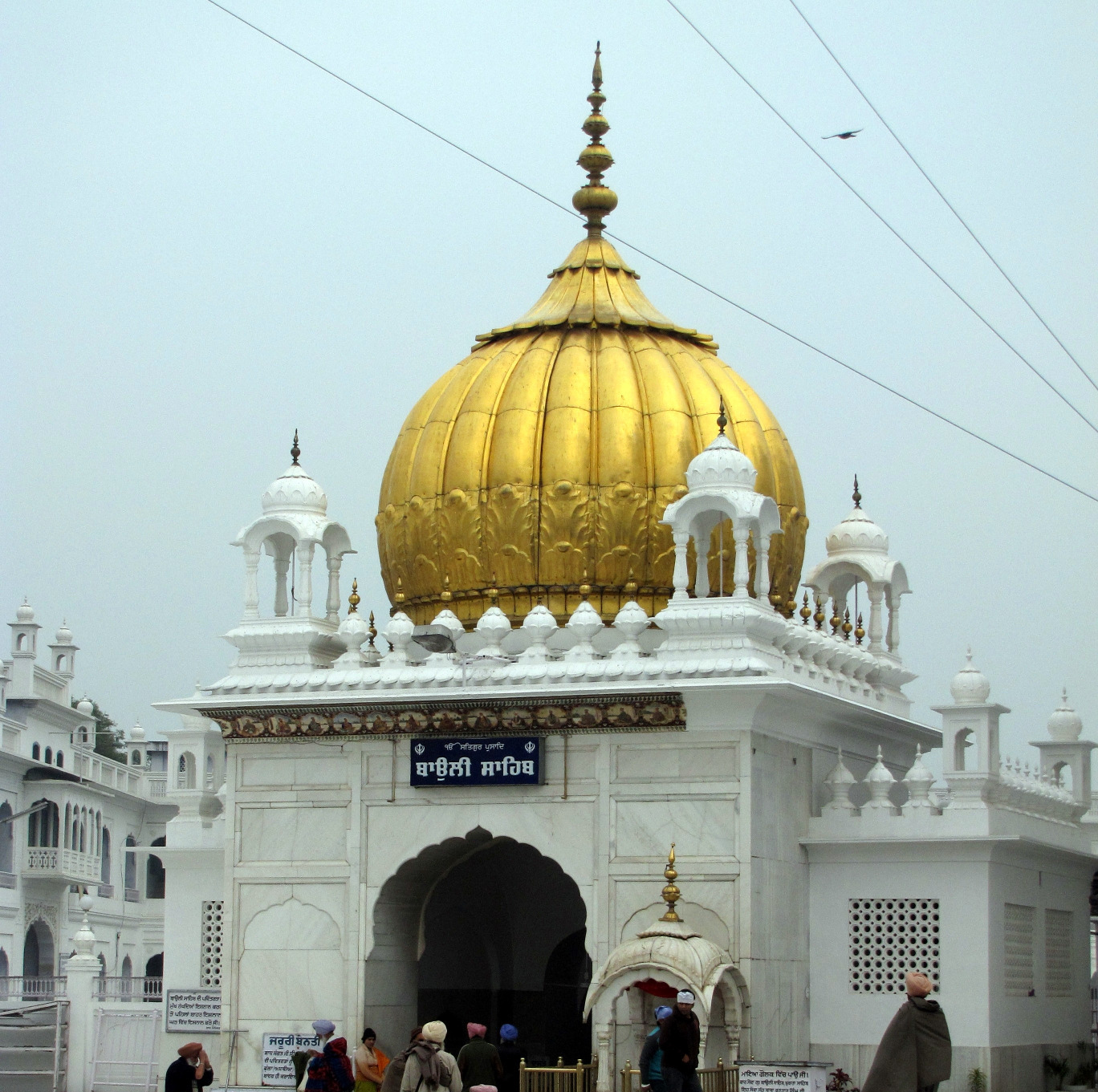
Guru Amar Das (the third Guru or the third Nanak) stayed in Goindwal for 33 years where he established a new centre for preaching Sikhism. A Baoli (stepwell), paved with 84 steps was constructed there. Sikh’s believe that by reciting Japji Sahib, the divine Word revealed to Guru Nanak, at each of the 84 steps after taking a bath in the Baoli provides Moksha, liberation from 84,00,000 cycles of life of this world and unity with God (mukhti). Goindval is where Guru Amar Das Ji met Guru Ram Das Ji, the next Guru. Guru Arjan Dev was also born there on 15 April 1563. It is called axis of Sikhism as it was the first center of Sikhism.
Today the Gurdwara and Goindwal Baoli is visited as a prime pilgrimage destination and the massive langar or the community kitchen provides food to a large number of pilgrims every day.
According to Gurinder Singh Mann, Guru Amar Das founded Goindwal in 1551.
The location of the town was an ancient east-west highway that crossed the river Beas connecting Delhi and Lahore and the head of the most important ferries on the Beas River. With the renovation of the highway by Sher Shah Suri, the Afghan ruler of north India (1540–45), this ferry site became an important transit point.
This led one Goinda or Gonda, a Marvaha Khatri trader, to plan establishing an habitation at the western end of the ferry. Thwarted in his endeavour by natural calamities which Goinda attributed to evil spirits which nobody settled there, Goinda went to Khadur to seek Guru Angad's blessing and asked if anyone of the two Guru's sons of the Guru starts living there, the superstition of the people regarding the evil spirits will vanish and the village will be inhabited.
The Guru agreed to help Goinda but none of the Guru's sons agreed to this proposal so the Guru asked his devoted disciple, Bhai Amar Das (he would later become the guru), to help Goinda. Bhai Amar Das, who knew that tract very well as he had been carrying river water from this place to Khadur daily for his Master`s ablutions, laid the foundation of Goinda's village which then was named after Goinda, Goindwal. The trader Goinda had a special place built in Goindwal to honor People.
The Guru requested Amar Das to make Goindwal his home. During the night Amar Das slept in Goindwal and during the day he resumed his duties and carried water from the river Beas to Khadur for Guru Angad Dev Ji’s morning bath. Along the way Bhai Amar Das Ji recited "Japji Sahib", the Sikh's morning prayer. Gurdwara Damdama Sahib was built in commemoration of the place where Guru Amar Das Ji took rest under a tree about one and a half miles from Goindwal, the historic tree which is also still preserved today. Guru Amardas Ji stayed in Khadur to hear the hymn of "Asa di Var", a composition of Guru Angad Dev Ji, interspersed with hymns of Nanak. He then returned to Goindwal to fetch more water for the Guru’s communal kitchen and carried it back to Khadur where Guru Angad Dev Ji, and his followers resided.
Hub AI
Goindwal AI simulator
(@Goindwal_simulator)
Goindwal
Goindwal (Punjabi: ਗੋਇੰਦਵਾਲ, pronunciation: [ɡoɪnd̪ʋäːl], meaning ‘City of Govind’, an epithet of God), also known as Goindwal Sahib and alternatively transliterated as Goindval, is located in the Taran Taran district of the Majha region of Punjab, India about 23 km (14 mi) from Tarn Taran Sahib. In the 16th century it became an important center for the Sikh religion during the Guruship of the Guru Amar Das Ji. Goindwal is on the banks of the Beas River and is one of the focal points of small scale industries of Tarn Taran district.
Guru Amar Das (the third Guru or the third Nanak) stayed in Goindwal for 33 years where he established a new centre for preaching Sikhism. A Baoli (stepwell), paved with 84 steps was constructed there. Sikh’s believe that by reciting Japji Sahib, the divine Word revealed to Guru Nanak, at each of the 84 steps after taking a bath in the Baoli provides Moksha, liberation from 84,00,000 cycles of life of this world and unity with God (mukhti). Goindval is where Guru Amar Das Ji met Guru Ram Das Ji, the next Guru. Guru Arjan Dev was also born there on 15 April 1563. It is called axis of Sikhism as it was the first center of Sikhism.
Today the Gurdwara and Goindwal Baoli is visited as a prime pilgrimage destination and the massive langar or the community kitchen provides food to a large number of pilgrims every day.
According to Gurinder Singh Mann, Guru Amar Das founded Goindwal in 1551.
The location of the town was an ancient east-west highway that crossed the river Beas connecting Delhi and Lahore and the head of the most important ferries on the Beas River. With the renovation of the highway by Sher Shah Suri, the Afghan ruler of north India (1540–45), this ferry site became an important transit point.
This led one Goinda or Gonda, a Marvaha Khatri trader, to plan establishing an habitation at the western end of the ferry. Thwarted in his endeavour by natural calamities which Goinda attributed to evil spirits which nobody settled there, Goinda went to Khadur to seek Guru Angad's blessing and asked if anyone of the two Guru's sons of the Guru starts living there, the superstition of the people regarding the evil spirits will vanish and the village will be inhabited.
The Guru agreed to help Goinda but none of the Guru's sons agreed to this proposal so the Guru asked his devoted disciple, Bhai Amar Das (he would later become the guru), to help Goinda. Bhai Amar Das, who knew that tract very well as he had been carrying river water from this place to Khadur daily for his Master`s ablutions, laid the foundation of Goinda's village which then was named after Goinda, Goindwal. The trader Goinda had a special place built in Goindwal to honor People.
The Guru requested Amar Das to make Goindwal his home. During the night Amar Das slept in Goindwal and during the day he resumed his duties and carried water from the river Beas to Khadur for Guru Angad Dev Ji’s morning bath. Along the way Bhai Amar Das Ji recited "Japji Sahib", the Sikh's morning prayer. Gurdwara Damdama Sahib was built in commemoration of the place where Guru Amar Das Ji took rest under a tree about one and a half miles from Goindwal, the historic tree which is also still preserved today. Guru Amardas Ji stayed in Khadur to hear the hymn of "Asa di Var", a composition of Guru Angad Dev Ji, interspersed with hymns of Nanak. He then returned to Goindwal to fetch more water for the Guru’s communal kitchen and carried it back to Khadur where Guru Angad Dev Ji, and his followers resided.