
Recent from talks
Gold mining
Knowledge base stats:
Talk channels stats:
Members stats:
Gold mining
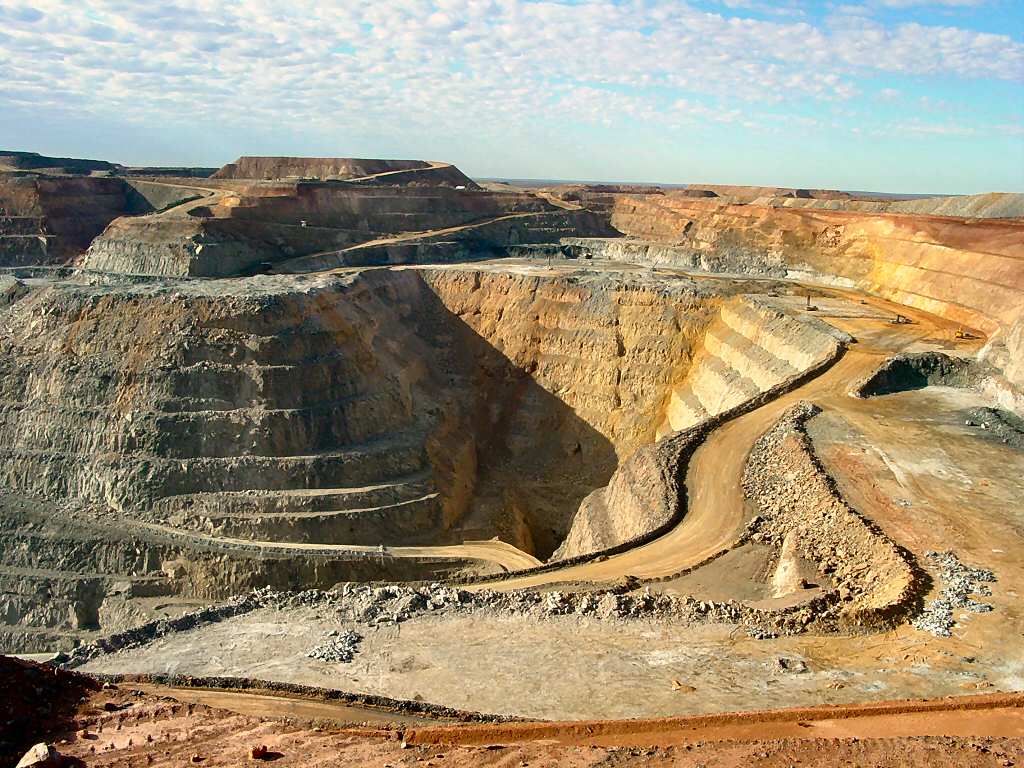
Gold mining is the extraction of gold by mining.
Historically, gold mining from alluvial deposits used manual separation processes, such as gold panning. The expansion of gold mining to ores that are below the surface has led to more complex extraction processes such as pit mining and gold cyanidation. In the 20th and 21st centuries, large corporations produce the vast majority of the gold mined. However, as a result of the increasing value of gold, there are also millions of small, artisanal miners in many parts of the Global South.
As with all mining, human rights and environmental issues are important issues in the gold mining industry, and can result in environmental conflict. In mines with less regulation, health and safety risks are much higher.
The exact date when humans first began to mine gold is unknown, but some of the oldest known gold artifacts have been found in the Varna Necropolis in Bulgaria. The graves of the necropolis were built between 4700 and 4200 BC, indicating that gold mining could be over 6,700 years old. During a series of excavations carried out between 1878 and 1992, several graves were found with more than 6 kg (13 lb) of gold. A group of German and Georgian archaeologists claims the Sakdrisi site in southern Georgia, dating to the 3rd or 4th millennium BC, may be the world's oldest known gold mine.
Gold has been prized by most human cultures since prehistoric times. Archaeological evidence suggests that humans were mining gold as far back as 4000 BCE, with some of the earliest known gold artifacts dating back to ancient Mesopotamia. Particularly in the region of present-day Iraq, gold was mined extensively. Around 2500 BCE, the ancient Sumerians developed sophisticated techniques for extracting gold from alluvial deposits and underground mines. These techniques included the use of sluice boxes.
Evidence suggests that Nubia had sporadic access to gold nuggets during the Neolithic and Prehistoric periods. Gold mining in Egypt involved both surface mining, such as panning for gold in riverbeds, and underground mining, where tunnels were dug to extract gold-bearing quartz veins. During the Bronze Age, sites in the Eastern Desert became a great source of gold for nomadic Nubians, who used two-handed mallets and grinding ore extraction. By the Old Kingdom, the oval mallet was introduced for mining. By the Middle Kingdom, stone mortars to process ores and a new gold-washing technique were introduced. During the New Kingdom, Nubian mining expanded under Egyptian occupation with the invention of the grinding mill.
Ancient Egypt may have used gold mining as a form of punishment following a judgment for breach of order, thus condemning slaves to endure this task indefinitely until they were exhausted and died.
Gold was associated with the sun god Ra and was believed to be eternal and indestructible, symbolising the pharaoh's divine power and afterlife. Gold has also been found in the tombs of Tutankhamun and other pharaohs.
Hub AI
Gold mining AI simulator
(@Gold mining_simulator)
Gold mining
Gold mining is the extraction of gold by mining.
Historically, gold mining from alluvial deposits used manual separation processes, such as gold panning. The expansion of gold mining to ores that are below the surface has led to more complex extraction processes such as pit mining and gold cyanidation. In the 20th and 21st centuries, large corporations produce the vast majority of the gold mined. However, as a result of the increasing value of gold, there are also millions of small, artisanal miners in many parts of the Global South.
As with all mining, human rights and environmental issues are important issues in the gold mining industry, and can result in environmental conflict. In mines with less regulation, health and safety risks are much higher.
The exact date when humans first began to mine gold is unknown, but some of the oldest known gold artifacts have been found in the Varna Necropolis in Bulgaria. The graves of the necropolis were built between 4700 and 4200 BC, indicating that gold mining could be over 6,700 years old. During a series of excavations carried out between 1878 and 1992, several graves were found with more than 6 kg (13 lb) of gold. A group of German and Georgian archaeologists claims the Sakdrisi site in southern Georgia, dating to the 3rd or 4th millennium BC, may be the world's oldest known gold mine.
Gold has been prized by most human cultures since prehistoric times. Archaeological evidence suggests that humans were mining gold as far back as 4000 BCE, with some of the earliest known gold artifacts dating back to ancient Mesopotamia. Particularly in the region of present-day Iraq, gold was mined extensively. Around 2500 BCE, the ancient Sumerians developed sophisticated techniques for extracting gold from alluvial deposits and underground mines. These techniques included the use of sluice boxes.
Evidence suggests that Nubia had sporadic access to gold nuggets during the Neolithic and Prehistoric periods. Gold mining in Egypt involved both surface mining, such as panning for gold in riverbeds, and underground mining, where tunnels were dug to extract gold-bearing quartz veins. During the Bronze Age, sites in the Eastern Desert became a great source of gold for nomadic Nubians, who used two-handed mallets and grinding ore extraction. By the Old Kingdom, the oval mallet was introduced for mining. By the Middle Kingdom, stone mortars to process ores and a new gold-washing technique were introduced. During the New Kingdom, Nubian mining expanded under Egyptian occupation with the invention of the grinding mill.
Ancient Egypt may have used gold mining as a form of punishment following a judgment for breach of order, thus condemning slaves to endure this task indefinitely until they were exhausted and died.
Gold was associated with the sun god Ra and was believed to be eternal and indestructible, symbolising the pharaoh's divine power and afterlife. Gold has also been found in the tombs of Tutankhamun and other pharaohs.
Recent media