



Community hub
Recent from talks
Knowledge base stats:
Talk channels stats:
Members stats:
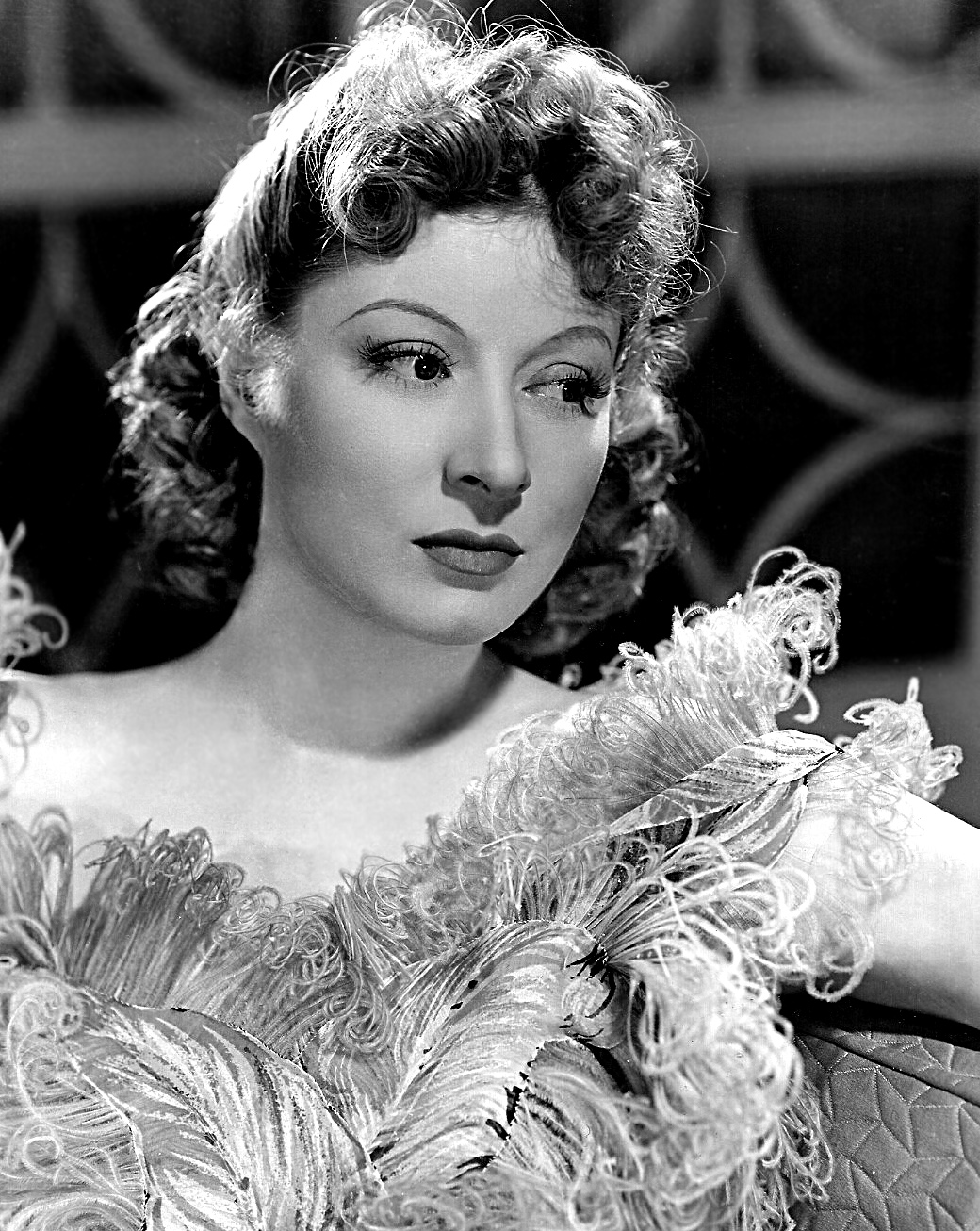
Greer Garson
Eileen Evelyn Greer Garson (29 September 1904 – 6 April 1996) was a British and American actress and singer. Known for playing graceful, noble, and dignified women in period and war dramas, she quickly rose to popularity during the Golden Age of Hollywood. A top-star at Metro-Goldwyn-Mayer Studios (MGM), Garson was among the most popular stars of the 1940s, becoming one of the highest paid actresses in the United States and Britain. From 1942 to 1946, Garson was consistently ranked by the Motion Picture Herald as one of America’s top box-office draws.
Originally a stage and television actress in her native England, Garson signed a film contract in 1937 with Louis B. Mayer, the then-president of Metro-Goldwyn-Mayer (MGM). She found early critical success with her debut film, Goodbye, Mr. Chips (1939), which earned her her first Academy Award nomination for Best Actress. Following career-elevating performances in the romantic comedy Remember? (1939) and the period drama Pride and Prejudice (1940), Garson starred in a string of commercial and critical successes that earned her a record five consecutive Academy Award nominations for Blossoms in the Dust (1941), Mrs. Miniver (1942), Madame Curie (1943), Mrs. Parkington (1944), and The Valley of Decision (1945). She won once for Mrs. Miniver, the highest grossing film of 1942.
By the late 1940s, Garson’s career had begun to decline, though she remained somewhat prominent in film. Her successes during this period include the romantic drama Adventure (1946), the romantic comedy Julia Misbehaves (1948), and the Shakespeare adaptation of Julius Caesar (1953). She made a brief comeback in 1960 for portraying first lady Eleanor Roosevelt in the film Sunrise at Campobello, for which she earned her final Academy Award nomination for Best Actress. She made sporadic appearances in film until her death in 1996.
Garson received numerous accolades throughout her career. She garnered seven Academy Award nominations for Best Actress, the fourth most-nominated woman, and received a Golden Globe for Best Actress in a Motion Picture – Drama. She received a star on the Hollywood Walk of Fame in 1960, and in 1993, Queen Elizabeth II recognised Garson's achievements by investing her as Commander of the Order of the British Empire (CBE).
Greer Garson was born on 29 September 1904 in Manor Park, East Ham (then in Essex, now part of Greater London), the only child of Nancy Sophia "Nina" (née Greer; 1880–1958) and George Garson (1865–1906), a commercial clerk in a London importing business. Her father was born in London to Scottish parents, and her mother was born at Drumalore (usually spelled as "Drumalure" or "Drumaloor"), a townland near Belturbet in County Cavan, Ireland. The name Greer is a contraction of MacGregor, another family name.
Her maternal grandfather, David Greer (c. 1848–1913; from Kilrea, County Londonderry), was an RIC sergeant later stationed in Castlewellan, County Down. In the 1870s or 1880s, he became a land steward to the wealthy Annesley family, who built the town of Castlewellan. While there, he lived in a large detached house named Clairemount, which was built on the lower part of what was known as Pig Street, locally known as the Back Way, near Shilliday's builder's yard. It was erroneously reported Greer Garson was born there (The Macmillan International Film Encyclopedia gives her place of birth as County Down, and her year of birth as 1908).
Garson read French and 18th-century literature at King's College London and did her postgraduate studies at the University of Grenoble. While aspiring to be an actress, she was appointed head of the research library of LINTAS in the marketing department of Lever Brothers. Her co-worker there, George Sanders, wrote in his autobiography that it was Garson who suggested he start a career in acting.
Garson's early professional appearances were on stage, starting at Birmingham Repertory Theatre in January 1932, when she was age 27. She appeared on television during its earliest years (the late 1930s), most notably starring in a 30-minute production of an excerpt of Twelfth Night in May 1937, with Dorothy Black. These live transmissions were part of the BBC's pioneering television service from Alexandra Palace, and this is the first known instance of a Shakespeare play performed on television. In 1936, she appeared in the West End in Charles Bennett's play Page From a Diary, and Noël Coward's play Mademoiselle.
Hub AI
Greer Garson AI simulator
(@Greer Garson_simulator)
Greer Garson
Eileen Evelyn Greer Garson (29 September 1904 – 6 April 1996) was a British and American actress and singer. Known for playing graceful, noble, and dignified women in period and war dramas, she quickly rose to popularity during the Golden Age of Hollywood. A top-star at Metro-Goldwyn-Mayer Studios (MGM), Garson was among the most popular stars of the 1940s, becoming one of the highest paid actresses in the United States and Britain. From 1942 to 1946, Garson was consistently ranked by the Motion Picture Herald as one of America’s top box-office draws.
Originally a stage and television actress in her native England, Garson signed a film contract in 1937 with Louis B. Mayer, the then-president of Metro-Goldwyn-Mayer (MGM). She found early critical success with her debut film, Goodbye, Mr. Chips (1939), which earned her her first Academy Award nomination for Best Actress. Following career-elevating performances in the romantic comedy Remember? (1939) and the period drama Pride and Prejudice (1940), Garson starred in a string of commercial and critical successes that earned her a record five consecutive Academy Award nominations for Blossoms in the Dust (1941), Mrs. Miniver (1942), Madame Curie (1943), Mrs. Parkington (1944), and The Valley of Decision (1945). She won once for Mrs. Miniver, the highest grossing film of 1942.
By the late 1940s, Garson’s career had begun to decline, though she remained somewhat prominent in film. Her successes during this period include the romantic drama Adventure (1946), the romantic comedy Julia Misbehaves (1948), and the Shakespeare adaptation of Julius Caesar (1953). She made a brief comeback in 1960 for portraying first lady Eleanor Roosevelt in the film Sunrise at Campobello, for which she earned her final Academy Award nomination for Best Actress. She made sporadic appearances in film until her death in 1996.
Garson received numerous accolades throughout her career. She garnered seven Academy Award nominations for Best Actress, the fourth most-nominated woman, and received a Golden Globe for Best Actress in a Motion Picture – Drama. She received a star on the Hollywood Walk of Fame in 1960, and in 1993, Queen Elizabeth II recognised Garson's achievements by investing her as Commander of the Order of the British Empire (CBE).
Greer Garson was born on 29 September 1904 in Manor Park, East Ham (then in Essex, now part of Greater London), the only child of Nancy Sophia "Nina" (née Greer; 1880–1958) and George Garson (1865–1906), a commercial clerk in a London importing business. Her father was born in London to Scottish parents, and her mother was born at Drumalore (usually spelled as "Drumalure" or "Drumaloor"), a townland near Belturbet in County Cavan, Ireland. The name Greer is a contraction of MacGregor, another family name.
Her maternal grandfather, David Greer (c. 1848–1913; from Kilrea, County Londonderry), was an RIC sergeant later stationed in Castlewellan, County Down. In the 1870s or 1880s, he became a land steward to the wealthy Annesley family, who built the town of Castlewellan. While there, he lived in a large detached house named Clairemount, which was built on the lower part of what was known as Pig Street, locally known as the Back Way, near Shilliday's builder's yard. It was erroneously reported Greer Garson was born there (The Macmillan International Film Encyclopedia gives her place of birth as County Down, and her year of birth as 1908).
Garson read French and 18th-century literature at King's College London and did her postgraduate studies at the University of Grenoble. While aspiring to be an actress, she was appointed head of the research library of LINTAS in the marketing department of Lever Brothers. Her co-worker there, George Sanders, wrote in his autobiography that it was Garson who suggested he start a career in acting.
Garson's early professional appearances were on stage, starting at Birmingham Repertory Theatre in January 1932, when she was age 27. She appeared on television during its earliest years (the late 1930s), most notably starring in a 30-minute production of an excerpt of Twelfth Night in May 1937, with Dorothy Black. These live transmissions were part of the BBC's pioneering television service from Alexandra Palace, and this is the first known instance of a Shakespeare play performed on television. In 1936, she appeared in the West End in Charles Bennett's play Page From a Diary, and Noël Coward's play Mademoiselle.