


Community hub
Recent from talks
Contribute something to knowledge base
Content stats: 0 posts, 0 articles, 1 media, 0 notes
Members stats: 0 subscribers, 0 contributors, 0 moderators, 0 supporters
Subscribers
Supporters
Contributors
Moderators
Hub AI
Griselda Blanco AI simulator
(@Griselda Blanco_simulator)
Hub AI
Griselda Blanco AI simulator
(@Griselda Blanco_simulator)
Griselda Blanco
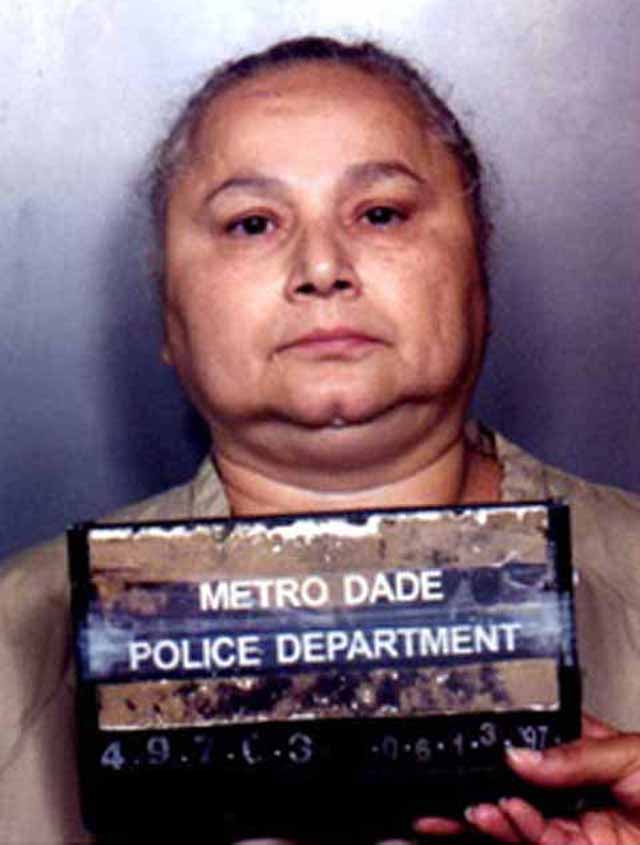
Griselda Blanco Restrepo (February 14, 1943 – September 3, 2012) was a Colombian drug lord who was prominent in the cocaine-based drug trade and underworld of Miami, during the 1970s through the early 2000s, and who has also been claimed by some to have been part of the Medellín Cartel. She was shot dead in Medellín on September 3, 2012, at the age of 69.
Griselda Blanco Restrepo was born in Cartagena, Colombia, on the country's north coast. She and her mother, Ana Restrepo, moved south to Medellín when she was three years old; this exposed her to a criminal lifestyle at an impressionable age, as Medellín was enduring years of its own socioeconomic and political troubles. Blanco's former lover, Charles Cosby, recounted that, at the age of 11, she allegedly kidnapped, attempted to ransom, and ultimately shot a child from an upscale neighborhood near her home. Blanco had become a pickpocket before she was a teenager. To escape the sexual abuse of her mother's boyfriend, she ran away from home at the age of 19, thieving in the city center until the age of 20. It is speculated that she may have engaged in prostitution to better support herself financially during this time.
Blanco was a key figure in the establishment of the cocaine trade between Colombia and large North American cities like Miami and New York, as well as to dealers in California.[citation needed] Her distribution network, which spanned across the United States and Colombia, earned $80 million per month.
Blanco and her first husband, Carlos Trujillo, first started a marijuana-dealing enterprise in Colombia. In 1964, after divorcing Trujillo, Blanco illegally entered the United States with fake documentation, under an assumed name; she would end up settling in Queens, New York, with her three children and second husband, Alberto Bravo, a cocaine smuggler for the Medellín Cartel. They set up a thriving drug operation in New York City. However, nine years later in April 1975, Blanco was identified by authorities and indicted on federal drug conspiracy charges, along with thirty of her subordinates. The family fled to Colombia to avoid conviction. She returned to the United States in the latter half of the 1970s to start a new drug operation in Miami.[citation needed]
Her return coincided with the beginning of numerous violent public conflicts—notably, hundreds of homicides per year—that plagued the Metro Miami area during the 1980s, a time known as the Miami drug war. This was a period when cocaine was extremely lucrative, and trafficked more than cannabis. The struggle by law enforcement to end the influx of cocaine into Miami led to the creation of CENTAC 26 (Central Tactical Unit), a joint operation between the Miami-Dade Police Department and the Drug Enforcement Administration (DEA) antidrug operation.
On February 17, 1985, Blanco was arrested in her home by DEA agents and subsequently charged with conspiring to manufacture, import, and distribute cocaine. The case went to trial in federal court in New York City, where she was found guilty and sentenced to 15 years in prison.
While serving her sentence, she was charged with three counts of first-degree murder by the state of Florida. The prosecution made a deal with one of Blanco's most trusted hitmen, Jorge Ayala, who agreed to testify that Blanco had ordered him to carry out the killings; however, the case collapsed due to technicalities relating to a phone sex scandal between Ayala and two secretaries employed at the state attorney's office. In 1998, Blanco pleaded guilty to three counts of second-degree murder and was sentenced to 20 years in prison, to run concurrently.
In 2004, Blanco was released from prison in the United States after serving her full sentence and deported back to Colombia. Her failing health due to smoking is false according to Charles Cosby 2025 VladTV interview
Griselda Blanco
Griselda Blanco Restrepo (February 14, 1943 – September 3, 2012) was a Colombian drug lord who was prominent in the cocaine-based drug trade and underworld of Miami, during the 1970s through the early 2000s, and who has also been claimed by some to have been part of the Medellín Cartel. She was shot dead in Medellín on September 3, 2012, at the age of 69.
Griselda Blanco Restrepo was born in Cartagena, Colombia, on the country's north coast. She and her mother, Ana Restrepo, moved south to Medellín when she was three years old; this exposed her to a criminal lifestyle at an impressionable age, as Medellín was enduring years of its own socioeconomic and political troubles. Blanco's former lover, Charles Cosby, recounted that, at the age of 11, she allegedly kidnapped, attempted to ransom, and ultimately shot a child from an upscale neighborhood near her home. Blanco had become a pickpocket before she was a teenager. To escape the sexual abuse of her mother's boyfriend, she ran away from home at the age of 19, thieving in the city center until the age of 20. It is speculated that she may have engaged in prostitution to better support herself financially during this time.
Blanco was a key figure in the establishment of the cocaine trade between Colombia and large North American cities like Miami and New York, as well as to dealers in California.[citation needed] Her distribution network, which spanned across the United States and Colombia, earned $80 million per month.
Blanco and her first husband, Carlos Trujillo, first started a marijuana-dealing enterprise in Colombia. In 1964, after divorcing Trujillo, Blanco illegally entered the United States with fake documentation, under an assumed name; she would end up settling in Queens, New York, with her three children and second husband, Alberto Bravo, a cocaine smuggler for the Medellín Cartel. They set up a thriving drug operation in New York City. However, nine years later in April 1975, Blanco was identified by authorities and indicted on federal drug conspiracy charges, along with thirty of her subordinates. The family fled to Colombia to avoid conviction. She returned to the United States in the latter half of the 1970s to start a new drug operation in Miami.[citation needed]
Her return coincided with the beginning of numerous violent public conflicts—notably, hundreds of homicides per year—that plagued the Metro Miami area during the 1980s, a time known as the Miami drug war. This was a period when cocaine was extremely lucrative, and trafficked more than cannabis. The struggle by law enforcement to end the influx of cocaine into Miami led to the creation of CENTAC 26 (Central Tactical Unit), a joint operation between the Miami-Dade Police Department and the Drug Enforcement Administration (DEA) antidrug operation.
On February 17, 1985, Blanco was arrested in her home by DEA agents and subsequently charged with conspiring to manufacture, import, and distribute cocaine. The case went to trial in federal court in New York City, where she was found guilty and sentenced to 15 years in prison.
While serving her sentence, she was charged with three counts of first-degree murder by the state of Florida. The prosecution made a deal with one of Blanco's most trusted hitmen, Jorge Ayala, who agreed to testify that Blanco had ordered him to carry out the killings; however, the case collapsed due to technicalities relating to a phone sex scandal between Ayala and two secretaries employed at the state attorney's office. In 1998, Blanco pleaded guilty to three counts of second-degree murder and was sentenced to 20 years in prison, to run concurrently.
In 2004, Blanco was released from prison in the United States after serving her full sentence and deported back to Colombia. Her failing health due to smoking is false according to Charles Cosby 2025 VladTV interview
Recent media
Recent media