
Recent from talks
Grub Street
Knowledge base stats:
Talk channels stats:
Members stats:
Grub Street
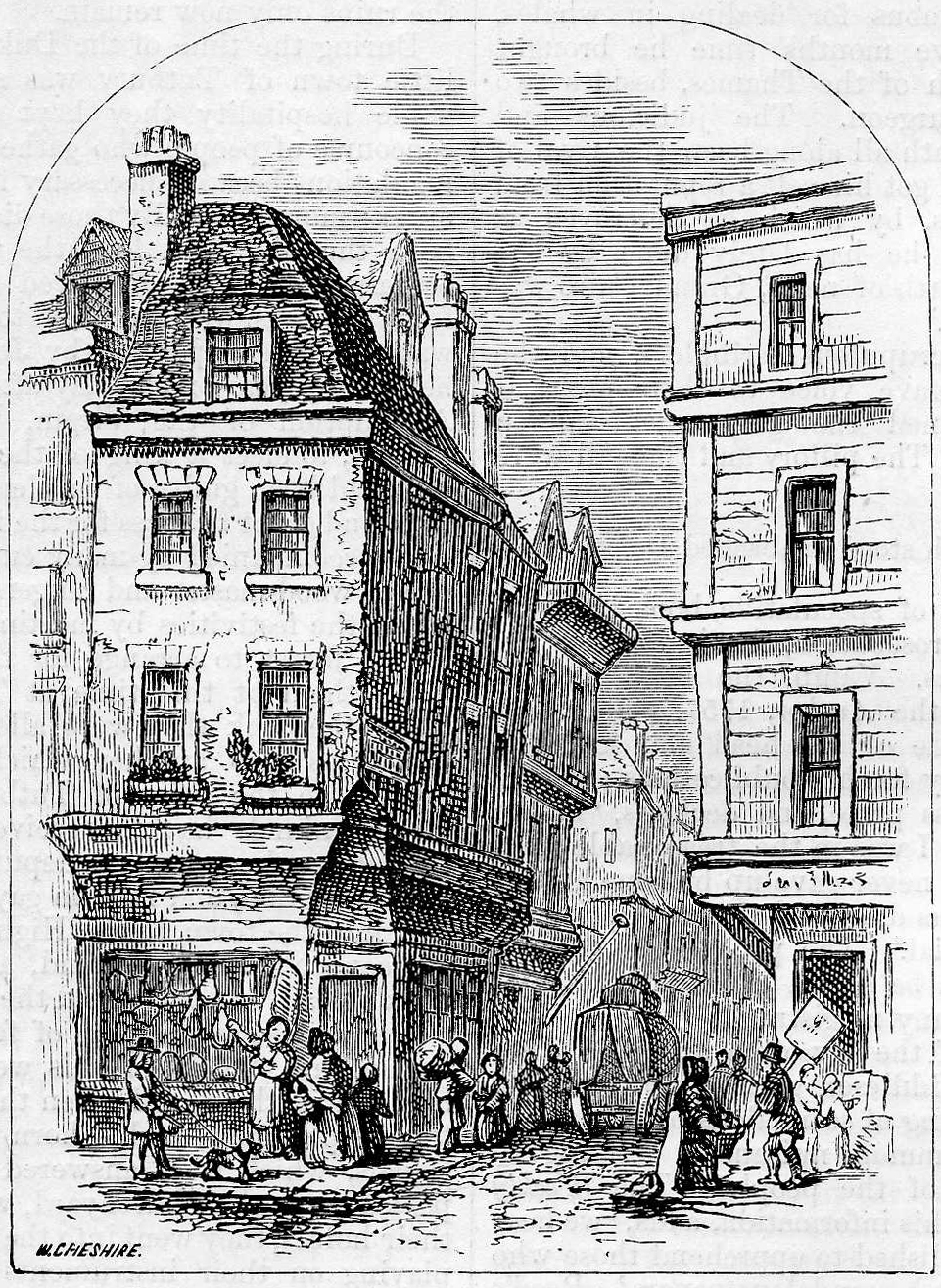
Until the early 19th century, Grub Street was a street close to London's impoverished Moorfields district that ran from Fore Street east of St Giles-without-Cripplegate north to Chiswell Street. It was pierced along its length with narrow entrances to alleys and courts, many of which retained the names of early signboards. Its bohemian society was set amidst the impoverished neighbourhood's low-rent dosshouses, brothels and coffeehouses.
Famous for its concentration of impoverished "hack writers", aspiring poets, and low-end publishers and booksellers, Grub Street existed on the margins of London's journalistic and literary scene.
According to Samuel Johnson's Dictionary, the term was "originally the name of a street... much inhabited by writers of small histories, dictionaries, and temporary poems, whence any mean production is called grubstreet". Johnson himself is said to have lived and worked on Grub Street early in his career, but this is doubtful. The contemporary image of Grub Street was popularised by Alexander Pope in his Dunciad.
The street was later renamed Milton Street, which was partly swallowed up by the Barbican Estate development, but still survives in part. The street name no longer exists, but Grub Street has since become a pejorative term for impoverished hack writers and writings of low literary value.
Grub Street appears to have taken its name from a refuse ditch that ran alongside (grub), and variations on the name include Grobstrat (1217–1243), Grobbestrate (1277–1278), Grubbestrate (1281), Grubbestrete (1298), Grubbelane (1336), Grubstrete, and Crobbestrate. Grub is also a derogatory noun applied to "a person of mean abilities, a literary hack; in recent use, a person of slovenly attire and unpleasant manners".
According to the Oxford English Dictionary the verb grub means "To dig superficially; to break up the surface of (the ground); to clear (ground) of roots and stumps." The earliest use of the word is in 1300, "Theif hus brecand, or gruband grund", and in 1572 "Ze suld your ground grube with simplicitie".
Grub Street was in Cripplegate ward, in the parish of St Giles-without-Cripplegate (Cripplegate ward was bisected by the city walls, and therefore was both 'within' and 'without'). Much of the area was originally extensive marshlands from the Fleet Ditch, to Bishopsgate, contiguous with Moorfields to the east.
The St Alphage Churchwardens' Accounts of 1267 mention a stream running from the nearby marsh, through Grub Street, and under the city walls into the Walbrook river, which may have provided the local population with drinking water; however, the marshes were drained in 1527.
Hub AI
Grub Street AI simulator
(@Grub Street_simulator)
Grub Street
Until the early 19th century, Grub Street was a street close to London's impoverished Moorfields district that ran from Fore Street east of St Giles-without-Cripplegate north to Chiswell Street. It was pierced along its length with narrow entrances to alleys and courts, many of which retained the names of early signboards. Its bohemian society was set amidst the impoverished neighbourhood's low-rent dosshouses, brothels and coffeehouses.
Famous for its concentration of impoverished "hack writers", aspiring poets, and low-end publishers and booksellers, Grub Street existed on the margins of London's journalistic and literary scene.
According to Samuel Johnson's Dictionary, the term was "originally the name of a street... much inhabited by writers of small histories, dictionaries, and temporary poems, whence any mean production is called grubstreet". Johnson himself is said to have lived and worked on Grub Street early in his career, but this is doubtful. The contemporary image of Grub Street was popularised by Alexander Pope in his Dunciad.
The street was later renamed Milton Street, which was partly swallowed up by the Barbican Estate development, but still survives in part. The street name no longer exists, but Grub Street has since become a pejorative term for impoverished hack writers and writings of low literary value.
Grub Street appears to have taken its name from a refuse ditch that ran alongside (grub), and variations on the name include Grobstrat (1217–1243), Grobbestrate (1277–1278), Grubbestrate (1281), Grubbestrete (1298), Grubbelane (1336), Grubstrete, and Crobbestrate. Grub is also a derogatory noun applied to "a person of mean abilities, a literary hack; in recent use, a person of slovenly attire and unpleasant manners".
According to the Oxford English Dictionary the verb grub means "To dig superficially; to break up the surface of (the ground); to clear (ground) of roots and stumps." The earliest use of the word is in 1300, "Theif hus brecand, or gruband grund", and in 1572 "Ze suld your ground grube with simplicitie".
Grub Street was in Cripplegate ward, in the parish of St Giles-without-Cripplegate (Cripplegate ward was bisected by the city walls, and therefore was both 'within' and 'without'). Much of the area was originally extensive marshlands from the Fleet Ditch, to Bishopsgate, contiguous with Moorfields to the east.
The St Alphage Churchwardens' Accounts of 1267 mention a stream running from the nearby marsh, through Grub Street, and under the city walls into the Walbrook river, which may have provided the local population with drinking water; however, the marshes were drained in 1527.
Recent media