
Recent from talks
Guido Westerwelle
Knowledge base stats:
Talk channels stats:
Members stats:
Guido Westerwelle
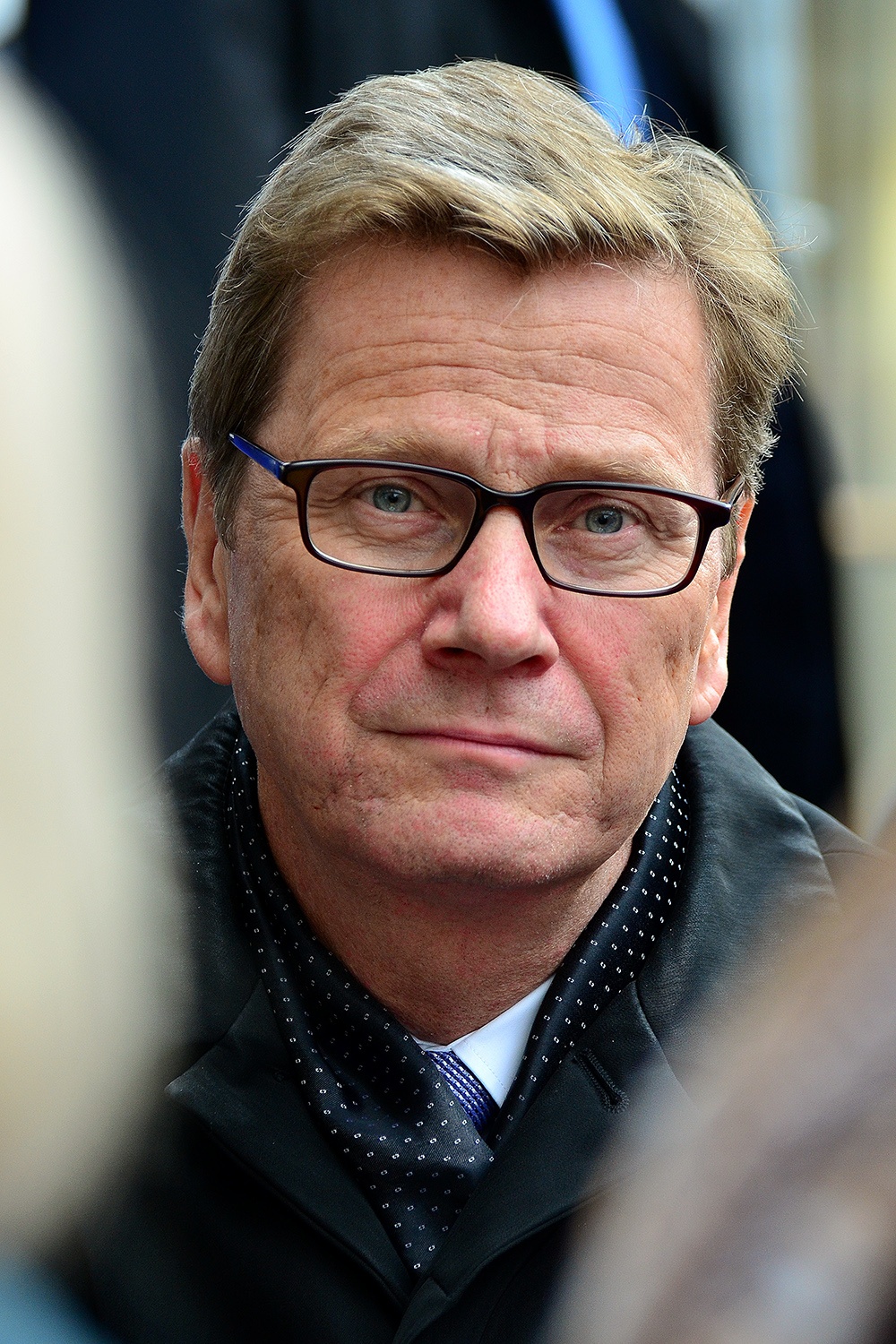
Guido Westerwelle (German: [ˈɡiːdo ˈvɛstɐˌvɛlə]; 27 December 1961 – 18 March 2016) was a German politician who served as foreign minister in the second cabinet of Chancellor Angela Merkel and Vice-Chancellor of Germany from 2009 to 2011, being the first openly gay person to hold any of these positions. He also led the liberal Free Democratic Party (FDP) from 2001 until he stepped down in 2011. A lawyer by profession, he was a member of the Bundestag from 1996 to 2013.
Guido Westerwelle was born in Bad Honnef in the German state of North Rhine-Westphalia. His parents were lawyers. He graduated from Ernst Moritz Arndt Gymnasium in 1980 after academic struggles resulted in his departure from previous institutions where he was considered an average student at best, but substandard otherwise. He studied law at the University of Bonn from 1980 to 1987. Following the First and Second State Law Examinations in 1987 and 1991 respectively, he began practising as an attorney in Bonn in 1991. In 1994, he earned a doctoral degree in law from the University of Hagen.
Westerwelle joined the Free Democratic Party (FDP) in 1980. He was a founding member of the Junge Liberale (Young Liberals), which became the party's official youth organization in 1983, and he was its chairman from 1983 to 1988. In a 1988 newspaper interview, he singled out the FDP's rejection of an amnesty for tax offenders and its diminished enthusiasm for nuclear power as fruits of the youth wing's labors.
He was a member of the executive board of the FDP from 1988, and in 1994, he was appointed secretary general of the party.
In 1996, Westerwelle was first elected a member of the Bundestag, filling in for Heinz Lanfermann, who had resigned from his seat after entering the Ministry of Justice. In the 1998 national elections, he was re-elected to parliament. As his parliamentary group's home affairs spokesman, he was instrumental in swinging the FDP behind a 1999 government bill to make German citizenship available to children born in Germany of non-German parents.
In 2001, Westerwelle succeeded Wolfgang Gerhardt as party chairman. Gerhardt, however, remained chairman of the FDP's parliamentary group. Westerwelle, the youngest party chairman at the time, emphasized economics and education, and espoused a strategy initiated by his deputy Jürgen Möllemann, who, as chairman of the North Rhine-Westphalia branch of the FDP, had led his party back into the state parliament, gaining 9.8% of the vote. This strategy, transferred to the federal level, was dubbed Project 18, referring both to the envisioned percentage and the German age of majority. Leading up to the 2002 elections, he positioned his party equidistantly from the major parties and refused to commit his party to a coalition with either the Christian Democrats or the Social Democrats. He was also named the FDP's candidate for the office of chancellor. Since the FDP had never claimed such a candidacy (and hasn't done since) and had no chance of attaining it against the two major parties, this move was widely seen as political marketing alongside other ploys, such as driving around in a campaign van dubbed the Guidomobile, wearing the figure 18 on the soles of his shoes or appearing in the Big Brother TV show. Eventually, the federal elections yielded a slight increase of the FDP's vote from 6.2% to 7.4%. Despite this setback, he was reelected as party chairman in 2003.
In the federal elections of 2005, Westerwelle was his party's front-runner. When neither Chancellor Gerhard Schröder's Social Democrats and Greens nor a coalition of Christian and Free Democrats, favored by Angela Merkel and Westerwelle, managed to gain a majority of seats, Westerwelle rejected overtures by Chancellor Schröder to save his chancellorship by entering his coalition, preferring to become one of the leaders of the disparate opposition of the subsequently formed "Grand Coalition" of Christian and Social Democrats, with Merkel as chancellor. Westerwelle became a vocal critic of the new government. In 2006, according to an internal agreement, Westerwelle succeeded Wolfgang Gerhardt as chairman of the parliamentary group.
Over the following years, in an effort to broaden the party's appeal, Westerwelle embraced its left wing under former justice minister Sabine Leutheusser-Schnarrenberger and focused his campaign messages on tax cuts, education and civil rights.
Hub AI
Guido Westerwelle AI simulator
(@Guido Westerwelle_simulator)
Guido Westerwelle
Guido Westerwelle (German: [ˈɡiːdo ˈvɛstɐˌvɛlə]; 27 December 1961 – 18 March 2016) was a German politician who served as foreign minister in the second cabinet of Chancellor Angela Merkel and Vice-Chancellor of Germany from 2009 to 2011, being the first openly gay person to hold any of these positions. He also led the liberal Free Democratic Party (FDP) from 2001 until he stepped down in 2011. A lawyer by profession, he was a member of the Bundestag from 1996 to 2013.
Guido Westerwelle was born in Bad Honnef in the German state of North Rhine-Westphalia. His parents were lawyers. He graduated from Ernst Moritz Arndt Gymnasium in 1980 after academic struggles resulted in his departure from previous institutions where he was considered an average student at best, but substandard otherwise. He studied law at the University of Bonn from 1980 to 1987. Following the First and Second State Law Examinations in 1987 and 1991 respectively, he began practising as an attorney in Bonn in 1991. In 1994, he earned a doctoral degree in law from the University of Hagen.
Westerwelle joined the Free Democratic Party (FDP) in 1980. He was a founding member of the Junge Liberale (Young Liberals), which became the party's official youth organization in 1983, and he was its chairman from 1983 to 1988. In a 1988 newspaper interview, he singled out the FDP's rejection of an amnesty for tax offenders and its diminished enthusiasm for nuclear power as fruits of the youth wing's labors.
He was a member of the executive board of the FDP from 1988, and in 1994, he was appointed secretary general of the party.
In 1996, Westerwelle was first elected a member of the Bundestag, filling in for Heinz Lanfermann, who had resigned from his seat after entering the Ministry of Justice. In the 1998 national elections, he was re-elected to parliament. As his parliamentary group's home affairs spokesman, he was instrumental in swinging the FDP behind a 1999 government bill to make German citizenship available to children born in Germany of non-German parents.
In 2001, Westerwelle succeeded Wolfgang Gerhardt as party chairman. Gerhardt, however, remained chairman of the FDP's parliamentary group. Westerwelle, the youngest party chairman at the time, emphasized economics and education, and espoused a strategy initiated by his deputy Jürgen Möllemann, who, as chairman of the North Rhine-Westphalia branch of the FDP, had led his party back into the state parliament, gaining 9.8% of the vote. This strategy, transferred to the federal level, was dubbed Project 18, referring both to the envisioned percentage and the German age of majority. Leading up to the 2002 elections, he positioned his party equidistantly from the major parties and refused to commit his party to a coalition with either the Christian Democrats or the Social Democrats. He was also named the FDP's candidate for the office of chancellor. Since the FDP had never claimed such a candidacy (and hasn't done since) and had no chance of attaining it against the two major parties, this move was widely seen as political marketing alongside other ploys, such as driving around in a campaign van dubbed the Guidomobile, wearing the figure 18 on the soles of his shoes or appearing in the Big Brother TV show. Eventually, the federal elections yielded a slight increase of the FDP's vote from 6.2% to 7.4%. Despite this setback, he was reelected as party chairman in 2003.
In the federal elections of 2005, Westerwelle was his party's front-runner. When neither Chancellor Gerhard Schröder's Social Democrats and Greens nor a coalition of Christian and Free Democrats, favored by Angela Merkel and Westerwelle, managed to gain a majority of seats, Westerwelle rejected overtures by Chancellor Schröder to save his chancellorship by entering his coalition, preferring to become one of the leaders of the disparate opposition of the subsequently formed "Grand Coalition" of Christian and Social Democrats, with Merkel as chancellor. Westerwelle became a vocal critic of the new government. In 2006, according to an internal agreement, Westerwelle succeeded Wolfgang Gerhardt as chairman of the parliamentary group.
Over the following years, in an effort to broaden the party's appeal, Westerwelle embraced its left wing under former justice minister Sabine Leutheusser-Schnarrenberger and focused his campaign messages on tax cuts, education and civil rights.
Recent media