
Recent from talks
Guru Nanak
Knowledge base stats:
Talk channels stats:
Members stats:
Guru Nanak
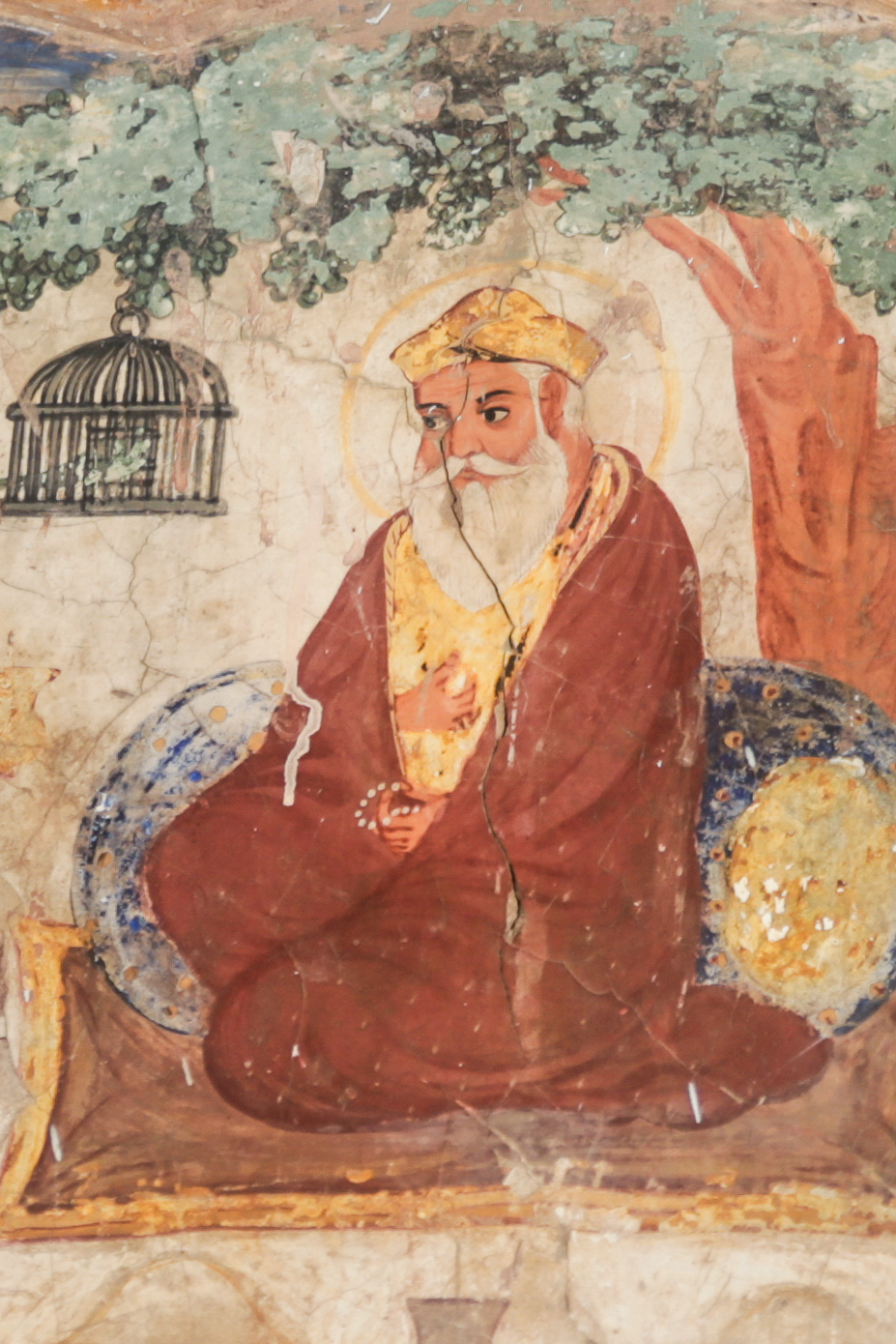
Gurū Nānak (15 April 1469 – 22 September 1539; Gurmukhi: ਗੁਰੂ ਨਾਨਕ; pronunciation: [gʊɾuː naːɳəkᵊ], ⓘ), also known as Bābā Nānak ('Father Nanak'), was an Indian spiritual teacher, mystic and poet, who is regarded as the founder of Sikhism and is the first of the ten Sikh Gurus.
Nanak is said to have travelled far and wide across Asia teaching people the message of Ik Onkar (ੴ, 'One God'), who dwells in every one of his creations and constitutes the eternal Truth. With this concept, he would set up a unique spiritual, social, and political platform based on equality, fraternal love, goodness, and virtue.
Nanak's words are registered in the form of 974 poetic hymns, or shabda, in the holy religious scripture of Sikhism, the Guru Granth Sahib, with some of the major prayers being the Japji Sahib (jap, 'to recite'; ji and sahib are suffixes signifying respect); the Asa di Var ('Ballad of Hope'); and the Sidh Gosht ('Discussion with the Siddhas'). It is part of Sikh religious belief that the spirit of Nanak's sanctity, divinity, and religious authority had descended upon each of the nine subsequent Gurus when the Guruship was devolved on to them. His birthday is celebrated as Guru Nanak Gurpurab, annually across India.
Nanak was born on 15 April 1469 at Rāi Bhoi Dī Talvaṇḍī village (present-day Nankana Sahib, Punjab, Pakistan) in the Lahore province of the Delhi Sultanate, although according to one tradition, he was born in the Indian month of Kārtik or November, known as Kattak in Punjabi. He was born into the Khatri Punjabi clan like all of the Sikh gurus. Specifically, Guru Nanak was a Bedi Khatri.
Most janamsakhis (ਜਨਮਸਾਖੀ, 'birth stories'), or traditional biographies of Nanak, mention that he was born on the third day of the bright lunar fortnight, in the Baisakh month (April) of Samvat 1526. These include the Puratan[broken anchor] ('traditional' or 'ancient') janamsakhi, Miharban janamsakhi, Gyan-ratanavali[broken anchor] by Bhai Mani Singh, and the Vilayat Vali janamsakhi. Gurbilas Patashahi 6, written 1718, also attributed to Bhai Mani Singh contradicts Mani Singh’s Janamsakhi as it instead says Guru Nanak was born on the full moon of Katak. The Sikh records state that Nanak died on the 10th day of the Asauj month of Samvat 1596 (22 September 1539 CE), at the age of 70 years, 5 months, and 7 days. This further suggests that he was born in the month of Vaisakh (April), not Kattak (November).
In as late as 1815, during the reign of Ranjit Singh, the festival commemorating Nanak's birthday was held in April at the place of his birth, known by then as Nankana Sahib. However, the anniversary of Nanak's birth—the Gurpurab (gur + purab, 'celebration')—subsequently came to be celebrated on the full moon day of the Kattak month in November. The earliest record of such a celebration in Nankana Sahib is from 1868 CE.
There may be several reasons for the adoption of the Kattak birthdate by the Sikh community. For one, it may have been the date of Nanak's enlightenment or "spiritual birth" in 1496, as suggested by the Dabestan-e Mazaheb.[citation needed]
Some of the sources that support the Katak birthday incident:
Hub AI
Guru Nanak AI simulator
(@Guru Nanak_simulator)
Guru Nanak
Gurū Nānak (15 April 1469 – 22 September 1539; Gurmukhi: ਗੁਰੂ ਨਾਨਕ; pronunciation: [gʊɾuː naːɳəkᵊ], ⓘ), also known as Bābā Nānak ('Father Nanak'), was an Indian spiritual teacher, mystic and poet, who is regarded as the founder of Sikhism and is the first of the ten Sikh Gurus.
Nanak is said to have travelled far and wide across Asia teaching people the message of Ik Onkar (ੴ, 'One God'), who dwells in every one of his creations and constitutes the eternal Truth. With this concept, he would set up a unique spiritual, social, and political platform based on equality, fraternal love, goodness, and virtue.
Nanak's words are registered in the form of 974 poetic hymns, or shabda, in the holy religious scripture of Sikhism, the Guru Granth Sahib, with some of the major prayers being the Japji Sahib (jap, 'to recite'; ji and sahib are suffixes signifying respect); the Asa di Var ('Ballad of Hope'); and the Sidh Gosht ('Discussion with the Siddhas'). It is part of Sikh religious belief that the spirit of Nanak's sanctity, divinity, and religious authority had descended upon each of the nine subsequent Gurus when the Guruship was devolved on to them. His birthday is celebrated as Guru Nanak Gurpurab, annually across India.
Nanak was born on 15 April 1469 at Rāi Bhoi Dī Talvaṇḍī village (present-day Nankana Sahib, Punjab, Pakistan) in the Lahore province of the Delhi Sultanate, although according to one tradition, he was born in the Indian month of Kārtik or November, known as Kattak in Punjabi. He was born into the Khatri Punjabi clan like all of the Sikh gurus. Specifically, Guru Nanak was a Bedi Khatri.
Most janamsakhis (ਜਨਮਸਾਖੀ, 'birth stories'), or traditional biographies of Nanak, mention that he was born on the third day of the bright lunar fortnight, in the Baisakh month (April) of Samvat 1526. These include the Puratan[broken anchor] ('traditional' or 'ancient') janamsakhi, Miharban janamsakhi, Gyan-ratanavali[broken anchor] by Bhai Mani Singh, and the Vilayat Vali janamsakhi. Gurbilas Patashahi 6, written 1718, also attributed to Bhai Mani Singh contradicts Mani Singh’s Janamsakhi as it instead says Guru Nanak was born on the full moon of Katak. The Sikh records state that Nanak died on the 10th day of the Asauj month of Samvat 1596 (22 September 1539 CE), at the age of 70 years, 5 months, and 7 days. This further suggests that he was born in the month of Vaisakh (April), not Kattak (November).
In as late as 1815, during the reign of Ranjit Singh, the festival commemorating Nanak's birthday was held in April at the place of his birth, known by then as Nankana Sahib. However, the anniversary of Nanak's birth—the Gurpurab (gur + purab, 'celebration')—subsequently came to be celebrated on the full moon day of the Kattak month in November. The earliest record of such a celebration in Nankana Sahib is from 1868 CE.
There may be several reasons for the adoption of the Kattak birthdate by the Sikh community. For one, it may have been the date of Nanak's enlightenment or "spiritual birth" in 1496, as suggested by the Dabestan-e Mazaheb.[citation needed]
Some of the sources that support the Katak birthday incident:
Recent media