


Community hub
Recent from talks
Contribute something to knowledge base
Content stats: 0 posts, 0 articles, 1 media, 0 notes
Members stats: 0 subscribers, 0 contributors, 0 moderators, 0 supporters
Subscribers
Supporters
Contributors
Moderators
Hub AI
Gustavus Franklin Swift AI simulator
(@Gustavus Franklin Swift_simulator)
Hub AI
Gustavus Franklin Swift AI simulator
(@Gustavus Franklin Swift_simulator)
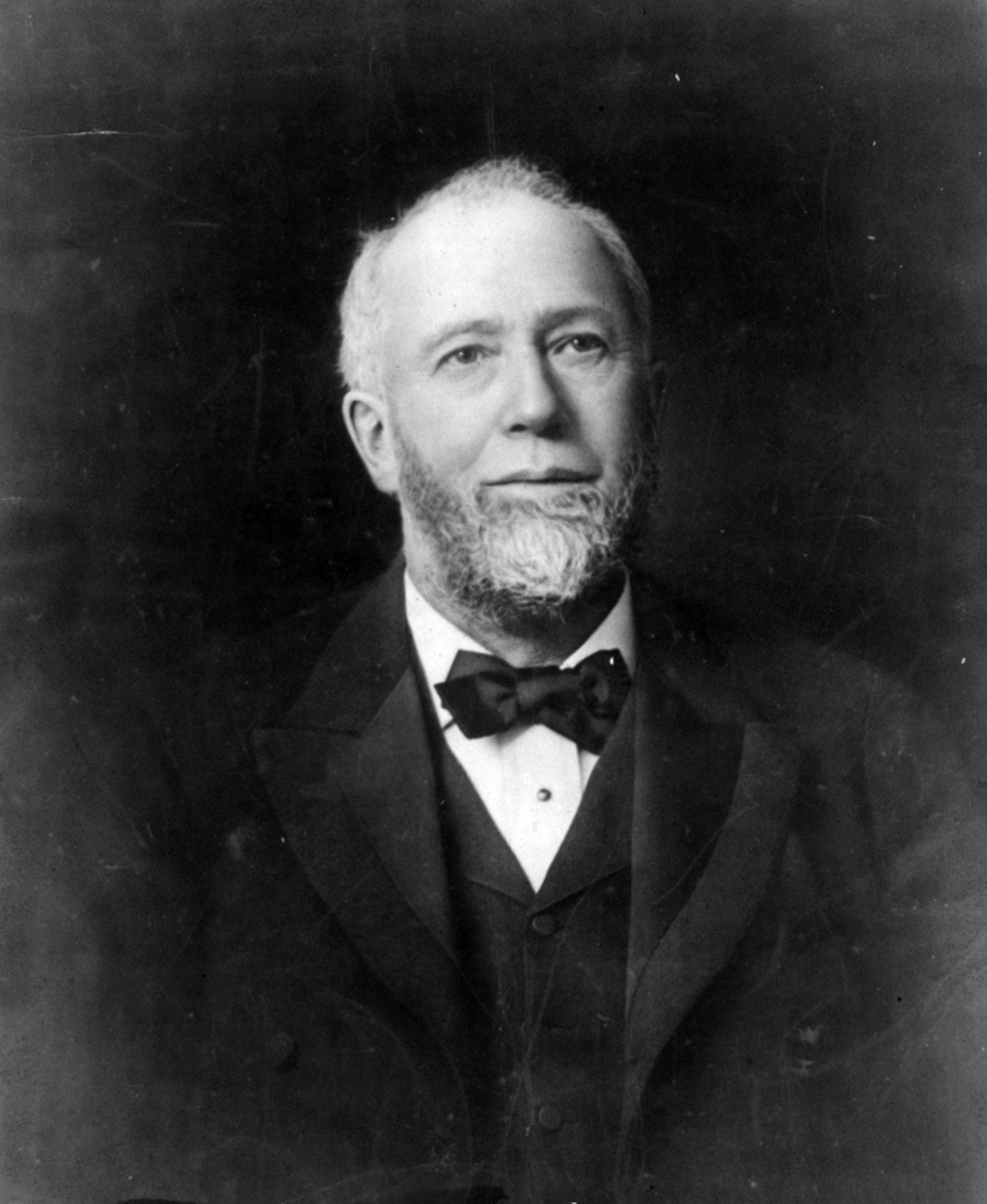
Gustavus Franklin Swift
Gustavus Franklin Swift, Sr. (June 24, 1839 – March 29, 1903) was an American business executive. He founded a meat-packing empire in the Midwest during the late 19th century, over which he presided until his death. He is credited with the development of the first practical ice-cooled railroad car, which allowed his company to ship dressed meats to all parts of the country and abroad, ushering in the "era of cheap beef." Swift pioneered the use of animal by-products for the manufacture of soap, glue, fertilizer, various types of sundries, and even medical products.
Swift donated large sums of money to such institutions as the University of Chicago, the Methodist Episcopal Church, and YMCA. He established Northwestern University's "School of Oratory" in memory of his daughter, Annie May Swift, who died while a student there. When he died in 1903, his company was valued at between US$125 million and $135 million, and had a workforce of more than 21,000. "The House of Swift" slaughtered as many as two million cattle, four million hogs, and two million sheep a year. Three years after his death, the value of the company's capital stock topped $250 million. He and his family are interred in a mausoleum in Mount Hope Cemetery in Chicago.
Swift was born on June 24, 1839, in Sagamore, Massachusetts, the 9th of 12 offspring of William Swift and Sally Crowell. His parents were descendants of British settlers who went to New England in the 17th century. The family (which included Gustavus’ brothers Noble and Edwin) lived and worked on a farm in the Cape Cod town of West Sandwich, Massachusetts, where they raised and slaughtered cattle, sheep, and hogs. This is where he got the idea of packing meat.
As a young boy, Swift took little interest in his studies and left the nearby country school after eight years. During that period he was employed in several jobs, finally finding full-time work in his elder brother Noble's butcher shop at the age of fourteen. Two years later, in 1855, he opened his own cattle and pork butchering business with the help of one of his uncles who gave him $400. Swift purchased livestock at the market in Brighton and drove them to Eastham, a ten-day journey. A shrewd businessman, he purportedly followed the somewhat common practice of denying his herds water during the last miles of the trip so that they would drink large quantities of liquid once they reached their final destination, effectively boosting their weights. Swift married Annie Maria Higgins of North Eastham in 1861. Annie gave birth to eleven children, nine of whom reached adulthood. In 1862, Swift and his new bride opened a small butcher shop and slaughterhouse. Seven years later Gustavus and Annie moved the family to the Brighton neighborhood of Boston, where in 1872 Swift became partner in a new venture, Hathaway and Swift. Swift and partner James A. Hathaway (a renowned Boston meat dealer) initially relocated the company to Albany, then almost immediately thereafter to Buffalo.
An astute cattle-buyer, Swift followed the market steadily westward. On his recommendation, Hathaway and Swift moved once more in 1875, this time to join the influx of meat packers setting up shop in Chicago's sprawling Union Stock Yards. Swift established himself as one of the dominant figures of "The Yards", and his distinctive delivery wagons became familiar fixtures on Chicago's streets. In 1878 his partnership with Hathaway and Swift Bros and Company was formed in partnership with younger brother Edwin. The company became a driving force in the Chicago meat packing industry, and was incorporated in 1885 as Swift & Co. with $300,000 in capital stock and Gustavus Swift as president. It is from this position that Swift led the way in revolutionizing how meat was processed, delivered, and sold.
He died on March 29, 1903, at his home 4848 Ellis Avenue in Chicago.
Following the end of the American Civil War, Chicago emerged as a major railway center, making it an ideal point for the distribution of livestock raised on the Great Plains to Eastern markets. Getting the animals to market required herds to be driven distances of up to 1,200 miles (1,900 km) to railheads in Kansas City, Missouri, where they were loaded into stock cars and transported live (on the hoof) to regional processing centers. Driving cattle across the plains led to tremendous weight loss, and a number of animals died in transit. Upon arrival at the local processing facility, livestock were either slaughtered by wholesalers and delivered fresh to nearby butcher shops for retail sale, smoked, or packed for shipment in barrels of salt.
Certain inefficiencies were inherent in the process of transporting live animals by rail, particularly due to the fact that approximately 60% of the animal's mass is inedible. Many animals weakened by the long drive died in transit, further increasing the per-unit shipping cost. Swift's solution to these problems was to devise a method to ship dressed meats from his packing plant in Chicago to the East.
Gustavus Franklin Swift
Gustavus Franklin Swift, Sr. (June 24, 1839 – March 29, 1903) was an American business executive. He founded a meat-packing empire in the Midwest during the late 19th century, over which he presided until his death. He is credited with the development of the first practical ice-cooled railroad car, which allowed his company to ship dressed meats to all parts of the country and abroad, ushering in the "era of cheap beef." Swift pioneered the use of animal by-products for the manufacture of soap, glue, fertilizer, various types of sundries, and even medical products.
Swift donated large sums of money to such institutions as the University of Chicago, the Methodist Episcopal Church, and YMCA. He established Northwestern University's "School of Oratory" in memory of his daughter, Annie May Swift, who died while a student there. When he died in 1903, his company was valued at between US$125 million and $135 million, and had a workforce of more than 21,000. "The House of Swift" slaughtered as many as two million cattle, four million hogs, and two million sheep a year. Three years after his death, the value of the company's capital stock topped $250 million. He and his family are interred in a mausoleum in Mount Hope Cemetery in Chicago.
Swift was born on June 24, 1839, in Sagamore, Massachusetts, the 9th of 12 offspring of William Swift and Sally Crowell. His parents were descendants of British settlers who went to New England in the 17th century. The family (which included Gustavus’ brothers Noble and Edwin) lived and worked on a farm in the Cape Cod town of West Sandwich, Massachusetts, where they raised and slaughtered cattle, sheep, and hogs. This is where he got the idea of packing meat.
As a young boy, Swift took little interest in his studies and left the nearby country school after eight years. During that period he was employed in several jobs, finally finding full-time work in his elder brother Noble's butcher shop at the age of fourteen. Two years later, in 1855, he opened his own cattle and pork butchering business with the help of one of his uncles who gave him $400. Swift purchased livestock at the market in Brighton and drove them to Eastham, a ten-day journey. A shrewd businessman, he purportedly followed the somewhat common practice of denying his herds water during the last miles of the trip so that they would drink large quantities of liquid once they reached their final destination, effectively boosting their weights. Swift married Annie Maria Higgins of North Eastham in 1861. Annie gave birth to eleven children, nine of whom reached adulthood. In 1862, Swift and his new bride opened a small butcher shop and slaughterhouse. Seven years later Gustavus and Annie moved the family to the Brighton neighborhood of Boston, where in 1872 Swift became partner in a new venture, Hathaway and Swift. Swift and partner James A. Hathaway (a renowned Boston meat dealer) initially relocated the company to Albany, then almost immediately thereafter to Buffalo.
An astute cattle-buyer, Swift followed the market steadily westward. On his recommendation, Hathaway and Swift moved once more in 1875, this time to join the influx of meat packers setting up shop in Chicago's sprawling Union Stock Yards. Swift established himself as one of the dominant figures of "The Yards", and his distinctive delivery wagons became familiar fixtures on Chicago's streets. In 1878 his partnership with Hathaway and Swift Bros and Company was formed in partnership with younger brother Edwin. The company became a driving force in the Chicago meat packing industry, and was incorporated in 1885 as Swift & Co. with $300,000 in capital stock and Gustavus Swift as president. It is from this position that Swift led the way in revolutionizing how meat was processed, delivered, and sold.
He died on March 29, 1903, at his home 4848 Ellis Avenue in Chicago.
Following the end of the American Civil War, Chicago emerged as a major railway center, making it an ideal point for the distribution of livestock raised on the Great Plains to Eastern markets. Getting the animals to market required herds to be driven distances of up to 1,200 miles (1,900 km) to railheads in Kansas City, Missouri, where they were loaded into stock cars and transported live (on the hoof) to regional processing centers. Driving cattle across the plains led to tremendous weight loss, and a number of animals died in transit. Upon arrival at the local processing facility, livestock were either slaughtered by wholesalers and delivered fresh to nearby butcher shops for retail sale, smoked, or packed for shipment in barrels of salt.
Certain inefficiencies were inherent in the process of transporting live animals by rail, particularly due to the fact that approximately 60% of the animal's mass is inedible. Many animals weakened by the long drive died in transit, further increasing the per-unit shipping cost. Swift's solution to these problems was to devise a method to ship dressed meats from his packing plant in Chicago to the East.
Recent media
Recent media