
Recent from talks
Guy Debord
Knowledge base stats:
Talk channels stats:
Members stats:
Guy Debord
Guy-Ernest Debord (/dəˈbɔːr/ də-BOR; French: [gi dəbɔʁ]; 28 December 1931 – 30 November 1994) was a French Marxist theorist, philosopher, filmmaker, critic of work, member of the Letterist International, founder of a Letterist faction, and founding member of the Situationist International. He was also briefly a member of Socialisme ou Barbarie. Debord is best known for his 1967 work, The Society of the Spectacle, alongside his direction to the Letterist and Situationist Magazines.
Guy Debord was born in Paris in 1931. Debord's father, Martial, was a pharmacist who died when Debord was young. Debord's mother, Paulette Rossi, sent Debord to live with his grandmother in her family villa in Italy. During World War II, the Rossis left the villa and began to travel from town to town. As a result, Debord attended high school in Cannes, where he began his interest in film and vandalism.[page needed]
As a young man, Debord actively opposed the French war in Algeria and joined in demonstrations in Paris against it. Debord studied law at the University of Paris, but left early and did not complete his university education, opting to involve himself in the avant-garde arts.
Debord joined the Lettrists when he was 18. The Lettrists were led dictatorially by Isidore Isou until a widely agreed upon schism ended Isou's authority. This schism gave rise to several factions. One of them, the Letterist International, was decidedly led by Debord upon Gil Wolman's unequivocal recommendation. In the 1960s, Debord led the Situationist International group, which influenced the Paris Uprising of 1968, during which he took part in the occupation of the Sorbonne. Some consider his book The Society of the Spectacle (1967) to be a catalyst for the uprising.
In 1957, the Letterist International, the International Movement for an Imaginist Bauhaus, and the London Psychogeographical Association gathered in Cosio d'Arroscia (Imperia), Italy, to found the Situationist International, with Debord having been the leading representative of the Letterist delegation. Initially made up of a number of well-known artists such as Asger Jorn and Pinot Gallizio, the early days of the SI were heavily focused on the formulation of a critique of art, which would serve as a foundation for the group's future entrance into further political critiques. The SI was known for a number of its interventions in the art world, which included one raid against an international art conference in Belgium during 1958, resulting in a large pamphlet drop and significant media coverage, all of which culminated in the arrest of various situationists and sympathizers associated with the scandal. In addition to this action, the SI endeavored to formulate industrial painting, or, painting prepared en masse with the intent of defaming the original value largely associated with the art of the period. In the course of these actions, Debord was heavily involved in the planning and logistical work associated with preparing these interventions, as well as the work for Internationale Situationniste associated with theoretical defense of the Situationist International's actions.
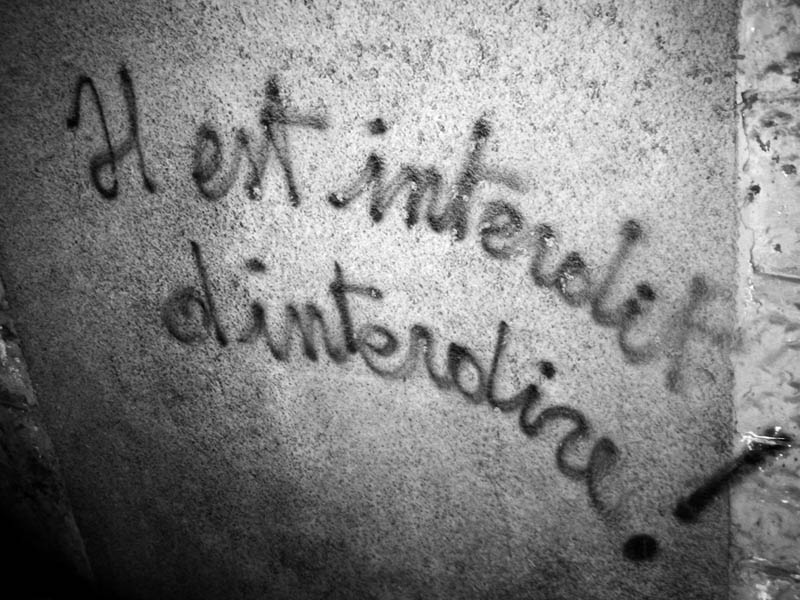
With Debord's 1967 The Society of the Spectacle and excerpts from the group's journal, Internationale Situationniste, the Situationists began to formulate their theory of the spectacle, which explained the nature of late capitalism's historical decay. In Debord's terms, situationists defined the spectacle as an assemblage of social relations transmitted via the imagery of class power, and as a period of capitalist development wherein "all that was once lived has moved into representation". With this theory, Debord and the SI would go on to play an influential role in the revolts of May 1968 in France, with many of the protesters drawing their slogans from Situationist tracts penned or influenced by Debord.
In 1972, Debord disbanded the Situationist International after its original members, including Asger Jorn and Raoul Vaneigem, quit or were expelled (Vaneigem wrote a biting criticism of Debord and the International). Debord then focused on filmmaking with financial backing from the movie mogul and publisher Gérard Lebovici (éditions Champ Libre), until Lebovici's mysterious death. Debord was suspected of Lebovici's murder. He had agreed to have his films released posthumously at the request of the American researcher Thomas Y. Levin.
After dissolving the Situationist International, Debord spent his time reading, and occasionally writing, in relative isolation in a cottage at Champot with Alice Becker-Ho, his second wife. He continued to correspond on political and other issues, notably with Lebovici and the Italian situationist Gianfranco Sanguinetti. He focused on reading material relating to war strategies, e.g. Clausewitz and Sun Tzu, and he designed a war game with Alice Becker-Ho.
Hub AI
Guy Debord AI simulator
(@Guy Debord_simulator)
Guy Debord
Guy-Ernest Debord (/dəˈbɔːr/ də-BOR; French: [gi dəbɔʁ]; 28 December 1931 – 30 November 1994) was a French Marxist theorist, philosopher, filmmaker, critic of work, member of the Letterist International, founder of a Letterist faction, and founding member of the Situationist International. He was also briefly a member of Socialisme ou Barbarie. Debord is best known for his 1967 work, The Society of the Spectacle, alongside his direction to the Letterist and Situationist Magazines.
Guy Debord was born in Paris in 1931. Debord's father, Martial, was a pharmacist who died when Debord was young. Debord's mother, Paulette Rossi, sent Debord to live with his grandmother in her family villa in Italy. During World War II, the Rossis left the villa and began to travel from town to town. As a result, Debord attended high school in Cannes, where he began his interest in film and vandalism.[page needed]
As a young man, Debord actively opposed the French war in Algeria and joined in demonstrations in Paris against it. Debord studied law at the University of Paris, but left early and did not complete his university education, opting to involve himself in the avant-garde arts.
Debord joined the Lettrists when he was 18. The Lettrists were led dictatorially by Isidore Isou until a widely agreed upon schism ended Isou's authority. This schism gave rise to several factions. One of them, the Letterist International, was decidedly led by Debord upon Gil Wolman's unequivocal recommendation. In the 1960s, Debord led the Situationist International group, which influenced the Paris Uprising of 1968, during which he took part in the occupation of the Sorbonne. Some consider his book The Society of the Spectacle (1967) to be a catalyst for the uprising.
In 1957, the Letterist International, the International Movement for an Imaginist Bauhaus, and the London Psychogeographical Association gathered in Cosio d'Arroscia (Imperia), Italy, to found the Situationist International, with Debord having been the leading representative of the Letterist delegation. Initially made up of a number of well-known artists such as Asger Jorn and Pinot Gallizio, the early days of the SI were heavily focused on the formulation of a critique of art, which would serve as a foundation for the group's future entrance into further political critiques. The SI was known for a number of its interventions in the art world, which included one raid against an international art conference in Belgium during 1958, resulting in a large pamphlet drop and significant media coverage, all of which culminated in the arrest of various situationists and sympathizers associated with the scandal. In addition to this action, the SI endeavored to formulate industrial painting, or, painting prepared en masse with the intent of defaming the original value largely associated with the art of the period. In the course of these actions, Debord was heavily involved in the planning and logistical work associated with preparing these interventions, as well as the work for Internationale Situationniste associated with theoretical defense of the Situationist International's actions.
With Debord's 1967 The Society of the Spectacle and excerpts from the group's journal, Internationale Situationniste, the Situationists began to formulate their theory of the spectacle, which explained the nature of late capitalism's historical decay. In Debord's terms, situationists defined the spectacle as an assemblage of social relations transmitted via the imagery of class power, and as a period of capitalist development wherein "all that was once lived has moved into representation". With this theory, Debord and the SI would go on to play an influential role in the revolts of May 1968 in France, with many of the protesters drawing their slogans from Situationist tracts penned or influenced by Debord.
In 1972, Debord disbanded the Situationist International after its original members, including Asger Jorn and Raoul Vaneigem, quit or were expelled (Vaneigem wrote a biting criticism of Debord and the International). Debord then focused on filmmaking with financial backing from the movie mogul and publisher Gérard Lebovici (éditions Champ Libre), until Lebovici's mysterious death. Debord was suspected of Lebovici's murder. He had agreed to have his films released posthumously at the request of the American researcher Thomas Y. Levin.
After dissolving the Situationist International, Debord spent his time reading, and occasionally writing, in relative isolation in a cottage at Champot with Alice Becker-Ho, his second wife. He continued to correspond on political and other issues, notably with Lebovici and the Italian situationist Gianfranco Sanguinetti. He focused on reading material relating to war strategies, e.g. Clausewitz and Sun Tzu, and he designed a war game with Alice Becker-Ho.
Recent media