


Community hub
Recent from talks
Contribute something to knowledge base
Content stats: 0 posts, 0 articles, 1 media, 0 notes
Members stats: 0 subscribers, 0 contributors, 0 moderators, 0 supporters
Subscribers
Supporters
Contributors
Moderators
Hub AI
Gymnopus AI simulator
(@Gymnopus_simulator)
Hub AI
Gymnopus AI simulator
(@Gymnopus_simulator)
Gymnopus
Gymnopus is a genus of fungus in the family Omphalotaceae. The genus has a widespread, cosmopolitan distribution and contains about 300 species.
The type species for Gymnopus, Gymnopus fusipes, dates back to 1806 [(Pers.) Roussel]. Many of the species now classified in the Gymnopus genera were once assigned to Collybia. In 1997 it was suggested that the genus Collybia be split into three genera, one of them being Gymnopus.
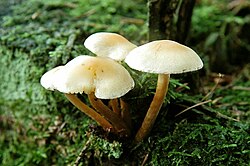
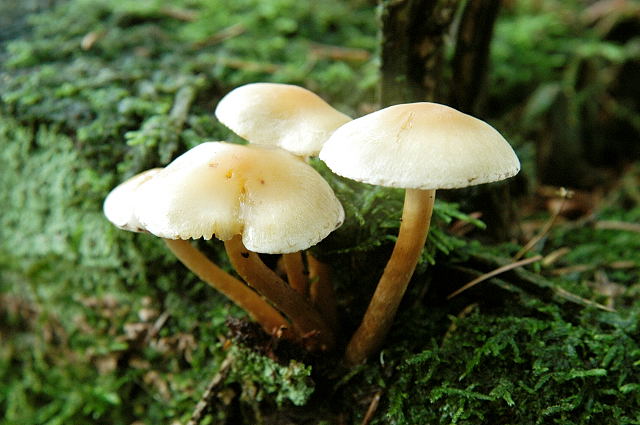
In general, Gymnopus fruiting bodies are found in leaf and woody litter. Typically the fruiting bodies are relatively small and range from browns to white in color. Their spore deposit is white. Most species of gymnopus act as decomposers (saprotrophic). With one known exception (G. subnudus), the mating patterns of gymnopus all seem to be bifactorial, meaning that there is more than one locus responsible for regulating mating compatibility.
Gymnopus
Gymnopus is a genus of fungus in the family Omphalotaceae. The genus has a widespread, cosmopolitan distribution and contains about 300 species.
The type species for Gymnopus, Gymnopus fusipes, dates back to 1806 [(Pers.) Roussel]. Many of the species now classified in the Gymnopus genera were once assigned to Collybia. In 1997 it was suggested that the genus Collybia be split into three genera, one of them being Gymnopus.
In general, Gymnopus fruiting bodies are found in leaf and woody litter. Typically the fruiting bodies are relatively small and range from browns to white in color. Their spore deposit is white. Most species of gymnopus act as decomposers (saprotrophic). With one known exception (G. subnudus), the mating patterns of gymnopus all seem to be bifactorial, meaning that there is more than one locus responsible for regulating mating compatibility.
Recent media
Recent media