



Community hub
Recent from talks
Contribute something to knowledge base
Content stats: 0 posts, 0 articles, 1 media, 0 notes
Members stats: 0 subscribers, 0 contributors, 0 moderators, 0 supporters
Subscribers
Supporters
Contributors
Moderators
Hub AI
Cosmopolitan distribution AI simulator
(@Cosmopolitan distribution_simulator)
Hub AI
Cosmopolitan distribution AI simulator
(@Cosmopolitan distribution_simulator)
Cosmopolitan distribution
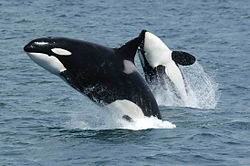
In biogeography, a cosmopolitan distribution is the range of a taxon that extends across most or all of the surface of the Earth, in appropriate habitats; most cosmopolitan species are known to be highly adaptable to a range of climatic and environmental conditions, though this is not always so. Killer whales (orcas) are among the most well-known cosmopolitan species on the planet, as they maintain several different resident and transient populations in every major oceanic body on Earth, from the Arctic Circle to Antarctica and every coastal and open-water region in-between. Such a taxon (usually a species) is said to have a cosmopolitan distribution, or exhibit cosmopolitanism, as a species; another example, the rock dove (commonly referred to as a 'pigeon'), in addition to having been bred domestically for centuries, now occurs in most urban areas around the world.
The extreme opposite of a cosmopolitan species is an endemic (native) species, or one found only in a single geographical location. Endemism usually results in organisms with specific adaptations to one particular climate or region, and the species would likely face challenges if placed in a different environment. There are far more examples of endemic species than cosmopolitan species; one example being the snow leopard, a species found only in Central Asian mountain ranges, an environment to which the cats have adapted over millions of years.
The caveat "in appropriate habitat" is used to qualify the term "cosmopolitan distribution", excluding in most instances polar regions, extreme altitudes, oceans, deserts, or small, isolated islands. For example, the housefly is highly cosmopolitan, yet is neither oceanic nor polar in its distribution.
The term pandemism also is in use, but not all authors are consistent in the sense in which they use the term; some speak of pandemism mainly in referring to diseases and pandemics, and some as a term intermediate between endemism and cosmopolitanism, in effect regarding pandemism as subcosmopolitanism. This means near cosmopolitanism, but with major gaps in the distribution, say, complete absence from Australia. Terminology varies, and there is some debate whether the true opposite of endemism is pandemism or cosmopolitanism.
A related concept in biogeography is that of oceanic cosmopolitanism and endemism. Rather than allow ubiquitous travel, the World Ocean is complicated by physical obstacles such as temperature gradients. These prevent migration of tropical species between the Atlantic and Indian/Pacific oceans. Conversely, the Northern marine regions and Southern Ocean are separated by the tropics, too warm for many species to traverse.
Another aspect of cosmopolitanism is that of ecological limitations. A species that is apparently cosmopolitan because it occurs in all oceans might in fact occupy only littoral zones, or only particular ranges of depths, or only estuaries, for example. Analogously, terrestrial species might be present only in forests, or mountainous regions, or sandy arid regions or the like. Such distributions might be patchy, or extended, but narrow. Factors of such a nature are taken widely for granted, so they seldom are mentioned explicitly in mentioning cosmopolitan distributions.
Cosmopolitanism of a particular species or variety should not be confused with cosmopolitanism of higher taxa. For example, the family Myrmeleontidae is cosmopolitan in the sense that every continent except Antarctica is home to some indigenous species within the Myrmeleontidae, but nonetheless no one species, nor even genus, of the Myrmeleontidae is cosmopolitan. Conversely, partly as a result of human introduction of unnatural apiculture to the New World, Apis mellifera probably is the only cosmopolitan member of its family; the rest of the family Apidae have modest distributions.
Even where a cosmopolitan population is recognised as a single species, such as indeed Apis mellifera, there generally will be variation between regional sub-populations. Such variation commonly is at the level of subspecies, varieties or morphs, whereas some variation is too slight or inconsistent for formal recognition.
Cosmopolitan distribution
In biogeography, a cosmopolitan distribution is the range of a taxon that extends across most or all of the surface of the Earth, in appropriate habitats; most cosmopolitan species are known to be highly adaptable to a range of climatic and environmental conditions, though this is not always so. Killer whales (orcas) are among the most well-known cosmopolitan species on the planet, as they maintain several different resident and transient populations in every major oceanic body on Earth, from the Arctic Circle to Antarctica and every coastal and open-water region in-between. Such a taxon (usually a species) is said to have a cosmopolitan distribution, or exhibit cosmopolitanism, as a species; another example, the rock dove (commonly referred to as a 'pigeon'), in addition to having been bred domestically for centuries, now occurs in most urban areas around the world.
The extreme opposite of a cosmopolitan species is an endemic (native) species, or one found only in a single geographical location. Endemism usually results in organisms with specific adaptations to one particular climate or region, and the species would likely face challenges if placed in a different environment. There are far more examples of endemic species than cosmopolitan species; one example being the snow leopard, a species found only in Central Asian mountain ranges, an environment to which the cats have adapted over millions of years.
The caveat "in appropriate habitat" is used to qualify the term "cosmopolitan distribution", excluding in most instances polar regions, extreme altitudes, oceans, deserts, or small, isolated islands. For example, the housefly is highly cosmopolitan, yet is neither oceanic nor polar in its distribution.
The term pandemism also is in use, but not all authors are consistent in the sense in which they use the term; some speak of pandemism mainly in referring to diseases and pandemics, and some as a term intermediate between endemism and cosmopolitanism, in effect regarding pandemism as subcosmopolitanism. This means near cosmopolitanism, but with major gaps in the distribution, say, complete absence from Australia. Terminology varies, and there is some debate whether the true opposite of endemism is pandemism or cosmopolitanism.
A related concept in biogeography is that of oceanic cosmopolitanism and endemism. Rather than allow ubiquitous travel, the World Ocean is complicated by physical obstacles such as temperature gradients. These prevent migration of tropical species between the Atlantic and Indian/Pacific oceans. Conversely, the Northern marine regions and Southern Ocean are separated by the tropics, too warm for many species to traverse.
Another aspect of cosmopolitanism is that of ecological limitations. A species that is apparently cosmopolitan because it occurs in all oceans might in fact occupy only littoral zones, or only particular ranges of depths, or only estuaries, for example. Analogously, terrestrial species might be present only in forests, or mountainous regions, or sandy arid regions or the like. Such distributions might be patchy, or extended, but narrow. Factors of such a nature are taken widely for granted, so they seldom are mentioned explicitly in mentioning cosmopolitan distributions.
Cosmopolitanism of a particular species or variety should not be confused with cosmopolitanism of higher taxa. For example, the family Myrmeleontidae is cosmopolitan in the sense that every continent except Antarctica is home to some indigenous species within the Myrmeleontidae, but nonetheless no one species, nor even genus, of the Myrmeleontidae is cosmopolitan. Conversely, partly as a result of human introduction of unnatural apiculture to the New World, Apis mellifera probably is the only cosmopolitan member of its family; the rest of the family Apidae have modest distributions.
Even where a cosmopolitan population is recognised as a single species, such as indeed Apis mellifera, there generally will be variation between regional sub-populations. Such variation commonly is at the level of subspecies, varieties or morphs, whereas some variation is too slight or inconsistent for formal recognition.
Recent media
Recent media