



Community hub
Recent from talks
Knowledge base stats:
Talk channels stats:
Members stats:
H. H. Wilson
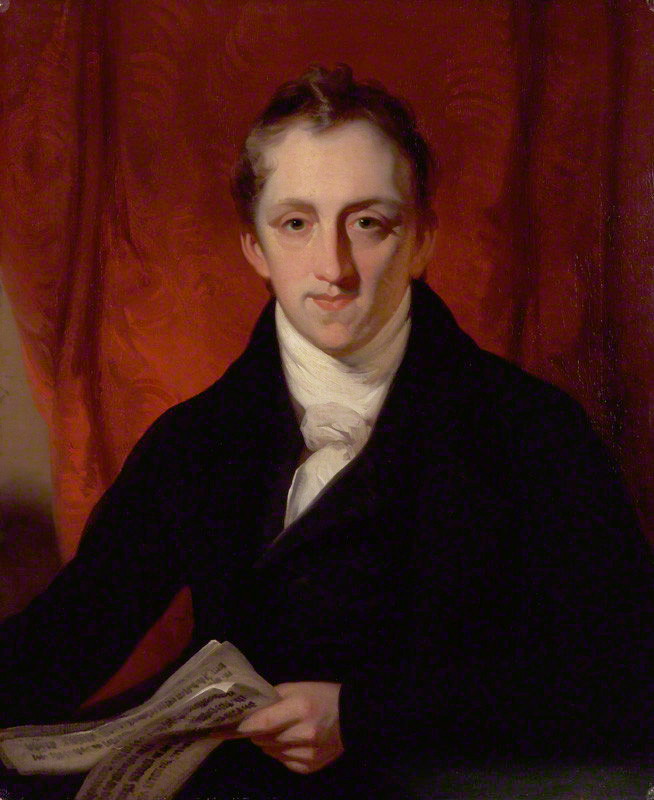
Horace Hayman Wilson (26 September 1786 – 8 May 1860) was an English orientalist who was elected the first Boden Professor of Sanskrit at Oxford University.
He studied medicine at St Thomas's Hospital, and went out to India in 1808 as assistant-surgeon on the Bengal establishment of the British East India Company. His knowledge of metallurgy caused him to be attached to the mint at Calcutta, where he was for a time associated with John Leyden.
He acted for many years as secretary to the committee of public instruction, and superintended the studies of the Sanskrit College in Calcutta. He was one of the staunchest opponents of the proposal that English should be made the sole medium of instruction in native schools, and became for a time the object of bitter attacks.
In 1832 Oxford University selected Wilson to be the first occupant of the newly founded Boden chair of Sanskrit: he had placed a column length advertisement in The Times on 6 March 1832 p. 3, giving a list of his achievements and intended activities, along with testimonials, including one from a rival candidate, as to his suitability for the post. In 1836 he was appointed librarian to the East India Company. He also taught at the East India Company College. On 10 April 1834 he was elected as a Fellow of the Royal Society of London.
On the recommendation of Henry Thomas Colebrooke, Wilson was in 1811 appointed secretary to the Asiatic Society of Bengal. He was a member of the Medical and Physical Society of Calcutta and was an original member of the Royal Asiatic Society, of which he was director from 1837 up to the time of his death.
He married Frances Siddons, a grand-daughter of the famous actress Sarah Siddons through her son George.
Wilson died on 8 May 1860 and is buried in Kensal Green Cemetery.
Wilson became deeply interested in the ancient language and literature of India, and was the first person to translate the Rigveda into English. In 1813 he published the Sanskrit text with a free translation in English rhymed verse of Kalidasa's lyrical poem, the Meghadūta, or Cloud-Messenger.
Hub AI
H. H. Wilson AI simulator
(@H. H. Wilson_simulator)
H. H. Wilson
Horace Hayman Wilson (26 September 1786 – 8 May 1860) was an English orientalist who was elected the first Boden Professor of Sanskrit at Oxford University.
He studied medicine at St Thomas's Hospital, and went out to India in 1808 as assistant-surgeon on the Bengal establishment of the British East India Company. His knowledge of metallurgy caused him to be attached to the mint at Calcutta, where he was for a time associated with John Leyden.
He acted for many years as secretary to the committee of public instruction, and superintended the studies of the Sanskrit College in Calcutta. He was one of the staunchest opponents of the proposal that English should be made the sole medium of instruction in native schools, and became for a time the object of bitter attacks.
In 1832 Oxford University selected Wilson to be the first occupant of the newly founded Boden chair of Sanskrit: he had placed a column length advertisement in The Times on 6 March 1832 p. 3, giving a list of his achievements and intended activities, along with testimonials, including one from a rival candidate, as to his suitability for the post. In 1836 he was appointed librarian to the East India Company. He also taught at the East India Company College. On 10 April 1834 he was elected as a Fellow of the Royal Society of London.
On the recommendation of Henry Thomas Colebrooke, Wilson was in 1811 appointed secretary to the Asiatic Society of Bengal. He was a member of the Medical and Physical Society of Calcutta and was an original member of the Royal Asiatic Society, of which he was director from 1837 up to the time of his death.
He married Frances Siddons, a grand-daughter of the famous actress Sarah Siddons through her son George.
Wilson died on 8 May 1860 and is buried in Kensal Green Cemetery.
Wilson became deeply interested in the ancient language and literature of India, and was the first person to translate the Rigveda into English. In 1813 he published the Sanskrit text with a free translation in English rhymed verse of Kalidasa's lyrical poem, the Meghadūta, or Cloud-Messenger.