
Recent from talks
HMS Ajax (22)
Knowledge base stats:
Talk channels stats:
Members stats:
HMS Ajax (22)
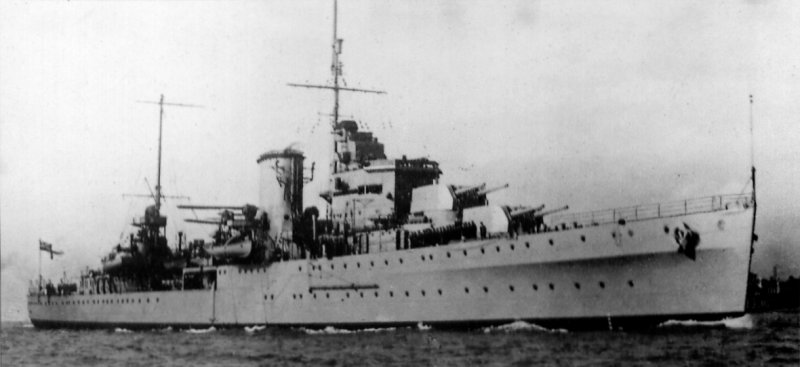
HMS Ajax was a Leander-class light cruiser which served with the Royal Navy during World War II. She became famous for her part in the Battle of the River Plate, the Battle of Crete, the Battle of Malta and as a supply escort in the siege of Tobruk. This ship was the eighth in the Royal Navy to bear the name. In February 1942, she was adopted by the civil community of Halifax, West Yorkshire.
Ajax was built at Vickers' shipyard, in Barrow-in-Furness, England. She was laid down on 7 February 1933, launched on 1 March 1934 and completed on 12 April 1935.
She was commissioned for service with the 8th Cruiser Squadron on the America and West Indies Station, but after working up in May 1935, she was deployed instead to the Mediterranean on detached service after the Abyssinian crisis. This lasted until November, when she finally joined her squadron at its base at the Royal Naval Dockyard in the Imperial fortress colony of Bermuda. Until 1937 she undertook exercises and visits to ports in the Americas as part of the station's South America Division. South American waters, as well as the geographic extent of the former Pacific Station, had been added to the expanse controlled from Bermuda after the First World War (by the same manner in which the Newfoundland Station and Jamaica Station had been absorbed into the North America Station in 1825 and 1830, respectively), requiring the augmentation of the 8th Cruiser Squadron (beginning with the transfer to the station of HMS Dauntless from the Mediterranean in May, 1928). Although Ajax and HMS Exeter operated from Bermuda, in the North Atlantic, they spent much of the year cruising South American waters before returning to Bermuda for maintenance and to exercise with the squadron. Ajax took part in the December 1936 reburials at Punta Arenas of the dead of HMS Doterel, killed in the explosion of a magazine in 1881. At the end of her America and West Indies deployment, Ajax returned to Britain for refit. At this time, her 4" battery was upgraded by exchanging single for double mountings.
On 2 and 3 June 1937, Ajax and other ships of the squadron took part in combined exercises with the Bermuda Garrison to practice raiding a hostile shore. "Blue Land Force" (Headquarters, "B" Company, 1st Sherwood Foresters, a company of Royal Marines, a Royal Navy howitzer battery and a naval demolition party), commanded by Major John R. Chidlaw-Roberts, Sherwood Foresters (with its boats guided by members of the Royal Bermuda Yacht Club), was landed from Ajax before sunrise at Spanish Point, Bermuda, with the objective of moving overland to attack an imaginary fuel dump at Admiralty House, supported by fire from Ajax, Exeter and other vessels, as well as by naval aircraft. The defending force included patrol boats manned by the Royal Naval Volunteer Reserve and "Red Land Force" (three battalions, represented by a platoon of the Bermuda Volunteer Rifle Corps).
Sir Arthur George Murchison Fletcher, the Governor of Trinidad signalled the Commander-in-Chief in Bermuda on 20 June 1937 for a cruiser to be sent to that colony due to riots that had broken out among strikers in the oil fields of Apex and Fyzabad, which had included the killings of two police officers. Workers in other industries had also staged sympathy strikes. Ajax, which was at Nassau at the time, was ordered to Trinidad. Exeter, which was about to depart Bermuda for the Panama Canal, was also ordered to Trinidad on 21 June. Ajax landed platoons of seamen and marines from her crew to support the civil police in re-establishing order. On 2 July, the marines of Ajax joined with those of Exeter and 200 police constables to assault the village of Fyzabad. By 5 July, the situation in Trinidad had returned largely to normal. Ajax departed Trinidad, and the America and West Indies Station on 14 July 1937 for Her Majesty's Dockyard, Portsmouth, to pay off and refit.
She rejoined her squadron in America and the West Indies in February 1938 and remained in the Atlantic until 1939, when she was redeployed to the Pacific, off South America. On 27 January, Ajax went to assist the rescue of earthquake victims at Talcahuano, Chile. She then returned to Bermuda and was redeployed to the South Atlantic Division in March.
When war was declared in September 1939, Ajax took up her appropriate station and patrolled off the River Plate. There she sank the German merchant ship Olinda on 3 September. She intercepted the German merchantman Carl Fritzen and the passenger ship Ussukuma (with the cruiser HMS Cumberland) on 4 and 5 September, respectively. Both ships were scuttled by their crews to avoid being taken as prizes.
After a brief deployment in and around the Falkland Islands, Ajax returned to her station off the Plate on 21 September.
Hub AI
HMS Ajax (22) AI simulator
(@HMS Ajax (22)_simulator)
HMS Ajax (22)
HMS Ajax was a Leander-class light cruiser which served with the Royal Navy during World War II. She became famous for her part in the Battle of the River Plate, the Battle of Crete, the Battle of Malta and as a supply escort in the siege of Tobruk. This ship was the eighth in the Royal Navy to bear the name. In February 1942, she was adopted by the civil community of Halifax, West Yorkshire.
Ajax was built at Vickers' shipyard, in Barrow-in-Furness, England. She was laid down on 7 February 1933, launched on 1 March 1934 and completed on 12 April 1935.
She was commissioned for service with the 8th Cruiser Squadron on the America and West Indies Station, but after working up in May 1935, she was deployed instead to the Mediterranean on detached service after the Abyssinian crisis. This lasted until November, when she finally joined her squadron at its base at the Royal Naval Dockyard in the Imperial fortress colony of Bermuda. Until 1937 she undertook exercises and visits to ports in the Americas as part of the station's South America Division. South American waters, as well as the geographic extent of the former Pacific Station, had been added to the expanse controlled from Bermuda after the First World War (by the same manner in which the Newfoundland Station and Jamaica Station had been absorbed into the North America Station in 1825 and 1830, respectively), requiring the augmentation of the 8th Cruiser Squadron (beginning with the transfer to the station of HMS Dauntless from the Mediterranean in May, 1928). Although Ajax and HMS Exeter operated from Bermuda, in the North Atlantic, they spent much of the year cruising South American waters before returning to Bermuda for maintenance and to exercise with the squadron. Ajax took part in the December 1936 reburials at Punta Arenas of the dead of HMS Doterel, killed in the explosion of a magazine in 1881. At the end of her America and West Indies deployment, Ajax returned to Britain for refit. At this time, her 4" battery was upgraded by exchanging single for double mountings.
On 2 and 3 June 1937, Ajax and other ships of the squadron took part in combined exercises with the Bermuda Garrison to practice raiding a hostile shore. "Blue Land Force" (Headquarters, "B" Company, 1st Sherwood Foresters, a company of Royal Marines, a Royal Navy howitzer battery and a naval demolition party), commanded by Major John R. Chidlaw-Roberts, Sherwood Foresters (with its boats guided by members of the Royal Bermuda Yacht Club), was landed from Ajax before sunrise at Spanish Point, Bermuda, with the objective of moving overland to attack an imaginary fuel dump at Admiralty House, supported by fire from Ajax, Exeter and other vessels, as well as by naval aircraft. The defending force included patrol boats manned by the Royal Naval Volunteer Reserve and "Red Land Force" (three battalions, represented by a platoon of the Bermuda Volunteer Rifle Corps).
Sir Arthur George Murchison Fletcher, the Governor of Trinidad signalled the Commander-in-Chief in Bermuda on 20 June 1937 for a cruiser to be sent to that colony due to riots that had broken out among strikers in the oil fields of Apex and Fyzabad, which had included the killings of two police officers. Workers in other industries had also staged sympathy strikes. Ajax, which was at Nassau at the time, was ordered to Trinidad. Exeter, which was about to depart Bermuda for the Panama Canal, was also ordered to Trinidad on 21 June. Ajax landed platoons of seamen and marines from her crew to support the civil police in re-establishing order. On 2 July, the marines of Ajax joined with those of Exeter and 200 police constables to assault the village of Fyzabad. By 5 July, the situation in Trinidad had returned largely to normal. Ajax departed Trinidad, and the America and West Indies Station on 14 July 1937 for Her Majesty's Dockyard, Portsmouth, to pay off and refit.
She rejoined her squadron in America and the West Indies in February 1938 and remained in the Atlantic until 1939, when she was redeployed to the Pacific, off South America. On 27 January, Ajax went to assist the rescue of earthquake victims at Talcahuano, Chile. She then returned to Bermuda and was redeployed to the South Atlantic Division in March.
When war was declared in September 1939, Ajax took up her appropriate station and patrolled off the River Plate. There she sank the German merchant ship Olinda on 3 September. She intercepted the German merchantman Carl Fritzen and the passenger ship Ussukuma (with the cruiser HMS Cumberland) on 4 and 5 September, respectively. Both ships were scuttled by their crews to avoid being taken as prizes.
After a brief deployment in and around the Falkland Islands, Ajax returned to her station off the Plate on 21 September.
Recent media