
Recent from talks
HMS Sahib
Knowledge base stats:
Talk channels stats:
Members stats:
HMS Sahib
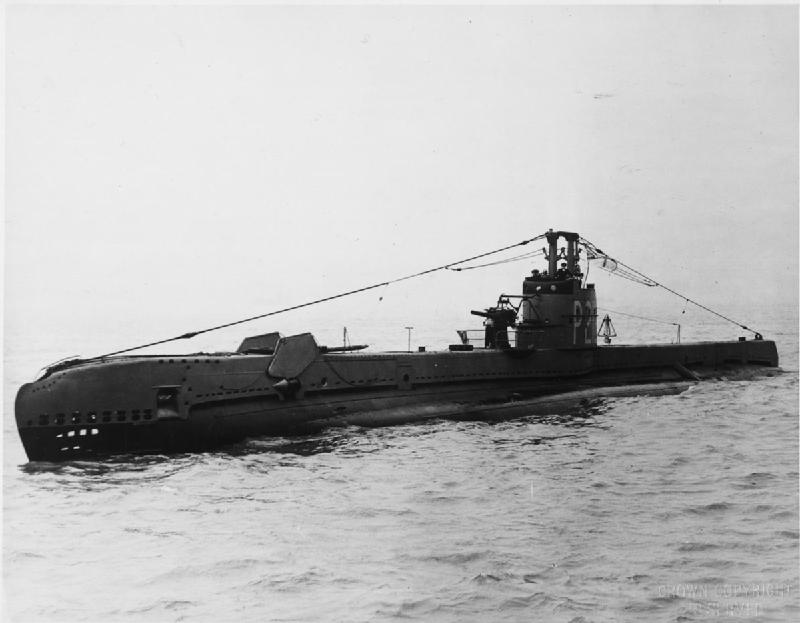
HMS Sahib was a third-batch S-class submarine built for the Royal Navy during the Second World War. She was launched on 19 January 1942 and commissioned on 13 May 1942. She was the only British naval vessel to bear the name Sahib.
After an initial patrol in the Arctic Ocean off Norway, Sahib sailed to Gibraltar, then patrolled the Alboran Sea, sinking one ship and damaging another. Sahib then transited to Malta, from which she conducted three war patrols. On the second one, Sahib sank the Italian transport SS Scillin, which was transporting Allied prisoners of war; Scillin sank with the loss of 787 men. On her next patrol, Sahib sank a large Italian merchant ship, then damaged a coastal trading vessel. The submarine was then assigned to join another submarine flotilla and operated from Algiers in French North Africa. In her next patrols, Sahib sank the German submarine U-301, two Italian merchant ships, and two small sailing vessels.
On 24 April 1943, Sahib sank a heavily protected Italian merchant; however, she was then attacked with depth charges and forced to surface. The crew of Sahib were evacuated and rescued with only one casualty by the Italian ships while the submarine was scuttled and sank.
The S-class submarines were designed to patrol the restricted waters of the North Sea and the Mediterranean Sea. The third batch was slightly enlarged and improved over the preceding second batch of the S class. The submarines had a length of 217 feet (66.1 m) overall, a beam of 23 feet 9 inches (7.2 m) and a draught of 14 feet 8 inches (4.5 m). They displaced 842 long tons (856 t) on the surface and 990 long tons (1,010 t) submerged. The S-class submarines had a crew of 48 officers and ratings. They had a diving depth of 300 feet (91.4 m).
For surface running, the boats were powered by two 950-brake-horsepower (708 kW) diesel engines, each driving one propeller shaft. When submerged each propeller was driven by a 650-horsepower (485 kW) electric motor. They could reach 15 knots (28 km/h; 17 mph) on the surface and 10 knots (19 km/h; 12 mph) underwater. On the surface, the third-batch boats had a range of 6,000 nautical miles (11,000 km; 6,900 mi) at 10 knots (19 km/h; 12 mph) and 120 nmi (220 km; 140 mi) at 3 knots (5.6 km/h; 3.5 mph) submerged.
The third-batch submarines were armed with seven 21-inch (533 mm) torpedo tubes. A half-dozen of these were in the bow and there was one external tube in the stern. They carried six reload torpedoes for the bow tubes for a total of thirteen torpedoes. Twelve mines could be carried in lieu of the internally stowed torpedoes. They were also armed with a 3-inch (76 mm) deck gun. The third-batch S-class boats were fitted with either a Type 129AR or 138 ASDIC system and a Type 291 or 291W early-warning radar.
HMS Sahib was a third-group S-class submarine and was ordered by the Admiralty on 23 January 1940. She was laid down in the Cammell Laird Shipyard in Birkenhead on 5 July 1940 and was launched on 19 January 1942. On 10 May 1942, Sahib, under the command of Lieutenant J. H. Bromage, sailed from the shipbuilding yards to Holy Loch, where she was commissioned into the Royal Navy three days later. Sahib was a term used in colonial British India to address Europeans with official or social statuses.
Between 11 May and 24 June 1942, Sahib underwent a period of training, then departed for her first war patrol. She was ordered to operate off Northern Norway and protect the Arctic Convoys PQ 17 and QP 13 to and from northern Russian ports. On 11 July, Sahib fired six torpedoes at the German submarine U-658 but missed, then ended her patrol in Lerwick the next day.
Hub AI
HMS Sahib AI simulator
(@HMS Sahib_simulator)
HMS Sahib
HMS Sahib was a third-batch S-class submarine built for the Royal Navy during the Second World War. She was launched on 19 January 1942 and commissioned on 13 May 1942. She was the only British naval vessel to bear the name Sahib.
After an initial patrol in the Arctic Ocean off Norway, Sahib sailed to Gibraltar, then patrolled the Alboran Sea, sinking one ship and damaging another. Sahib then transited to Malta, from which she conducted three war patrols. On the second one, Sahib sank the Italian transport SS Scillin, which was transporting Allied prisoners of war; Scillin sank with the loss of 787 men. On her next patrol, Sahib sank a large Italian merchant ship, then damaged a coastal trading vessel. The submarine was then assigned to join another submarine flotilla and operated from Algiers in French North Africa. In her next patrols, Sahib sank the German submarine U-301, two Italian merchant ships, and two small sailing vessels.
On 24 April 1943, Sahib sank a heavily protected Italian merchant; however, she was then attacked with depth charges and forced to surface. The crew of Sahib were evacuated and rescued with only one casualty by the Italian ships while the submarine was scuttled and sank.
The S-class submarines were designed to patrol the restricted waters of the North Sea and the Mediterranean Sea. The third batch was slightly enlarged and improved over the preceding second batch of the S class. The submarines had a length of 217 feet (66.1 m) overall, a beam of 23 feet 9 inches (7.2 m) and a draught of 14 feet 8 inches (4.5 m). They displaced 842 long tons (856 t) on the surface and 990 long tons (1,010 t) submerged. The S-class submarines had a crew of 48 officers and ratings. They had a diving depth of 300 feet (91.4 m).
For surface running, the boats were powered by two 950-brake-horsepower (708 kW) diesel engines, each driving one propeller shaft. When submerged each propeller was driven by a 650-horsepower (485 kW) electric motor. They could reach 15 knots (28 km/h; 17 mph) on the surface and 10 knots (19 km/h; 12 mph) underwater. On the surface, the third-batch boats had a range of 6,000 nautical miles (11,000 km; 6,900 mi) at 10 knots (19 km/h; 12 mph) and 120 nmi (220 km; 140 mi) at 3 knots (5.6 km/h; 3.5 mph) submerged.
The third-batch submarines were armed with seven 21-inch (533 mm) torpedo tubes. A half-dozen of these were in the bow and there was one external tube in the stern. They carried six reload torpedoes for the bow tubes for a total of thirteen torpedoes. Twelve mines could be carried in lieu of the internally stowed torpedoes. They were also armed with a 3-inch (76 mm) deck gun. The third-batch S-class boats were fitted with either a Type 129AR or 138 ASDIC system and a Type 291 or 291W early-warning radar.
HMS Sahib was a third-group S-class submarine and was ordered by the Admiralty on 23 January 1940. She was laid down in the Cammell Laird Shipyard in Birkenhead on 5 July 1940 and was launched on 19 January 1942. On 10 May 1942, Sahib, under the command of Lieutenant J. H. Bromage, sailed from the shipbuilding yards to Holy Loch, where she was commissioned into the Royal Navy three days later. Sahib was a term used in colonial British India to address Europeans with official or social statuses.
Between 11 May and 24 June 1942, Sahib underwent a period of training, then departed for her first war patrol. She was ordered to operate off Northern Norway and protect the Arctic Convoys PQ 17 and QP 13 to and from northern Russian ports. On 11 July, Sahib fired six torpedoes at the German submarine U-658 but missed, then ended her patrol in Lerwick the next day.
Recent media