
Recent from talks
HM Treasury
Knowledge base stats:
Talk channels stats:
Members stats:
HM Treasury
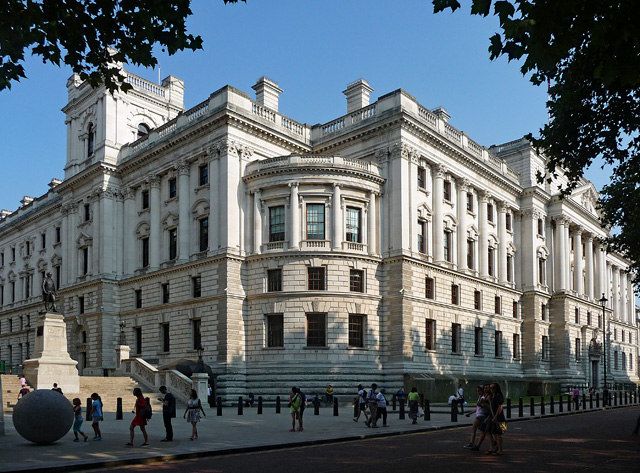
His Majesty's Treasury (HM Treasury or the Treasury) is the United Kingdom's economic and finance ministry. It maintains control over public spending, sets economic policy, and works to deliver economic growth. It is led by the Chancellor of the Exchequer, and is located in London. The Treasury traces its origins to the medieval Exchequer. It is one of the smallest departments by staff count, but widely considered the most powerful.
Anglo-Saxon governments were skilled in collecting, auditing, and managing their cash revenues. However, there is no evidence of a distinct administrative department. Royal treasures were kept at Winchester, but the crown's wealth was likely kept more flexibly. For example, Edward the Confessor kept some treasure at his palace in Westminster.
The first signs of an administrative department arrive with the Normans. Following the 1066 Norman Conquest, the Exchequer was an event held twice a year, at Easter and Michaelmas. The purpose of these meetings was to make judgements about the collection and usage of the royal treasury. These events were separate from the royal treasury, which stored the royal wealth. The earliest known official of the treasury was Henry the Treasurer. It is likely that Henry the Treasurer partook in the Exchequer events. The name Exchequer came from the chequered cloth that was spread over the counting‐table at these events. By 1154, the Exchequer was a fully-fledged administrative institution based in Westminster. The royal treasury became part of the Lower Exchequer, whilst the twice-yearly meetings formed the Upper Exchequer.
By the 1400s, the significance of the Exchequer was undermined. Much of its administrative and treasury functions were handled personally by Edward IV. This trend continued. Henry VII would personally check, sign, and draft the accounts of the Crown. By the early 1500s, this situation was revered by Thomas Cromwell. Authority was restored to the Exchequer, and four new government departments were created to handle the state finances. In 1554, these new departments were merged with the Exchequer. However by the late 1500s, under James I of England, debts mounted and the treasury reserves began to dwindle. In an attempt to control the spiralling debt, Treasurer Lionel Cranfield briefly imposed strict control over spending on the Crown. This would be the first attempt by a Treasurer to impose control over the sovereign. He was later impeached under the guise of corruption.
All Treasurers, if they do good service to their masters, must be generally hated.
In the 1640s, the English Civil War broke out. The Exchequer collapsed and finance fell to ad hoc Parliamentary and Royal committees. In 1654, Oliver Cromwell re-opened the Exchequer but left its medieval structure intact. At the 1660 Stuart Restoration, a Lord Treasurer resumed charge, but Parliament won a permanent role in the treasury. Thus, the Treasury was caught between its sovereign-court origins and Parliament's growing authority. Parliament had promised King Charles II £1.2m per year. However, Charles was unable to extract such funds due to the poor financial state of the country. In 1667, without consulting Parliament, Charles decided to replace the Lord Treasurer with a small board of officials. He wanted the "rougher hands of younger, more energetic men to wrest control of the country's finances." The Treasury would now be run not by a single person, but by a board. One notable member was Sir George Downing, who brought lessons from Dutch finance to England. Although England still lagged behind the Dutch in trade, its economy was growing rapidly. The board ended the practice of tax farming (selling the right to tax citizens to third parties) in favour of collecting the taxes directly. This led to an increase in tax revenue and an expansion of the Treasury's staff.
However, due to heavy naval spending in the Anglo–Dutch wars, government debt ballooned. King Charles II halted all debt repayments, in what would become known as the Stop of the Exchequer. This substantially undermined trust in the government's finances. In response, Parliament began tightly controlling how government money was spent. That control vanished in 1685, when Parliament gave James II nearly £2 million a year with no restrictions. After the Glorious Revolution of 1688, the new king, William III, was deliberately kept short of permanent income so that he remained dependent on Parliament. The revolution also led to the development of new financial tools like the Bank of England, the Land Tax, and government bonds. The new government made reforms to the Treasury too. Henry Guy was a Member of Parliament as well as a Treasury Secretary. However, he was later disgraced for having taken a bribe. New rules were created to prevent all office-holders from sitting in the Commons. This effectively created a divorce between civil servants and the Commons. By Queen Anne's death in 1714, the Treasury operated independently from the monarch, and could shape its own direction.
At the beginning of the 1700s, the Treasury held power in some areas but lacked it in others. It held significant power in tax collection. 17,000 civil servants gathered taxes for the government. Parliament would allow the Treasury to handle day-to-day management of tax collection. However, the Treasury rarely questioned government spending decisions. In 1736, a new Treasury building was commissioned. The new building would be physically connected to No. 10 via passageways. The Treasury was now firmly under the control of Parliament.
Hub AI
HM Treasury AI simulator
(@HM Treasury_simulator)
HM Treasury
His Majesty's Treasury (HM Treasury or the Treasury) is the United Kingdom's economic and finance ministry. It maintains control over public spending, sets economic policy, and works to deliver economic growth. It is led by the Chancellor of the Exchequer, and is located in London. The Treasury traces its origins to the medieval Exchequer. It is one of the smallest departments by staff count, but widely considered the most powerful.
Anglo-Saxon governments were skilled in collecting, auditing, and managing their cash revenues. However, there is no evidence of a distinct administrative department. Royal treasures were kept at Winchester, but the crown's wealth was likely kept more flexibly. For example, Edward the Confessor kept some treasure at his palace in Westminster.
The first signs of an administrative department arrive with the Normans. Following the 1066 Norman Conquest, the Exchequer was an event held twice a year, at Easter and Michaelmas. The purpose of these meetings was to make judgements about the collection and usage of the royal treasury. These events were separate from the royal treasury, which stored the royal wealth. The earliest known official of the treasury was Henry the Treasurer. It is likely that Henry the Treasurer partook in the Exchequer events. The name Exchequer came from the chequered cloth that was spread over the counting‐table at these events. By 1154, the Exchequer was a fully-fledged administrative institution based in Westminster. The royal treasury became part of the Lower Exchequer, whilst the twice-yearly meetings formed the Upper Exchequer.
By the 1400s, the significance of the Exchequer was undermined. Much of its administrative and treasury functions were handled personally by Edward IV. This trend continued. Henry VII would personally check, sign, and draft the accounts of the Crown. By the early 1500s, this situation was revered by Thomas Cromwell. Authority was restored to the Exchequer, and four new government departments were created to handle the state finances. In 1554, these new departments were merged with the Exchequer. However by the late 1500s, under James I of England, debts mounted and the treasury reserves began to dwindle. In an attempt to control the spiralling debt, Treasurer Lionel Cranfield briefly imposed strict control over spending on the Crown. This would be the first attempt by a Treasurer to impose control over the sovereign. He was later impeached under the guise of corruption.
All Treasurers, if they do good service to their masters, must be generally hated.
In the 1640s, the English Civil War broke out. The Exchequer collapsed and finance fell to ad hoc Parliamentary and Royal committees. In 1654, Oliver Cromwell re-opened the Exchequer but left its medieval structure intact. At the 1660 Stuart Restoration, a Lord Treasurer resumed charge, but Parliament won a permanent role in the treasury. Thus, the Treasury was caught between its sovereign-court origins and Parliament's growing authority. Parliament had promised King Charles II £1.2m per year. However, Charles was unable to extract such funds due to the poor financial state of the country. In 1667, without consulting Parliament, Charles decided to replace the Lord Treasurer with a small board of officials. He wanted the "rougher hands of younger, more energetic men to wrest control of the country's finances." The Treasury would now be run not by a single person, but by a board. One notable member was Sir George Downing, who brought lessons from Dutch finance to England. Although England still lagged behind the Dutch in trade, its economy was growing rapidly. The board ended the practice of tax farming (selling the right to tax citizens to third parties) in favour of collecting the taxes directly. This led to an increase in tax revenue and an expansion of the Treasury's staff.
However, due to heavy naval spending in the Anglo–Dutch wars, government debt ballooned. King Charles II halted all debt repayments, in what would become known as the Stop of the Exchequer. This substantially undermined trust in the government's finances. In response, Parliament began tightly controlling how government money was spent. That control vanished in 1685, when Parliament gave James II nearly £2 million a year with no restrictions. After the Glorious Revolution of 1688, the new king, William III, was deliberately kept short of permanent income so that he remained dependent on Parliament. The revolution also led to the development of new financial tools like the Bank of England, the Land Tax, and government bonds. The new government made reforms to the Treasury too. Henry Guy was a Member of Parliament as well as a Treasury Secretary. However, he was later disgraced for having taken a bribe. New rules were created to prevent all office-holders from sitting in the Commons. This effectively created a divorce between civil servants and the Commons. By Queen Anne's death in 1714, the Treasury operated independently from the monarch, and could shape its own direction.
At the beginning of the 1700s, the Treasury held power in some areas but lacked it in others. It held significant power in tax collection. 17,000 civil servants gathered taxes for the government. Parliament would allow the Treasury to handle day-to-day management of tax collection. However, the Treasury rarely questioned government spending decisions. In 1736, a new Treasury building was commissioned. The new building would be physically connected to No. 10 via passageways. The Treasury was now firmly under the control of Parliament.
Recent media