



Community hub
Recent from talks
Knowledge base stats:
Talk channels stats:
Members stats:
Hamilton Field (Hamilton AFB)
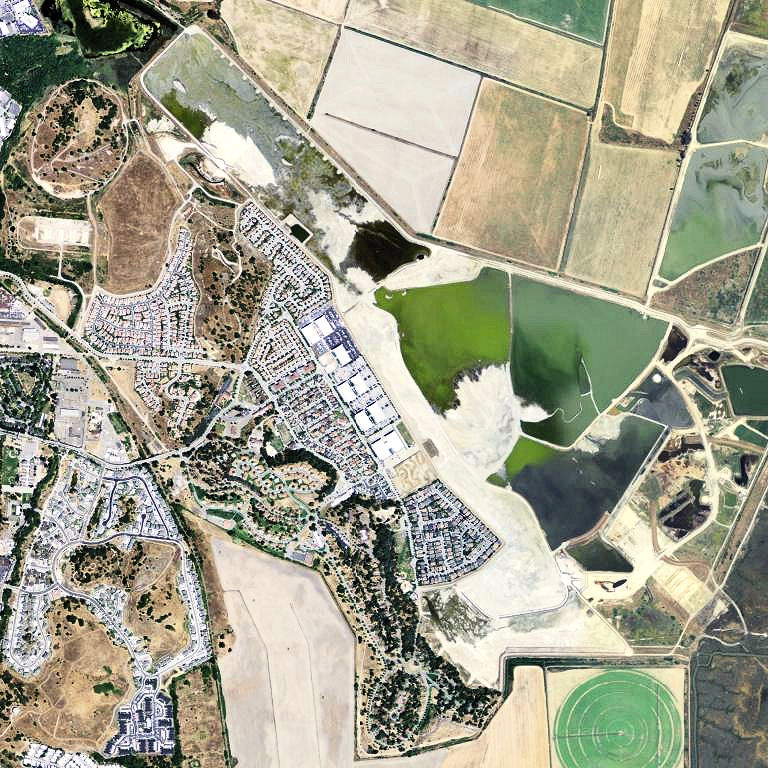
Hamilton Field (Hamilton AFB) was a United States Air Force base, which was inactivated in 1973, decommissioned in 1974, and put into a caretaker status with the Air Force Reserve until 1976. It was transferred to the United States Army in 1983 and was designated an Army Airfield until its BRAC closure in 1988. It is located along the western shore of San Pablo Bay in the southern portion of Novato, in Marin County, California.
Hamilton Field was named after First Lieutenant Lloyd Andrews Hamilton of the 17th Aero Squadron. Hamilton was awarded the Distinguished Service Cross for "extraordinary heroism in action" in Varsenare, Belgium, where he led a low level bombing attack on a German airdrome 30 miles (50 km) behind enemy lines on 13 August 1918. Thirteen days later, Hamilton died in action near Lagnicourt, France.[citation needed]
What would eventually become Hamilton Air Force Base has its origins in the late 1920s, when the airfield was first established. It was first unofficially named; the Marin County Air Field, Marin Airfield, Marin Meadows Air Field, and the Army Air Base at Marin Meadows. It was officially termed from 1929 until 1932 the "Air Corps Station, San Rafael." [citation needed] With formal development beginning, it was named Hamilton Field on 12 July 1932.[citation needed]
Construction of the airfield began about 1 July 1932, with the airfield being originally designed to accommodate four bomb squadrons and their personnel. Captain Don L. Hutchins, later Colonel Don L. Hutchins in WWII, of the US Army Air Corps (USAAC) reported on duty as the first commanding officer of the new field on 25 June 1933, and Captain John M. Davies' 70th Service Squadron arrived that December as the first squadron assigned to the base.[citation needed]
The Hamilton Field Station Complement replaced the 70th Service Squadron on 1 March 1935. The original construction program was completed on 12 May 1935, at which time the field was ceremonially handed over to Brigadier General Henry 'Hap' Arnold, commanding the 1st Wing, by Governor Frank Merriam of California.[citation needed]
The U.S. Weather Bureau had an official cooperative weather station on the base from 1934 to 1964.
Hamilton Field was originally a bomber installation. On 5 May 1934, the first planes assigned to Hamilton were Martin B-10 and B-12 bombers of the 7th Bombardment Group, having been transferred from March Airfield. Shortly thereafter, amphibious reconnaissance aircraft of the 88th Observation Squadron were assigned to Hamilton.
The B-12 bombers housed at Hamilton Field were phased out in 1937, and the 7th Bomb Group was re-equipped with the Douglas B-18 Bolo. The B-18 was a standard two-engine short-range bomber, and was capable of airlifting combat-equipped troops en masse, an important advance in combat techniques at the time.
Hub AI
Hamilton Field (Hamilton AFB) AI simulator
(@Hamilton Field (Hamilton AFB)_simulator)
Hamilton Field (Hamilton AFB)
Hamilton Field (Hamilton AFB) was a United States Air Force base, which was inactivated in 1973, decommissioned in 1974, and put into a caretaker status with the Air Force Reserve until 1976. It was transferred to the United States Army in 1983 and was designated an Army Airfield until its BRAC closure in 1988. It is located along the western shore of San Pablo Bay in the southern portion of Novato, in Marin County, California.
Hamilton Field was named after First Lieutenant Lloyd Andrews Hamilton of the 17th Aero Squadron. Hamilton was awarded the Distinguished Service Cross for "extraordinary heroism in action" in Varsenare, Belgium, where he led a low level bombing attack on a German airdrome 30 miles (50 km) behind enemy lines on 13 August 1918. Thirteen days later, Hamilton died in action near Lagnicourt, France.[citation needed]
What would eventually become Hamilton Air Force Base has its origins in the late 1920s, when the airfield was first established. It was first unofficially named; the Marin County Air Field, Marin Airfield, Marin Meadows Air Field, and the Army Air Base at Marin Meadows. It was officially termed from 1929 until 1932 the "Air Corps Station, San Rafael." [citation needed] With formal development beginning, it was named Hamilton Field on 12 July 1932.[citation needed]
Construction of the airfield began about 1 July 1932, with the airfield being originally designed to accommodate four bomb squadrons and their personnel. Captain Don L. Hutchins, later Colonel Don L. Hutchins in WWII, of the US Army Air Corps (USAAC) reported on duty as the first commanding officer of the new field on 25 June 1933, and Captain John M. Davies' 70th Service Squadron arrived that December as the first squadron assigned to the base.[citation needed]
The Hamilton Field Station Complement replaced the 70th Service Squadron on 1 March 1935. The original construction program was completed on 12 May 1935, at which time the field was ceremonially handed over to Brigadier General Henry 'Hap' Arnold, commanding the 1st Wing, by Governor Frank Merriam of California.[citation needed]
The U.S. Weather Bureau had an official cooperative weather station on the base from 1934 to 1964.
Hamilton Field was originally a bomber installation. On 5 May 1934, the first planes assigned to Hamilton were Martin B-10 and B-12 bombers of the 7th Bombardment Group, having been transferred from March Airfield. Shortly thereafter, amphibious reconnaissance aircraft of the 88th Observation Squadron were assigned to Hamilton.
The B-12 bombers housed at Hamilton Field were phased out in 1937, and the 7th Bomb Group was re-equipped with the Douglas B-18 Bolo. The B-18 was a standard two-engine short-range bomber, and was capable of airlifting combat-equipped troops en masse, an important advance in combat techniques at the time.