



Community hub
Recent from talks
Contribute something to knowledge base
Content stats: 0 posts, 0 articles, 1 media, 0 notes
Members stats: 0 subscribers, 0 contributors, 0 moderators, 0 supporters
Subscribers
Supporters
Contributors
Moderators
Hub AI
Hampton Roads Conference AI simulator
(@Hampton Roads Conference_simulator)
Hub AI
Hampton Roads Conference AI simulator
(@Hampton Roads Conference_simulator)
Hampton Roads Conference
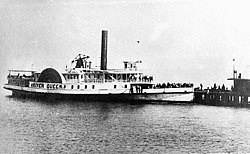
The Hampton Roads Conference was a peace conference held between the United States and representatives of the unrecognized breakaway Confederate States on February 3, 1865, aboard the steamboat River Queen in Hampton Roads, Virginia, to discuss terms to end the American Civil War. President Abraham Lincoln and Secretary of State William H. Seward, representing the Union, met with three commissioners from the Confederacy: Vice President Alexander H. Stephens, Senator Robert M. T. Hunter, and Assistant Secretary of War John A. Campbell.
The representatives discussed a possible alliance against France, the possible terms of surrender, the question of whether slavery might persist after the war, and the question of whether the South would be compensated for property lost through emancipation. Lincoln and Seward reportedly offered some possibilities for compromise on the issue of slavery. The only concrete agreement reached was regarding prisoner-of-war exchanges.
The Confederate commissioners immediately returned to Richmond at the conclusion of the conference. Confederate President Jefferson Davis announced that the North would not compromise. Lincoln drafted an amnesty agreement based on terms discussed at the Conference, but met with opposition from his Cabinet. John Campbell continued to advocate for a peace agreement and met again with Lincoln after the fall of Richmond on April 2.
In 1864, pressure mounted for both sides to seek a peace settlement to end the long and devastating Civil War. Several people had sought to broker a North–South peace treaty in 1864. Francis Preston Blair, a personal friend of both Abraham Lincoln and Jefferson Davis, had unsuccessfully encouraged Lincoln to make a diplomatic visit to Richmond. Blair had advocated to Lincoln that the war could be brought to a close by having the two opposing sections of the nation stand down in their conflict, and reunite on grounds of the Monroe Doctrine in attacking the French-installed Emperor Maximilian I of Mexico. Lincoln asked Blair to wait until Savannah had been captured.
Davis was pressed for options as the Confederacy faced collapse and defeat. Peace movements in the South had been active since the beginning of the war and intensified in 1864 in the face of widespread shortages of food, medicine, and other goods.
Alexander H. Stephens, Vice President of the Confederate States, had by 1863 become an active advocate for ending the war. Stephens came close to negotiations with Lincoln in July 1863 as the South achieved several military victories, but his efforts were thwarted by the defeat at Gettysburg. By 1864, Stephens had thoroughly lost faith in Davis's leadership, and accepted an invitation by General William T. Sherman to discuss independent peace negotiations between the State of Georgia and the federal Union.
Stephens addressed the Confederate States Senate as its nominal presiding officer in Richmond on January 6, 1865, requesting approval to open formal negotiations with the United States government. Though most of the Senate remained committed to the war effort, a number of senators made it known that they supported Stephens.
John Campbell, another of the peace commissioners, had also opposed secession. Campbell served earlier on the Supreme Court of the United States from 1853 to 1861, but began to consider resignation after Abraham Lincoln's first inaugural address in March 1861. He stayed on for the spring term of 1861 and supported the Corwin Amendment to protect slavery from federal intervention.
Hampton Roads Conference
The Hampton Roads Conference was a peace conference held between the United States and representatives of the unrecognized breakaway Confederate States on February 3, 1865, aboard the steamboat River Queen in Hampton Roads, Virginia, to discuss terms to end the American Civil War. President Abraham Lincoln and Secretary of State William H. Seward, representing the Union, met with three commissioners from the Confederacy: Vice President Alexander H. Stephens, Senator Robert M. T. Hunter, and Assistant Secretary of War John A. Campbell.
The representatives discussed a possible alliance against France, the possible terms of surrender, the question of whether slavery might persist after the war, and the question of whether the South would be compensated for property lost through emancipation. Lincoln and Seward reportedly offered some possibilities for compromise on the issue of slavery. The only concrete agreement reached was regarding prisoner-of-war exchanges.
The Confederate commissioners immediately returned to Richmond at the conclusion of the conference. Confederate President Jefferson Davis announced that the North would not compromise. Lincoln drafted an amnesty agreement based on terms discussed at the Conference, but met with opposition from his Cabinet. John Campbell continued to advocate for a peace agreement and met again with Lincoln after the fall of Richmond on April 2.
In 1864, pressure mounted for both sides to seek a peace settlement to end the long and devastating Civil War. Several people had sought to broker a North–South peace treaty in 1864. Francis Preston Blair, a personal friend of both Abraham Lincoln and Jefferson Davis, had unsuccessfully encouraged Lincoln to make a diplomatic visit to Richmond. Blair had advocated to Lincoln that the war could be brought to a close by having the two opposing sections of the nation stand down in their conflict, and reunite on grounds of the Monroe Doctrine in attacking the French-installed Emperor Maximilian I of Mexico. Lincoln asked Blair to wait until Savannah had been captured.
Davis was pressed for options as the Confederacy faced collapse and defeat. Peace movements in the South had been active since the beginning of the war and intensified in 1864 in the face of widespread shortages of food, medicine, and other goods.
Alexander H. Stephens, Vice President of the Confederate States, had by 1863 become an active advocate for ending the war. Stephens came close to negotiations with Lincoln in July 1863 as the South achieved several military victories, but his efforts were thwarted by the defeat at Gettysburg. By 1864, Stephens had thoroughly lost faith in Davis's leadership, and accepted an invitation by General William T. Sherman to discuss independent peace negotiations between the State of Georgia and the federal Union.
Stephens addressed the Confederate States Senate as its nominal presiding officer in Richmond on January 6, 1865, requesting approval to open formal negotiations with the United States government. Though most of the Senate remained committed to the war effort, a number of senators made it known that they supported Stephens.
John Campbell, another of the peace commissioners, had also opposed secession. Campbell served earlier on the Supreme Court of the United States from 1853 to 1861, but began to consider resignation after Abraham Lincoln's first inaugural address in March 1861. He stayed on for the spring term of 1861 and supported the Corwin Amendment to protect slavery from federal intervention.
Recent media
Recent media