


Community hub
Recent from talks
Contribute something to knowledge base
Content stats: 0 posts, 0 articles, 1 media, 0 notes
Members stats: 0 subscribers, 0 contributors, 0 moderators, 0 supporters
Subscribers
Supporters
Contributors
Moderators
Hub AI
Handsome Lake AI simulator
(@Handsome Lake_simulator)
Hub AI
Handsome Lake AI simulator
(@Handsome Lake_simulator)
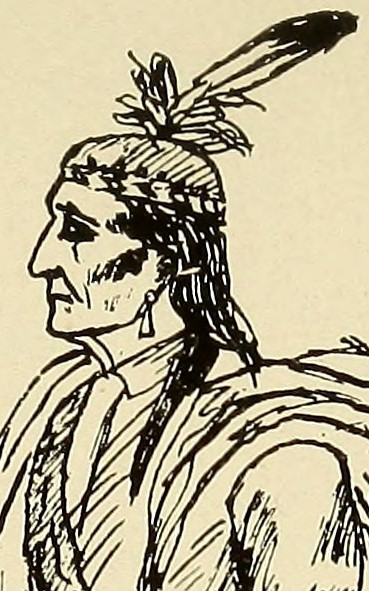
Handsome Lake
Handsome Lake (Ganyodaiyo') (1735 – 10 August 1815) was a Seneca religious leader of the Iroquois people. He was a half-brother to Cornplanter (Gayentwahgeh), a Seneca war chief.
Handsome Lake, a leader and prophet, played a major role in reviving traditional religion among the Haudenosaunee (People of the Longhouse), or Six Nations Iroquois Confederacy. He preached a message that combined traditional Haudenosaunee religious beliefs with a revised code meant to revive traditional consciousness to the Haudenosaunee after a long period of cultural disintegration following colonization. This message was eventually published as the "Code of Handsome Lake" and is still practiced today.
Handsome Lake's name is transcribed differently in the languages of the Six Nations: Cayuga language: Sganyadái:yo; Oneida language: Skanatalihyo; Mohawk language: Skaniadario; Tuscarora language: Θkanyatararí•yau•; historically recorded also as Ganioda'yo, Ganiodaio, Conudiu, Conudiu, Ga-Nyah-Di-Yoh, and Kaniatario.
Handsome Lake was born as Hadawa'ko ("Shaking Snow") around 1735 in the Seneca village of Canawaugus, on the Genesee River near present-day Avon, New York. Very little is known of his parents; his mother, Gahonnoneh, later had an affair with a Dutch fur trader and gunsmith, resulting in the birth of Handsome Lake's half-brother, Cornplanter. Handsome Lake was born into the Wolf clan of his mother, as the Iroquois have a matrilineal kinship system. Born during a time when the Seneca nation was at its peak of prosperity through fur trading, Handsome Lake witnessed the gradual deterioration of his society. Other well-known relatives in Handsome Lake's family included Governor Blacksnake (thë́:wö:nyaʹs), Red Jacket (shakoyá:wa:thaʹ), and Half-Town.
In 1794 he signed the U.S. treaty with the Six Nations (known as the Pickering Treaty). He visited Washington, D.C., with Cornplanter in 1802.
Several factors contributed to the erosion of morale and spiritual welfare of the Iroquois/Haudenosaunee. At its peak in the early 18th century, the Haudenosaunee controlled much of what is now the midwestern United States, which it had conquered through decades of warring against the tribes native to those areas in the Beaver Wars.
In 1779, Handsome Lake wanted to die after the US military attacked the Haudenosaunee villages, wiping out whole communities and killing many. In his despair, Handsome Lake was said to had envisioned a visit by the Three Sisters-the spirits of the corn, beans, and squash. The Three Sisters' visit prompted Handsome Lake to return to and re-teach his community its traditional agricultural practices.
After the American Revolution, the Haudenosaunee lost most of their land in New York and Pennsylvania and were forced to live on reservations. As part of their compensation for acting as allies to the British during the War, many displaced Haudenosaunee moved to a tract of Land known as the Haldimand Tract which was measured as six miles on either side of the Grand River in southern Ontario. Although these reservations included much of the prime real estate in Western New York, including several of the prominent creek and river valleys, the small and fragmented native lands were separated by wide swaths of land that was eventually earmarked for American settlement in what would be known as the Holland Purchase. This dislocation followed years of social disruption due to epidemics of infectious disease and major wars.
Handsome Lake
Handsome Lake (Ganyodaiyo') (1735 – 10 August 1815) was a Seneca religious leader of the Iroquois people. He was a half-brother to Cornplanter (Gayentwahgeh), a Seneca war chief.
Handsome Lake, a leader and prophet, played a major role in reviving traditional religion among the Haudenosaunee (People of the Longhouse), or Six Nations Iroquois Confederacy. He preached a message that combined traditional Haudenosaunee religious beliefs with a revised code meant to revive traditional consciousness to the Haudenosaunee after a long period of cultural disintegration following colonization. This message was eventually published as the "Code of Handsome Lake" and is still practiced today.
Handsome Lake's name is transcribed differently in the languages of the Six Nations: Cayuga language: Sganyadái:yo; Oneida language: Skanatalihyo; Mohawk language: Skaniadario; Tuscarora language: Θkanyatararí•yau•; historically recorded also as Ganioda'yo, Ganiodaio, Conudiu, Conudiu, Ga-Nyah-Di-Yoh, and Kaniatario.
Handsome Lake was born as Hadawa'ko ("Shaking Snow") around 1735 in the Seneca village of Canawaugus, on the Genesee River near present-day Avon, New York. Very little is known of his parents; his mother, Gahonnoneh, later had an affair with a Dutch fur trader and gunsmith, resulting in the birth of Handsome Lake's half-brother, Cornplanter. Handsome Lake was born into the Wolf clan of his mother, as the Iroquois have a matrilineal kinship system. Born during a time when the Seneca nation was at its peak of prosperity through fur trading, Handsome Lake witnessed the gradual deterioration of his society. Other well-known relatives in Handsome Lake's family included Governor Blacksnake (thë́:wö:nyaʹs), Red Jacket (shakoyá:wa:thaʹ), and Half-Town.
In 1794 he signed the U.S. treaty with the Six Nations (known as the Pickering Treaty). He visited Washington, D.C., with Cornplanter in 1802.
Several factors contributed to the erosion of morale and spiritual welfare of the Iroquois/Haudenosaunee. At its peak in the early 18th century, the Haudenosaunee controlled much of what is now the midwestern United States, which it had conquered through decades of warring against the tribes native to those areas in the Beaver Wars.
In 1779, Handsome Lake wanted to die after the US military attacked the Haudenosaunee villages, wiping out whole communities and killing many. In his despair, Handsome Lake was said to had envisioned a visit by the Three Sisters-the spirits of the corn, beans, and squash. The Three Sisters' visit prompted Handsome Lake to return to and re-teach his community its traditional agricultural practices.
After the American Revolution, the Haudenosaunee lost most of their land in New York and Pennsylvania and were forced to live on reservations. As part of their compensation for acting as allies to the British during the War, many displaced Haudenosaunee moved to a tract of Land known as the Haldimand Tract which was measured as six miles on either side of the Grand River in southern Ontario. Although these reservations included much of the prime real estate in Western New York, including several of the prominent creek and river valleys, the small and fragmented native lands were separated by wide swaths of land that was eventually earmarked for American settlement in what would be known as the Holland Purchase. This dislocation followed years of social disruption due to epidemics of infectious disease and major wars.
Recent media
Recent media