


Community hub
Recent from talks
Contribute something to knowledge base
Content stats: 0 posts, 0 articles, 1 media, 0 notes
Members stats: 0 subscribers, 0 contributors, 0 moderators, 0 supporters
Subscribers
Supporters
Contributors
Moderators
Hub AI
Hannah Glasse AI simulator
(@Hannah Glasse_simulator)
Hub AI
Hannah Glasse AI simulator
(@Hannah Glasse_simulator)
Hannah Glasse
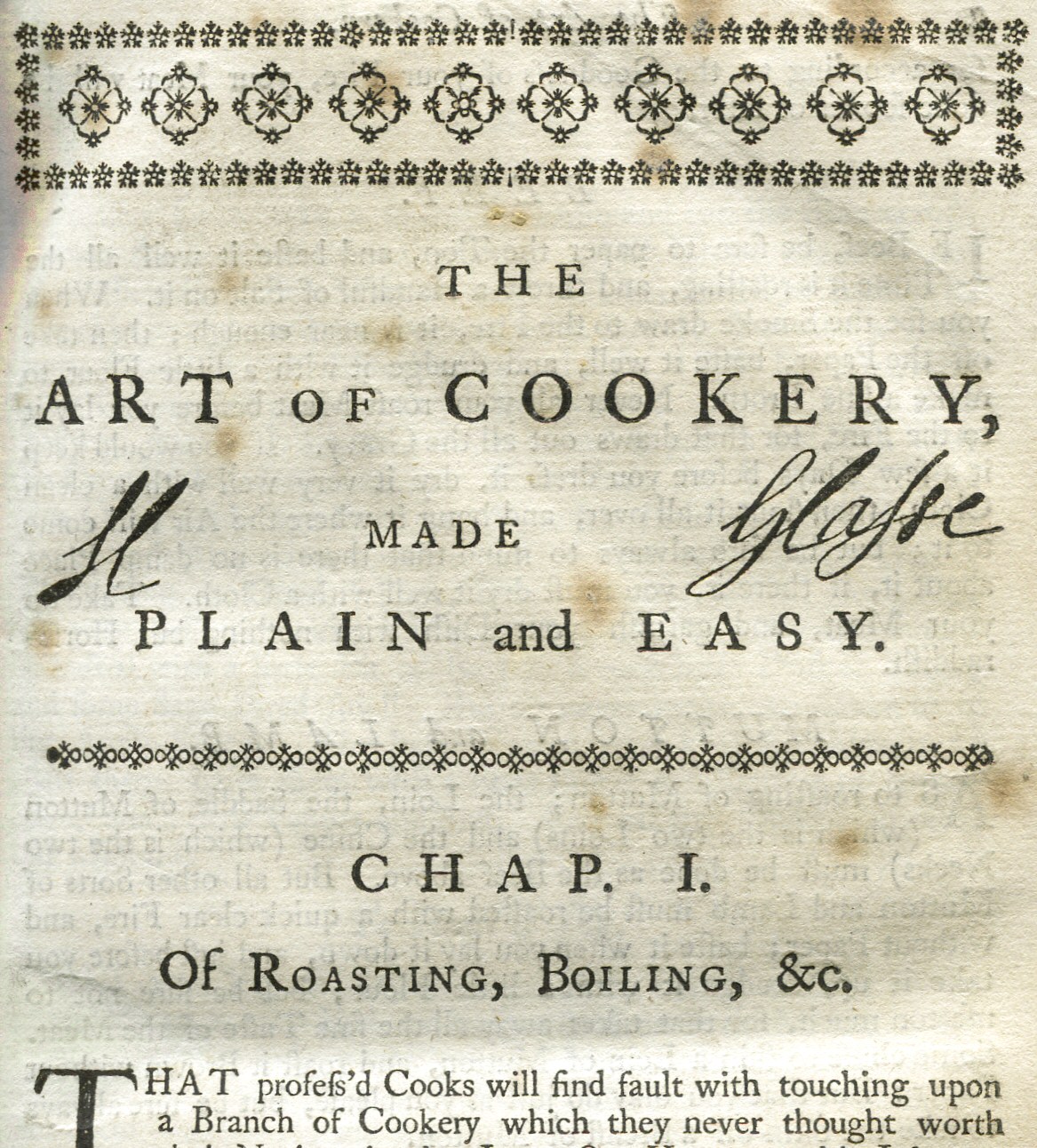
Hannah Glasse (née Allgood; March 1708 – 1 September 1770) was an English cookery writer of the 18th century. Her first cookery book, The Art of Cookery Made Plain and Easy, published in 1747, became the best-selling recipe book that century. It was reprinted within its first year of publication, appeared in 20 editions in the 18th century, and continued to be published until well into the 19th century. She later wrote The Servants' Directory (1760) and The Compleat Confectioner, which was probably published in 1760; neither book was as commercially successful as her first.
Glasse was born in London to a Northumberland landowner and his mistress. After the relationship ended, Glasse was brought up in her father's family. When she was 16 she eloped with a 30-year-old Irish subaltern then on half-pay and lived in Essex, working on the estate of the Earls of Donegall. The couple struggled financially and, with the aim of raising money, Glasse wrote The Art of Cookery. She copied extensively from other cookery books, around a third of the recipes having been published elsewhere. Among her original recipes are the first known curry recipe written in English, as well as three recipes for pilau, an early reference to vanilla in English cuisine, the first recorded use of jelly in trifle, and an early recipe for ice cream. She was also the first to use the term "Yorkshire pudding" in print.
Glasse became a dressmaker in Covent Garden—where her clients included Princess Augusta, the Princess of Wales—but she ran up excessive debts. She was imprisoned for bankruptcy and was forced to sell the copyright of The Art of Cookery. Much of Glasse's later life is unrecorded; information about her identity was lost until uncovered in 1938 by the historian Madeleine Hope Dodds. Other authors plagiarised Glasse's writing and pirated copies became common, particularly in the United States. The Art of Cookery has been admired by English cooks in the second part of the 20th century, and influenced many of them, including Elizabeth David, Fanny Cradock and Clarissa Dickson Wright.
Glasse was born Hannah Allgood at Greville Street, Hatton Garden, London, to Isaac Allgood and his mistress, Hannah Reynolds. Isaac, a landowner and coal-mine owner, was from a well-known, respected family from Nunwick Hall, Hexham, Northumberland; he was married to Hannah née Clark, the daughter of Isaac of London, a vintner. Glasse was christened on 24 March 1708 at St Andrews, Holborn, London. Allgood and Reynolds had two other children, both of whom died young. Allgood and his wife also had a child, Lancelot, born three years after Glasse.
Allgood took Reynolds and the young Hannah back to Hexham to live. Hannah Allgood Glasse was brought up with his other children, but according to A. H. T. Robb-Smith in the Oxford Dictionary of National Biography, Hannah Reynolds was "banished from Hexham," for which no reason is recorded. By 1713, Allgood and Reynolds were again living together back in London. The following year, while drunk, Allgood signed papers transferring all his property to Reynolds. Once he realised the magnitude of his mistake, the couple separated. For many years thereafter, the Allgood family tried and managed to have the property returned. They succeeded in 1740 and this success provided Glasse with an annual income and a sum of capital. She did not have a good relationship with her mother, either, and Hannah Reynolds had little input into her daughter's upbringing. Glasse also described her mother in correspondence as a "wicked wretch!"
Soon after the death of his wife in 1724, Allgood fell ill and Glasse was sent to live with her grandmother. Although her grandmother banned Glasse from attending social events, Glasse began a relationship with an older man: John Glasse. He was a 30-year-old Irish subaltern, then on half-pay, who had previously been employed by Lord Polwarth; John was a widower. On 4 August 1724, the couple married by special licence secretly. Her family found out about the marriage a month later, when she moved out of her grandmother's house and in with her husband in Piccadilly. Although her family were angered by the relationship initially, they soon resumed cordial dealings and continued a warm and friendly correspondence. Hannah's first letter to her grandmother apologised for the secrecy surrounding her elopement, but she did not express regret for marrying John Glasse. "I am sorry at what I have done, but only the manner of it".
By 1728, the Glasses were living in New Hall, Broomfield, Essex, the home of the 4th Earl of Donegall; John Glasse was probably working as an estate steward. They had their first child while living at New Hall. The Glasses moved back to London in November 1734 and lodged there for four years before moving to Greville Street, near Hatton Garden. Over the coming years, Glasse gave birth to ten children, five of whom died young. She considered education important and sent her daughters to good local schools and her sons to Eton and Westminster. The couple struggled with finances constantly and, in 1744, Glasse tried to sell Daffy's Elixir, a patent medicine; the project did not take off. She then decided to write a cookery book.
In a letter dated January 1746 Glasse wrote "My book goes on very well and everybody is pleased with it, it is now in the press". The Art of Cookery Made Plain and Easy was printed the following year and sold at "Mrs. Ashburn's, a China Shop, the corner of Fleet-Ditch", according to the title page. The book was available bound for 5 shillings, or plainly stitched for 3 shillings. As was the practice for publishers at the time, Glasse provided the names of subscribers—those who had pre-paid for a copy—who were listed inside the work. The first edition listed 202 subscribers; that number increased for the second and third editions. On the title page Glasse writes that the book "far exceeds any Thing of the Kind ever yet published". In the introduction she states "I believe I have attempted a Branch of Cookery which Nobody has yet thought worth their while to write upon", which, she explains, is to write a book aimed at the domestic staff of a household. As such, she apologises to readers, "If I have not wrote in the high, polite Stile, I hope I shall be forgiven; for my Intention is to instruct the lower Sort, and therefore must treat them in their own Way".
Hannah Glasse
Hannah Glasse (née Allgood; March 1708 – 1 September 1770) was an English cookery writer of the 18th century. Her first cookery book, The Art of Cookery Made Plain and Easy, published in 1747, became the best-selling recipe book that century. It was reprinted within its first year of publication, appeared in 20 editions in the 18th century, and continued to be published until well into the 19th century. She later wrote The Servants' Directory (1760) and The Compleat Confectioner, which was probably published in 1760; neither book was as commercially successful as her first.
Glasse was born in London to a Northumberland landowner and his mistress. After the relationship ended, Glasse was brought up in her father's family. When she was 16 she eloped with a 30-year-old Irish subaltern then on half-pay and lived in Essex, working on the estate of the Earls of Donegall. The couple struggled financially and, with the aim of raising money, Glasse wrote The Art of Cookery. She copied extensively from other cookery books, around a third of the recipes having been published elsewhere. Among her original recipes are the first known curry recipe written in English, as well as three recipes for pilau, an early reference to vanilla in English cuisine, the first recorded use of jelly in trifle, and an early recipe for ice cream. She was also the first to use the term "Yorkshire pudding" in print.
Glasse became a dressmaker in Covent Garden—where her clients included Princess Augusta, the Princess of Wales—but she ran up excessive debts. She was imprisoned for bankruptcy and was forced to sell the copyright of The Art of Cookery. Much of Glasse's later life is unrecorded; information about her identity was lost until uncovered in 1938 by the historian Madeleine Hope Dodds. Other authors plagiarised Glasse's writing and pirated copies became common, particularly in the United States. The Art of Cookery has been admired by English cooks in the second part of the 20th century, and influenced many of them, including Elizabeth David, Fanny Cradock and Clarissa Dickson Wright.
Glasse was born Hannah Allgood at Greville Street, Hatton Garden, London, to Isaac Allgood and his mistress, Hannah Reynolds. Isaac, a landowner and coal-mine owner, was from a well-known, respected family from Nunwick Hall, Hexham, Northumberland; he was married to Hannah née Clark, the daughter of Isaac of London, a vintner. Glasse was christened on 24 March 1708 at St Andrews, Holborn, London. Allgood and Reynolds had two other children, both of whom died young. Allgood and his wife also had a child, Lancelot, born three years after Glasse.
Allgood took Reynolds and the young Hannah back to Hexham to live. Hannah Allgood Glasse was brought up with his other children, but according to A. H. T. Robb-Smith in the Oxford Dictionary of National Biography, Hannah Reynolds was "banished from Hexham," for which no reason is recorded. By 1713, Allgood and Reynolds were again living together back in London. The following year, while drunk, Allgood signed papers transferring all his property to Reynolds. Once he realised the magnitude of his mistake, the couple separated. For many years thereafter, the Allgood family tried and managed to have the property returned. They succeeded in 1740 and this success provided Glasse with an annual income and a sum of capital. She did not have a good relationship with her mother, either, and Hannah Reynolds had little input into her daughter's upbringing. Glasse also described her mother in correspondence as a "wicked wretch!"
Soon after the death of his wife in 1724, Allgood fell ill and Glasse was sent to live with her grandmother. Although her grandmother banned Glasse from attending social events, Glasse began a relationship with an older man: John Glasse. He was a 30-year-old Irish subaltern, then on half-pay, who had previously been employed by Lord Polwarth; John was a widower. On 4 August 1724, the couple married by special licence secretly. Her family found out about the marriage a month later, when she moved out of her grandmother's house and in with her husband in Piccadilly. Although her family were angered by the relationship initially, they soon resumed cordial dealings and continued a warm and friendly correspondence. Hannah's first letter to her grandmother apologised for the secrecy surrounding her elopement, but she did not express regret for marrying John Glasse. "I am sorry at what I have done, but only the manner of it".
By 1728, the Glasses were living in New Hall, Broomfield, Essex, the home of the 4th Earl of Donegall; John Glasse was probably working as an estate steward. They had their first child while living at New Hall. The Glasses moved back to London in November 1734 and lodged there for four years before moving to Greville Street, near Hatton Garden. Over the coming years, Glasse gave birth to ten children, five of whom died young. She considered education important and sent her daughters to good local schools and her sons to Eton and Westminster. The couple struggled with finances constantly and, in 1744, Glasse tried to sell Daffy's Elixir, a patent medicine; the project did not take off. She then decided to write a cookery book.
In a letter dated January 1746 Glasse wrote "My book goes on very well and everybody is pleased with it, it is now in the press". The Art of Cookery Made Plain and Easy was printed the following year and sold at "Mrs. Ashburn's, a China Shop, the corner of Fleet-Ditch", according to the title page. The book was available bound for 5 shillings, or plainly stitched for 3 shillings. As was the practice for publishers at the time, Glasse provided the names of subscribers—those who had pre-paid for a copy—who were listed inside the work. The first edition listed 202 subscribers; that number increased for the second and third editions. On the title page Glasse writes that the book "far exceeds any Thing of the Kind ever yet published". In the introduction she states "I believe I have attempted a Branch of Cookery which Nobody has yet thought worth their while to write upon", which, she explains, is to write a book aimed at the domestic staff of a household. As such, she apologises to readers, "If I have not wrote in the high, polite Stile, I hope I shall be forgiven; for my Intention is to instruct the lower Sort, and therefore must treat them in their own Way".
Recent media
Recent media