
Recent from talks
Harold Godwinson
Knowledge base stats:
Talk channels stats:
Members stats:
Harold Godwinson
Harold Godwinson (died 14 October 1066), also called Harold II, was the last crowned Anglo-Saxon King of England. Harold reigned from 6 January 1066 until his death at the Battle of Hastings on 14 October 1066, the decisive battle of the Norman Conquest. He was succeeded by William the Conqueror, the victor at Hastings.
Harold Godwinson was a member of the most powerful noble family in England, his father Godwin having been made Earl of Wessex by Cnut the Great. Harold, who served previously as Earl of East Anglia, was appointed to his father's earldom on Godwin's death. After his brother-in-law, King Edward the Confessor, died without an heir on 5 January 1066, the Witenagemot convened and chose Harold to succeed him; he was probably the first English monarch to be crowned in Westminster Abbey. In late September, he defeated an invasion by rival claimant Harald Hardrada of Norway in the Battle of Stamford Bridge near York before marching his army back south to meet William at Hastings two weeks later, where he was killed in battle.
Harold was a son of Godwin (died 1053), the powerful Earl of Wessex, and of Gytha Thorkelsdóttir, whose brother Ulf the Earl was married to Estrid Svendsdatter (c. 1015/1016), the daughter of King Sweyn Forkbeard (died 1014) and sister of King Cnut the Great of England and Denmark. Ulf and Estrid's son would become King Sweyn II of Denmark in 1047. Godwin was the son of Wulfnoth, probably a thegn and a native of Sussex. Godwin began his political career by supporting King Edmund Ironside (reigned April to November 1016), but switched to supporting King Cnut by 1018, when Cnut named him Earl of Wessex.
Godwin remained an earl throughout the remainder of Cnut's reign, one of only two earls to survive to the end of that reign. On Cnut's death in 1035, Godwin originally supported Harthacnut instead of Cnut's initial successor Harold Harefoot, but managed to switch sides in 1037 – although not without becoming involved in the 1036 murder of Alfred Aetheling, half-brother of Harthacnut and younger brother of the later King Edward the Confessor.
When Harold Harefoot died in 1040, Harthacnut ascended the English throne and Godwin's power was imperiled by his earlier involvement in Alfred's murder, but an oath and large gift secured the new king's favour for Godwin. Harthacnut's death in 1042 probably involved Godwin in a role as kingmaker, helping to secure the English throne for Edward the Confessor. In 1045, Godwin reached the height of his power when the new king married Godwin's daughter Edith.
Godwin and Gytha had several children – six sons: Sweyn, Harold, Tostig, Gyrth, Leofwine and Wulfnoth (in that order); and three daughters: Edith of Wessex (originally named Gytha but renamed Ealdgyth (or Edith) when she married King Edward the Confessor), Gunhild and Ælfgifu. The birthdates of the children are unknown. Harold was aged about 25 in 1045, which makes his birth year around 1020.
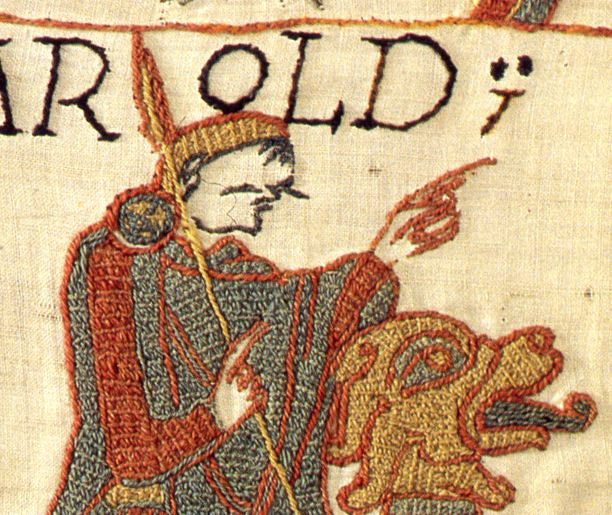
The manor of Bosham on the South coast of England had been acquired, originally from the Archbishop of Canterbury as the family seat by Earl Godwin, and was inherited by Harold. The Bayeux Tapestry has two representations of Harold's family residence. The manor of Bosham is just one of four places, in England, named on the tapestry.
Edith married Edward on 23 January 1045 and, around that time, Harold became Earl of East Anglia. Harold is called "earl" when he appears as a witness in a will that may date to 1044; but, by 1045, Harold regularly appears as an earl in documents. One reason for his appointment to East Anglia may have been a need to defend against the threat from King Magnus the Good of Norway. It is possible that Harold led some of the ships from his earldom that were sent to Sandwich in 1045 against Magnus. Sweyn, Harold's elder brother, had been named an earl in 1043. It was also around the time that Harold was named an earl that he began a relationship with Edith the Fair, who appears to have been the heiress to lands in Cambridgeshire, Suffolk and Essex, lands in Harold's new earldom. The relationship was a form of marriage that was not blessed or sanctioned by the Church, known as More danico, or "in the Danish manner", and was accepted by most laypeople in England at the time. Any children of such a union were considered legitimate. Harold probably entered the relationship in part to secure support in his new earldom.
Hub AI
Harold Godwinson AI simulator
(@Harold Godwinson_simulator)
Harold Godwinson
Harold Godwinson (died 14 October 1066), also called Harold II, was the last crowned Anglo-Saxon King of England. Harold reigned from 6 January 1066 until his death at the Battle of Hastings on 14 October 1066, the decisive battle of the Norman Conquest. He was succeeded by William the Conqueror, the victor at Hastings.
Harold Godwinson was a member of the most powerful noble family in England, his father Godwin having been made Earl of Wessex by Cnut the Great. Harold, who served previously as Earl of East Anglia, was appointed to his father's earldom on Godwin's death. After his brother-in-law, King Edward the Confessor, died without an heir on 5 January 1066, the Witenagemot convened and chose Harold to succeed him; he was probably the first English monarch to be crowned in Westminster Abbey. In late September, he defeated an invasion by rival claimant Harald Hardrada of Norway in the Battle of Stamford Bridge near York before marching his army back south to meet William at Hastings two weeks later, where he was killed in battle.
Harold was a son of Godwin (died 1053), the powerful Earl of Wessex, and of Gytha Thorkelsdóttir, whose brother Ulf the Earl was married to Estrid Svendsdatter (c. 1015/1016), the daughter of King Sweyn Forkbeard (died 1014) and sister of King Cnut the Great of England and Denmark. Ulf and Estrid's son would become King Sweyn II of Denmark in 1047. Godwin was the son of Wulfnoth, probably a thegn and a native of Sussex. Godwin began his political career by supporting King Edmund Ironside (reigned April to November 1016), but switched to supporting King Cnut by 1018, when Cnut named him Earl of Wessex.
Godwin remained an earl throughout the remainder of Cnut's reign, one of only two earls to survive to the end of that reign. On Cnut's death in 1035, Godwin originally supported Harthacnut instead of Cnut's initial successor Harold Harefoot, but managed to switch sides in 1037 – although not without becoming involved in the 1036 murder of Alfred Aetheling, half-brother of Harthacnut and younger brother of the later King Edward the Confessor.
When Harold Harefoot died in 1040, Harthacnut ascended the English throne and Godwin's power was imperiled by his earlier involvement in Alfred's murder, but an oath and large gift secured the new king's favour for Godwin. Harthacnut's death in 1042 probably involved Godwin in a role as kingmaker, helping to secure the English throne for Edward the Confessor. In 1045, Godwin reached the height of his power when the new king married Godwin's daughter Edith.
Godwin and Gytha had several children – six sons: Sweyn, Harold, Tostig, Gyrth, Leofwine and Wulfnoth (in that order); and three daughters: Edith of Wessex (originally named Gytha but renamed Ealdgyth (or Edith) when she married King Edward the Confessor), Gunhild and Ælfgifu. The birthdates of the children are unknown. Harold was aged about 25 in 1045, which makes his birth year around 1020.
The manor of Bosham on the South coast of England had been acquired, originally from the Archbishop of Canterbury as the family seat by Earl Godwin, and was inherited by Harold. The Bayeux Tapestry has two representations of Harold's family residence. The manor of Bosham is just one of four places, in England, named on the tapestry.
Edith married Edward on 23 January 1045 and, around that time, Harold became Earl of East Anglia. Harold is called "earl" when he appears as a witness in a will that may date to 1044; but, by 1045, Harold regularly appears as an earl in documents. One reason for his appointment to East Anglia may have been a need to defend against the threat from King Magnus the Good of Norway. It is possible that Harold led some of the ships from his earldom that were sent to Sandwich in 1045 against Magnus. Sweyn, Harold's elder brother, had been named an earl in 1043. It was also around the time that Harold was named an earl that he began a relationship with Edith the Fair, who appears to have been the heiress to lands in Cambridgeshire, Suffolk and Essex, lands in Harold's new earldom. The relationship was a form of marriage that was not blessed or sanctioned by the Church, known as More danico, or "in the Danish manner", and was accepted by most laypeople in England at the time. Any children of such a union were considered legitimate. Harold probably entered the relationship in part to secure support in his new earldom.
Recent media