


Community hub
Recent from talks
Contribute something
Nothing was collected or created yet.
Sweyn II of Denmark
View on WikipediaSweyn II (c. 1019 – 28 April 1076),[2][3] also known as Sweyn Estridsson[a] (Old Norse: Sveinn Ástríðarson, Danish: Svend Estridsen) and Sweyn Ulfsson, was King of Denmark from 1047 until his death in 1076. He was the son of Ulf Thorgilsson and Estrid Svendsdatter, and the grandson of Sweyn Forkbeard through his mother's line. He was married at least two times, and fathered 20 children or more out of wedlock, including the five future kings Harald Hen, Saint Canute, Oluf Hunger, Eric Evergood, and Niels.
Key Information


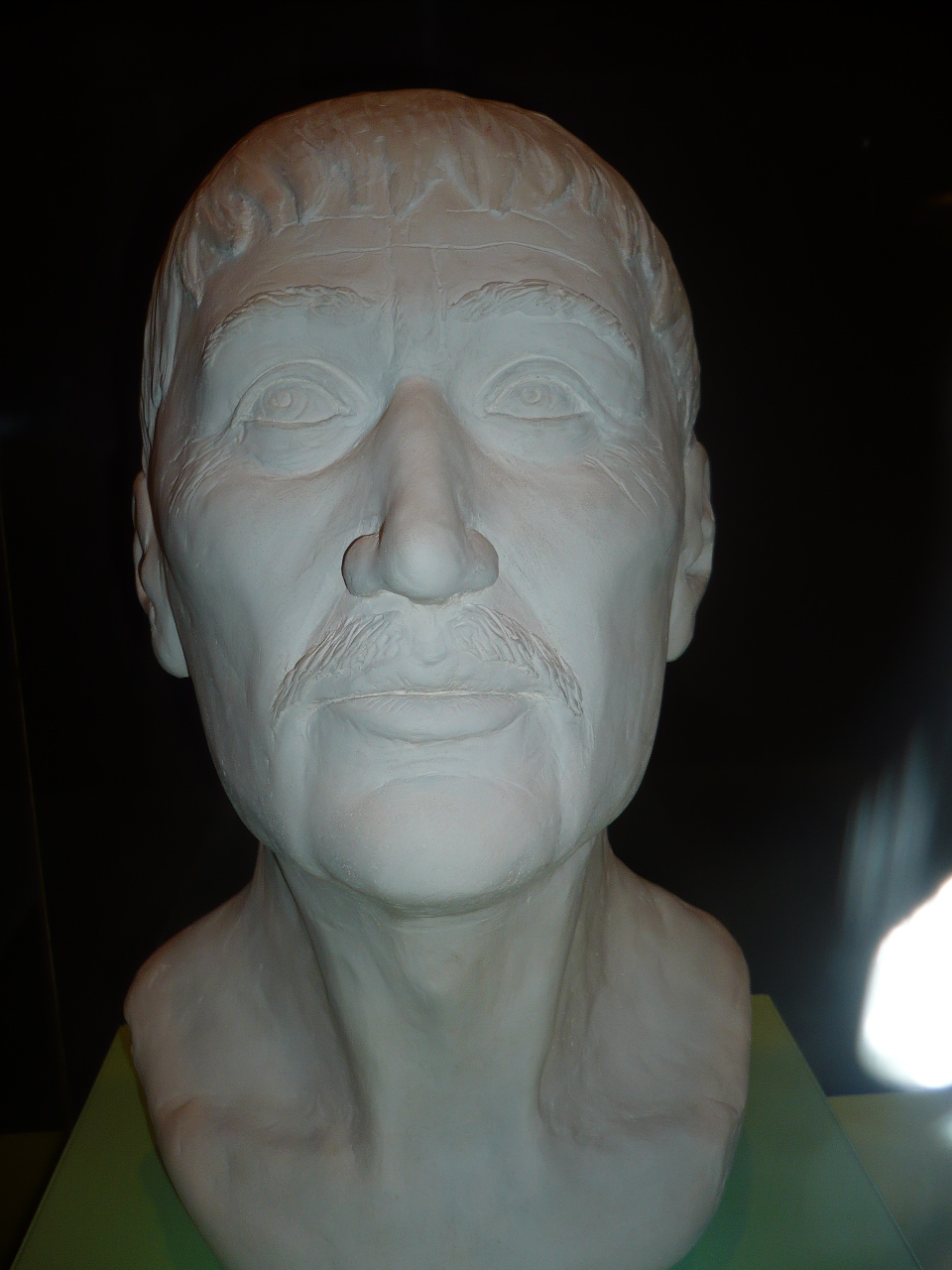
He was courageous in battle, but did not have much success as a military commander.[4] His skeleton reveals that he was a tall, powerfully built man who walked with a limp.
Biography
[edit]Accession to the throne
[edit]Sweyn was born in England,[4] as the son of Ulf Thorgilsson and Estrid Svendsdatter, the latter of whom was the daughter of King Sweyn I Forkbeard and sister of Kings Harald II and Canute the Great. Sweyn grew up a military leader, and served under king Anund Jacob of Sweden for a time.[4] He pillaged the Elbe-Weser area in 1040, but was caught by the Archbishop of Hamburg-Bremen, who released him shortly thereafter.[5]
Svend was made a jarl under Danish king Harthacnut (the two were first cousins),[4] and led a campaign for him against Norway, but was beaten by Magnus I of Norway.[5] When Harthacnut died in 1042, Magnus claimed the Danish throne and made Svend the jarl of Jutland.[6] In 1043, Sweyn fought for Magnus at the Battle of Lyrskov Heath at Hedeby, near the present-day border of Denmark and Germany.[5] Sweyn won a great reputation at Lyrskov Heath, and had the Danish nobles crown him king in Viborg in Jutland.[6] He was defeated by Magnus on several occasions, and had to flee to Sweden. Eventually he managed to return and establish a foothold in Scania.[5]
The war between Magnus and Sweyn lasted until 1045, when Magnus' uncle Harald Hardrada returned to Norway from exile. Harald and Sweyn joined forces, and Magnus decided to share the Norwegian throne with Harald.[4] In 1047 Magnus died, having stated on his deathbed that his kingdom would be divided: Harald would get the throne of Norway, while Sweyn would be king of Denmark.[6] Upon hearing of Magnus' death Sweyn said, "Now so help me God, I shall never yield Denmark".[7]
Feud with Harald Hardrada
[edit]Harald, unwilling to relinquish Denmark, attacked Sweyn and fought a long war. Harald sacked Hedeby in 1050, and also sacked Aarhus.[5] Sweyn almost captured Harald in 1050, when Harald attacked the coast of Jutland and loaded his ships with goods and captives. Sweyn's flotilla caught up with the Norwegians and Harald ordered his men to throw out the captured goods, thinking the Danes would stop to get the goods. Sweyn ordered his men to leave the goods and go after Harald. Harald then ordered his men to throw the captives overboard. For them Sweyn was willing to let Harald slip away.[7] Sweyn came close to losing his life at the naval Battle of Niså off the coast of Halland in 1062.[4] According to the sagas Harald urged Sweyn to meet him in a final and decisive battle at Elv in the spring of 1062.[8] When Sweyn and the Danish army did not show up, Harald sent home a large part of his army, only keeping the more professional warriors in his fleet. When Sweyn finally came to meet Harald, his fleet numbered 300 ships to Harald's 150.[9] The fleets met at night and the battle lasted until morning, when the Danes started to flee. In the sagas the Norwegian victory is largely credited to earl Haakon Ivarsson, who disengaged his ships from the Norwegian flanks and started attacking the weakened ships on the Danish flanks.[10] This might be the aiding Norwegian chieftain that Saxo Grammaticus refers to, as turning the tide in Norwegian favour.[11]
Sweyn managed to escape the battle, reached land and stopped at the house of a peasant to ask for something to eat. "What was the terrible rumbling in the night?" she asked. "Didn't you know the two kings were fighting all night?" asked one of Sweyn's men. "Who won, then?" the woman asked. "Norwegians," came the reply. "It's a shame on us, for a king we already have. He limps and is timid." "No," King Sweyn explained, "Timid the king of the Danes is assuredly not,"[clarification needed] defended another of the king's men, "but luck isn't with him and he lacks a victory." The housecarl brought the men water and a towel to wash themselves. As the king was drying his hands, the woman tore the cloth from him, "You should be ashamed of yourself for using the whole towel for yourself," she scolded. "The day will come when I will have your permission to use the whole cloth," was the king's comment. Her husband gave the king a horse,, and Sweyn continued on his way to Zealand.
Some time later, the peasant was called to Zealand and given lands there for his service to the king, but his wife had to remain behind in Halland.[7] Sweyn had a reputation for generosity and kindness that helped him on several occasions to win the trust of his people. Harald relinquished his claims to Denmark in 1064,[4] in exchange for Sweyn's recognition of Harald as Harald III of Norway.[6] Harald then sailed off to England to claim the crown of England and was killed there.
Consolidation of power
[edit]


Sweyn's connection to the Danish kings was his mother Estrid Svendsdatter, and he took the matronymic surname Estridsson after her, emphasizing his link to the Danish royal house.[5] He also minted his own coins.
Sweyn sought to consolidate his power through links to the church as well as foreign powers, and actively sought the friendship of the popes.[4] He wanted his eldest son Knud Magnus crowned by the Pope, but Knud died on the journey to Rome. He also unsuccessfully pressed for Harald Bluetooth, the first Christian king of Denmark, to be sanctified. He was an ally of Emperor Henry III against Count Baldwin V of Flanders in 1049, and Sweyn assisted his son-in-law Gottschalk in the Liutizi Civil War of 1057.[5]
After Harald Hardrada was killed, and William the Conqueror had conquered England, Sweyn turned his attention to England, once ruled by his uncle Canute the Great. He joined forces with Edgar Atheling, the last remaining heir of the Anglo-Saxon royal house, and sent a force to attack king William in 1069. However, after capturing York, Sweyn accepted a payment from William to desert Edgar, who then returned into exile in Scotland. Sweyn failed another attempt in 1074/1075.[5]
Relationship with the church
[edit]Sweyn feared that Archbishop Adalbert of Hamburg would fill the upper ranks of Denmark's churches with Germans, so he brought Anglo-Danes over from England to keep the Danish church independent. Under the influence of Sweyn,[12] Denmark was divided into eight dioceses around 1060.[13] He set the dioceses up by donating large tracts of land, with the Diocese of Roskilde being the most-favoured one, as he had a good relationship with Bishop Vilhelm.[5] When Archbishop Adalbert died in 1072, Sweyn was able to deal directly with the Holy See.
He brought scholars to Denmark to teach him and his people Latin so they could converse with the rest of Europe on equal terms. Adam of Bremen travelled to meet this learned king and came away with greater respect for the king's patience and wisdom. Sweyn encouraged the building of churches all over Denmark, and Adam of Bremen was astounded that there were 300 churches in Scania alone, more than in all the other countries of the north put together.[citation needed]
Death
[edit]
King Sweyn died at the royal estate Søderup, 10 kilometres (6.2 mi) west of Åbenrå at the Little Belt strait. The Danish chronicles inaccurately date his death to 1074, but it is known that he received and answered letters in 1075 and died in 1076.[3][2] The king's body was carried to Roskilde Cathedral where he was interred in a pillar of the choir next to the remains of Bishop Vilhelm (who was the actual person who died in 1074). Later he was called the "father of kings" because five of his fifteen sons became kings of Denmark.[7]
He was the last Viking ruler of Denmark and an ancestor of all subsequent Danish kings.[14] The remains of other Danish kings are also entombed in Roskilde Cathedral. According to the saga, Sweyn's mother was entombed inside a pillar across from the chapel. However, analysis of mitochondrial DNA proved that this person was not the king's mother.[14]
Legacy
[edit]One of the legacies of King Sweyn was a fundamental change in Danish society which had been based on whether a person was free or a bondsman. Sweyn is often considered to be Denmark's last Viking king as well as the first medieval one. A strengthened church in alliance with the land-owning noble families begin to pit their power against the royal family. The peasants were left to fend for themselves.[15]
Sweyn built a strong foundation for royal power through cooperation with the church. He completed the final partition of Denmark into dioceses by corresponding directly with the pope, bypassing the Archbishop of Hamburg-Bremen. During his reign hundreds of small wooden churches were built throughout the kingdom; many were rebuilt in stone in the 12th century.[5] Sweyn sought to create a Nordic Archbishopric under Danish rule, a feat which his son Eric I accomplished.[12]
Sweyn seems to have been able to read and write, and was described as an especially educated monarch by his personal friend Pope Gregory VII.[12] He is the source of much of our current knowledge about Denmark and Sweden in the 9th and 10th centuries, having told the story of his ancestry to historian Adam of Bremen around 1070.
Family
[edit]Sweyn's first marriage was to Gyda of Sweden, daughter of king Anund Jacob of Sweden. His second marriage, in 1050, was to Gunnhildr Sveinsdóttir, the stepmother of Gyda. The Archbishop of Hamburg-Bremen ordered that the union be dissolved,[5] which was effectuated by Pope Leo IX.[12] According to Adam of Bremen, Sweyn had a certain "Tora" at his court. Historian Sture Bolin argues that this "Tora" is actually Tora Torbergsdatter, the mother of king Olaf III of Norway, linking this to a passage about a king marrying the mother of a king named Olof.[16] He took one mistress after another during his life. Sweyn fathered at least 20 children, of whom only one was born in wedlock.[4]
With Gunnhildr:
- Svend Svendsen, who died young[4]
With various concubines:[4]
- Knud Magnus
- Harald III Hen of Denmark (d. 1080)
- Canute IV the Saint of Denmark (d. 1086)
- Olaf I Hunger of Denmark (d. 1095)
- Eric I Evergood of Denmark (d. 1103)
- Svend Tronkræver (d. 1104)
- Ulf Svendsen (Ubbe) (d. 1104)
- Benedict Svendsen (d. 1086)
- Bjørn Svendsen, Duke of Nordalbingien from 1099 (d. 1100)[17]
- Niels of Denmark (d. 1134)
- Sigrid Svendsdatter (d. 1066), wife of prince Gottschalk
- Ingerid, wife of Olav III of Norway
- Sweyn the Crusader (d. 1097)
- Thorgils Svendsen
- Sigurd Svendsen, died in war against the Wends[4]
- Guttorm Svendsen
- Ømund Svendsen
- Ragnhild Svendsdatter, wife of Svein Aslaksson
Previously alleged children
[edit]- Gunhild (Helene), whose existence is only known from the Gunhild Cross, used to be considered a daughter of King Sweyn II[4] due to the inscription of the cross mentioning a great King Sweyn, but modern scholarship suggest she was a daughter of Sweyn III Grathe.[18]
See also
[edit]
Notes
[edit]- ^ His first name is also spelled Swen, Swein, Svein and Sven, and the patronymic as Estridson, Estrithson or Estridsøn.
References
[edit]- ^ Monarkiet i Danmark – Kongerækken Archived 2009-11-18 at the Wayback Machine at The Danish Monarchy
- ^ a b Steenstrup, Johannes C. H. R. (1903). "Svend Estridsen". In Bricka, Carl Frederik (ed.). Dansk Biografisk Leksikon (in Danish). Vol. 17. Kjøbenhavn: Gyldendalske Boghandels Forlag (F. Hegel & Søn). p. 4. Retrieved 2007-02-22.
Sweyn died at the royal estate Søderup in the Duchy of Schleswig April 28, 1076 (the Danish annals have, certainly incorrect, 1074) and was buried in Roskilde Cathedral. [S. døde paa Kongsgaarden i Søderup i Slesvig 28. April 1076 (de danske Aarbøger have, sikkert urigtig, 1074) og blev begravet i Roskilde Domkirke.]
- ^ a b Ræder, J. G. F. (1871). "Danmark under Svend Estridsen og hans Sønner (Copenhagen, pp. 202–203)". archive.org. Retrieved 2017-02-22.
At Vilhelm er død før Kongen, meddeles af de ikke meget senere Skribenter Anonymus Roskild. (Lgb.I. S. 378) og Ætnothus (Lgb.III. S. 338). At fremdeles Svend Estridsen døde 1076 og ikke allerede 1074, er ligeledes hævet over enhver Tvivl; naar nu ikke destomindre en hel Række Kildeskrifter lader ham dø allerede 1074, saa synes dette at hænge sammen med det allerede tidlig opstaaede og hos Saxo opbevarede Sagn om, at Vilhelm døde faa Dage efter Kongen og af Sorg over hans Død. Det kan da tænkes , at man har draget Kongens Død tilbage til Bispens Dødsaar 1074, ligesom Nyere (t. Ex. Molbech, hist. Aarb. III S. 19) drage Bispens Dødsaar frem til 1076 for at faa Begges Dødsaar til at falde sammen." ... & ... "men derimod giver en ny Skrivelse, som Paven afsendte til Svend d. 17. April s. A. [1075], En det bestemte Indtryk, at der i Mellemtiden er foregaaet Noget, hvorved Svend har gjort sig Paven forbunden
- ^ a b c d e f g h i j k l m Bricka, Carl Frederik, Dansk Biografisk Lexikon, vol. XVII [Svend Tveskjæg – Tøxen], 1903, pp.3–5.
- ^ a b c d e f g h i j k Stefan Pajung, Artikel: Svend Estridsen ca. 1019-1074/76, danmarkshistorien.dk, Aarhus University, January 19, 2010
- ^ a b c d Louise Kæmpe Henriksen, Historiske Personer – Svend Estridsen – konge af Danmark 1047–74., vikingeskibsmuseet.dk
- ^ a b c d Huitfeldt, Arild. Danmarks Riges Krønike
- ^ http://mcllibrary.org/Heimskringla/hardrade2.html, p.61
- ^ http://mcllibrary.org/Heimskringla/hardrade2.html, p.63
- ^ http://mcllibrary.org/Heimskringla/hardrade2.html, p.65
- ^ "Archived copy" (PDF). Archived from the original (PDF) on 2016-03-04. Retrieved 2013-09-01.
{{cite web}}: CS1 maint: archived copy as title (link) - ^ a b c d Svend 2. Estridsen at Gyldendal Åbne Encyklopædi
- ^ Diocese of Lund, Diocese of Odense, Diocese of Ribe, Diocese of Roskilde, Diocese of Schleswig, Diocese of Viborg, Diocese of Vestervig, and Diocese of Aarhus.
- ^ a b iGenea – DNA profiles and haplogroups of famous persons: Sven II Estridsen – the last Viking King, accessed July 2018.
- ^ Danmarks Historie II perbenny.dk
- ^ Sture Bolin, "Kring Mäster Adams text", Scandia 4, 1932.
- ^ Kings and Queens of Denmark at JMarcussen.dk
- ^ "Titel: Gunhild-korset" (in Danish). National Museum of Denmark. Retrieved 12 June 2021.
Sources
[edit]- Sturlason, Snorre. Heimskringla – The Norse King Sagas.
| Knýtlinga |
| .svg) | |||
|---|---|---|---|---|---|
| Fairhair |
| ||||
| Estridsen | |||||
| Bjälbo |
| ||||
| Estridsen |
| ||||
| Pomerania |
| ||||
| Palatinate-Neumarkt |
| ||||
| Oldenburg |
| ||||
| |||||
| International | |
|---|---|
| National | |
| People | |
| Other | |

Sweyn II of Denmark
View on GrokipediaEarly Life and Background
Family Origins and Upbringing
Sweyn II Estridsson was born around 1019, likely in England during the reign of his uncle Cnut the Great over the North Sea empire encompassing Denmark, England, and Norway.[6] He was the son of Ulf Thorgilsson, a Danish earl of probable Norwegian descent who rose to prominence as regent in Denmark during Cnut's campaigns abroad, and Estrid Svendsdatter, Cnut's sister and daughter of Sweyn Forkbeard, the earlier Danish king.[6][3] This matrilineal connection to the Jelling dynasty provided Sweyn with a claim to royal legitimacy, though his paternal lineage tied him to regional nobility rather than direct kingship.[6] Ulf's career exemplified the opportunistic alliances of Viking-era elites; he supported Cnut's conquests, including the Battle of Holy River against the Swedes in 1026, but tensions culminated in his execution by Cnut in 1027 at Roskilde, reportedly after refusing to yield regency power or due to suspected disloyalty.[6] Following this event, young Sweyn and his family faced precarious circumstances, with accounts indicating flight to Sweden for refuge under sympathetic rulers, away from Cnut's retribution.[6] His early years thus unfolded amid the empire's political turbulence, blending exposure to Danish royal courts, English administrative influences under Cnut, and Scandinavian military traditions. Contemporary chronicles, such as those drawing from Scandinavian sagas, portray the family as ambitious figures navigating power vacuums, though later ecclesiastical sources like Adam of Bremen's Gesta Hammaburgensis ecclesiae pontificum exhibit biases against Danish pagans and rivals to Hamburg-Bremen's authority, potentially exaggerating Ulf's opportunism.[6] Sweyn's upbringing likely immersed him in the era's hybrid Viking culture—raiding prowess alongside nascent Christianization efforts in Cnut's realms—fostering skills in warfare and diplomacy essential for his later survival in contested successions.[3]Military Service in Scandinavia
Sweyn Estridsson entered the service of Norwegian king Magnus I (known as Magnus the Good) around 1040, following the death of Danish king Hardecanute in 1042, and swore an oath of allegiance to him.[7] Upon Magnus's subsequent claim to the Danish throne, Sweyn was appointed as earl or viceroy responsible for administering Denmark, a role that positioned him as a key military commander in Norwegian efforts to consolidate control over the region.[7] In 1043, Sweyn demonstrated his tactical acumen during the Battle of Lyrskov Hede near Hedeby, where he led forces alongside Magnus against a large Wendish (Slavic) invasion army estimated at up to 15,000 warriors.[7] The Dano-Norwegian coalition decisively repelled the attackers, inflicting heavy casualties and securing the southern Danish borders; Sweyn's performance in this engagement earned him widespread acclaim among Danish nobles for his leadership and prowess, though it also fueled ambitions that strained his loyalty to Magnus.[7] Norwegian sagas, such as those compiled by Snorri Sturluson, attribute much of the victory's success to coordinated command under figures like Sweyn, highlighting his role in regional defense without overstating individual heroics.[8] By 1045, amid escalating conflicts with Magnus over Danish sovereignty, Sweyn briefly allied with Harald Hardrada, the exiled Norwegian prince returning from Byzantine service, forming a tactical partnership against Magnus's forces.[8] Together, they undertook joint raiding expeditions, leveraging naval operations to harass Norwegian holdings and Danish rivals, which underscored Sweyn's experience in Viking-style amphibious warfare and contributed to weakening Magnus's grip on Denmark.[8] This short-lived collaboration, referenced in sagas as opportunistic rather than deeply strategic, ended when Harald negotiated co-kingship with Magnus, but it solidified Sweyn's reputation as a capable Scandinavian warlord capable of mobilizing fleets and troops across borders.[8]Ascension to the Throne
Agreement with Magnus of Norway
Following Magnus I of Norway's inheritance of Denmark in 1042 pursuant to a mutual succession pact with the deceased King Harthacnut, Sweyn Estridsson—initially appointed viceroy—rebelled in 1043 amid Magnus's campaign against the Wends.[2] Magnus suppressed the uprising, compelling Sweyn into exile before negotiating a settlement that reinstated him as earl of Denmark, effectively granting administrative authority under Norwegian overlordship.[2] This pragmatic accord, rooted in Sweyn's proven military service and kinship as nephew to Cnut the Great (via his mother Estrid, Cnut's sister), averted prolonged conflict and positioned Sweyn to inherit Denmark seamlessly upon Magnus's sudden death on 25 October 1047, likely from injuries sustained in a fall from his horse.[2][9] Harald Hardrada, Magnus's uncle and co-ruler in Norway, concentrated on securing the Norwegian throne, forgoing immediate claims on Denmark and thus dissolving the brief dual monarchy (1042–1047).[2] The arrangement underscored causal contingencies over strict hereditary entitlement, as Sweyn lacked direct descent from Magnus or Harthacnut; instead, Danish nobles' acquiescence stemmed from his Cnut-linked lineage and earlship's de facto governance, enabling uncontested kingship without conquest.[2]Initial Challenges and Norwegian Claims
Following the death of Magnus I of Norway on 25 October 1047, Sweyn's position as king of Denmark was precarious, as Norwegian forces under Harald Hardrada asserted claims to the Danish throne based on Magnus's prior conquests and the mutual succession agreement Magnus had made with Harthacnut around 1041, stipulating that the survivor of the two rulers would inherit both kingdoms if the other died without a legitimate heir.[9][10] Harald, who had been co-ruler with Magnus in Norway since 1046, viewed Denmark as his rightful inheritance upon Magnus's sudden death during a Wendish campaign, prompting immediate Norwegian preparations for intervention.[11] Harald launched the first of several invasions in 1048, initiating a protracted series of naval raids and skirmishes that tested Sweyn's nascent authority and highlighted the fragility of Danish unity against external aggression.[12] These early campaigns, extending through 1050, involved Norwegian forces targeting coastal regions and key settlements, including the sacking and burning of the major trading hub Hedeby in 1050, which disrupted Danish commerce and demonstrated Harald's intent to enforce his overlordship.[12] Sweyn countered with defensive fleets and opportunistic alliances among Danish jarls opposed to Norwegian dominance, gradually stabilizing his hold through a combination of military resistance and diplomatic maneuvering to rally local support. Internally, Sweyn contended with unrest from rival jarls and regional strongmen, particularly in Jutland, where lingering loyalties to the previous Norwegian administration fueled skirmishes and low-level rebellions in the late 1040s; these were quelled via targeted force and pacts with influential families favoring native Danish rule over foreign claims.[13] The chronicler Adam of Bremen, reliant on Sweyn for much of his information on Scandinavian affairs but writing from the perspective of the Hamburg-Bremen church—which advocated centralized ecclesiastical authority over northern realms at the expense of Danish independence—depicts these years as marked by incessant Norwegian incursions that Sweyn repelled through persistent naval engagements, though Adam's narrative emphasizes the disruptive potential of such conflicts to regional Christianization efforts under Hamburg's influence.[14][1] This dual pressure from Norwegian ambitions and domestic dissent underscored the challenges Sweyn faced in forging a cohesive realm, compelling him to prioritize military readiness and loyalty-building over broader reforms in his early years.Reign and Internal Consolidation
Administrative and Social Reforms
Sweyn II's administration emphasized the consolidation of royal authority in core Danish territories, particularly Jutland and Scania, through mechanisms that transitioned the kingdom from decentralized tribal assemblies toward a more centralized monarchy. His long reign from 1047 to 1076 facilitated this stabilization, enabling institutional continuity that outlasted the frequent successions and civil strife of prior decades.[6][15] A key indicator of administrative centralization was the minting of silver pennies under Sweyn's authority, notably in Lund during the 1060s, which featured Christian iconography and royal effigies modeled partly on Byzantine designs. These coins, struck at royal mints, supported a standardized monetary system that underpinned taxation, trade, and fiscal policy, marking a departure from the plunder-based economy of the Viking Age toward sustainable revenue generation.[16] Archaeological evidence from hoards confirms their widespread use across Denmark, reflecting effective governance and economic integration.[17] Socially, Sweyn's policies contributed to a gradual evolution in societal structures, moving beyond the rigid free-bondsman dichotomy prevalent in earlier Scandinavian societies by fostering obligations tied to land tenure and royal service, though direct codifications of law emerged more prominently in subsequent reigns. This shift, evidenced by the durability of his dynasty's rule, prioritized empirical stability over transient raiding successes, allowing Denmark to redirect resources toward internal development and continental ties.[18]Relations with the Church and Christianization Efforts
Sweyn II actively supported the expansion of ecclesiastical infrastructure in Denmark, facilitating the transition from sporadic missionary efforts to a structured Christian presence. Under his rule, the kingdom saw the construction of numerous churches, with the canon Adam of Bremen reporting over 300 in Scania alone—a figure exceeding those in all of Germany combined, underscoring the scale of investment in religious institutions. [5] Adam's Gesta Hammaburgensis ecclesiae pontificum, composed amid tensions between the Danish crown and the Hamburg-Bremen archbishopric, reflects institutional bias favoring German ecclesiastical dominance, as evidenced by his portrayal of Sweyn as occasionally rebellious against archiepiscopal authority; nonetheless, the chronicler's firsthand observations during visits to Denmark lend empirical weight to the proliferation of churches as a marker of royal patronage. [19] Sweyn completed the organization of Denmark into eight dioceses—Børglum, Lund, Odense, Ribe, Roskilde, Schleswig, Viborg, and Aarhus—each overseen by a bishop nominally subject to the metropolitan see of Hamburg-Bremen. [1] To counter the appointment of German clergy by Archbishop Adalbert, who sought to extend Bremen’s control over Scandinavian sees, Sweyn preferentially installed Anglo-Danish or English bishops, such as William of Roskilde, consecrated around 1044 and active into his reign. [20] This policy invited English scholars to Denmark for Latin instruction, aiming to equip clergy and elites for integration into broader European Christendom while preserving national autonomy. [3] Efforts to assert Danish ecclesiastical independence involved direct overtures to Rome, bypassing Bremen’s hierarchy, though full separation was not achieved until the establishment of the Lund archbishopric in 1104. Sweyn's confrontations with bishops like William over church properties reveal a pragmatic assertion of royal oversight, prioritizing political consolidation over unqualified subservience to clerical demands. [20] Such measures served causal ends beyond piety: by embedding Christianity institutionally, Sweyn bolstered monarchical legitimacy in a realm still navigating pagan remnants and rival claimants, evidenced by his maintenance of concubinage alongside church endowments, which undercut hagiographic depictions in sources like the monk Ælnoth's Gesta Sweynonis of a uniformly devout ruler. [5] This blend of support and resistance critiques portrayals of Sweyn as a passive agent of Christianization, highlighting instead strategic use of religion to forge alliances and internal cohesion.Foreign Policy and Military Engagements
Conflicts with Harald Hardrada
Following the death of Magnus the Good in 1047, Harald Hardrada asserted claims to Denmark as his former co-ruler's successor, initiating a protracted conflict with Sweyn II Estridsen, who had been designated king by Magnus on his deathbed.[21] Harald's invasions, driven by ambitions to consolidate Scandinavian realms under Norwegian hegemony rather than mere defensive retrieval of perceived rights, commenced around 1048 and persisted intermittently through the 1050s and 1060s, featuring raids on key Danish settlements such as the sack of Hedeby in 1050. Sweyn responded with defensive strategies emphasizing naval mobilization and avoidance of vulnerable land-based confrontations, leveraging Denmark's extensive coastline and shipbuilding capacity to contest Harald's amphibious assaults without committing to campaigns beyond territorial defense.[22] The conflicts manifested in multiple naval engagements, where Sweyn's larger fleets—often outnumbering Norwegian forces—inflicted attrition on Harald's expeditions, resulting in stalemates that precluded Norwegian occupation despite tactical successes for Harald.[8] The pivotal clash occurred at the Battle of Niså on August 9, 1062, at the mouth of the Nissan River in present-day Sweden, pitting Harald's 150 ships against Sweyn's approximately 300; intense hand-to-hand combat raged from afternoon into night, culminating in a decisive Norwegian victory that cleared 70 Danish vessels but failed to capture Sweyn or enable conquest, as the Danish king escaped in disguise via rowboat and regrouped his forces.[8] Accounts from Snorri Sturluson's Heimskringla, composed circa 1230 and favoring Norwegian protagonists with dramatic flourishes, describe Sweyn's flight as undignified, yet the battle's strategic inconclusiveness underscores Danish resilience, corroborated by Harald's subsequent withdrawals amid logistical strains and Sweyn's capacity to replenish fleets.[21] Diplomatic truces punctuated the warfare, often fragile and broken by Harald's renewed offensives, but culminated in a 1064 treaty whereby Harald acknowledged Sweyn's sovereignty over Denmark in exchange for Sweyn's recognition of Norwegian independence, averting further escalation without territorial concessions or reparations.[22] This accord, following Harald's inability to exploit battlefield gains—such as at Niså—into lasting control, preserved Danish autonomy and frustrated Harald's expansionist designs, as evidenced by the absence of Norwegian administrative imprints in Denmark during the period; primary saga narratives, while biased toward glorifying Harald's martial prowess, align with the outcome of sustained Danish sovereignty through persistent defensive attrition rather than heroic conquest myths.[21]Interactions with England and Other Realms
In 1069, Sweyn II dispatched a fleet estimated at 240 ships to northern England, supporting Anglo-Saxon rebels including Edgar Ætheling against William the Conqueror following the latter's consolidation after Hastings.[23] The Danish force, commanded by jarls such as Asbjörn and Osbjörn, sailed into the Humber estuary, linked with northern insurgents, and contributed to the temporary recapture of York in late September, where they plundered and burned areas like Lindsey amid widespread devastation.[24] This intervention drew on precedents from Cnut the Great's earlier North Sea dominion, positioning Sweyn as a potential claimant, though his personal arrival was delayed by logistical preparations. The campaign faltered in early 1070 when Sweyn, facing divided loyalties among his commanders and stretched resources from ongoing Danish internal stabilization, negotiated a withdrawal after receiving tribute from William—reportedly in silver and promises of non-aggression—abandoning the rebels and returning to Scandinavia without establishing a foothold. This opportunistic thrust, while tactically disruptive, yielded no lasting territorial gains, constrained by Sweyn's prioritization of domestic authority over extraterritorial ambitions and the fiscal incentives of payoff over prolonged siege warfare.[25] Sweyn's engagements beyond England remained peripheral, centered on securing Baltic trade lanes against Wendish (Slavic) tribes rather than conquest; expeditions involved punitive raids to deter piracy and protect Danish commerce, as evidenced by the death of his son Sigurd in Wendland during such operations.[26] Ties with Sweden emphasized alliance over conflict, bolstered by Sweyn's marriage circa 1047 to Gyda, daughter of King Anund Jacob, which facilitated peaceful borders and mutual economic interests without major military clashes.[3] These limited forays reflect pragmatic defensiveness, not expansive revival of Viking-era imperialism, as Sweyn's resources were diverted to throne security and ecclesiastical alliances.Personal Affairs and Later Years
Marriages, Concubines, and Progeny
Sweyn II contracted two marriages, both of which were politically motivated alliances but produced limited or no surviving legitimate issue. His first union was with Gyda, daughter of King Anund Jacob of Sweden, contracted around 1047–1048; she died approximately one year later, in 1049, with no contemporary records confirming children from the match.[27] His second marriage, to Gunnhildr Sveinsdóttir—daughter of the Norwegian jarl Svein Håkonsson and thus a relative through prior Swedish royal ties—occurred circa 1050–1052 but faced ecclesiastical scrutiny for consanguinity, as the couple were deemed too closely related under canon law, possibly as half-cousins or through step-relations via Gunnhildr's prior connections to Swedish royalty.[28] [29] The union was annulled by papal decree around 1053, reportedly at Gunnhildr's instigation or under Church pressure, yielding at most one son, Svend Svendsen, who died in infancy and whose legitimacy remains debated due to the marriage's brevity and dissolution.[28] [3] Beyond these unions, Sweyn maintained multiple concubines, a practice rooted in Scandinavian traditions but increasingly at odds with the Christian ecclesiastical reforms he supported, including closer ties to Rome and promotion of clerical celibacy norms.[28] This personal conduct—yielding an estimated 20 or more offspring, predominantly illegitimate—highlighted tensions between pre-Christian elite customs and the monogamous ideals Sweyn advanced through church endowments and alliances, as noted in contemporary chroniclers like Adam of Bremen, who attributed his prolificacy to post-annulment indulgences without political motive.[28] Historical attestations from sagas and annals, such as the Roskilde Chronicle, verify several sons via their roles in royal affairs and charters, though exact maternity and totals vary; modern genealogical scrutiny, drawing on diplomatic records rather than DNA (unavailable for this era), has pruned inflated lists from medieval traditions, confirming fewer than two dozen with direct ties to Sweyn's patronage or succession claims.[30] [31] Sweyn's verifiable progeny included numerous sons and daughters from unnamed concubines, with the following key males emerging in historical records:| Name | Approximate Birth–Death | Notes |
|---|---|---|
| Knud Magnus | c. 1041–1058 | Eldest attested son; died young without issue.[3] |
| Harald Hen | c. 1040s–1080 | Succeeded as king; confirmed via contemporary Norwegian-Danish pacts.[30] |
| Knútr (Canute IV) | c. 1043–1086 | Later canonized; documented in ecclesiastical charters.[32] |
| Óláfr (Oluf Hunger) | c. 1050s–1095 | Royal successor; attested in famine-era annals.[30] |
| Eiríkr (Eric I) | c. 1060s–1103 | King; verified through Swedish alliances.[32] |
| Niels | c. 1060s–1134 | Later king; noted in dynastic disputes.[30] |