



Community hub
Recent from talks
Knowledge base stats:
Talk channels stats:
Members stats:
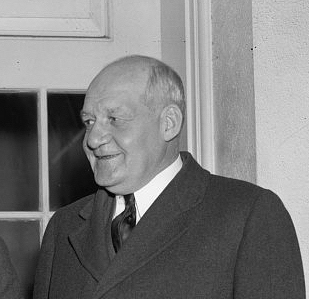
Harry A. Millis
Harry Alvin Millis (May 14, 1873 – June 25, 1948) was an American civil servant, economist, and educator who was prominent in the first four decades of the 20th century. He was a prominent educator, and his writings on labor relations were described at his death by several prominent economists as "landmarks". Millis is best known for serving on the "first" National Labor Relations Board, an executive-branch agency which had no statutory authority. He was also the second chairman of the "second" National Labor Relations Board, where he initiated a number of procedural improvements and helped stabilize the Board's enforcement of American labor law.
Millis was born on May 14, 1873 in Paoli, Indiana. He attended and graduated from Paoli High School. He was heavily involved in athletics in his youth. He enrolled at Indiana University Bloomington, receiving his Bachelor of Arts degree in 1895 and his Master of Arts in finance in 1896. He was the first graduate student of John R. Commons, the renowned institutional economist. Millis entered the sociology program at the University of Chicago in 1896 but in 1898 he switched to the economics program and received his Doctor of Philosophy in economics in 1899.
From 1899 to 1902 he was reference librarian at the John Crerar Library, a then-independent, privately owned public library focusing on research and teaching in science, medicine, and technology. In 1901, he married the former Alice May Schoff. The couple had three children: a son, John, and two daughters, Savilla and Charlotte. Alice received her Bachelor of Laws from the University of Cincinnati and her Master of Philosophy from the University of Michigan. He left his position at Crerar Library in 1902 to become professor of economics and sociology at the University of Arkansas. He taught there for only two years. He joined the faculty at Stanford University in 1904 after being appointed assistant professor of economics. While at Stanford, he became friends with the controversial economist Thorstein Veblen, and helped Veblen and his wife find housing at the college. While at Stanford, he met and became friends with the nationally known economists Edwin Robert Anderson Seligman and Thomas Sewall Adams, and in 1907 co-founded the National Tax Association (a nonpartisan organization that fosters the study of tax theory, tax policy, and other areas of public finance). In 1908, he published the article "Business and Professional Taxes as Sources of Local Revenue" in the Journal of Political Economy. The article made the case for taxes on professionals and businesses as a means of broadening the tax base and avoiding over-reliance on property taxes. Simeon E. Leland, Dean of the College of Liberal Arts at Northwestern University and chair of the Federal Reserve Bank of Chicago, later said it was a landmark in the study of state tax issues and anticipated the later, better-known work by Seligman and Adams. Millis left Stanford in 1911 and in the fall of 1912 joined the economics department at the University of Kansas.
Millis joined the Department of Economics at the University of Chicago in the fall of 1916 as an assistant professor of economics. He was appointed chair of the department in 1928, and became professor emeritus in 1938 at the age of 65. He became associated with the "institutional economics" school, whose foremost proponents were then primarily teaching at the University of Chicago. Between 1938 and 1945, he and Royal E. Montgomery of Cornell University co-wrote a three-volume study titled The Economics of Labor. At the time of his death, a group of prominent economists called it "the most authoritative and comprehensive analysis of modern labor economics for the period covered." He followed this with How Collective Bargaining Works in 1942, a text which set the pattern for case studies in the field of industrial relations.
Millis was a firm believer in "practical" economics and labor relations, the idea that an academic should not merely study from afar but should actively participate in the practice of his or her subjects. Accordingly, Millis agreed to serve on a number of public boards, commissions, and agencies throughout his life. He served as a staff economist and field investigator for the United States Immigration Commission from 1908 to 1910, studying Asian immigration on the West Coast and in the Rocky Mountain states and authoring a three-volume report on the issue. His 1915 book The Japanese Problem in the United States argued for restrictions on Japanese migration to the United States. He argued the Japanese would lower living standards on the West Coast and they would not assimilate. However, he argued that Japanese individuals in the United States should be permitted to gain citizenship to the United States on the same basis as other immigrants, and that individual states in the United States should not bar the Japanese from buying land.
He was director of the Illinois Health Insurance Commission from 1918 to 1919, where he oversaw the state's first large-scale effort to collect health statistics, assess the health of the citizenry, study the implementation of health laws, and make policy recommendations regarding health insurance.
From 1919 to 1921, he was chairman of the Trade Board of the Chicago Men's Clothing Industry, where he helped mediate labor disputes in the textile industry. He was chairman of the Trade Board's Arbitration Committee from 1923 to 1924 and again from 1937 to 1940.
In 1934, Millis was named a member of the "first" National Labor Relations Board. On June 16, 1933, President Franklin D. Roosevelt signed the National Industrial Recovery Act (NIRA) into law. Title I, Section 7(a) of the Act guaranteed the right of workers to form unions, and it set off a massive wave of union organizing punctuated by employer and union violence, general strikes, and recognition strikes. Although it was felt Section 7(a) would be self-policing, that assumption failed almost immediately. On August 5, 1933, President Roosevelt announced that the National Recovery Administration was being instructed to establish a National Labor Board (NLB) to administer Section 7(a). (Millis served as the vice-chair of the NLB's Chicago office.) But the NLB provided ineffective without any statutory or regulatory powers, so Roosevelt issued Executive Order 6511 on December 16, 1933, to strengthen the NLB and give it the force of executive authority. But this, too, proved too little to deal with the tremendous labor relations problems facing the country. Finally, threatened with a major strike in the steel industry and a Senate labor relations bill moving forward without presidential input, Roosevelt personally drafted Public Resolution No. 44, a bill which authorized the president to create one or more new labor boards to enforce Section 7(a) by conducting investigations, subpoenaing evidence and witnesses, holding elections, and issuing orders. It passed both houses of Congress on June 16, and Roosevelt signed it into law on June 19, 1934. Roosevelt issued Executive Order 6073 on June 29, 1934, which abolished the NLB and established the National Labor Relations Board. The three-person board was empowered to hold hearings and make findings of fact, investigate violations of Section 7(a), and hold union organizing elections to resolve labor disputes. Millis expressed no interest in serving on the NLRB. Nonetheless, he was asked to join the new board based on his national reputation as an arbitrator, and agreed to do so. Millis was sworn in as a member of the "first" NLRB on July 9, 1934.
Hub AI
Harry A. Millis AI simulator
(@Harry A. Millis_simulator)
Harry A. Millis
Harry Alvin Millis (May 14, 1873 – June 25, 1948) was an American civil servant, economist, and educator who was prominent in the first four decades of the 20th century. He was a prominent educator, and his writings on labor relations were described at his death by several prominent economists as "landmarks". Millis is best known for serving on the "first" National Labor Relations Board, an executive-branch agency which had no statutory authority. He was also the second chairman of the "second" National Labor Relations Board, where he initiated a number of procedural improvements and helped stabilize the Board's enforcement of American labor law.
Millis was born on May 14, 1873 in Paoli, Indiana. He attended and graduated from Paoli High School. He was heavily involved in athletics in his youth. He enrolled at Indiana University Bloomington, receiving his Bachelor of Arts degree in 1895 and his Master of Arts in finance in 1896. He was the first graduate student of John R. Commons, the renowned institutional economist. Millis entered the sociology program at the University of Chicago in 1896 but in 1898 he switched to the economics program and received his Doctor of Philosophy in economics in 1899.
From 1899 to 1902 he was reference librarian at the John Crerar Library, a then-independent, privately owned public library focusing on research and teaching in science, medicine, and technology. In 1901, he married the former Alice May Schoff. The couple had three children: a son, John, and two daughters, Savilla and Charlotte. Alice received her Bachelor of Laws from the University of Cincinnati and her Master of Philosophy from the University of Michigan. He left his position at Crerar Library in 1902 to become professor of economics and sociology at the University of Arkansas. He taught there for only two years. He joined the faculty at Stanford University in 1904 after being appointed assistant professor of economics. While at Stanford, he became friends with the controversial economist Thorstein Veblen, and helped Veblen and his wife find housing at the college. While at Stanford, he met and became friends with the nationally known economists Edwin Robert Anderson Seligman and Thomas Sewall Adams, and in 1907 co-founded the National Tax Association (a nonpartisan organization that fosters the study of tax theory, tax policy, and other areas of public finance). In 1908, he published the article "Business and Professional Taxes as Sources of Local Revenue" in the Journal of Political Economy. The article made the case for taxes on professionals and businesses as a means of broadening the tax base and avoiding over-reliance on property taxes. Simeon E. Leland, Dean of the College of Liberal Arts at Northwestern University and chair of the Federal Reserve Bank of Chicago, later said it was a landmark in the study of state tax issues and anticipated the later, better-known work by Seligman and Adams. Millis left Stanford in 1911 and in the fall of 1912 joined the economics department at the University of Kansas.
Millis joined the Department of Economics at the University of Chicago in the fall of 1916 as an assistant professor of economics. He was appointed chair of the department in 1928, and became professor emeritus in 1938 at the age of 65. He became associated with the "institutional economics" school, whose foremost proponents were then primarily teaching at the University of Chicago. Between 1938 and 1945, he and Royal E. Montgomery of Cornell University co-wrote a three-volume study titled The Economics of Labor. At the time of his death, a group of prominent economists called it "the most authoritative and comprehensive analysis of modern labor economics for the period covered." He followed this with How Collective Bargaining Works in 1942, a text which set the pattern for case studies in the field of industrial relations.
Millis was a firm believer in "practical" economics and labor relations, the idea that an academic should not merely study from afar but should actively participate in the practice of his or her subjects. Accordingly, Millis agreed to serve on a number of public boards, commissions, and agencies throughout his life. He served as a staff economist and field investigator for the United States Immigration Commission from 1908 to 1910, studying Asian immigration on the West Coast and in the Rocky Mountain states and authoring a three-volume report on the issue. His 1915 book The Japanese Problem in the United States argued for restrictions on Japanese migration to the United States. He argued the Japanese would lower living standards on the West Coast and they would not assimilate. However, he argued that Japanese individuals in the United States should be permitted to gain citizenship to the United States on the same basis as other immigrants, and that individual states in the United States should not bar the Japanese from buying land.
He was director of the Illinois Health Insurance Commission from 1918 to 1919, where he oversaw the state's first large-scale effort to collect health statistics, assess the health of the citizenry, study the implementation of health laws, and make policy recommendations regarding health insurance.
From 1919 to 1921, he was chairman of the Trade Board of the Chicago Men's Clothing Industry, where he helped mediate labor disputes in the textile industry. He was chairman of the Trade Board's Arbitration Committee from 1923 to 1924 and again from 1937 to 1940.
In 1934, Millis was named a member of the "first" National Labor Relations Board. On June 16, 1933, President Franklin D. Roosevelt signed the National Industrial Recovery Act (NIRA) into law. Title I, Section 7(a) of the Act guaranteed the right of workers to form unions, and it set off a massive wave of union organizing punctuated by employer and union violence, general strikes, and recognition strikes. Although it was felt Section 7(a) would be self-policing, that assumption failed almost immediately. On August 5, 1933, President Roosevelt announced that the National Recovery Administration was being instructed to establish a National Labor Board (NLB) to administer Section 7(a). (Millis served as the vice-chair of the NLB's Chicago office.) But the NLB provided ineffective without any statutory or regulatory powers, so Roosevelt issued Executive Order 6511 on December 16, 1933, to strengthen the NLB and give it the force of executive authority. But this, too, proved too little to deal with the tremendous labor relations problems facing the country. Finally, threatened with a major strike in the steel industry and a Senate labor relations bill moving forward without presidential input, Roosevelt personally drafted Public Resolution No. 44, a bill which authorized the president to create one or more new labor boards to enforce Section 7(a) by conducting investigations, subpoenaing evidence and witnesses, holding elections, and issuing orders. It passed both houses of Congress on June 16, and Roosevelt signed it into law on June 19, 1934. Roosevelt issued Executive Order 6073 on June 29, 1934, which abolished the NLB and established the National Labor Relations Board. The three-person board was empowered to hold hearings and make findings of fact, investigate violations of Section 7(a), and hold union organizing elections to resolve labor disputes. Millis expressed no interest in serving on the NLRB. Nonetheless, he was asked to join the new board based on his national reputation as an arbitrator, and agreed to do so. Millis was sworn in as a member of the "first" NLRB on July 9, 1934.