
Recent from talks
Heat pump and refrigeration cycle
Knowledge base stats:
Talk channels stats:
Members stats:
Heat pump and refrigeration cycle
Thermodynamic heat pump cycles or refrigeration cycles are the conceptual and mathematical models for heat pump, air conditioning and refrigeration systems. A heat pump is a mechanical system that transmits heat from one location (the "source") at a certain temperature to another location (the "sink" or "heat sink") at a higher temperature. Thus a heat pump may be thought of as a "heater" if the objective is to warm the heat sink (as when warming the inside of a home on a cold day), or a "refrigerator" or "cooler" if the objective is to cool the heat source (as in the normal operation of a freezer). The operating principles in both cases are the same; energy is used to move heat from a colder place to a warmer place.
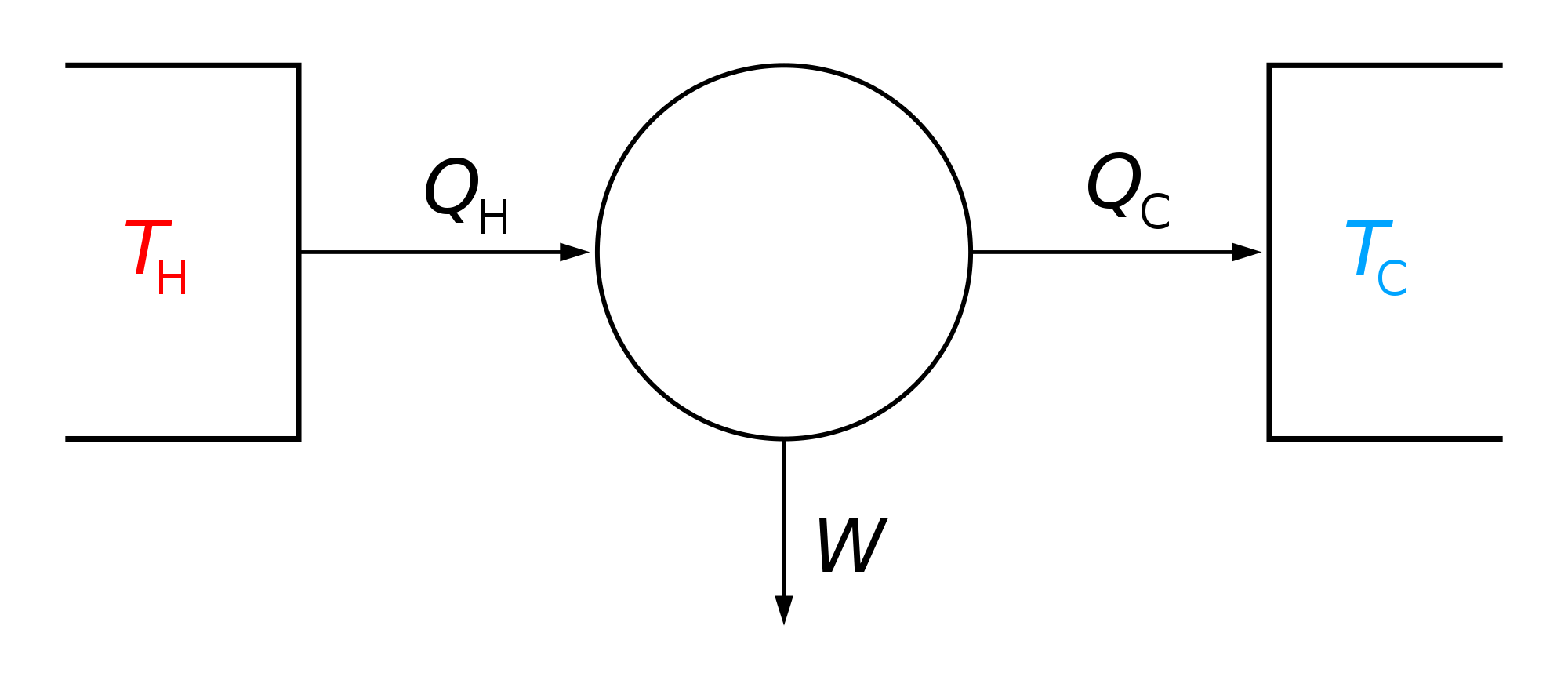
According to the second law of thermodynamics, heat cannot spontaneously flow from a colder location to a hotter area; mechanical work is required to achieve this. An air conditioner requires work to cool a living space, moving heat from the interior being cooled (the heat source) to the outdoors (the heat sink). Similarly, a refrigerator moves heat from inside the cold icebox (the heat source) to the warmer room-temperature air of the kitchen (the heat sink). The operating principle of an ideal heat engine was described mathematically using the Carnot cycle by Sadi Carnot in 1824. An ideal refrigerator or heat pump can be thought of as an ideal heat engine that is operating in a reverse Carnot cycle.
Heat pump cycles and refrigeration cycles can be classified as vapor compression, vapor absorption, gas cycle, or Stirling cycle types.
The vapor-compression cycle is used by many refrigeration, air conditioning, and other cooling applications and also within heat pump for heating applications. There are two heat exchangers, one being the condenser, which is hotter and releases heat, and the other being the evaporator, which is colder and accepts heat. For applications which need to operate in both heating and cooling modes, a reversing valve is used to switch the roles of these two heat exchangers.[citation needed]
At the start of the thermodynamic cycle the refrigerant enters the compressor as a low pressure and low temperature vapor. In heat pumps, this refrigerant is typically R32 refrigerant or R290 refrigerant. Then the pressure is increased and the refrigerant leaves as a higher temperature and higher pressure superheated gas. This hot pressurised gas then passes through the condenser where it releases heat to the surroundings as it cools and condenses completely. The cooler high-pressure liquid next passes through the expansion valve (throttle valve) which reduces the pressure abruptly causing the temperature to drop dramatically. The cold low pressure mixture of liquid and vapor next travels through the evaporator where it vaporizes completely as it accepts heat from the surroundings before returning to the compressor as a low pressure low temperature gas to start the cycle again.
Some simpler applications with fixed operating temperatures, such as a domestic refrigerator, may use a fixed speed compressor and fixed aperture expansion valve. Applications that need to operate at a high coefficient of performance in very varied conditions, as is the case with heat pumps where external temperatures and internal heat demand vary considerably through the seasons, typically use a variable speed inverter compressor and an adjustable expansion valve to control the pressures of the cycle more accurately.[citation needed]
The above discussion is based on the ideal vapor-compression refrigeration cycle and does not take into account real-world effects like frictional pressure drop in the system, slight thermodynamic irreversibility during the compression of the refrigerant vapor, or non-ideal gas behavior (if any).
In the early years of the twentieth century, the vapor absorption cycle using water-ammonia systems was popular and widely used but, after the development of the vapor compression cycle, it lost much of its importance because of its low coefficient of performance (about one fifth of that of the vapor compression cycle). Nowadays, the vapor absorption cycle is used only where heat is more readily available than electricity, such as industrial waste heat, solar thermal energy by solar collectors, or off-the-grid refrigeration in recreational vehicles.
Hub AI
Heat pump and refrigeration cycle AI simulator
(@Heat pump and refrigeration cycle_simulator)
Heat pump and refrigeration cycle
Thermodynamic heat pump cycles or refrigeration cycles are the conceptual and mathematical models for heat pump, air conditioning and refrigeration systems. A heat pump is a mechanical system that transmits heat from one location (the "source") at a certain temperature to another location (the "sink" or "heat sink") at a higher temperature. Thus a heat pump may be thought of as a "heater" if the objective is to warm the heat sink (as when warming the inside of a home on a cold day), or a "refrigerator" or "cooler" if the objective is to cool the heat source (as in the normal operation of a freezer). The operating principles in both cases are the same; energy is used to move heat from a colder place to a warmer place.
According to the second law of thermodynamics, heat cannot spontaneously flow from a colder location to a hotter area; mechanical work is required to achieve this. An air conditioner requires work to cool a living space, moving heat from the interior being cooled (the heat source) to the outdoors (the heat sink). Similarly, a refrigerator moves heat from inside the cold icebox (the heat source) to the warmer room-temperature air of the kitchen (the heat sink). The operating principle of an ideal heat engine was described mathematically using the Carnot cycle by Sadi Carnot in 1824. An ideal refrigerator or heat pump can be thought of as an ideal heat engine that is operating in a reverse Carnot cycle.
Heat pump cycles and refrigeration cycles can be classified as vapor compression, vapor absorption, gas cycle, or Stirling cycle types.
The vapor-compression cycle is used by many refrigeration, air conditioning, and other cooling applications and also within heat pump for heating applications. There are two heat exchangers, one being the condenser, which is hotter and releases heat, and the other being the evaporator, which is colder and accepts heat. For applications which need to operate in both heating and cooling modes, a reversing valve is used to switch the roles of these two heat exchangers.[citation needed]
At the start of the thermodynamic cycle the refrigerant enters the compressor as a low pressure and low temperature vapor. In heat pumps, this refrigerant is typically R32 refrigerant or R290 refrigerant. Then the pressure is increased and the refrigerant leaves as a higher temperature and higher pressure superheated gas. This hot pressurised gas then passes through the condenser where it releases heat to the surroundings as it cools and condenses completely. The cooler high-pressure liquid next passes through the expansion valve (throttle valve) which reduces the pressure abruptly causing the temperature to drop dramatically. The cold low pressure mixture of liquid and vapor next travels through the evaporator where it vaporizes completely as it accepts heat from the surroundings before returning to the compressor as a low pressure low temperature gas to start the cycle again.
Some simpler applications with fixed operating temperatures, such as a domestic refrigerator, may use a fixed speed compressor and fixed aperture expansion valve. Applications that need to operate at a high coefficient of performance in very varied conditions, as is the case with heat pumps where external temperatures and internal heat demand vary considerably through the seasons, typically use a variable speed inverter compressor and an adjustable expansion valve to control the pressures of the cycle more accurately.[citation needed]
The above discussion is based on the ideal vapor-compression refrigeration cycle and does not take into account real-world effects like frictional pressure drop in the system, slight thermodynamic irreversibility during the compression of the refrigerant vapor, or non-ideal gas behavior (if any).
In the early years of the twentieth century, the vapor absorption cycle using water-ammonia systems was popular and widely used but, after the development of the vapor compression cycle, it lost much of its importance because of its low coefficient of performance (about one fifth of that of the vapor compression cycle). Nowadays, the vapor absorption cycle is used only where heat is more readily available than electricity, such as industrial waste heat, solar thermal energy by solar collectors, or off-the-grid refrigeration in recreational vehicles.
Recent media