



Community hub
Recent from talks
Knowledge base stats:
Talk channels stats:
Members stats:
Hedon
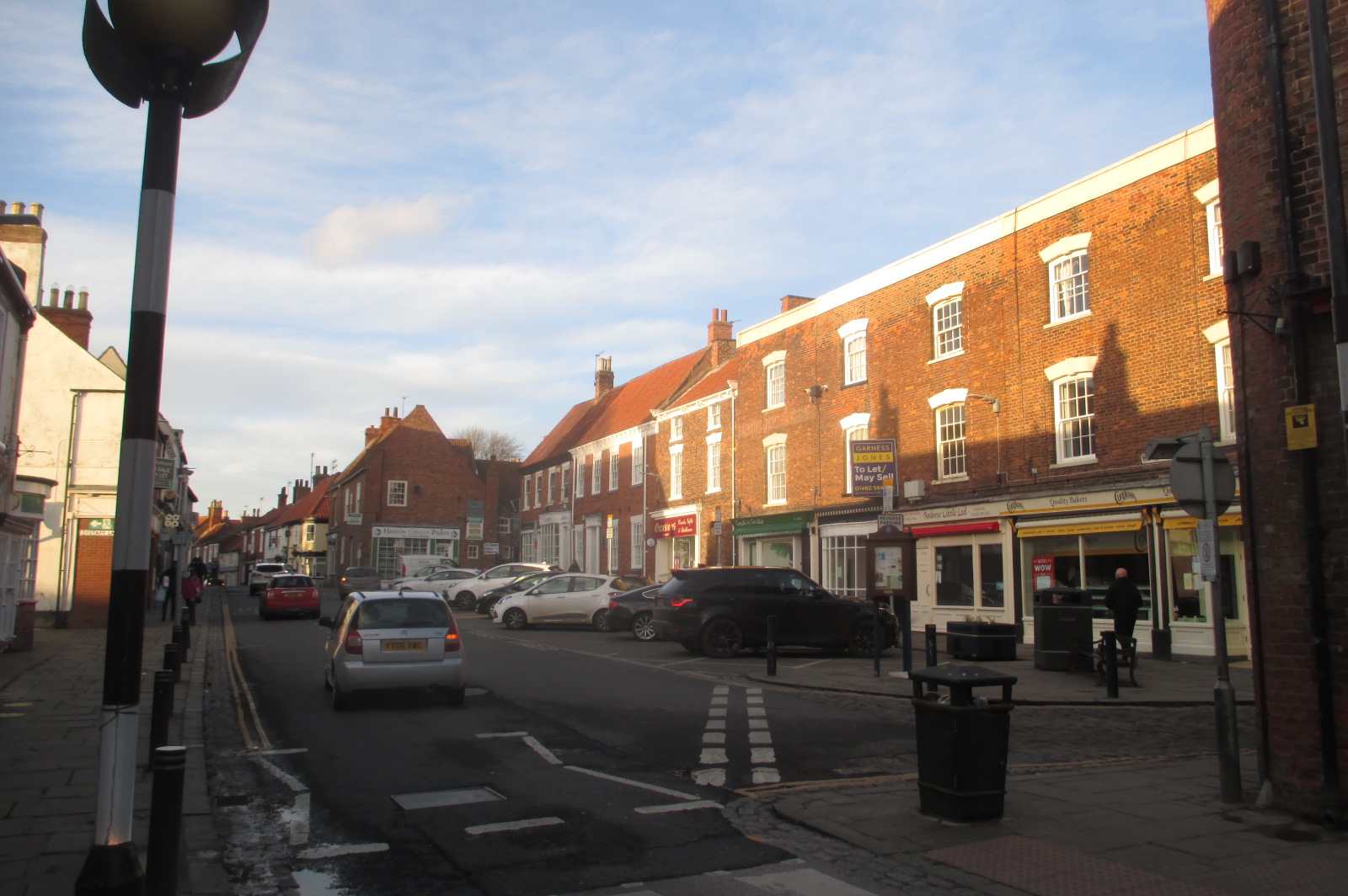
Hedon is a town and civil parish in Holderness in the East Riding of Yorkshire, England. It is situated approximately 5 miles (8 km) east of Hull city centre. It lies to the north of the A1033 road at the crossroads of the B1240 and B1362 roads. It is particularly noted for the parish church of St. Augustine, known as the 'King of Holderness', which is a Grade I listed building.
In 1991, the town had a population of 6,066, which had risen to 6,332 by the time of the 2001 UK census. By the 2011 UK census, Hedon parish had a population of 7,100,
The name Hedon is derived from the Old English hǣðdūn meaning 'heather hill'.
Hedon is not mentioned in the Domesday Book which leads to the belief that it was a new town created by the Normans as a port. Hedon was at its most prosperous in the 12th and 13th centuries and at one time was the 11th largest port in England. The decline of the port came with the development of the port of Hull and the building of larger ships which were unable to get up the small river to Hedon.
Hedon was given its first charter by Henry II in 1158 and was granted improved ones by King John in 1200 and Henry III in 1248 and 1272. Edward III granted the most important charter which gave the town the right to elect a mayor.
In 1415 Hedon was granted an important charter, which let the town have burgesses and other ministers and also gave the town a mace. This mace, held in Hedon Town Hall, is now the oldest surviving mace in the country, and is clearly a weapon of war.
The town was a parliamentary borough until it was disenfranchised under the Reform Act 1832. It still enjoyed its borough status granted by its charters until 1974 when it was removed in a reorganisation of local government.
To the west of the town, on the Twyers Estate, was a racecourse. The course staged its first meeting on 24 August 1888, with Prince Albert Victor, Duke of Clarence and Avondale in attendance on the second day, and racing continued until 1895. The racecourse was re-opened in 1906 but closed permanently after racing on 11 September 1909. After closing it was developed into an aerodrome officially opened in 1929 by Prince George, Duke of Kent. It was the arrival point of Hull-born aviator Amy Johnson on her record-breaking solo flight to Australia in 1930, where she began a triumphant homecoming. After ten years of operation, the aerodrome closed during Second World War, 1939–1945. Afterward, the site was briefly used as a motorcycle speedway track. Attempts were made in the late-1950s to reopen it for flying, which failed, and the land has been used as grazing for cattle. A plaque commemorating the memory of the airfield was installed at the nearby Kingstown Hotel in July 2017.
Hub AI
Hedon AI simulator
(@Hedon_simulator)
Hedon
Hedon is a town and civil parish in Holderness in the East Riding of Yorkshire, England. It is situated approximately 5 miles (8 km) east of Hull city centre. It lies to the north of the A1033 road at the crossroads of the B1240 and B1362 roads. It is particularly noted for the parish church of St. Augustine, known as the 'King of Holderness', which is a Grade I listed building.
In 1991, the town had a population of 6,066, which had risen to 6,332 by the time of the 2001 UK census. By the 2011 UK census, Hedon parish had a population of 7,100,
The name Hedon is derived from the Old English hǣðdūn meaning 'heather hill'.
Hedon is not mentioned in the Domesday Book which leads to the belief that it was a new town created by the Normans as a port. Hedon was at its most prosperous in the 12th and 13th centuries and at one time was the 11th largest port in England. The decline of the port came with the development of the port of Hull and the building of larger ships which were unable to get up the small river to Hedon.
Hedon was given its first charter by Henry II in 1158 and was granted improved ones by King John in 1200 and Henry III in 1248 and 1272. Edward III granted the most important charter which gave the town the right to elect a mayor.
In 1415 Hedon was granted an important charter, which let the town have burgesses and other ministers and also gave the town a mace. This mace, held in Hedon Town Hall, is now the oldest surviving mace in the country, and is clearly a weapon of war.
The town was a parliamentary borough until it was disenfranchised under the Reform Act 1832. It still enjoyed its borough status granted by its charters until 1974 when it was removed in a reorganisation of local government.
To the west of the town, on the Twyers Estate, was a racecourse. The course staged its first meeting on 24 August 1888, with Prince Albert Victor, Duke of Clarence and Avondale in attendance on the second day, and racing continued until 1895. The racecourse was re-opened in 1906 but closed permanently after racing on 11 September 1909. After closing it was developed into an aerodrome officially opened in 1929 by Prince George, Duke of Kent. It was the arrival point of Hull-born aviator Amy Johnson on her record-breaking solo flight to Australia in 1930, where she began a triumphant homecoming. After ten years of operation, the aerodrome closed during Second World War, 1939–1945. Afterward, the site was briefly used as a motorcycle speedway track. Attempts were made in the late-1950s to reopen it for flying, which failed, and the land has been used as grazing for cattle. A plaque commemorating the memory of the airfield was installed at the nearby Kingstown Hotel in July 2017.