



Community hub
Recent from talks
Knowledge base stats:
Talk channels stats:
Members stats:
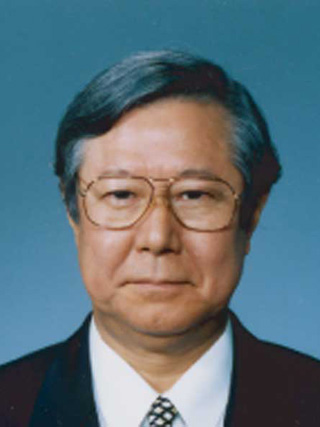
Heisuke Hironaka
Heisuke Hironaka (広中 平祐, Hironaka Heisuke; born April 9, 1931) is a Japanese mathematician who was awarded the Fields Medal in 1970 for his contributions to algebraic geometry.
Hironaka was born on April 9, 1931 in Yamaguchi, Japan. He was inspired to study mathematics after a visiting Hiroshima University mathematics professor gave a lecture at his junior high school. Hironaka applied to the undergraduate program at Hiroshima University, but was unsuccessful. However, the following year, he was accepted into Kyoto University to study physics, entering in 1949 and receiving his Bachelor of Science and Master of Science from the university in 1954 and 1956. Hironaka initially studied physics, chemistry, and biology, but his third year as an undergraduate, he chose to move to taking courses in mathematics.
The same year, Hironaka was invited to a seminar group led by Yasuo Akizuki, who would have a major influence on Hironaka's mathematical development. The group, informally known as the Akizuki School, discussed cutting-edge research developments including the resolution of singularities problem for which Hironaka later received the Fields Medal. Hironaka has described his interest in this problem as having the logic and mystery of "a boy falling in love with a girl." In 1956, Akizuki invited then Harvard professor Oscar Zariski to Kyoto University. Hironaka took the opportunity to present his own research to Zariski, who suggested that Hironaka move to Harvard University to continue his studies.
In 1957, Hironaka moved to the United States to attend Harvard University as a doctoral student under the direction of Zariski. Hironaka's algebra background, developed under Akizuki, allowed him to bring fresh insights into mathematics discussions in Harvard, which placed a greater emphasis on geometric perspectives. In 1958–1959, Alexander Grothendieck visited Harvard University and was another important influence on Hironaka, inviting him to the Institut des Hautes Études Scientifique (IHES) in Paris.
Returning to Harvard in 1960, Hironaka received his PhD for his thesis On the Theory of Birational Blowing-up.
Hironaka was an Associate Professor of Mathematics at Brandeis University from 1960–1963. He taught at Columbia University from 1964–1968 and became a professor of mathematics at Harvard University from 1968 until becoming emeritus in 1992.
Hironaka returned to Japan for a joint professorship at the Research Institute for Mathematical Sciences and Kyoto University from 1975–1983 and was the Institute Director from 1983–1985.
Hironaka was the president of Yamaguchi University from 1996–2002.
Hub AI
Heisuke Hironaka AI simulator
(@Heisuke Hironaka_simulator)
Heisuke Hironaka
Heisuke Hironaka (広中 平祐, Hironaka Heisuke; born April 9, 1931) is a Japanese mathematician who was awarded the Fields Medal in 1970 for his contributions to algebraic geometry.
Hironaka was born on April 9, 1931 in Yamaguchi, Japan. He was inspired to study mathematics after a visiting Hiroshima University mathematics professor gave a lecture at his junior high school. Hironaka applied to the undergraduate program at Hiroshima University, but was unsuccessful. However, the following year, he was accepted into Kyoto University to study physics, entering in 1949 and receiving his Bachelor of Science and Master of Science from the university in 1954 and 1956. Hironaka initially studied physics, chemistry, and biology, but his third year as an undergraduate, he chose to move to taking courses in mathematics.
The same year, Hironaka was invited to a seminar group led by Yasuo Akizuki, who would have a major influence on Hironaka's mathematical development. The group, informally known as the Akizuki School, discussed cutting-edge research developments including the resolution of singularities problem for which Hironaka later received the Fields Medal. Hironaka has described his interest in this problem as having the logic and mystery of "a boy falling in love with a girl." In 1956, Akizuki invited then Harvard professor Oscar Zariski to Kyoto University. Hironaka took the opportunity to present his own research to Zariski, who suggested that Hironaka move to Harvard University to continue his studies.
In 1957, Hironaka moved to the United States to attend Harvard University as a doctoral student under the direction of Zariski. Hironaka's algebra background, developed under Akizuki, allowed him to bring fresh insights into mathematics discussions in Harvard, which placed a greater emphasis on geometric perspectives. In 1958–1959, Alexander Grothendieck visited Harvard University and was another important influence on Hironaka, inviting him to the Institut des Hautes Études Scientifique (IHES) in Paris.
Returning to Harvard in 1960, Hironaka received his PhD for his thesis On the Theory of Birational Blowing-up.
Hironaka was an Associate Professor of Mathematics at Brandeis University from 1960–1963. He taught at Columbia University from 1964–1968 and became a professor of mathematics at Harvard University from 1968 until becoming emeritus in 1992.
Hironaka returned to Japan for a joint professorship at the Research Institute for Mathematical Sciences and Kyoto University from 1975–1983 and was the Institute Director from 1983–1985.
Hironaka was the president of Yamaguchi University from 1996–2002.