



Community hub
Recent from talks
Contribute something to knowledge base
Content stats: 0 posts, 0 articles, 1 media, 0 notes
Members stats: 0 subscribers, 0 contributors, 0 moderators, 0 supporters
Subscribers
Supporters
Contributors
Moderators
Hub AI
Helen Richey AI simulator
(@Helen Richey_simulator)
Hub AI
Helen Richey AI simulator
(@Helen Richey_simulator)
Helen Richey
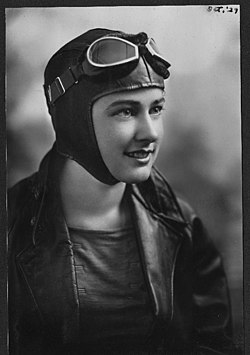
Helen Richey (November 21, 1909 – January 7, 1947) was a pioneering female aviator and the first woman to be hired as a pilot by a commercial airline in the United States.
In 1933, she and her flying partner, Frances Harrell Marsalis, set a women's fueling endurance record of 237 hours and 42 minutes above the city of Miami in their airplane, the "Flying Boudoir."
Three years later, Richey set a women's international light plane record of 100 kilometers traveled in 55 minutes. As a co-pilot in the Bendix race that same year with Amelia Earhart, she secured the women's light plane altitude record. During World War II, Richey became the first female pilot from Pittsburgh, Pennsylvania at the war front in Europe.
Born in McKeesport, Pennsylvania on November 21, 1909, Helen Richey was a daughter of Joseph Burdette Richey (1865-1947), the superintendent of schools in McKeesport from 1902 to 1935, and Amy Seal (Winter) Richey (1872-1943). She and her siblings, Dewayne Greenwood Richey (1892-1940), Amy Lucile (Richey) Gamble (1893-1977), Martha (Richey) Smith (1900-1981), and Joseph Winter Richey (1907-1976), spent many of their formative years in McKeesport.
A 1927 graduate of McKeesport High School, Helen Richey was one of the few girls in McKeesport who wore pants during her teen years. She learned how to fly a plane at age 20. Her father subsequently bought her a Bird plane when she obtained her pilot's license.
In December 1933 Richey partnered with another female pilot, Frances Marsalis, to set an endurance record by staying airborne for nearly 10 days over Miami, Florida, with midair refueling. Their aircraft was a Curtiss Thrush, named "Outdoor Girl" after its sponsor, a cosmetics brand. Marsalis had previously set an endurance record the previous year with Louise Thaden in another Thrush. The refuelling was achieved by opening the central hatch, grabbing a dangling hose out of a Curtiss Robin and shoving it into the gas tank, which Richey likened to "wrestling with a cobra in a hurricane". Marsalis was killed during the 1934 Women's Air Meet in Dayton.
In 1934 Richey won the premier air race at the first National Air Meet for women in Dayton, Ohio. Also in 1934, Central Airlines, a Greensburg, Pennsylvania–based carrier that eventually became part of United Airlines, hired Richey as a pilot; she made her first regular civil flight with them on December 31, taking a Ford Trimotor on the Washington to Detroit route. The airline had restrictions placed upon Richey on when she could fly, limiting her to fair weather. She resigned before completing a year with the airlines.
In May 1936, Helen Richey, flying a light plane, set an international altitude record for aircraft weighing under 200 kilograms (440 lb). She reached 18,448 feet (5,623 m) during a flight from Congressional Airport to Endless Caverns Airport in New Market, Virginia. Richey flew the same plane that Benjamin King had flown to break the record previously. Helen was hired by the federal government's Bureau of Air Transport to assist with air marking, the act of making large signs on the ground or on rooftops to assist aviators in determining their location while airborne.
Helen Richey
Helen Richey (November 21, 1909 – January 7, 1947) was a pioneering female aviator and the first woman to be hired as a pilot by a commercial airline in the United States.
In 1933, she and her flying partner, Frances Harrell Marsalis, set a women's fueling endurance record of 237 hours and 42 minutes above the city of Miami in their airplane, the "Flying Boudoir."
Three years later, Richey set a women's international light plane record of 100 kilometers traveled in 55 minutes. As a co-pilot in the Bendix race that same year with Amelia Earhart, she secured the women's light plane altitude record. During World War II, Richey became the first female pilot from Pittsburgh, Pennsylvania at the war front in Europe.
Born in McKeesport, Pennsylvania on November 21, 1909, Helen Richey was a daughter of Joseph Burdette Richey (1865-1947), the superintendent of schools in McKeesport from 1902 to 1935, and Amy Seal (Winter) Richey (1872-1943). She and her siblings, Dewayne Greenwood Richey (1892-1940), Amy Lucile (Richey) Gamble (1893-1977), Martha (Richey) Smith (1900-1981), and Joseph Winter Richey (1907-1976), spent many of their formative years in McKeesport.
A 1927 graduate of McKeesport High School, Helen Richey was one of the few girls in McKeesport who wore pants during her teen years. She learned how to fly a plane at age 20. Her father subsequently bought her a Bird plane when she obtained her pilot's license.
In December 1933 Richey partnered with another female pilot, Frances Marsalis, to set an endurance record by staying airborne for nearly 10 days over Miami, Florida, with midair refueling. Their aircraft was a Curtiss Thrush, named "Outdoor Girl" after its sponsor, a cosmetics brand. Marsalis had previously set an endurance record the previous year with Louise Thaden in another Thrush. The refuelling was achieved by opening the central hatch, grabbing a dangling hose out of a Curtiss Robin and shoving it into the gas tank, which Richey likened to "wrestling with a cobra in a hurricane". Marsalis was killed during the 1934 Women's Air Meet in Dayton.
In 1934 Richey won the premier air race at the first National Air Meet for women in Dayton, Ohio. Also in 1934, Central Airlines, a Greensburg, Pennsylvania–based carrier that eventually became part of United Airlines, hired Richey as a pilot; she made her first regular civil flight with them on December 31, taking a Ford Trimotor on the Washington to Detroit route. The airline had restrictions placed upon Richey on when she could fly, limiting her to fair weather. She resigned before completing a year with the airlines.
In May 1936, Helen Richey, flying a light plane, set an international altitude record for aircraft weighing under 200 kilograms (440 lb). She reached 18,448 feet (5,623 m) during a flight from Congressional Airport to Endless Caverns Airport in New Market, Virginia. Richey flew the same plane that Benjamin King had flown to break the record previously. Helen was hired by the federal government's Bureau of Air Transport to assist with air marking, the act of making large signs on the ground or on rooftops to assist aviators in determining their location while airborne.
Recent media
Recent media