Hubbry Logo
Hen PearceHen PearceMain
Open search
Hen Pearce
Community hub
Hen Pearce
logo
8 pages, 0 posts
0 subscribers
Be the first to start a discussion here.
Hen Pearce
Hen Pearce
from Wikipedia

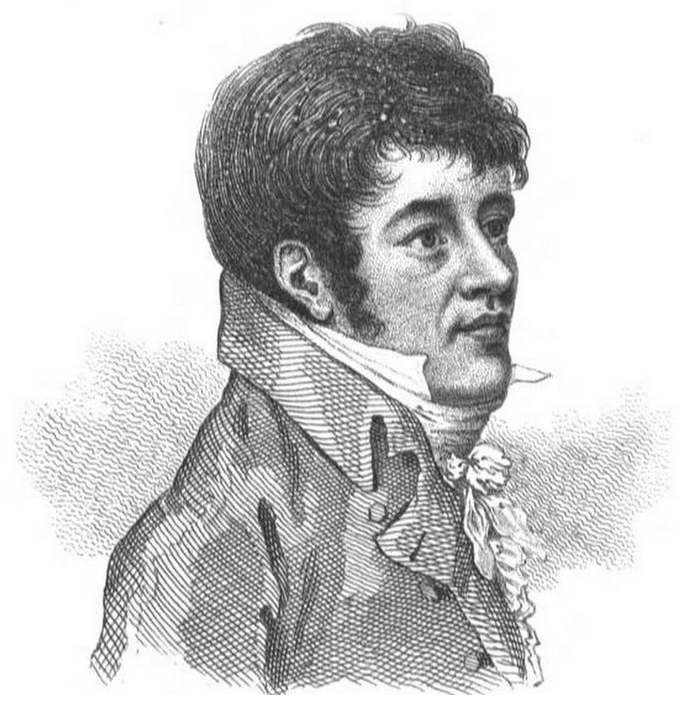
Henry "Hen" Pearce (7 May 1777, in Bristol – 30 April 1809, at St. Martin's Lane, London) was an English bare-knuckle prizefighter who fought under the London Prize Ring rules and was the recognised English Champion from 1804 until his retirement due to ill health in 1807.[1]

Pearce was known as "The Game Chicken", a nickname probably derived from his habit of signing his name "Hen" instead of Henry. He was reckoned a fast, skillful boxer who hit hard with both fists.

On 6 December 1805, Pearce defeated Jem Belcher in a Championship decider (a fight reported in Pierce Egan's first volume of Boxiana).[2]

He was inducted into the Ring Boxing Hall of Fame in 1987 and the International Boxing Hall of Fame in 1993.

External Sources

[edit]

See also

[edit]

References

[edit]
Revisions and contributorsEdit on WikipediaRead on Wikipedia
from Grokipedia
Henry Pearce (1777–1809), commonly known as Hen Pearce or the Game Chicken, was an influential English bare-knuckle from who rose to prominence in the early as a champion fighter renowned for his courage, skill, and defensive prowess. Born in in 1777, Pearce was apprenticed as a and began boxing as a young man in local circles before gaining wider recognition. His first recorded professional bout occurred in 1803 in , where he defeated Jack Firley, marking the start of an undefeated career spanning seven bare-knuckle fights, all won by . Pearce's most notable achievements came in 1805, a pivotal year in his career. He first engaged in a grueling 64-round battle against John Gully in , , lasting over an hour and attended by royalty including the (later King William IV), which solidified his reputation as a resilient contender. Later that year, on December 6, Pearce defeated the reigning champion Jem Belcher in an 18-round contest near , claiming the English bare-knuckle heavyweight title and earning widespread acclaim for his tactical mastery and unyielding spirit. Following his championship victory, Pearce retired from competitive but embarked on exhibition tours, during which he struggled with . He died on April 30, 1809, at the age of 32 from and related ailments, leaving a legacy as one of the pioneers of the sport. In recognition of his contributions, Pearce was posthumously inducted into the in the Pioneer category in 1993.

Early Life

Birth and Upbringing

Henry Pearce was born on 7 May 1777 in , , to working-class parents in a city renowned as a major port and commercial hub during the late 18th century. Bristol's economy thrived on maritime trade, including exports of woollen cloth, coal, and lead, as well as imports of wine, timber, and other goods, creating a dynamic yet stratified environment where laboring families like Pearce's navigated modest means amid industrial growth. Details about Pearce's remain limited in historical records, with little verified information on his parents or siblings. His background reflects the typical circumstances of Bristol's lower classes, tied to manual trades in a bustling . This socio-economic setting, marked by the port's bustle and the challenges of urban , provided little in terms of formal or privilege, instead emphasizing resilience and hands-on survival. Pearce's childhood unfolded in Bristol's rougher neighborhoods, areas influenced by the port's docks and industrial zones where street fights and brawls were commonplace among the youth. Exposure to these environments, combined with the physical demands of labor in a city teeming with -related work, honed his early toughness and familiarity with confrontation. As a young man, he served an to a , a that immersed him further in Bristol's working-class routines and served as a precursor to his later pursuits.

Introduction to Boxing

At around the age of 14, Hen Pearce began his as a in , a role that involved strenuous physical labor such as handling heavy carcasses and tools, which significantly contributed to his robust physique. This demanding work helped forge the strength that would later define his prowess, as Pearce grew to stand approximately 5 feet 9 to 10 inches tall and weigh nearly 13 stone, presenting a compact yet powerfully built frame ideal for the rigors of bare-knuckle combat. Pearce's introduction to boxing occurred during his youth in Bristol, where he engaged in informal sparring sessions with local boys, honing his skills through playful yet competitive encounters. These early experiences were often tied to his friendships, notably with John Gully, a fellow Bristol native who would later become a rival and prominent figure in the sport; their shared background fostered mutual respect and occasional practice bouts that sharpened Pearce's natural aggression. As Pearce matured, his involvement deepened through informal fights in Bristol's pubs and on the streets, where bare-knuckle rules prevailed without formal referees or rounds, emphasizing and raw power. These unregulated scraps allowed him to develop an aggressive, two-fisted style characterized by rapid, forceful punches from both hands, blending instinctive defense with offensive ferocity that set him apart in the city's vibrant milieu, a known breeding ground for emerging pugilists.

Professional Career

Debut and Early Bouts

Henry Pearce, known as the "Game Chicken," made his professional debut on June 3, 1803, in against Jack Firley. Fighting under the London Prize Ring rules, which governed the sport's bare-knuckle contests with minimal regulations beyond prohibiting and gouging, Pearce secured a victory after 10 rounds through his relentless aggression and powerful striking. This win marked the beginning of his undefeated streak and quickly drew attention in London's pugilistic circles. Pearce followed this debut with a dominant performance against Joe Bourke on August 12, 1803, also in , where he knocked his opponent down repeatedly over 15 rounds before Bourke conceded. The two rematched on January 23, 1804, at , with Pearce again prevailing after 24 grueling rounds, showcasing his endurance and slugging style that overwhelmed Bourke's defenses. These early successes, characterized by Pearce's forward-pressing attacks and heavy blows rather than defensive finesse, established his reputation as a formidable brawler in regional venues around and . His friendship with fellow fighter John Gully provided key introductions to influential patrons, aiding his rise in the sport's underground network. Continuing his momentum in 1805, Pearce defeated Elias Spray on March 11 at Hampton, , in a 29-round bout where his superior strength led to multiple knockdowns and Spray's eventual submission. Later that year, on April 27 at , he bested John Cart (also known as Stephen Carte) after 25 rounds, again relying on his aggressive tactics to outlast and overpower a less skilled opponent. By this point, Pearce had compiled a 5-0 professional record, all victories by or opponent concession in bare-knuckle format, solidifying his status in and fighting scenes without venturing into major championship contention.

Key Victories and Rise

In 1804, Pearce was arrested and imprisoned for three months in Horsemonger Gaol for participating in an illegal fight against Joe Bourke on . Upon his release in early 1805, Pearce resumed his career, maintaining an undefeated record in fights to that point. A pivotal moment came later that year when Pearce encountered John , a imprisoned in the King's Bench for unpaid debts. Impressed by Gully's potential after visiting him for informal sessions in jail—where Gully landed notable blows—Pearce arranged for a sponsor to cover Gully's debts using anticipated fight proceeds, securing his release and enabling a high-profile . This act of highlighted Pearce's character beyond the ring and set the stage for one of his most celebrated victories. The bout took place on 8 October 1805 at in , attended by the (later King William IV) and a large crowd of nobility and enthusiasts. Pearce dominated the early stages, knocking down in nearly every round for the first 17, showcasing his superior strength and technique. Despite Gully's fierce rally in later rounds, including blows that bloodied Pearce's face, the fight endured for 64 grueling rounds—lasting nearly one and a half hours—before Pearce secured a victory when Gully, nearly blinded by swelling, could no longer continue. This triumph, fueled by the proceeds that fully cleared Gully's debts, elevated Pearce's national stature as an unbeatable champion and drew widespread acclaim for his prowess and generosity.

Championship Reign

Pearce achieved his pinnacle in on 6 December 1805, when he defeated the reigning English champion Jem Belcher in a grueling contest near Blyth, close to , , thereby claiming the title under the London Prize Ring rules. The fight, which spanned 18 rounds and approximately 35 minutes, saw Pearce outslug Belcher with relentless power despite a severe cut to his eye inflicted in the opening round, causing profuse bleeding that persisted throughout. In the final round, Belcher conceded defeat after sustaining an injury that rendered his left arm useless, allowing Pearce to secure the victory by . This triumph marked Pearce's recognition as the English bare-knuckle champion, a status he held from December 1805 until 1807. His momentum into the title bout stemmed from a hard-fought win over John Gully just two months earlier on 8 October 1805. Pearce retired from the ring with an undefeated professional record of 7-0, all victories by , underscoring his dominance as a pugilist. His public persona as "The Game Chicken" arose from his nickname "Hen" combined with his courageous and spirited fighting style, which emphasized bold aggression and resilience in the face of adversity.

Later Life and Legacy

Retirement and Health Decline

Following his successful championship reign, which peaked with victories over prominent fighters like Jem Belcher and John Gully, Henry Pearce retired from competitive in 1805 at the age of 28 due to deteriorating health. His condition was exacerbated by a lifestyle of excessive drinking and dissipated socializing in , where he made "copious libations at the shrine of Bacchus" amid company with sporting characters, impairing his constitution. Upon returning to his native , Pearce's health continued to decline as he developed pulmonary consumption, reaching its final stage by early 1809, leaving him barely able to walk. Despite his fame, he faced financial difficulties and did not resume his pre-boxing trade as a , instead becoming a victualler to support his family. To sustain himself, he toured various towns across , conducting exhibitions and teaching techniques, which were well-patronized but limited to demonstrations rather than full contests owing to his physical weakness. In November 1807, Pearce demonstrated his enduring strength by climbing the roof of a burning building in , to rescue a trapped servant girl, an act of bravery that earned him a silver cup from the . By February 1809, his frailty prompted a benefit event at the Fives Court in , featuring matches to aid his circumstances. He also used his skills informally, such as defending a from on Clifton Downs.

Death and Posthumous Recognition

Pearce succumbed to on 30 April 1809 at the age of 31 while residing in St. Martin's Lane, , with his condition worsened by excessive drinking and other ailments. Accounts of his burial vary, with some placing it in St. James Churchyard, , , and others suggesting , his birthplace. In recognition of his contributions to the sport, Pearce was posthumously inducted into the Ring Boxing Hall of Fame in 1987 and the International Boxing Hall of Fame in 1993, the latter in the Pioneer category. Pearce's legacy endures as an undefeated pioneer of bare-knuckle boxing under the London Prize Ring rules, where he reigned as English champion from 1805 until his retirement later that year, with a perfect record of seven fights, all won by knockout. His aggressive slugging style, emphasizing raw strength and endurance over finesse, has influenced subsequent generations of heavyweights by exemplifying relentless pressure in the ring. He is portrayed as a heroic figure in Pierce Egan's seminal work Boxiana; or, Sketches of Ancient and Modern Pugilism, first published in 1812, which chronicled his battles and elevated pugilism's cultural status.
Add your contribution
Related Hubs
User Avatar
No comments yet.