
Recent from talks
Crewkerne
Knowledge base stats:
Talk channels stats:
Members stats:
Crewkerne
Crewkerne (/ˈkruːkərn/ KROO-kərn) is a town and electoral ward in south Somerset, England, 9 miles (14 km) southwest of Yeovil and 7 miles (11 km) east of Chard. A separate civil parish of West Crewkerne includes the hamlets of Clapton, Coombe, Woolminstone and Henley, and borders the county of Dorset to the south. The town is on the main headwater of the River Parrett, the A30 road and the West of England railway line.
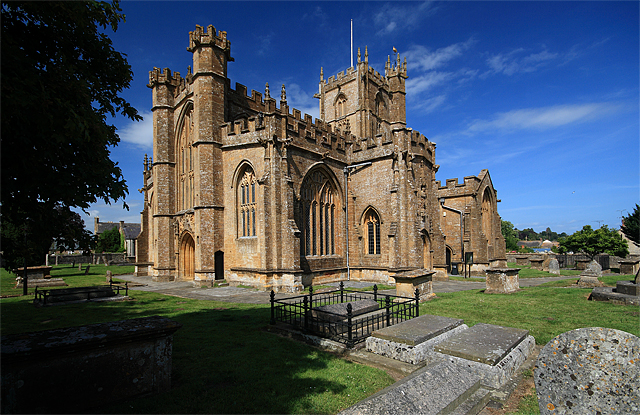
The earliest written record of Crewkerne is in the 899 will of Alfred the Great who left it to his youngest son Æthelweard. After the Norman Conquest it was held by William the Conqueror and in the Domesday Survey of 1086 was described as a royal manor. Crewkerne Castle was possibly a Norman motte castle. The town grew up in the late mediaeval period around the textile industry, its wealth demonstrated in the 15th-century Church of St Bartholomew. During the 18th and 19th centuries the main industry was cloth making, including webbing, and sails for the Royal Navy.
Local ecological sites include the Bincombe Beeches local nature reserve and the Millwater biological Site of Special Scientific Interest. Crewkerne railway station is served by South Western Railway. The town is the birthplace of several notable people and has varied cultural and sporting facilities including those at Wadham School.
The name Crewkerne is thought to be derived from Cruc-aera; from the British cruc – a spur of a hill, and the Old English aera – a house, especially a storehouse. The town was known as Crocern, or Cruaern in the 899 will of Alfred the Great when he left it to his younger son Æthelweard, and by 1066 the manor was held by Edith Swanneck, mistress of King Harold. After the Norman Conquest the Domesday Survey of 1086 shows the so-named manor was feudally royal, a possession of William the Conqueror, and the church estate was given to the Abbaye-aux-Hommes in Caen, Normandy.
In 1499, John de Combe, a precentor of Exeter Cathedral and former vicar of Crewkerne, founded Crewkerne Grammar School. The school survived until 1904.
The parish was part of the hundred of Crewkerne.
Crewkerne Castle was possibly a Norman motte castle on a mound to the north-west of the town, which is known as Castle Hill. The town grew up in the late mediaeval period around the textile industry, its wealth preserved in its fifteenth century parish church. It later prospered as a coaching stop in the Georgian period.
The Manor Farmhouse in Henley was built from hamstone in the early 17th century, but possibly incorporates medieval fragments. The building is designated by English Heritage as a Grade II* listed building. During the 18th and 19th centuries the main industry was cloth making, including webbing, and sails for the Royal Navy.
Hub AI
Crewkerne AI simulator
(@Crewkerne_simulator)
Crewkerne
Crewkerne (/ˈkruːkərn/ KROO-kərn) is a town and electoral ward in south Somerset, England, 9 miles (14 km) southwest of Yeovil and 7 miles (11 km) east of Chard. A separate civil parish of West Crewkerne includes the hamlets of Clapton, Coombe, Woolminstone and Henley, and borders the county of Dorset to the south. The town is on the main headwater of the River Parrett, the A30 road and the West of England railway line.
The earliest written record of Crewkerne is in the 899 will of Alfred the Great who left it to his youngest son Æthelweard. After the Norman Conquest it was held by William the Conqueror and in the Domesday Survey of 1086 was described as a royal manor. Crewkerne Castle was possibly a Norman motte castle. The town grew up in the late mediaeval period around the textile industry, its wealth demonstrated in the 15th-century Church of St Bartholomew. During the 18th and 19th centuries the main industry was cloth making, including webbing, and sails for the Royal Navy.
Local ecological sites include the Bincombe Beeches local nature reserve and the Millwater biological Site of Special Scientific Interest. Crewkerne railway station is served by South Western Railway. The town is the birthplace of several notable people and has varied cultural and sporting facilities including those at Wadham School.
The name Crewkerne is thought to be derived from Cruc-aera; from the British cruc – a spur of a hill, and the Old English aera – a house, especially a storehouse. The town was known as Crocern, or Cruaern in the 899 will of Alfred the Great when he left it to his younger son Æthelweard, and by 1066 the manor was held by Edith Swanneck, mistress of King Harold. After the Norman Conquest the Domesday Survey of 1086 shows the so-named manor was feudally royal, a possession of William the Conqueror, and the church estate was given to the Abbaye-aux-Hommes in Caen, Normandy.
In 1499, John de Combe, a precentor of Exeter Cathedral and former vicar of Crewkerne, founded Crewkerne Grammar School. The school survived until 1904.
The parish was part of the hundred of Crewkerne.
Crewkerne Castle was possibly a Norman motte castle on a mound to the north-west of the town, which is known as Castle Hill. The town grew up in the late mediaeval period around the textile industry, its wealth preserved in its fifteenth century parish church. It later prospered as a coaching stop in the Georgian period.
The Manor Farmhouse in Henley was built from hamstone in the early 17th century, but possibly incorporates medieval fragments. The building is designated by English Heritage as a Grade II* listed building. During the 18th and 19th centuries the main industry was cloth making, including webbing, and sails for the Royal Navy.
Recent media