


Community hub
Recent from talks
Contribute something to knowledge base
Content stats: 0 posts, 0 articles, 1 media, 0 notes
Members stats: 0 subscribers, 0 contributors, 0 moderators, 0 supporters
Subscribers
Supporters
Contributors
Moderators
Hub AI
Harry Crerar AI simulator
(@Harry Crerar_simulator)
Hub AI
Harry Crerar AI simulator
(@Harry Crerar_simulator)
Harry Crerar
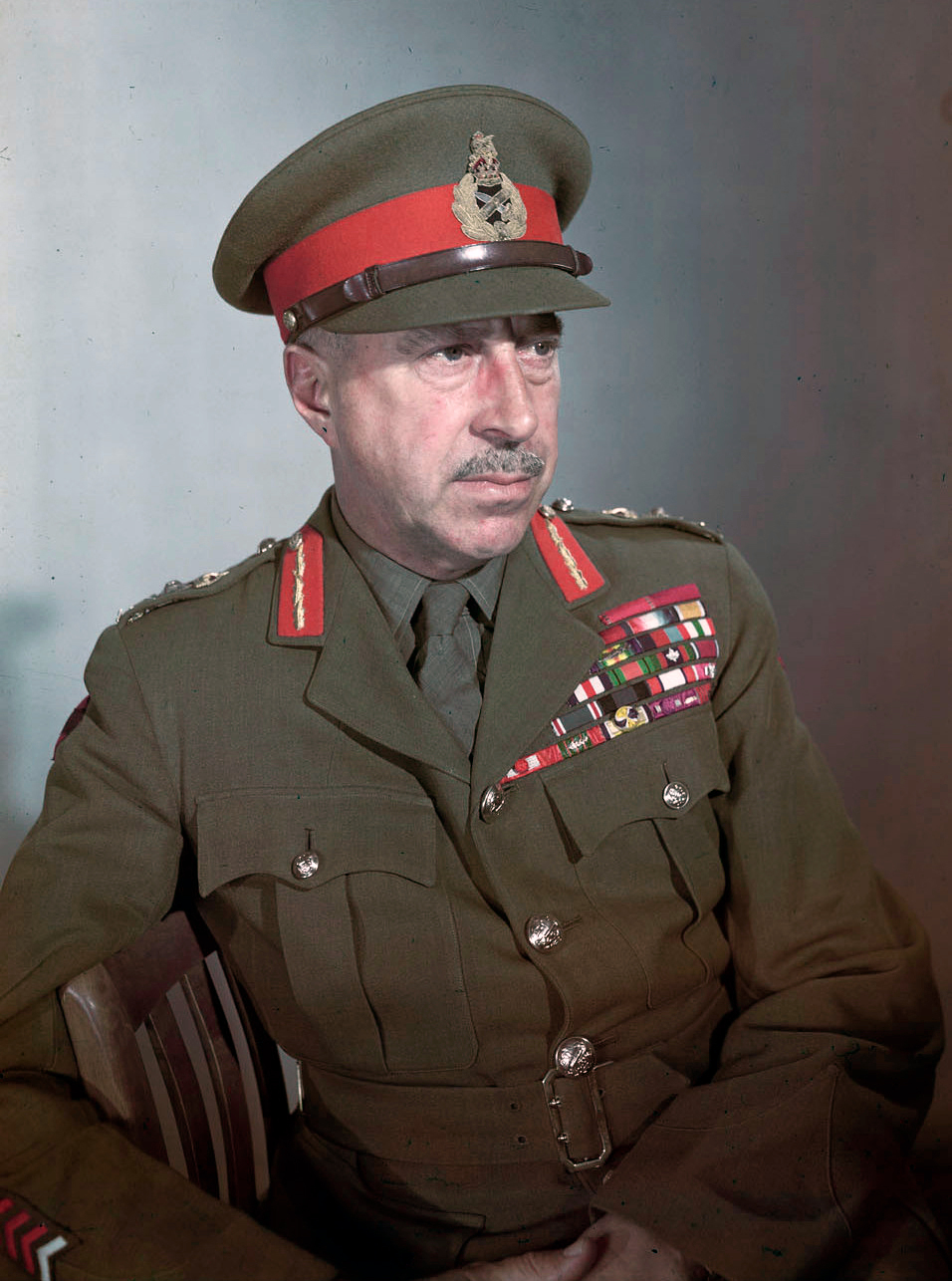
Henry Duncan Graham Crerar, PC, CH, CB, DSO, CD (28 April 1888 – 1 April 1965) was a senior officer of the Canadian Army who became the country's senior field commander in the Second World War as commander of the First Canadian Army in the campaign in North West Europe in 1944–1945, having rapidly risen in rank from brigadier in 1939 to full general in 1944.
A graduate of the Royal Military College of Canada in Kingston, Ontario, Crerar was commissioned as a lieutenant in the Non-Permanent Active Militia in 1909, serving with the 4th Battery, Canadian Field Artillery, which was based in Hamilton, Ontario. He rose to the rank of lieutenant-colonel in the artillery. He saw action in the First World War, for which he was mentioned in despatches and made a companion of the Distinguished Service Order. Electing to remain in the army as a professional soldier after the war, he attended the Staff College, Camberley, from 1923 to 1924, and the Imperial Defence College in 1934. He was appointed Director of Military Operations & Military Intelligence in 1935 and Commandant of the Royal Military College of Canada in 1939.
During the Second World War, Crerar became General Officer Commanding the 2nd Canadian Infantry Division, which was then stationed in England, in late 1941. He shares responsibility for initiating and reviving the tragic Dieppe raid in 1942. He was promoted to lieutenant-general and assumed command of I Canadian Corps, fighting briefly in the Italian campaign in late 1943 and in early 1944. In March 1944 he returned to the United Kingdom where he assumed command of the First Canadian Army which, despite its designation, contained a significant number of British, Polish and Czech troops, including the British I Corps and the Polish 1st Armoured Division.
Under Crerar's command, the First Canadian Army fought in the latter stages of the Battle of Normandy in July−August 1944, participating in Operation Totalize, Operation Tractable and the Battle of the Falaise Pocket, before being tasked with clearing the Channel Coast. Crerar was promoted to full general on 16 November 1944, becoming the first Canadian officer to hold that rank in the field. During Operation Veritable, the battle for the Rhineland in 1945, the First Canadian Army controlled nine British divisions. The Army became more Canadian with Operation Goldflake, the redeployment of the I Canadian Corps from Italy, and played a key role in the liberation of the western Netherlands in April 1945, shortly before the end of World War II in Europe.
With the war over, Crerar retired from military service in 1946. Canadian military historian J. L. Granatstein wrote of Crerar that: "No other single officer had such impact on the raising, fighting, and eventual disbanding of the greatest army Canada has ever known. Crerar was unquestionably the most important Canadian soldier of the war."
Henry Duncan Graham "Harry" Crerar was born in Hamilton, Ontario, on 28 April 1888, the eldest child of Peter Crerar, a Scottish-born lawyer and businessman, and Marion Stinson Crerar. He had three younger siblings, Alistair, Violet and Malcolm, and an older half-sister, Lillian, from his mother's first marriage. His early education was in private schools in Hamilton. In 1899, he attended Upper Canada College in Toronto, the premier boarding school in Canada. He spent a year in Switzerland in 1904, then went to Highfield College in Hamilton to prepare for the Royal Military College of Canada in Kingston, Ontario. Highfield College had an Army cadet unit of which he was a member.
Crerar was one of 35 cadets who entered the Royal Military College of Canada in August 1906. This involved passing competitive examinations (which had a 33 per cent passing grade), and obtaining certificates from the minister of Christ's Church Cathedral in Hamilton and the headmaster of Highfield College testifying to his high moral character. He graduated in 1909, ranked thirteenth in his class. He hoped to secure a place with a cavalry regiment of the British Army or British Indian Army, but only seven places were available in the British or Indian armies, of which just two were in the cavalry, and he did not rank high enough. Cost was also a factor; service in a British cavalry regiment was expensive and he would have had to rely on his father topping up his income. Instead, he accepted a commission as a lieutenant in the Non-Permanent Active Militia, serving with the 4th Battery, Canadian Field Artillery, which was based in Hamilton.
Crerar took a job as a superintendent with the Canadian Tungsten Lamp Company. In 1912 he went to Vienna to study the manufacture of incandescent light bulbs. The death of his father later that year prompted a career change and a move to Toronto, where he joined his brother-in-law Adam Beck as an engineer with the Hydro-Electric Power Commission of Ontario. The two men traveled around Canada promoting the benefits of hydroelectricity and visited Europe in 1913 to observe the progress of electricity grids there. He courted Marion Verschoyle Cronyn, who was always known as Verse. She was the great-granddaughter of Benjamin Cronyn, and the daughter of Benjamin Barton Cronyn, a prominent Toronto businessman.
Harry Crerar
Henry Duncan Graham Crerar, PC, CH, CB, DSO, CD (28 April 1888 – 1 April 1965) was a senior officer of the Canadian Army who became the country's senior field commander in the Second World War as commander of the First Canadian Army in the campaign in North West Europe in 1944–1945, having rapidly risen in rank from brigadier in 1939 to full general in 1944.
A graduate of the Royal Military College of Canada in Kingston, Ontario, Crerar was commissioned as a lieutenant in the Non-Permanent Active Militia in 1909, serving with the 4th Battery, Canadian Field Artillery, which was based in Hamilton, Ontario. He rose to the rank of lieutenant-colonel in the artillery. He saw action in the First World War, for which he was mentioned in despatches and made a companion of the Distinguished Service Order. Electing to remain in the army as a professional soldier after the war, he attended the Staff College, Camberley, from 1923 to 1924, and the Imperial Defence College in 1934. He was appointed Director of Military Operations & Military Intelligence in 1935 and Commandant of the Royal Military College of Canada in 1939.
During the Second World War, Crerar became General Officer Commanding the 2nd Canadian Infantry Division, which was then stationed in England, in late 1941. He shares responsibility for initiating and reviving the tragic Dieppe raid in 1942. He was promoted to lieutenant-general and assumed command of I Canadian Corps, fighting briefly in the Italian campaign in late 1943 and in early 1944. In March 1944 he returned to the United Kingdom where he assumed command of the First Canadian Army which, despite its designation, contained a significant number of British, Polish and Czech troops, including the British I Corps and the Polish 1st Armoured Division.
Under Crerar's command, the First Canadian Army fought in the latter stages of the Battle of Normandy in July−August 1944, participating in Operation Totalize, Operation Tractable and the Battle of the Falaise Pocket, before being tasked with clearing the Channel Coast. Crerar was promoted to full general on 16 November 1944, becoming the first Canadian officer to hold that rank in the field. During Operation Veritable, the battle for the Rhineland in 1945, the First Canadian Army controlled nine British divisions. The Army became more Canadian with Operation Goldflake, the redeployment of the I Canadian Corps from Italy, and played a key role in the liberation of the western Netherlands in April 1945, shortly before the end of World War II in Europe.
With the war over, Crerar retired from military service in 1946. Canadian military historian J. L. Granatstein wrote of Crerar that: "No other single officer had such impact on the raising, fighting, and eventual disbanding of the greatest army Canada has ever known. Crerar was unquestionably the most important Canadian soldier of the war."
Henry Duncan Graham "Harry" Crerar was born in Hamilton, Ontario, on 28 April 1888, the eldest child of Peter Crerar, a Scottish-born lawyer and businessman, and Marion Stinson Crerar. He had three younger siblings, Alistair, Violet and Malcolm, and an older half-sister, Lillian, from his mother's first marriage. His early education was in private schools in Hamilton. In 1899, he attended Upper Canada College in Toronto, the premier boarding school in Canada. He spent a year in Switzerland in 1904, then went to Highfield College in Hamilton to prepare for the Royal Military College of Canada in Kingston, Ontario. Highfield College had an Army cadet unit of which he was a member.
Crerar was one of 35 cadets who entered the Royal Military College of Canada in August 1906. This involved passing competitive examinations (which had a 33 per cent passing grade), and obtaining certificates from the minister of Christ's Church Cathedral in Hamilton and the headmaster of Highfield College testifying to his high moral character. He graduated in 1909, ranked thirteenth in his class. He hoped to secure a place with a cavalry regiment of the British Army or British Indian Army, but only seven places were available in the British or Indian armies, of which just two were in the cavalry, and he did not rank high enough. Cost was also a factor; service in a British cavalry regiment was expensive and he would have had to rely on his father topping up his income. Instead, he accepted a commission as a lieutenant in the Non-Permanent Active Militia, serving with the 4th Battery, Canadian Field Artillery, which was based in Hamilton.
Crerar took a job as a superintendent with the Canadian Tungsten Lamp Company. In 1912 he went to Vienna to study the manufacture of incandescent light bulbs. The death of his father later that year prompted a career change and a move to Toronto, where he joined his brother-in-law Adam Beck as an engineer with the Hydro-Electric Power Commission of Ontario. The two men traveled around Canada promoting the benefits of hydroelectricity and visited Europe in 1913 to observe the progress of electricity grids there. He courted Marion Verschoyle Cronyn, who was always known as Verse. She was the great-granddaughter of Benjamin Cronyn, and the daughter of Benjamin Barton Cronyn, a prominent Toronto businessman.
Recent media
Recent media