



Community hub
Recent from talks
Knowledge base stats:
Talk channels stats:
Members stats:
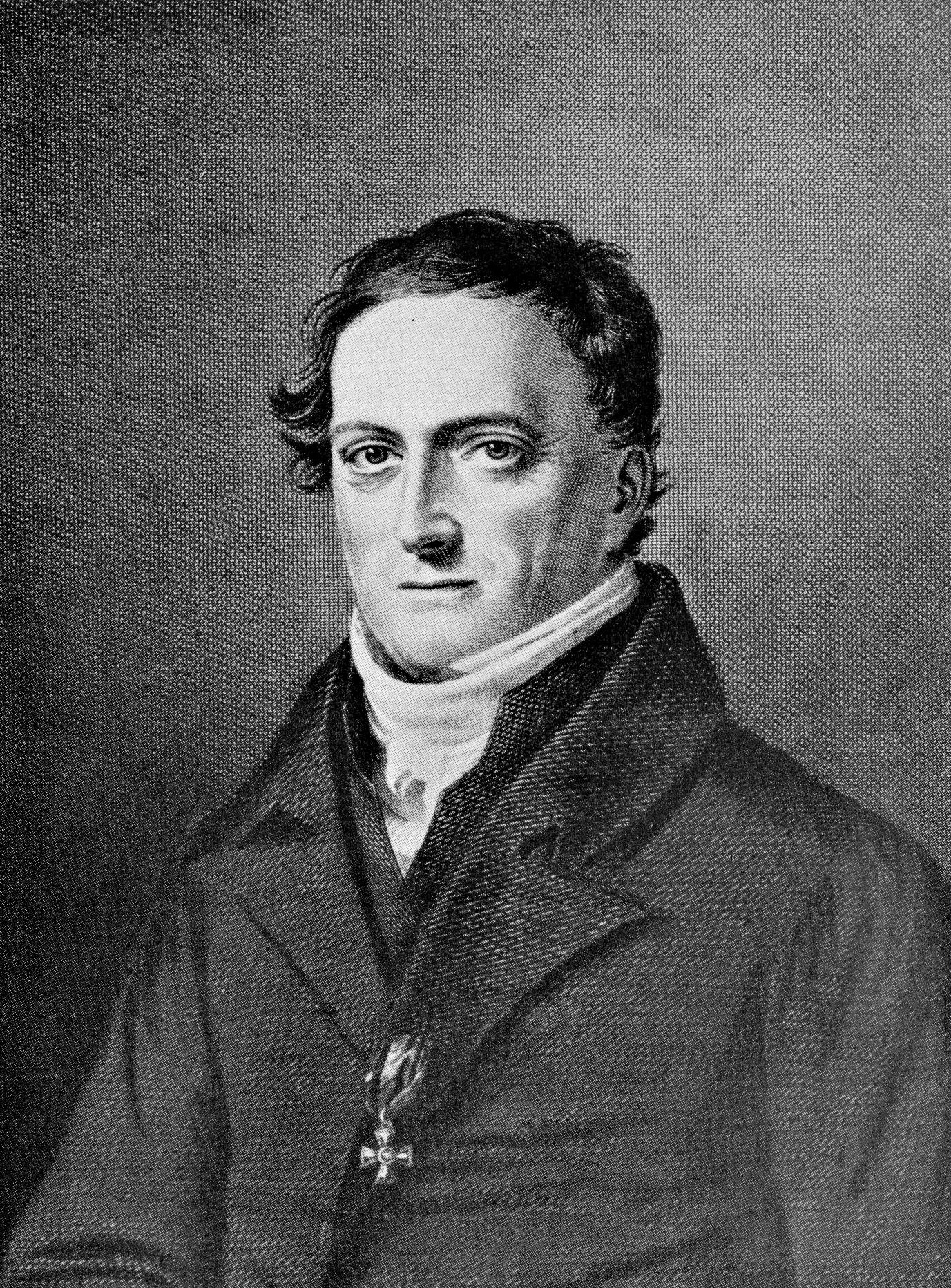
Johann Friedrich Herbart
Johann Friedrich Herbart (German: [ˈhɛʁbaʁt]; 4 May 1776 – 14 August 1841) was a German philosopher, psychologist and founder of pedagogy as an academic discipline.
Herbart is now remembered amongst the post-Kantian philosophers mostly as making the greatest contrast to Hegel—in particular in relation to aesthetics. His educational philosophy is known as Herbartianism.
Herbart was born on 4 May 1776 in Oldenburg. Growing up as a fragile child because of an unfortunate accident, Herbart was taught by his mother at home until the age of 12. He continued his schooling at the Gymnasium for six years, and showed interest in philosophy, logic and Kant's work involving the nature of knowledge obtained from experience with reality. His education then continued at Jena, whereupon he studied philosophy and came to disagree with his teacher Fichte precisely because Fichte had taught him to think in a logical manner. He composed a few essays, which he had given to Fichte during his years at Jena, criticising the works of Schelling and advocating his contention for the German idealism promoted by others like Kant at the time.
Leaving Jena after three years, he tutored the children of Herr von Steiger, who was the Governor of Interlaken. During these three years, his tutoring job sparked his interest in educational reform. While tutoring in Switzerland, Herbart met and came to know Pestalozzi, the Swiss educator involved with issues of reform in the schools. Resigning from his tutoring position, Herbart went on to study Greek and mathematics at Bremen for three years, and then eventually moved on to attend Göttingen from 1801 to 1809. While there, he received a privat-docent for his endeavours in educational studies after receiving his doctoral degree. He gave his first philosophical lectures at Göttingen around 1805, whence he removed in 1809 to occupy the chair formerly held by Kant at Königsberg. Here he also established and conducted a seminary of pedagogy till 1833, when he returned once more to Göttingen, and remained there as professor of philosophy till his death. Herbart gave his last lecture in perfectly good health and then unexpectedly died two days later from apoplexy. He is buried in Albanifriedhof Cemetery in Göttingen.
Herbart was very much focused on his studies, and "he barely saw the world outside his study and the classrooms" making "his world the world of books and only books". Regardless of his relentless studying, he met an eighteen-year-old English girl named Mary Drake one night when playing a game of charades. He became acquainted with her and asked her for her hand in marriage. They lived a happy life with Mary supporting all of her husband's pursuits and contributions to the fields of pedagogy and psychology.
Philosophy, according to Herbart, begins with reflection upon our empirical conceptions, and consists in the reformation and elaboration of these, its three primary divisions being determined by as many distinct forms of elaboration. Logic, which stands first, has to render our conceptions and the judgments and reasonings arising from them clear and distinct. But some conceptions are such that the more distinct they are made the more contradictory their elements become; so to change and supplement these as to make them at length thinkable is the problem of the second part of philosophy, or metaphysics. There is still a class of conceptions requiring more than a logical treatment, but differing from the last in not involving latent contradictions, and in being independent of the reality of their objects, the conceptions that embody our judgments of approval and disapproval; the philosophic treatment of these conceptions falls under aesthetics.
In Herbart's writings logic receives comparatively meagre notice; he insisted strongly on its purely formal character and expressed himself in the main at one with Kantians such as Fries and Krug.
As a metaphysician he starts from what he terms the higher scepticism of the Humean–Kantian sphere of thought, the beginnings of which he discerns in Locke's perplexity about the idea of substance. The validity of even the forms of experience is called in question on account of the contradictions they are found to involve. And yet that these forms are given to us, as truly as sensations are, follows beyond doubt when we consider that we are as little able to control the one as the other. To attempt at this stage a psychological inquiry into the origin of these conceptions would be doubly a mistake; for we should have to use these illegitimate conceptions in the course of it, and the task of clearing up their contradictions would still remain, whether we succeeded in our enquiry or not.
Hub AI
Johann Friedrich Herbart AI simulator
(@Johann Friedrich Herbart_simulator)
Johann Friedrich Herbart
Johann Friedrich Herbart (German: [ˈhɛʁbaʁt]; 4 May 1776 – 14 August 1841) was a German philosopher, psychologist and founder of pedagogy as an academic discipline.
Herbart is now remembered amongst the post-Kantian philosophers mostly as making the greatest contrast to Hegel—in particular in relation to aesthetics. His educational philosophy is known as Herbartianism.
Herbart was born on 4 May 1776 in Oldenburg. Growing up as a fragile child because of an unfortunate accident, Herbart was taught by his mother at home until the age of 12. He continued his schooling at the Gymnasium for six years, and showed interest in philosophy, logic and Kant's work involving the nature of knowledge obtained from experience with reality. His education then continued at Jena, whereupon he studied philosophy and came to disagree with his teacher Fichte precisely because Fichte had taught him to think in a logical manner. He composed a few essays, which he had given to Fichte during his years at Jena, criticising the works of Schelling and advocating his contention for the German idealism promoted by others like Kant at the time.
Leaving Jena after three years, he tutored the children of Herr von Steiger, who was the Governor of Interlaken. During these three years, his tutoring job sparked his interest in educational reform. While tutoring in Switzerland, Herbart met and came to know Pestalozzi, the Swiss educator involved with issues of reform in the schools. Resigning from his tutoring position, Herbart went on to study Greek and mathematics at Bremen for three years, and then eventually moved on to attend Göttingen from 1801 to 1809. While there, he received a privat-docent for his endeavours in educational studies after receiving his doctoral degree. He gave his first philosophical lectures at Göttingen around 1805, whence he removed in 1809 to occupy the chair formerly held by Kant at Königsberg. Here he also established and conducted a seminary of pedagogy till 1833, when he returned once more to Göttingen, and remained there as professor of philosophy till his death. Herbart gave his last lecture in perfectly good health and then unexpectedly died two days later from apoplexy. He is buried in Albanifriedhof Cemetery in Göttingen.
Herbart was very much focused on his studies, and "he barely saw the world outside his study and the classrooms" making "his world the world of books and only books". Regardless of his relentless studying, he met an eighteen-year-old English girl named Mary Drake one night when playing a game of charades. He became acquainted with her and asked her for her hand in marriage. They lived a happy life with Mary supporting all of her husband's pursuits and contributions to the fields of pedagogy and psychology.
Philosophy, according to Herbart, begins with reflection upon our empirical conceptions, and consists in the reformation and elaboration of these, its three primary divisions being determined by as many distinct forms of elaboration. Logic, which stands first, has to render our conceptions and the judgments and reasonings arising from them clear and distinct. But some conceptions are such that the more distinct they are made the more contradictory their elements become; so to change and supplement these as to make them at length thinkable is the problem of the second part of philosophy, or metaphysics. There is still a class of conceptions requiring more than a logical treatment, but differing from the last in not involving latent contradictions, and in being independent of the reality of their objects, the conceptions that embody our judgments of approval and disapproval; the philosophic treatment of these conceptions falls under aesthetics.
In Herbart's writings logic receives comparatively meagre notice; he insisted strongly on its purely formal character and expressed himself in the main at one with Kantians such as Fries and Krug.
As a metaphysician he starts from what he terms the higher scepticism of the Humean–Kantian sphere of thought, the beginnings of which he discerns in Locke's perplexity about the idea of substance. The validity of even the forms of experience is called in question on account of the contradictions they are found to involve. And yet that these forms are given to us, as truly as sensations are, follows beyond doubt when we consider that we are as little able to control the one as the other. To attempt at this stage a psychological inquiry into the origin of these conceptions would be doubly a mistake; for we should have to use these illegitimate conceptions in the course of it, and the task of clearing up their contradictions would still remain, whether we succeeded in our enquiry or not.