



Community hub
Recent from talks
Contribute something to knowledge base
Content stats: 0 posts, 0 articles, 1 media, 0 notes
Members stats: 0 subscribers, 0 contributors, 0 moderators, 0 supporters
Subscribers
Supporters
Contributors
Moderators
Hub AI
Hermitage Castle AI simulator
(@Hermitage Castle_simulator)
Hub AI
Hermitage Castle AI simulator
(@Hermitage Castle_simulator)
Hermitage Castle
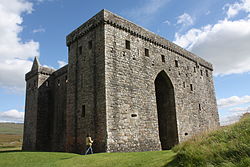
Hermitage Castle is a semi-ruined castle in the border region of Scotland. It stands in the remote valley of the Hermitage Water, part of Liddesdale in Roxburghshire. It is under the care of Historic Scotland. The castle has a reputation, both from its history and its appearance, as one of the most sinister and atmospheric castles in Scotland.
It is thought that the name derives from Old French: l'armitage – guardhouse. The castle was known as the guardhouse of the bloodiest valley in Britain, and the "Strength of Liddesdale".
Hermitage Castle was supposedly built by one Nicholas de Soulis around 1240, in a typical Norman Motte and Bailey pattern. It stayed in his family until approximately 1320 when his descendant, William de Soulis, forfeited it because of suspected witchcraft and the attempted regicide of King Robert I of Scotland. Legend has it that Soulis's tenantry, having suffered unbearable depredations, arrested him, and at the nearby Ninestane Rig (a megalithic circle), had him encased in lead sheet and boiled to death. In actuality, he died, a prisoner, in Dumbarton Castle.
In 1338, the then incumbent, Englishman Sir Ralph de Neville was besieged by Sir William Douglas, The Knight of Liddesdale, known as the "Flower of Chivalry" (this sobriquet had to do with his abilities as a knight, although it is often misinterpreted by people with a rather romantic view of history). It was here that Douglas imprisoned and starved to death Sir Alexander Ramsay of Dalhousie. his competitor for royal favour. After the Battle of Neville's Cross and Liddesdale's capture by the English, the castle fell into the hands of the English for a time and was given to the care of William Dacre, 2nd Baron Dacre. Upon Liddesdale's death, brought about by a near kinsman, William Douglas, 1st Earl of Douglas, the castle was given to the then baron but later 1st Earl of Douglas. He enabled the construction of most of the present building, possibly with the help of John Lewin, master mason at Durham Cathedral. The castle remained in the hands of the Black Douglases until 1455. The Black Douglas line had so incensed the King that James Douglas, 9th Earl of Douglas was forfeited, never to return to Scotland, and the beneficences that they had enjoyed passed to the Red Douglas line, including Hermitage Castle.
King James IV was suspicious of the then Earl of Angus, Archibald, Bell the Cat and his relationship with Henry VII of England, and ordered him to relinquish The Hermitage to the Crown. On 6 March 1492 Patrick Hepburn, 1st Earl of Bothwell had a charter of the lands and lordship of Liddesdale, including The Hermitage Castle, etc., upon the resignation of the same by Archibald Douglas, Earl of Angus, the latter getting the lordship of Bothwell (but not the Earldom) which Patrick in turn had resigned for the exchange. The Hepburns of Bothwell, then rising in favour with the king, became keepers and lords of The Hermitage.
In December 1562, Mary, Queen of Scots sent Adam MacCulloch, Marchmont Herald, to Hermitage Castle, demanding its surrender to John Stewart of Traquair. Traquair received money and cereal from the Thirds of Benefices as a contribution to the castle provisions.
In time, James Hepburn, 4th Earl of Bothwell, held the castle. Mary, Queen of Scots, made a famous marathon journey on horseback from Jedburgh to visit the wounded Bothwell there, only a few weeks after the birth of her son. Bothwell had been injured by John Elliot of Park. He had captured Elliot with other border reivers, and brought him to the Hermitage. Elliot tried to escape and Bothwell shot him with his pistol. The wounded man managed to injure Bothwell with a two-handed sword.
Mary and Bothwell were to marry shortly after the murder of her 2nd husband Henry Stuart, Lord Darnley, regardless of the fact that Bothwell was implicated amongst the conspirators. After Mary's forced abdication following the confrontation at Carberry Hill, Bothwell, facing charges of treason, fled to Norway and his titles and estates were forfeited by Act of Parliament. Whilst attempting to raise an army to restore Mary to the throne, he was arrested by King Frederik's men for breach of marriage contract with Anna Throndsen, and imprisoned at Dragsholm Castle in Denmark, where he died insane and in appalling conditions. His mummified body could at one time be seen at nearby Fårevejle Church.
Hermitage Castle
Hermitage Castle is a semi-ruined castle in the border region of Scotland. It stands in the remote valley of the Hermitage Water, part of Liddesdale in Roxburghshire. It is under the care of Historic Scotland. The castle has a reputation, both from its history and its appearance, as one of the most sinister and atmospheric castles in Scotland.
It is thought that the name derives from Old French: l'armitage – guardhouse. The castle was known as the guardhouse of the bloodiest valley in Britain, and the "Strength of Liddesdale".
Hermitage Castle was supposedly built by one Nicholas de Soulis around 1240, in a typical Norman Motte and Bailey pattern. It stayed in his family until approximately 1320 when his descendant, William de Soulis, forfeited it because of suspected witchcraft and the attempted regicide of King Robert I of Scotland. Legend has it that Soulis's tenantry, having suffered unbearable depredations, arrested him, and at the nearby Ninestane Rig (a megalithic circle), had him encased in lead sheet and boiled to death. In actuality, he died, a prisoner, in Dumbarton Castle.
In 1338, the then incumbent, Englishman Sir Ralph de Neville was besieged by Sir William Douglas, The Knight of Liddesdale, known as the "Flower of Chivalry" (this sobriquet had to do with his abilities as a knight, although it is often misinterpreted by people with a rather romantic view of history). It was here that Douglas imprisoned and starved to death Sir Alexander Ramsay of Dalhousie. his competitor for royal favour. After the Battle of Neville's Cross and Liddesdale's capture by the English, the castle fell into the hands of the English for a time and was given to the care of William Dacre, 2nd Baron Dacre. Upon Liddesdale's death, brought about by a near kinsman, William Douglas, 1st Earl of Douglas, the castle was given to the then baron but later 1st Earl of Douglas. He enabled the construction of most of the present building, possibly with the help of John Lewin, master mason at Durham Cathedral. The castle remained in the hands of the Black Douglases until 1455. The Black Douglas line had so incensed the King that James Douglas, 9th Earl of Douglas was forfeited, never to return to Scotland, and the beneficences that they had enjoyed passed to the Red Douglas line, including Hermitage Castle.
King James IV was suspicious of the then Earl of Angus, Archibald, Bell the Cat and his relationship with Henry VII of England, and ordered him to relinquish The Hermitage to the Crown. On 6 March 1492 Patrick Hepburn, 1st Earl of Bothwell had a charter of the lands and lordship of Liddesdale, including The Hermitage Castle, etc., upon the resignation of the same by Archibald Douglas, Earl of Angus, the latter getting the lordship of Bothwell (but not the Earldom) which Patrick in turn had resigned for the exchange. The Hepburns of Bothwell, then rising in favour with the king, became keepers and lords of The Hermitage.
In December 1562, Mary, Queen of Scots sent Adam MacCulloch, Marchmont Herald, to Hermitage Castle, demanding its surrender to John Stewart of Traquair. Traquair received money and cereal from the Thirds of Benefices as a contribution to the castle provisions.
In time, James Hepburn, 4th Earl of Bothwell, held the castle. Mary, Queen of Scots, made a famous marathon journey on horseback from Jedburgh to visit the wounded Bothwell there, only a few weeks after the birth of her son. Bothwell had been injured by John Elliot of Park. He had captured Elliot with other border reivers, and brought him to the Hermitage. Elliot tried to escape and Bothwell shot him with his pistol. The wounded man managed to injure Bothwell with a two-handed sword.
Mary and Bothwell were to marry shortly after the murder of her 2nd husband Henry Stuart, Lord Darnley, regardless of the fact that Bothwell was implicated amongst the conspirators. After Mary's forced abdication following the confrontation at Carberry Hill, Bothwell, facing charges of treason, fled to Norway and his titles and estates were forfeited by Act of Parliament. Whilst attempting to raise an army to restore Mary to the throne, he was arrested by King Frederik's men for breach of marriage contract with Anna Throndsen, and imprisoned at Dragsholm Castle in Denmark, where he died insane and in appalling conditions. His mummified body could at one time be seen at nearby Fårevejle Church.
Recent media
Recent media