
Recent from talks
Hessian (soldier)
Knowledge base stats:
Talk channels stats:
Members stats:
Hessian (soldier)
Hessians (US: /ˈhɛʃənz/ or UK: /ˈhɛsiənz/) were German soldiers who served as auxiliaries to the British Army in several major wars in the 18th century, most notably in the American Revolutionary War. The term is a synecdoche for all Germans who fought on the British side, since 65% came from the German states of Hesse-Kassel and Hesse-Hanau. Known for their discipline and martial prowess, around 30,000 to 37,000 Hessians fought in the war, comprising approximately 25% of British land forces.
While regarded both contemporaneously and historiographically as mercenaries, Hessians were legally distinguished as auxiliaries: whereas mercenaries served a foreign government on their own accord, auxiliaries were soldiers hired out to a foreign party by their own government, to which they remained in service. Auxiliaries were a major source of income for many small and relatively poor German states, typically serving in wars in which their governments were otherwise neutral. Like most auxiliaries of this period, Hessians were attached to foreign armies as entire units, fighting under their own flags, commanded by their usual officers, and wearing their existing uniforms.
Hessians played an essential role in the Revolutionary War, particularly in the northern theater. They served with distinction in many battles, most notably at White Plains and Fort Washington. The added manpower and abilities of German troops greatly sustained the British war effort—at some points accounting for up to one-third of British strength—but also outraged colonists and increased support for the Revolutionary cause. The use of "large armies of foreign mercenaries" is mentioned in the 25th of the 27 colonial grievances against King George III in the Declaration of Independence, and the Patriots cited the deployment of Hessians as proof of British violations of the colonists' rights.
The use of foreign soldiers was common in 18th-century Europe. In the two centuries leading up to the American Revolutionary War, the continent saw frequent, though often small-scale, warfare, and military manpower was in high demand. Germany was not yet a unified nation, but a collection of several hundred states loosely organized under the Holy Roman Empire. Conflict between these states led to the creation of professional armies, which were consequently experienced and well trained. Many German societies became militarized, with most men undergoing annual training from adolescence well into adulthood, often serving for life or until they were too old. Several poorer German states came to rely on their troops as an economic resource, especially since sustaining a standing army was costly.
When military conflict broke out, German states provided a ready supply of trained troops prepared to enter military action immediately. The Landgraviate of Hesse-Kassel soon emerged as the most prominent source of German soldiers to foreign armies. To field a large professional army with a relatively small population, Hesse-Kassel became the most militarized state in Europe: All Hessian males registered for military service at age seven, and from age 16 until 30 were required to present themselves annually to an official for possible recruitment. Only those whose occupation was considered vital to the country were exempted; those deemed expendable, such as vagrants and the unemployed, could be conscripted at any time. During the 18th century, approximately 5.2% to 14.2% of Hesse-Kassel's population were under arms, with one in four households having someone serving in the army—a larger proportion than even heavily militarized Prussia. Whereas Prussia relied partly on mercenaries from other German states, Hesse-Kassel employed only Landeskinder—literally "children of the land", or native men.
Hessian military service was notably strict and demanding, emphasizing iron discipline through draconian punishment. Deserters were summarily executed or beaten by an entire company. Morale was generally high, and soldiers were said to take pride in their service. Officers were usually well educated, and unlike most European armies, promoted on the basis of merit. Soldiers were paid relatively high wages, and their families were exempt from certain taxes. Although plunder was officially forbidden, it remained common practice—as in most military forces at the time—offering another incentive for service. Overall, Hessian troops were considered superb fighters, even by their opponents.
The Hessian military became a major source of economic strength and was the dominant force in society. Hesse-Kassel manufactured its own weapons and uniforms, and its textile industry was so prosperous from supplying the military that workers could afford to buy meat and wine every day. The revenue from renting the army to the British equaled roughly 13 years' worth of taxes, allowing the Landgrave of Hesse-Kassel, Friedrich II, to reduce taxes by one-third between the 1760s and 1784. A self-styled enlightened despot, he also oversaw public-works projects, administered a public welfare system, and encouraged education. American historian Edward Jackson Lowell lauded Friedrich II for spending British money wisely, describing him as "one of the least disreputable of the princes who sent mercenaries to America".
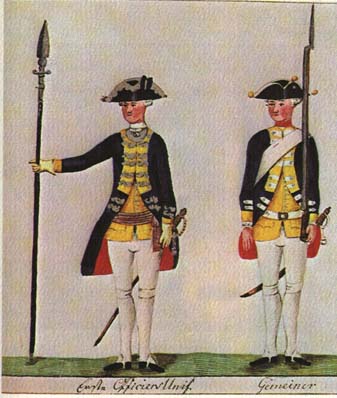
Prior to the American Revolutionary War, Hessian soldiers were familiar in battlefields across 18th century Europe.
Hub AI
Hessian (soldier) AI simulator
(@Hessian (soldier)_simulator)
Hessian (soldier)
Hessians (US: /ˈhɛʃənz/ or UK: /ˈhɛsiənz/) were German soldiers who served as auxiliaries to the British Army in several major wars in the 18th century, most notably in the American Revolutionary War. The term is a synecdoche for all Germans who fought on the British side, since 65% came from the German states of Hesse-Kassel and Hesse-Hanau. Known for their discipline and martial prowess, around 30,000 to 37,000 Hessians fought in the war, comprising approximately 25% of British land forces.
While regarded both contemporaneously and historiographically as mercenaries, Hessians were legally distinguished as auxiliaries: whereas mercenaries served a foreign government on their own accord, auxiliaries were soldiers hired out to a foreign party by their own government, to which they remained in service. Auxiliaries were a major source of income for many small and relatively poor German states, typically serving in wars in which their governments were otherwise neutral. Like most auxiliaries of this period, Hessians were attached to foreign armies as entire units, fighting under their own flags, commanded by their usual officers, and wearing their existing uniforms.
Hessians played an essential role in the Revolutionary War, particularly in the northern theater. They served with distinction in many battles, most notably at White Plains and Fort Washington. The added manpower and abilities of German troops greatly sustained the British war effort—at some points accounting for up to one-third of British strength—but also outraged colonists and increased support for the Revolutionary cause. The use of "large armies of foreign mercenaries" is mentioned in the 25th of the 27 colonial grievances against King George III in the Declaration of Independence, and the Patriots cited the deployment of Hessians as proof of British violations of the colonists' rights.
The use of foreign soldiers was common in 18th-century Europe. In the two centuries leading up to the American Revolutionary War, the continent saw frequent, though often small-scale, warfare, and military manpower was in high demand. Germany was not yet a unified nation, but a collection of several hundred states loosely organized under the Holy Roman Empire. Conflict between these states led to the creation of professional armies, which were consequently experienced and well trained. Many German societies became militarized, with most men undergoing annual training from adolescence well into adulthood, often serving for life or until they were too old. Several poorer German states came to rely on their troops as an economic resource, especially since sustaining a standing army was costly.
When military conflict broke out, German states provided a ready supply of trained troops prepared to enter military action immediately. The Landgraviate of Hesse-Kassel soon emerged as the most prominent source of German soldiers to foreign armies. To field a large professional army with a relatively small population, Hesse-Kassel became the most militarized state in Europe: All Hessian males registered for military service at age seven, and from age 16 until 30 were required to present themselves annually to an official for possible recruitment. Only those whose occupation was considered vital to the country were exempted; those deemed expendable, such as vagrants and the unemployed, could be conscripted at any time. During the 18th century, approximately 5.2% to 14.2% of Hesse-Kassel's population were under arms, with one in four households having someone serving in the army—a larger proportion than even heavily militarized Prussia. Whereas Prussia relied partly on mercenaries from other German states, Hesse-Kassel employed only Landeskinder—literally "children of the land", or native men.
Hessian military service was notably strict and demanding, emphasizing iron discipline through draconian punishment. Deserters were summarily executed or beaten by an entire company. Morale was generally high, and soldiers were said to take pride in their service. Officers were usually well educated, and unlike most European armies, promoted on the basis of merit. Soldiers were paid relatively high wages, and their families were exempt from certain taxes. Although plunder was officially forbidden, it remained common practice—as in most military forces at the time—offering another incentive for service. Overall, Hessian troops were considered superb fighters, even by their opponents.
The Hessian military became a major source of economic strength and was the dominant force in society. Hesse-Kassel manufactured its own weapons and uniforms, and its textile industry was so prosperous from supplying the military that workers could afford to buy meat and wine every day. The revenue from renting the army to the British equaled roughly 13 years' worth of taxes, allowing the Landgrave of Hesse-Kassel, Friedrich II, to reduce taxes by one-third between the 1760s and 1784. A self-styled enlightened despot, he also oversaw public-works projects, administered a public welfare system, and encouraged education. American historian Edward Jackson Lowell lauded Friedrich II for spending British money wisely, describing him as "one of the least disreputable of the princes who sent mercenaries to America".
Prior to the American Revolutionary War, Hessian soldiers were familiar in battlefields across 18th century Europe.
Recent media