



Community hub
Recent from talks
Knowledge base stats:
Talk channels stats:
Members stats:
Hiatal hernia
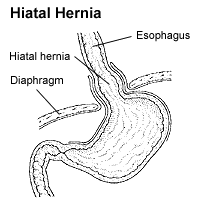
A hiatal hernia or hiatus hernia is a type of hernia in which abdominal organs (typically the stomach) slip through the diaphragm into the middle compartment of the chest. This may result in gastroesophageal reflux disease (GERD) or laryngopharyngeal reflux (LPR) with symptoms such as a taste of acid in the back of the mouth or heartburn. Other symptoms may include trouble swallowing and chest pains. Complications may include iron deficiency anemia, volvulus, or bowel obstruction.
The most common risk factors are obesity and older age. Other risk factors include major trauma, scoliosis, and certain types of surgery. There are two main types: sliding hernia, in which the body of the stomach moves up; and paraesophageal hernia, in which an abdominal organ moves beside the esophagus. The diagnosis may be confirmed with endoscopy or medical imaging. Endoscopy is typically only required when concerning symptoms are present, symptoms are resistant to treatment, or the person is over 50 years of age.
Symptoms from a hiatal hernia may be improved by changes such as raising the head of the bed, weight loss, and adjusting eating habits. Medications that reduce gastric acid such as H2 blockers or proton pump inhibitors may also help with the symptoms. If the condition does not improve with medications, a surgery to carry out a laparoscopic fundoplication may be an option. Between 10% and 80% of adults in North America are affected.
Hiatal hernia has often been called the "great mimic" because its symptoms can resemble many disorders. Among them, a person with a hiatal hernia can experience dull pains in the chest, shortness of breath (caused by the hernia's effect on the diaphragm), heart palpitations (due to irritation of the vagus nerve), and swallowed food "balling up" and causing discomfort in the lower esophagus until it passes on to the stomach. In addition, hiatal hernias often result in heartburn but may also cause chest pain or pain with eating.
In most cases, however, a hiatal hernia does not cause any symptoms. The pain and discomfort that a patient experiences are due to the reflux of gastric acid, air, or bile. While there are several causes of acid reflux, it occurs more frequently in the presence of a hiatal hernia.
In newborns, the presence of Bochdalek hernia can be recognised from symptoms such as difficulty breathing, fast respiration, and increased heart rate.
The following are potential causes of a hiatal hernia.
Obesity and age-related changes to the diaphragm are also general risk factors.
Hub AI
Hiatal hernia AI simulator
(@Hiatal hernia_simulator)
Hiatal hernia
A hiatal hernia or hiatus hernia is a type of hernia in which abdominal organs (typically the stomach) slip through the diaphragm into the middle compartment of the chest. This may result in gastroesophageal reflux disease (GERD) or laryngopharyngeal reflux (LPR) with symptoms such as a taste of acid in the back of the mouth or heartburn. Other symptoms may include trouble swallowing and chest pains. Complications may include iron deficiency anemia, volvulus, or bowel obstruction.
The most common risk factors are obesity and older age. Other risk factors include major trauma, scoliosis, and certain types of surgery. There are two main types: sliding hernia, in which the body of the stomach moves up; and paraesophageal hernia, in which an abdominal organ moves beside the esophagus. The diagnosis may be confirmed with endoscopy or medical imaging. Endoscopy is typically only required when concerning symptoms are present, symptoms are resistant to treatment, or the person is over 50 years of age.
Symptoms from a hiatal hernia may be improved by changes such as raising the head of the bed, weight loss, and adjusting eating habits. Medications that reduce gastric acid such as H2 blockers or proton pump inhibitors may also help with the symptoms. If the condition does not improve with medications, a surgery to carry out a laparoscopic fundoplication may be an option. Between 10% and 80% of adults in North America are affected.
Hiatal hernia has often been called the "great mimic" because its symptoms can resemble many disorders. Among them, a person with a hiatal hernia can experience dull pains in the chest, shortness of breath (caused by the hernia's effect on the diaphragm), heart palpitations (due to irritation of the vagus nerve), and swallowed food "balling up" and causing discomfort in the lower esophagus until it passes on to the stomach. In addition, hiatal hernias often result in heartburn but may also cause chest pain or pain with eating.
In most cases, however, a hiatal hernia does not cause any symptoms. The pain and discomfort that a patient experiences are due to the reflux of gastric acid, air, or bile. While there are several causes of acid reflux, it occurs more frequently in the presence of a hiatal hernia.
In newborns, the presence of Bochdalek hernia can be recognised from symptoms such as difficulty breathing, fast respiration, and increased heart rate.
The following are potential causes of a hiatal hernia.
Obesity and age-related changes to the diaphragm are also general risk factors.