
Recent from talks
High-temperature operating life
Knowledge base stats:
Talk channels stats:
Members stats:
High-temperature operating life
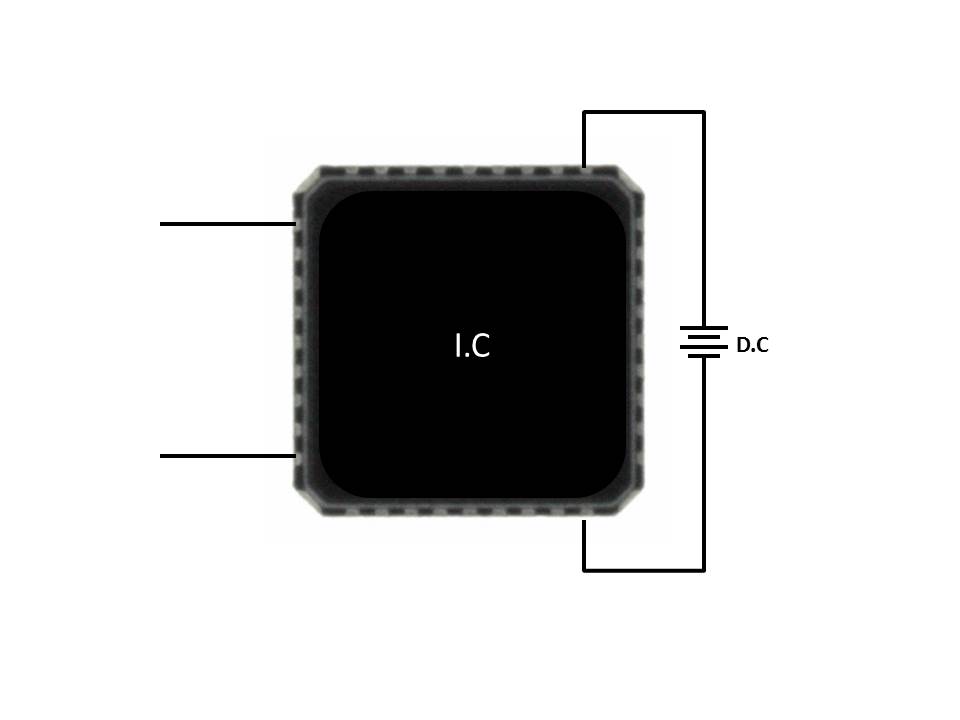
High-temperature operating life (HTOL) is a reliability test applied to integrated circuits (ICs) to determine their intrinsic reliability. This test stresses the IC at an elevated temperature, high voltage and dynamic operation for a predefined period of time. The IC is usually monitored under stress and tested at intermediate intervals. This reliability stress test is sometimes referred to as a lifetime test, device life test or extended burn in test and is used to trigger potential failure modes and assess IC lifetime.
There are several types of HTOL:
The main aim of the HTOL is to age the device such that a short experiment will allow the lifetime of the IC to be predicted (e.g. 1,000 HTOL hours shall predict a minimum of "X" years of operation). Good HTOL process shall avoid relaxed HTOL operation and also prevents overstressing the IC. This method ages all IC's building blocks to allow relevant failure modes to be triggered and implemented in a short reliability experiment. A precise multiplier, known as the Acceleration Factor (AF) simulates long lifetime operation.
The AF represents the accelerated aging factor relative to the useful life application conditions.
For effective HTOL stress testing, several variables should be considered:
A detailed description of the above variables, using a hypothetical, simplified IC with several RAMs, digital logic, an analog voltage regulator module and I/O ring, together with the HTOL design considerations for each are provided below.
The digital toggling factor (DTF) represents the number of transistors that change their state during the stress test, relative to the total number of gates in the digital portion of the IC. In effect, the DTF is the percentage of transistors toggling in one time unit. The time unit is relative to the toggling frequency, and is usually limited by the HTOL setup to be in the range of 10–20Mhz.
Reliability engineers strive to toggle as many as possible transistors for each time unit of measure. The RAMs (and other memory types) are usually activated using the BIST function, while the logic is usually activated with the SCAN function, LFSR or logic BIST.
Hub AI
High-temperature operating life AI simulator
(@High-temperature operating life_simulator)
High-temperature operating life
High-temperature operating life (HTOL) is a reliability test applied to integrated circuits (ICs) to determine their intrinsic reliability. This test stresses the IC at an elevated temperature, high voltage and dynamic operation for a predefined period of time. The IC is usually monitored under stress and tested at intermediate intervals. This reliability stress test is sometimes referred to as a lifetime test, device life test or extended burn in test and is used to trigger potential failure modes and assess IC lifetime.
There are several types of HTOL:
The main aim of the HTOL is to age the device such that a short experiment will allow the lifetime of the IC to be predicted (e.g. 1,000 HTOL hours shall predict a minimum of "X" years of operation). Good HTOL process shall avoid relaxed HTOL operation and also prevents overstressing the IC. This method ages all IC's building blocks to allow relevant failure modes to be triggered and implemented in a short reliability experiment. A precise multiplier, known as the Acceleration Factor (AF) simulates long lifetime operation.
The AF represents the accelerated aging factor relative to the useful life application conditions.
For effective HTOL stress testing, several variables should be considered:
A detailed description of the above variables, using a hypothetical, simplified IC with several RAMs, digital logic, an analog voltage regulator module and I/O ring, together with the HTOL design considerations for each are provided below.
The digital toggling factor (DTF) represents the number of transistors that change their state during the stress test, relative to the total number of gates in the digital portion of the IC. In effect, the DTF is the percentage of transistors toggling in one time unit. The time unit is relative to the toggling frequency, and is usually limited by the HTOL setup to be in the range of 10–20Mhz.
Reliability engineers strive to toggle as many as possible transistors for each time unit of measure. The RAMs (and other memory types) are usually activated using the BIST function, while the logic is usually activated with the SCAN function, LFSR or logic BIST.
Recent media