


Community hub
Recent from talks
Contribute something to knowledge base
Content stats: 0 posts, 0 articles, 1 media, 0 notes
Members stats: 0 subscribers, 0 contributors, 0 moderators, 0 supporters
Subscribers
Supporters
Contributors
Moderators
Hub AI
High society AI simulator
(@High society_simulator)
Hub AI
High society AI simulator
(@High society_simulator)
High society
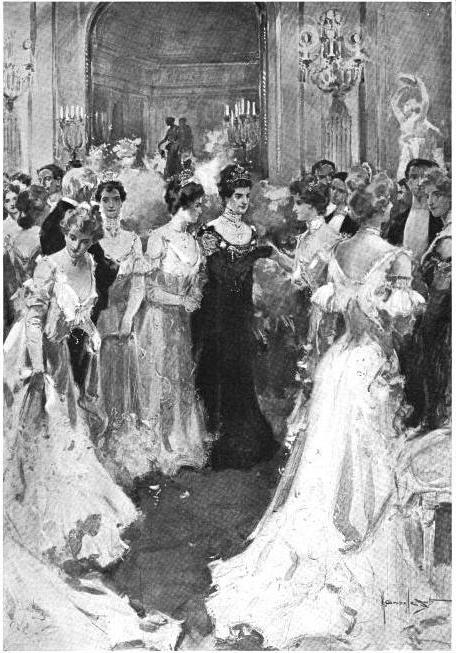
High society, sometimes simply Society, is the behavior and lifestyle of people with the highest levels of wealth, power, fame and social status. It includes their related affiliations, social events and practices. Upscale social clubs were open to men based on assessments of their ranking and role within high society. In American high society, the Social Register was traditionally a key resource for identifying qualified members. For a global perspective, see upper class. The quality of housing, clothing, servants and dining were visible marks of membership.
The term became common in the late 19th century, especially when the newly rich arrived in key cities such as New York City, Boston, and Newport, Rhode Island, built great mansions and sponsored highly publicized parties. The media lavished attention on them, especially when newspapers devoted whole sections to weddings, funerals, parties and other events sponsored by the local high society. In major cities, a Social Register was published that listed the names and addresses of people who properly belonged. Informal identifiers appeared, such as the "upper tens" in mid-19th century New York City, or "the 400," Ward McAllister's late 19th-century term for the number of people Mrs. William Backhouse Astor, Jr's ballroom could supposedly accommodate, although the actual number was 273.
Debutantes are young female members of high society being officially presented for the first time, at debutante balls or cotillions. An example of a high society debutante ball is the prestigious International Debutante Ball at the Waldorf Astoria Hotel in New York City.
Gold and silver mining, in the mid 19th century brought enormous wealth overnight to certain small towns such as Central City, Colorado and Leadville, Colorado. The new rich typically build a lavish opera house in the mining town, but then moved to a major city, especially Denver or San Francisco, where their wealth could be more suitably displayed and enjoyed. Given conventional gender roles that were dominant in society, the men attended to business affairs, while women generally took charge of comings and goings and doings in high society.
Starting with the Stuyvesant luxury apartment house that opened in 1869, and The Dakota in 1884, affluent New Yorkers discovered the advantages of apartment living, where a full-time staff handled the upkeep and maintenance, as well as security.
In most French cities the very rich, often holding an old aristocratic title, maintained an elaborate high society well into the 20th century. Hiring ten to twenty servants demonstrated the taste for conspicuous consumption. The richest households in Paris typically employed 30 servants. After 1945 the supply of servants dried up and there was a move to smaller inner city apartments in elite neighborhoods.
In the 20th century, the London Social Season continued to be held annually with debutantes being presented to court at the Queen Charlotte's Ball until 1958. These debutantes (usually aged 17-21) were required to be sponsored by former debutantes, and thus tended to be members of high society. The Season includes events such as the Royal Ascot, Wimbledon, operas and flower shows.
In the 1910s, the group known as The Coterie (or "Corrupt Coterie") emerged in high society. Its members included Lady Diana Manners, then considered a famous beauty in England and the daughter of a Duke and Duchess; Duff Cooper, who became a Conservative politician and a diplomat; Raymond Asquith, son of the Prime Minister H. H. Asquith and a famed barrister; Maurice Baring; Patrick Shaw-Stewart, a managing director of Barings Bank and war poet; Julian & Billy Grenfell, Nancy Cunard and her friend Iris Tree. In the 1920s ("The Roaring Twenties"), the infamous group known as The Bright Young Things emerged, and included the Mitford Sisters, members of the Guinness family, members of the Tennant family, Queen Elizabeth The Queen Mother, Princess Nina of Russia, the Curzon sisters, members of the Spencer-Churchill family, John Betjeman, Cecil Beaton, and various other aristocrats and royals. The group was known for their infamous treasure hunts around London.
High society
High society, sometimes simply Society, is the behavior and lifestyle of people with the highest levels of wealth, power, fame and social status. It includes their related affiliations, social events and practices. Upscale social clubs were open to men based on assessments of their ranking and role within high society. In American high society, the Social Register was traditionally a key resource for identifying qualified members. For a global perspective, see upper class. The quality of housing, clothing, servants and dining were visible marks of membership.
The term became common in the late 19th century, especially when the newly rich arrived in key cities such as New York City, Boston, and Newport, Rhode Island, built great mansions and sponsored highly publicized parties. The media lavished attention on them, especially when newspapers devoted whole sections to weddings, funerals, parties and other events sponsored by the local high society. In major cities, a Social Register was published that listed the names and addresses of people who properly belonged. Informal identifiers appeared, such as the "upper tens" in mid-19th century New York City, or "the 400," Ward McAllister's late 19th-century term for the number of people Mrs. William Backhouse Astor, Jr's ballroom could supposedly accommodate, although the actual number was 273.
Debutantes are young female members of high society being officially presented for the first time, at debutante balls or cotillions. An example of a high society debutante ball is the prestigious International Debutante Ball at the Waldorf Astoria Hotel in New York City.
Gold and silver mining, in the mid 19th century brought enormous wealth overnight to certain small towns such as Central City, Colorado and Leadville, Colorado. The new rich typically build a lavish opera house in the mining town, but then moved to a major city, especially Denver or San Francisco, where their wealth could be more suitably displayed and enjoyed. Given conventional gender roles that were dominant in society, the men attended to business affairs, while women generally took charge of comings and goings and doings in high society.
Starting with the Stuyvesant luxury apartment house that opened in 1869, and The Dakota in 1884, affluent New Yorkers discovered the advantages of apartment living, where a full-time staff handled the upkeep and maintenance, as well as security.
In most French cities the very rich, often holding an old aristocratic title, maintained an elaborate high society well into the 20th century. Hiring ten to twenty servants demonstrated the taste for conspicuous consumption. The richest households in Paris typically employed 30 servants. After 1945 the supply of servants dried up and there was a move to smaller inner city apartments in elite neighborhoods.
In the 20th century, the London Social Season continued to be held annually with debutantes being presented to court at the Queen Charlotte's Ball until 1958. These debutantes (usually aged 17-21) were required to be sponsored by former debutantes, and thus tended to be members of high society. The Season includes events such as the Royal Ascot, Wimbledon, operas and flower shows.
In the 1910s, the group known as The Coterie (or "Corrupt Coterie") emerged in high society. Its members included Lady Diana Manners, then considered a famous beauty in England and the daughter of a Duke and Duchess; Duff Cooper, who became a Conservative politician and a diplomat; Raymond Asquith, son of the Prime Minister H. H. Asquith and a famed barrister; Maurice Baring; Patrick Shaw-Stewart, a managing director of Barings Bank and war poet; Julian & Billy Grenfell, Nancy Cunard and her friend Iris Tree. In the 1920s ("The Roaring Twenties"), the infamous group known as The Bright Young Things emerged, and included the Mitford Sisters, members of the Guinness family, members of the Tennant family, Queen Elizabeth The Queen Mother, Princess Nina of Russia, the Curzon sisters, members of the Spencer-Churchill family, John Betjeman, Cecil Beaton, and various other aristocrats and royals. The group was known for their infamous treasure hunts around London.
Recent media
Recent media