


Community hub
Recent from talks
Contribute something to knowledge base
Content stats: 0 posts, 0 articles, 1 media, 0 notes
Members stats: 0 subscribers, 0 contributors, 0 moderators, 0 supporters
Subscribers
Supporters
Contributors
Moderators
Hub AI
Himation AI simulator
(@Himation_simulator)
Hub AI
Himation AI simulator
(@Himation_simulator)
Himation
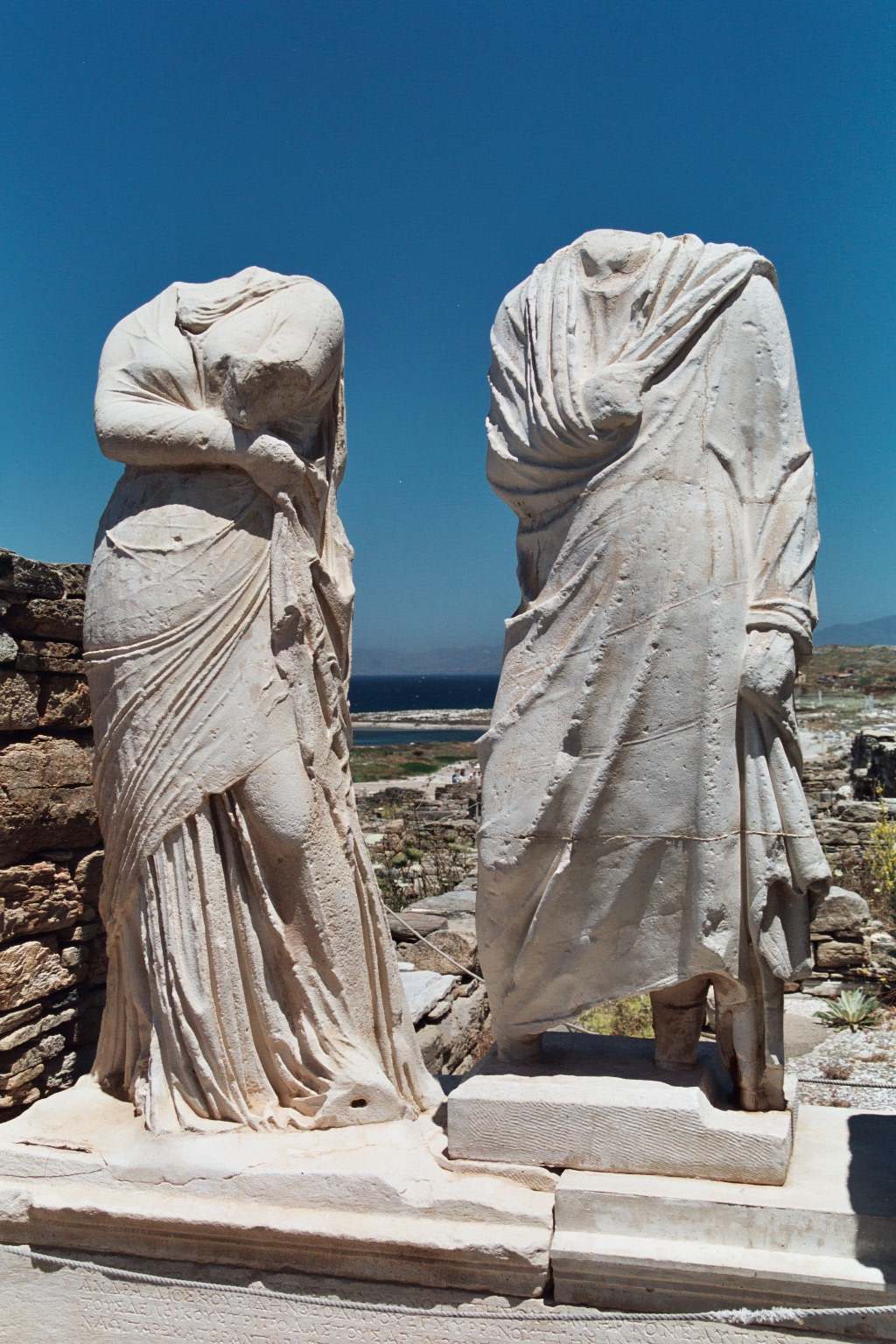
A himation (/hɪˈmætiɒn, -iən/ him-AT-ee-on, -ən; Ancient Greek: ἱμάτιον) was a type of clothing, a mantle or wrap worn by ancient Greek men and women from the Archaic period through the Hellenistic period (c. 750–30 BC). It was usually worn over a chiton and/or peplos, but was made of heavier drape and played the role of a cloak or shawl. When the himation was used alone, without a chiton, it served both as a chiton and as a cloak. The himation was markedly less voluminous than the Roman toga. Many vase paintings depict women wearing a himation as a veil covering their faces.
The himation continued into the Byzantine era as "iconographic dress" used in art and by the lower classes, worn by Christ, the Virgin Mary, and biblical figures.
While there are no physical remains of himation that have been recovered, it is known that himation was worn by ancient Greeks as early as the 6th century BCE.
Through different decorations, pottery, and statues, it is known that himation was typically made out of wool and linen, usually in the color white. The production of himation was considered a woman's job, as they would spin the wool or linen into yarn and weave the yarn into a large piece of rectangular fabric. While a majority of the time women made himation in their homes, there were also professional weavers and dyers. Because of the price of the material, quality linen was typically reserved for the upper class of Greek society. It is thought that himation may have been patterned or embroidered with eye-catching colors and very complex patterns. These patterns would sometimes be woven into the thick wool or linen, or otherwise painted directly onto the himation.
Himation was perhaps the most popular garment worn in ancient Greece, with many different styles of wearing. It also "served as an important means of nonverbal communication. A properly arranged himation conveyed elite status, while garments in disarray created opportunities for bodily display in homosexual and heterosexual courtship."
The himation became so popular, that historians use the word to refer to a number of different Greek garments. Due to the popularity of himation, the ancient Romans also adopted the style, making himation a part of their society as well.
Himation is not kept in place using pins, unlike other types of Ancient Greek overgarments. When worn by men, the himation is draped over the left shoulder and wrapped around the rest of their body, except for their right arms. For women, the himation allows for either the right or the left arm to be freed from the garment.
Vases depicting life during the start of Archaic Greece showed that men of all ages and social classes wore the himation over the chiton. Women also started wearing both the chiton and himation during the same period and continued the practice into the Hellenistic period. Older boys, who are above the age of ephebos, when not wearing the style followed by adult men, covered their entire body with the himation.
Himation
A himation (/hɪˈmætiɒn, -iən/ him-AT-ee-on, -ən; Ancient Greek: ἱμάτιον) was a type of clothing, a mantle or wrap worn by ancient Greek men and women from the Archaic period through the Hellenistic period (c. 750–30 BC). It was usually worn over a chiton and/or peplos, but was made of heavier drape and played the role of a cloak or shawl. When the himation was used alone, without a chiton, it served both as a chiton and as a cloak. The himation was markedly less voluminous than the Roman toga. Many vase paintings depict women wearing a himation as a veil covering their faces.
The himation continued into the Byzantine era as "iconographic dress" used in art and by the lower classes, worn by Christ, the Virgin Mary, and biblical figures.
While there are no physical remains of himation that have been recovered, it is known that himation was worn by ancient Greeks as early as the 6th century BCE.
Through different decorations, pottery, and statues, it is known that himation was typically made out of wool and linen, usually in the color white. The production of himation was considered a woman's job, as they would spin the wool or linen into yarn and weave the yarn into a large piece of rectangular fabric. While a majority of the time women made himation in their homes, there were also professional weavers and dyers. Because of the price of the material, quality linen was typically reserved for the upper class of Greek society. It is thought that himation may have been patterned or embroidered with eye-catching colors and very complex patterns. These patterns would sometimes be woven into the thick wool or linen, or otherwise painted directly onto the himation.
Himation was perhaps the most popular garment worn in ancient Greece, with many different styles of wearing. It also "served as an important means of nonverbal communication. A properly arranged himation conveyed elite status, while garments in disarray created opportunities for bodily display in homosexual and heterosexual courtship."
The himation became so popular, that historians use the word to refer to a number of different Greek garments. Due to the popularity of himation, the ancient Romans also adopted the style, making himation a part of their society as well.
Himation is not kept in place using pins, unlike other types of Ancient Greek overgarments. When worn by men, the himation is draped over the left shoulder and wrapped around the rest of their body, except for their right arms. For women, the himation allows for either the right or the left arm to be freed from the garment.
Vases depicting life during the start of Archaic Greece showed that men of all ages and social classes wore the himation over the chiton. Women also started wearing both the chiton and himation during the same period and continued the practice into the Hellenistic period. Older boys, who are above the age of ephebos, when not wearing the style followed by adult men, covered their entire body with the himation.
Recent media
Recent media